 Pump Pressure Switch Debris Clogging
- POST a QUESTION or COMMENT about this article topic
This article discusses debris clogged pressure switch problems that keep a water or well pump from turning on or off when it should.
InspectAPedia tolerates no conflicts of interest. We have no relationship with advertisers, products, or services discussed at this website.
- Daniel Friedman, Publisher/Editor/Author - See WHO ARE WE?
Sediment or Debris-Clogged Water Pump Control Switch Diagnosis & Repair
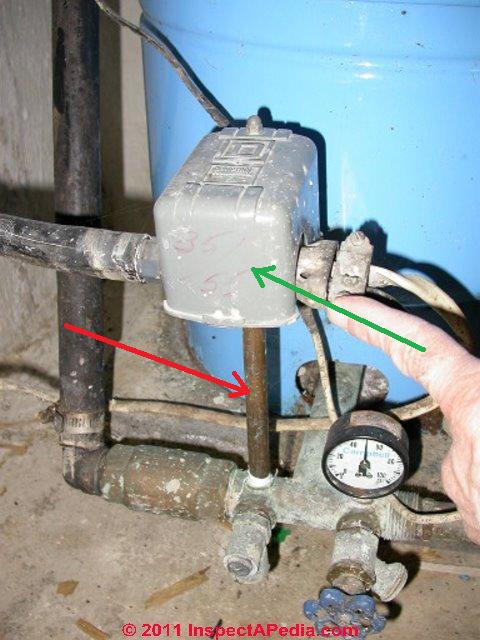
In the photo at page top I'm pointing to the pressure control switch (green arrow) and you can see the small tube that conducts water pressure to the switch bottom sensor (yellow arrow).
A small opening in the bottom of the pressure switch permits water to press against a diaphragm in the bottom of the pressure switch and thus allows the switch to sense the water pressure and to mechanically close or open the pump relay contacts to turn the pump on or off..
If the well or water pump pressure control switch does not reliably turn the pump ON and OFF when it should, for example if it's not responding to changes in water pressure, the switch's pressure sensor opening, a tiny hole in the bottom of the switch to which a water pressure sensing tube or little pipe conducts water pressure, may be clogged with silt, rust or other debris.
Other pressure control switches may be bolted right to the pump motor and may use a flexible plastic or copper tube to transmit water pressure to the switch.
If the switch bottom water pressure opening or the little pressure conducting pipe pipe (usually ¼” or 1/8” IPT diameter) is clogged with debris, you might be successful in getting the pressure control switch working again by replacing the switch and by cleaning any clog in the pressure sensor tubing.
Article Contents
- CAUSES of CLOGGING PRESSURE CONTROL SWITCH / TUBING
- HOW TO CHECK THE PRESSURE SWITCH FOR CLOGGING
- SOLUTIONS for MUD & DEBRIS in the WATER SUPPLY
- TORN PRESSURE SWITCH DIAPHRAGHM CAN ALSO CAUSE SWITCH TO STOP WORKING
Examples of water pump problems caused by a clogged pressure control switch include a pump that won't turn on, a pump that won't stop running, or a pump control switch that needs a good smack, tap, or rap to get it to respond to changes in water pressure.
...
Causes of Pump Pressure Control Switch or Tubing Clogging
The two most-common causes of pump pressure control switch sensor clogging are
- Mud, silt, rust or other debris in the water supply
- Kinks or bends in flexible copper tubing or plastic tubing connecting the switch to a water pressure source on the pump, tank, or piping
If your water has a high level of silt, debris, or minerals, it's possible that the tubing or piping connecting the pump pressure switch to the pump or water piping (red arrow in photo at left), or the pump switch bottom orifice through which the pressure switch senses the water pressure in the system has become clogged.
The small diameter of this tubing and still smaller diameter of the pump switch orifice makes clogging easy.
A clogged water pump pressure control switch (green arrow in photo at the top of this page) will often fail to turn on the well pump at all, even though the pressure in the system has dropped below the water pump "cut in" pressure.
Reader Jeff Crosby reported an example of this pressure switch clog problem:
[When our well pump kept short cycling and I was unable to get the well pump pressure control switch to work properly, ...] I ended up calling the pump service company to come over. There was an extreme amount of mineral buildup inside the pump where the copper tubing initially comes out to travel to the pressure switch.
I thought about checking that out but did not know how funny. There has always been an awl sitting on the pump base for the longest time.
One of their maintenance guys left it there long ago. Now I know why - ever since that date when they come do their yearly check up they knock out this sediment [using the awl to open the tubing so that the pressure switch can accurately sense the water pressure in the system]. -- Jeff Crosby
On rare occasions we can tap on the well pump control switch and it will begin working again, but not for long, and not reliably. Another water pressure control switch failure is the rupture of a rubber disk or "bladder" inside the switch itself. If you detect or suspect a defective pressure control switch, try replacing it with a new one.
We see a similar problem affecting water pressure gauges on private water systems: debris or mineral deposits can clog the pressure sensing orifice on the water pressure gauge, causing it to fail to respond at all, or to respond inaccurately to changes in water pressure.
When we find a clogged water pump pressure switch or the tubing connected to it, or a clogged water pressure gauge, we replace those items. A well pump pressure gauge that does not respond to pressure changes is potentially unsafe as it could lead to excessive pressurization of the water tank and building piping.
Watch out: some pump pressure control switches may mount directly to a water pressure tank without an obvious 1/8" or 1/4" ID mounting tube. In our pressure switch photo at left the red arrow points to the mounting base for the pressure control switch and you'll see that this control was screwed right into the water tank at a threaded tapping.
But the pressure sensing membrane found on the bottom (or in this case on the left side in our photo) of the pressure control switch can still become damaged or the orifice that admits water (and pressure) is easily clogged. The effect of debris clogging at a water pump pressure control switch is the same regardless of whether or not a longer mounting tube is used to mount the switch to the water system.
Also see WATER PUMP CONTROL SWITCH DEBRIS CLOGGING FAQs
Why is our water pump pressure switch continuously clogging up - the pump turns on and turns back off immediately
Our reader asked:
Well I replaced the pressure gauge, and the pressure switch. I rechecked the air in the empty tank - it is holding at 28 lbs. The new pressure switch is a 20/40 adjustable, but no matter how we adjust it, the pump kicks on well below 30 and kicks off almost immediately.
It pumps water but then shuts off, even if we have something (faucet, sink) running open. The gauge drops to 0 and stays there for a little while before the pressure switch kicks the pump on again. Then it wont go up past 32 before the pump shuts off again.
The tank is holding water when everything is closed - no seep leak showing, and when we removed the pressure gauge and at a different time the pressure switch, there was water in the line. What is causing this? How do we fix it?
When our water pressure would slow down or completely stop for a few seconds to a few minutes during baths, washing machine fill, etc., it was caused by a stopped up nipple below the pressure switch.
We replaced it, and the water psi came back to normal. We had replaced the pump and box about a year ago, and the last problem we had was as above.
Now the pump comes on, fills the tank (runs for a longer period of time than the intermittent run), shuts off, then after just a few minutes, kicks back on, runs just a couple of seconds and kicks back off. It just started this. We checked the air in the tank last night, it was about 10 lbs low.
We added air to empty tank. It did not fix the problem. I used canned air to blow any debris out of the pressure switch and the controlbox, and that did not fix the problem. I noticed a greasy looking substance inside the pressure switch while blowing it out.
We are going to replace the pressure switch tonight.
We also noticed that the tank is now sitting at an angle - not level. We are going to check this out too soon.
Someone had been messing around because the pressure switch cap was NOT locked on (screwed down) like we had left it. The tank is getting old, so we need to check it for leaks and need for replacement. The pressure gauge needs replacing as it is rusted. If all that doesn't fix it, then I guess we pull the well. On 2012-09-08 10 by Lisa
Reply by (mod) - water supply contains rust or debris that is clogging the pressure switch sensor
Lisa, it sounds as if your water supply contains rust or debris that is clogging the pressure switch sensor or clogging the sensor line conducting pressure to the switch. A cogged water filter between pump and house can have a similar effect.
Water inside that tube bringing pressure to the bottom og the pressure control switch is normal.if a pressure tank has a sticky internal bladder:
On occasion if a pressure tank has a sticky internal bladder or a damaged bladder the system may also be unable to push water into or draw water out of the tank, also giving improper pump om/off behavior.
I should add tht similar debris clogging can make the water pressure gauge read incorrectly and act oddly too, as he gauge also has a small pressure sensing opening that can become debris or rust clogged.
...
How to Check the Bottom of the Pump Control Switch for Clogging
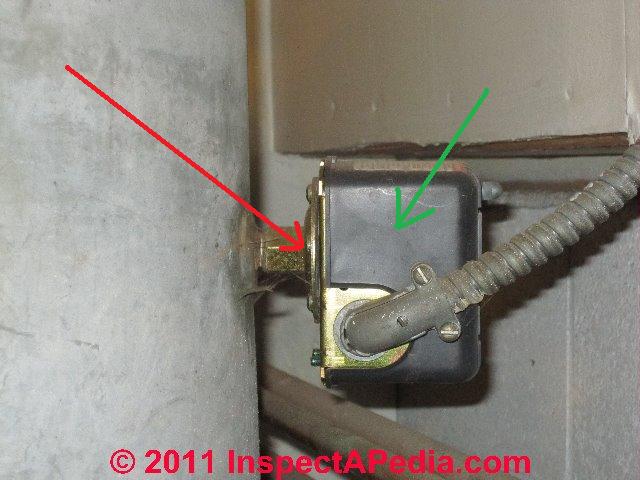
In the photo above our red arrow points to the point of connection between a pressure switch and the water pressure tank.
If you want to check for silt and debris clogging at this point you'd need to disconnect the electrical wires from the switch, remove water pressure from the system, lower water level in the pressure tank to below the point of attachment of the switch, and then unscrew the switch for inspection.
Below is a close-up look at the bottom of a pressure control switch.
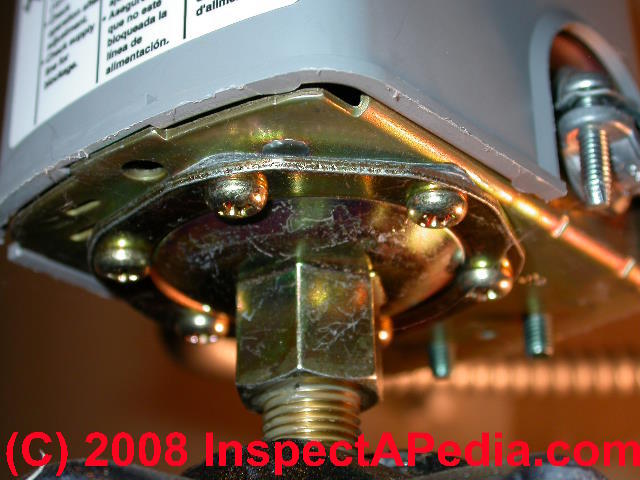
It's possible to remove all of the phillips-head screws at the underside of a pump pressure control switch to expose the diaphragm, and to clean out the whole mechanism.
Watch out: Don't nick or tear the diaphragm or it will no longer work and the switch will leak.
IF you are taking the switch off to check for damage or clogging or to examine or repair the relay switch and its contacts, check out that opening on the switch bottom as well.
We do this by unscrewing the connecting pipe from the bottom of the pressure switch, and looking inside of the opening into which that pipe was connected.
In a pinch it’s good to know that you may be able to clean the water pump control switch right up and get it working again.
Be careful about poking anything into the threaded opening which connects the pressure switch to the water pump or water tank. It's tempting to just jam a paper clip into the little sensor hole and wiggle it around. But if you puncture the switch diaphragm you'll certainly need a new switch.
You probably need one anyway if you see a lot of crud in there. Below we show debris and the small opening in a switch disassembled by Douglas Grooms, an InspectApedia reader.
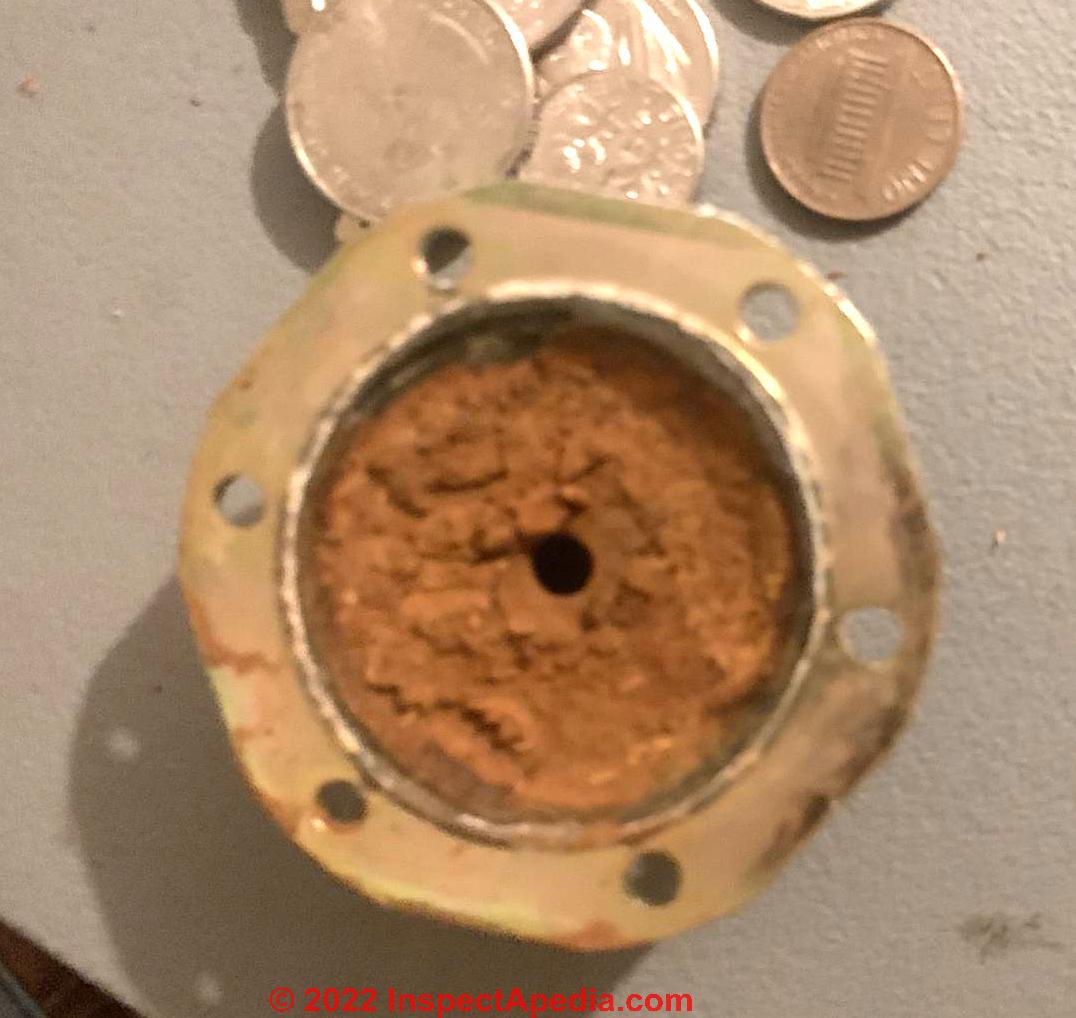
Really? Since a new pressure switch is not very costly, and since we have to take the switch off to diagnose it anyway, if on removing and inspecting the pump pressure switch we think it was clogged, I’ll often just replace it.
Watch out: even if you replace or repair a debris clogged pressure control switch, the tubing that conducts water (or air) pressure to the switch might itself be clogged as well.
...
Solutions for mud and debris in the water supply
Another reader wrote:
I have been in experiencing some major problems with my water. I had unusually high levels of iron and other minerals in my water. I purchased a Master water system. The following items are listed on my receipt (Neut/Softener, Water heater Conditioners, Multimedia filter, Resup kit (feeder & 1 qt).
This seemed to help finally my water was clear. Within a few months I noticed that the water began to look rusty again. The gentleman that installed the equipment later admitted that he didn't have any experience with this type of installation.
Another gentleman came out and he indicated that the equipment was not installed properly. He said that the media filter needed to be rebedded. He did that for me and immediately we noticed a loss of water pressure.
The water will run powerfully initially and then within seconds it diminishes to a trickle until it cuts off. We were told that the switch needed to be replaced so we did that. Then we were told to check the air pressure, we added air. We called someone else and he advised us that we needed to replace the submersible water tank
There was a lot of mud so we were advised to cut off about 10 ft of the pipe so we did that. The water seemed to be working fine for hours but now it is doing the same thing. It sounds as if water is being drained and it sounds like it is coming from the master equipment but they say it is not. Please help. Let me know if you need additional information. On 2011-11-24 by Abbie McCaffity
by (mod) - High levels of any particulate debris in the water supply can and will quickly clog
Abbie I'm not sure I've got the full picture of your installation and I certainly am not sure we have an accurate picture of just what problem substances are in your water supply, but it sounds as if you have a high level of sediment or perhaps even clay (you mention "mud") in your water pressure tank.
High levels of any particulate debris in the water supply can and will quickly clog treatment equipment, piping, pressure control switch sensor ports, even piping and water pressure tanks and on occasion dangerously clog pressure relief valves in the plumbing system.
You might want a more comprehensive water test that describes just what problems need to be corrected in your water supply. Then the proper choices of treatment equipment as well as the order of treatment can be properly chosen and installed. For example, you may need a sediment filter installed ahead of all other system components.
...
Also Check for a Torn Diaphraghm on the Pressure Switch Control
Watch out: the pressure sensing diaphragm on the bottom of the pump pressure switch is what conducts water pressure to the pump relay switch to cause the switch to open or close.
If the diaphragm has developed a tear or old the switch may leak water and it certainly won't work.
If you see that the diaphraghm is torn or if there is water leaking from the switch body there are repair kits to replace that part.
Really? Well yes but in nearly fifty years of working on pump and well problem diagnosis I've not found many repair technicians who will attempt to replace any part inside the pressure control switch. The repair tech will simply replace the pressure control switch.
The savings in labor time and therefore cost is probably greater than the cost of the pressure control switch itself - $15. to $60. depending on pressure switch model and vendor).
A well or water pump pressure control relay repair kit discussed
at PRESSURE SWITCH RELAY REPAIR KIT (about $17. U.S.) may solve a relay problem but I've not found a repair kit for the switch bottom diaphraghm: instead you can simply replace the switch.
...
...
...
Continue reading at CHECK PRESSURE SENSOR TUBING CLOGGING, or select a topic from the closely-related articles below, or see the complete ARTICLE INDEX.
Or see WATER PUMP CONTROL SWITCH DEBRIS CLOGGING FAQs diagnostic questions & answers posted originally at this page.
Or see these
Recommended Articles
- CHECK PRESSURE CONTROL BASE CLOG or TORN DIAPHRAGHM - debris clogged pressure sensor or torn pressure sensor diaphraghm can prevent the pump from turning ON or OFF
- CHECK PRESSURE SENSOR TUBING CLOGGING - debris clogged pressure conducting tubing between switch and pump or tank or other pressure source
- WATER PUMP REPAIR GUIDE - home
- WATER PRESSURE TABLE 1: PUMP WON'T RUN, WON'T STOP, or CYCLES - water pump diagnosis
- WATER PRESSURE TABLE 2: PUMP RUNS, WEAK or NO WATER PRESSURE - water pump diagnosis
- WATER PRESSURE TABLE 3: PUMP RUNS, NO WATER or INSUFFICIENT WATER - water pump diagnosis
- WATER PUMP PRESSURE SWITCH REPAIRS - home
- WATER PRESSURE INTERMITTENT LOSS - occasional loss of water pressure
- WATER PUMP WON'T START - ten things to check
- WATER PUMP WONT STOP RUNNING - what to check
Suggested citation for this web page
PRESSURE CONTROL SWITCH DEBRIS CLOGGING at InspectApedia.com - online encyclopedia of building & environmental inspection, testing, diagnosis, repair, & problem prevention advice.
Or see this
INDEX to RELATED ARTICLES: ARTICLE INDEX to WATER SUPPLY, PUMPS TANKS WELLS
Or use the SEARCH BOX found below to Ask a Question or Search InspectApedia
Ask a Question or Search InspectApedia
Share this article:Search the InspectApedia website
Need to make a private comment? Email editor@inspectApedia.com. We welcome email with your website content critique, corrections, suggestions or questions. Email is monitored daily but our workload may prevent an immediate reply. For immediate results, we hope you'll first try asking your question using the search box just above.
Citations & References
In addition to any citations in the article above, a full list is available on request.
- In addition to citations & references found in this article, see the research citations given at the end of the related articles found at our suggested
CONTINUE READING or RECOMMENDED ARTICLES.
- Carson, Dunlop & Associates Ltd., 120 Carlton Street Suite 407, Toronto ON M5A 4K2. Tel: (416) 964-9415 1-800-268-7070 Email: info@carsondunlop.com. Alan Carson is a past president of ASHI, the American Society of Home Inspectors.
Thanks to Alan Carson and Bob Dunlop, for permission for InspectAPedia to use text excerpts from The HOME REFERENCE BOOK - the Encyclopedia of Homes and to use illustrations from The ILLUSTRATED HOME .
Carson Dunlop Associates provides extensive home inspection education and report writing material. In gratitude we provide links to tsome Carson Dunlop Associates products and services.
 |
HOME | ABOUT | ASK a QUESTION | CONTACT | CONTENT USE POLICY | DESCRIPTION | POLICIES | PRIVACY | |
| © 2026 - 1985 Publisher InspectApedia.com - Daniel Friedman | |||||||||