 Roof Install, Inspect & Repair
- POST a QUESTION or COMMENT about types of roofing materials, installation, inspection, diagnosis, repair, maintenance, & warranties
Here we provide an index to our step by step articles explaining how to Install, Inspect, Diagnose, Repair Roofs.
These articles provide procedures for roof inspection, installation, diagnosis, repair & replacement guide. We give in-depth unbiased articles about building roofing materials, installations, inspection, roof problem or roof leak diagnosis and repair, roof covering or shingle product failures, roof warranties, roofing and roof structure defects, roofing repairs, and all types of roof covering products.
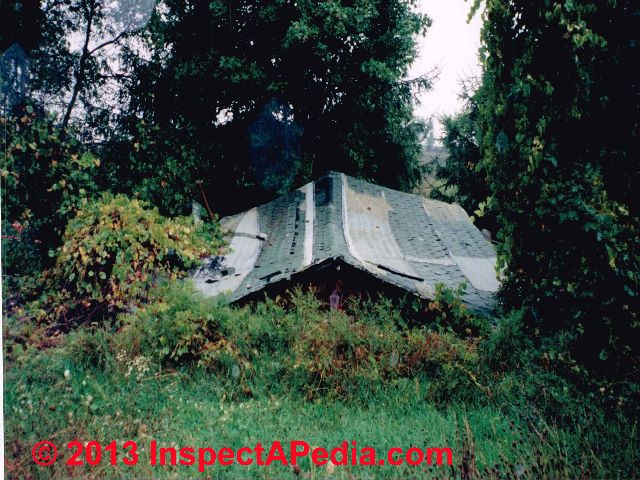
Page top photo: collapsed barn, Cooperstown, NY leaves only its roof in view - Daniel Friedman
InspectAPedia tolerates no conflicts of interest. We have no relationship with advertisers, products, or services discussed at this website.
- Daniel Friedman, Publisher/Editor/Author - See WHO ARE WE?
Roofing Installation, Inspection, Diagnosis & Repairs
 Example topics discussed in our building roofing articles include asphalt roof failures including thermal splitting and other defects,
causes and types of asphalt shingle roof leaks, shingle blow-offs and wind damage, shingle cracks, blisters, stains, fire retardant plywood roof sheathing defects, and other damage
.
Example topics discussed in our building roofing articles include asphalt roof failures including thermal splitting and other defects,
causes and types of asphalt shingle roof leaks, shingle blow-offs and wind damage, shingle cracks, blisters, stains, fire retardant plywood roof sheathing defects, and other damage
.
How to find and choose a roofing contractor, how to inspect roofs, product failures, class actions, and warranty claims, roofing repair methods, product sources for residential and light commercial roofs, slate roof inspection and repair methods.
At left is a beautiful if complex roof over a Russian Orthodox temple in Buenos Aires. [Click to enlarge any image]
Our roofing inspection, diagnosis, repair and installation articles listed below provide roof inspection, roof leak or problem diagnosis, roof installation, and roof repair information as well as details about the factors that affect the life of any roof.
This website also includes detailed information about roofing age, life, inspection, troubleshooting, and repair.
Particular sources of roof damage such as hail damage, ice dam damage, and wind damage as well as insurance inspections and claims are explained here.
We discuss often-argued-about proper roof flashing, roof slope, roof job estimating, roofing felt or underlayment, roof ventilation, and we include roof warranty and claim information and links to roofing product sources. We also discuss roof safety hazards and safety procedures & standards for roofers.
To find what you need quickly, if you don't want to scroll through this index you are welcome to use the page top or bottom SEARCH BOX to search InspectApedia for specific articles and information.
- Asbestos cement shingle roofs
ASBESTOS CEMENT ROOFING SHINGLES
or on more recent roofs where we find non-asbestos-containing
FIBER CEMENT SHINGLES or corrugated fiber cement products that are similar to slate in durability and costs
ASBESTOS & FIBER CEMENT ROOFING and
ASBESTOS CEMENT CORRUGATED ROOFING
CORRUGATED ROOFING
SIDING, ASBESTOS CEMENT
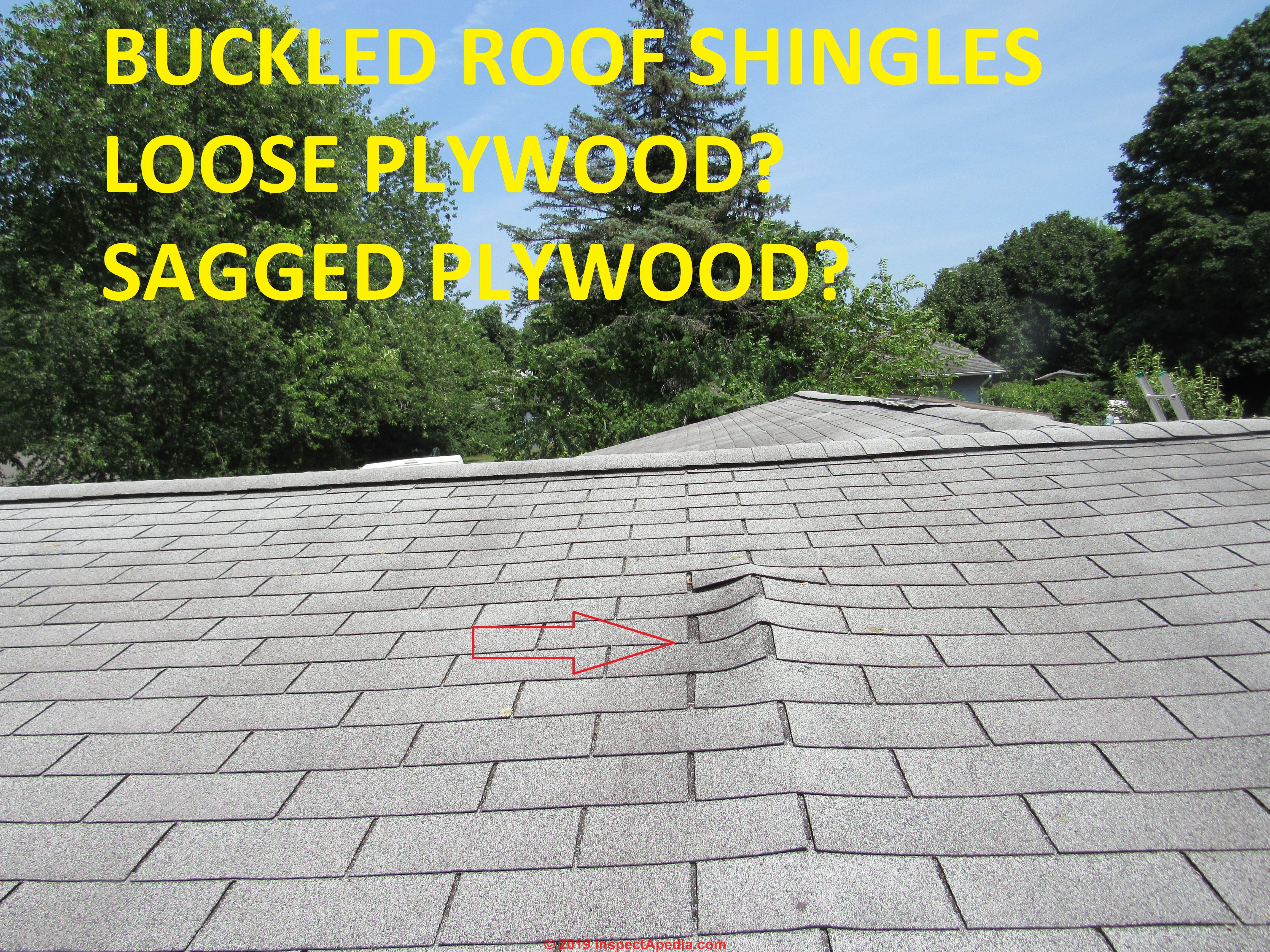
- Asphalt shingle roofs
have an installed cost (including labor) of $100 - $350 per square. (one square covers 100 sq .ft. of roof surface)
ASPHALT ROOF SHINGLES - home
Asphalt shingles have a typical
ASPHALT SHINGLE LIFE EXPECTANCY of 15-25 years, with some warranties extending up to 45 years, and asphalt roof shingles typically weigh 225-385 pounds per square - Built up roofing
BUR - multi-ply membrane roofing, including tar and gravel roofs, have a life expectancy of about 5 years per ply
BUILT UP ROOFS
- Clay tile roofing
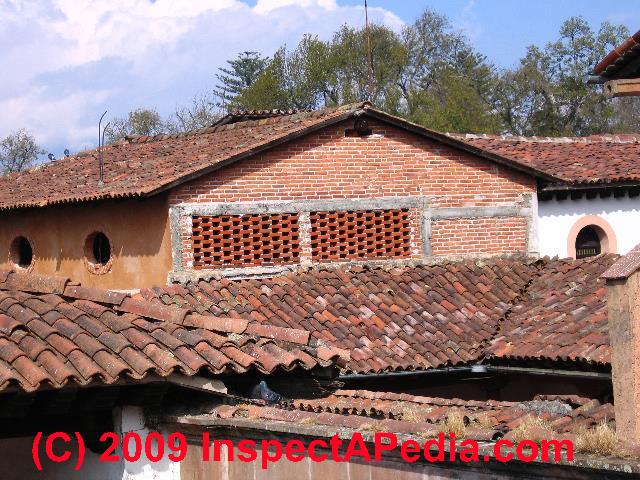
material and installation labor are more expensive than alternate materials, but the material has a life expectancy of up to 350 years where high quality vitreous tiles are used.
The clay tile roofs shown above were photographed by the author (DF) in Patzcuaro, Mexico.
Clay tiles are heavy, weighing between 850 and 1,700 pounds per square
CLAY TILE ROOFING - Concrete roofing
systems include poured concrete flat roofs and low slope roofs, and concrete roofing tiles, slates, or shingles
CONCRETE ROOFING
- Copper roofing
COPPER ROOFING
metal roofing systems involving soldered or mechanically crimped seams, used on steep, standard, low-slope, and some flat building roofs. Life expectancy of 50+ years.
- Corrugated Roofing
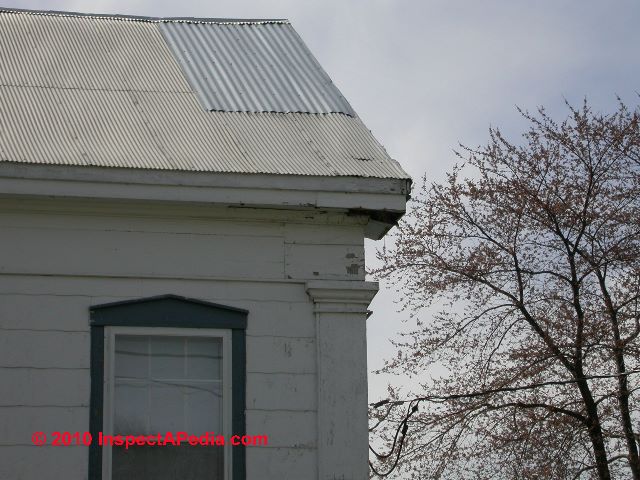
low cost metal roofing (or corrugated fiber cement roofing) used on buildings and outbuildings
CORRUGATED ROOFING where we include corrugated fiber cement roof products as well
Also see ASBESTOS CEMENT CORRUGATED ROOFING
and METAL ROOFING - DISASTERS: BUILDING INSPECTION & REPAIR - includes advice on avoiding roof damage from wind, wildfires, hurricanes
- DURALITA & METAL TILE ROOFS - describes clay tile look-alike roof coverings made of metal or of other man-made materials
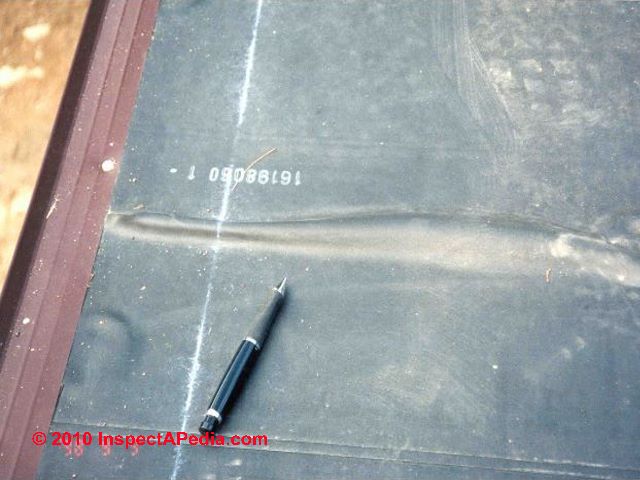
- EPDM roofing
is discussed beginning
at EPDM, RUBBER, PVC ROOFING
also referred to as MEMBRANE & SINGLE PLY ROOFS
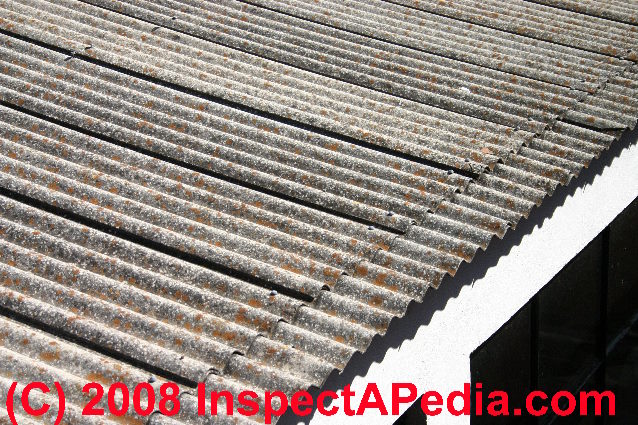
- Fiber cement roofing
ASBESTOS & FIBER CEMENT ROOFING
also see roofing failure product claims information
at AMERICAN CEMWOOD ROOFING also see
- Fiber-wood and fiberboard roofing
FIBERBOARD ROOFING & FIBER-WOOD ROOFING
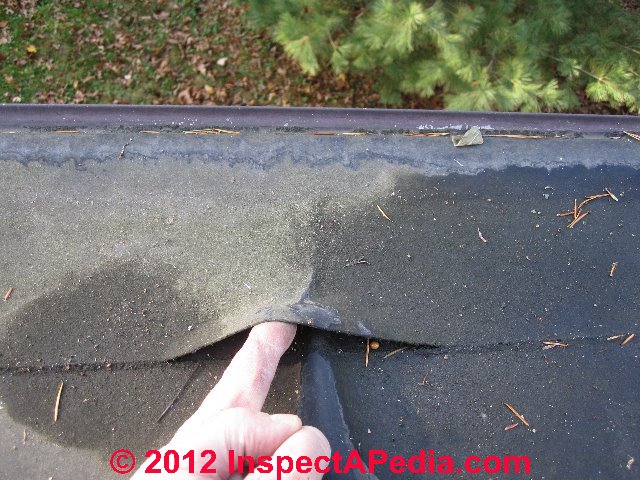
Above: a leakhy EPDM roof inspected by the author - this on a flat roofed home in New York state.
- Flat roofs
MEMBRANE & SINGLE PLY ROOFS
FLAT ROOF MOISTURE & CONDENSATION - Greenhouse roofs
GREEENHOUSE / SOLARIUM ROOF LEAKS - where do leaks occur on greenhouse or solarium attachments to homes? - Leaky roof: diagnosis and repair guide
LEAKY ROOF DIAGNOSIS & REPAIR - this article describes procedures for finding and fixing all types of leaks in roofs, figuring out the actual spot where a roof leak is occurring, and methods for tracking down the source of water or wet spots on ceilings or in attics.
The first part of this article describes different types and causes of roof leaks - clues about how and where to look for the causes of a roof leak.
The second part of this article discusses how we track an actual roof leak backwards to its probable source or entry point on the roof. This article series helps with diagnosis and repair of roof leaks found in different types of roof coverings and different types of roof designs.
We distinguish among actual roof leaks during rainfall, unusual leaks during hurricanes and high winds, wind-blown rain leaks, ice dam leaks in northern climates, and attic condensation or HVAC ductwork condensation and icing that may be mistaken for a roof leak in any climate. - Low slope roofing
refers to roofing systems for pitches below 4" in 12" of slope.
LOW SLOPE ROOFING
ROLL ROOFING, ASPHALT & SBS
MODIFIED BITUMEN ROOFING - Membrane roofing
such as EPDM, modified bitumen, rubber, or built up roofing using tar and gravel have a life expectancy of 20 - 40 years, varying significantly depending on materials and workmanship, and may cost $750 to $1000 per square.
BUILT UP ROOFS (tar and gravel or multi-ply flat)
MEMBRANE & SINGLE PLY ROOFS (EPDM or rubber roofs)
MODIFIED BITUMEN ROOFING
ROLL ROOFING, ASPHALT & SBS
FLAT ROOF MOISTURE & CONDENSATION
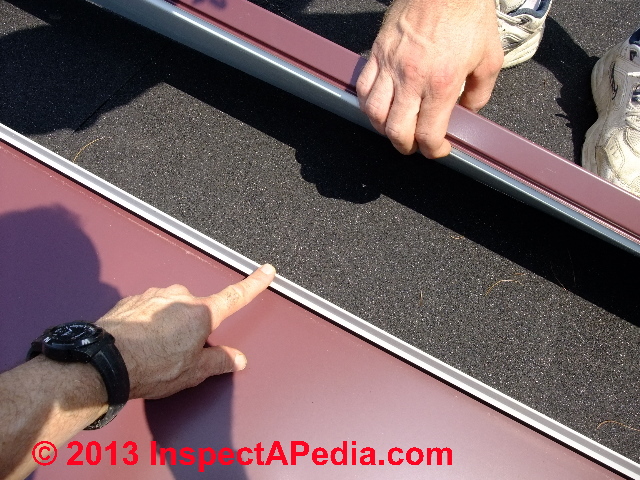
Above: a new, heavy-duty standing seam roof being installed by the author and prime contractor Eric Galow, in Poughkeepsie, New York.
- Metal roofing
material costs $35 - 250 per square (wide range because of wide range of types of metal roofing), with an installed cost of $35 - $400 / square, a life of 15-40 years or more (a roof kept properly coated can last longer), and weigh 50 - 270 pounds / square. A high end aluminum metal roof may cost $800 - $1000 / square.
METAL ROOFING where we provide articles on every type of metal roofing system and metal including for example:
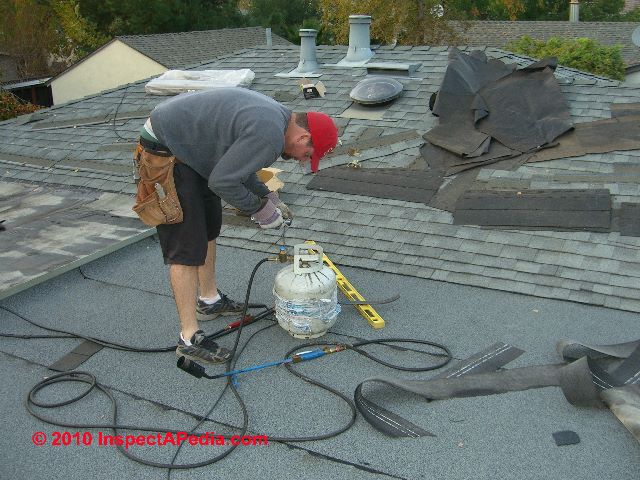
Asphalt shingle and modified bitumen roof above - photo by David Schwaderer.
- Modified bitumen roofing
a torch-applied single-ply membrane roof covering used on low slope and flat roofs.
MODIFIED BITUMEN ROOFING
MEMBRANE & SINGLE PLY ROOFS
FLAT ROOF MOISTURE & CONDENSATION - Plastic roofing products
plastic roof shingles, some sold with a 50-year or lifetime warranty, produced by a variety of manufacturers. Unfortunately some models failed early.
PLASTIC ROOFING TYPES - Repair Standards for Roofs
ROOF & WATERPROOFING MAINTENANCE & REPAIR, HUD Guidebook V, Chapter Five, [PDF] retrieved 2018/02/17, original source: https://www.hud.gov/sites/documents/HUDGB5C5GUID.PDF
This document, originally produced in 1994, describes emergency repairs procedures for most common roof types and addresses leaks and wind damage. - Roll Roofing
ROLL ROOFING, ASPHALT & SBS - simplest roof covering to install on a small section of low slope roof is 90-pound roll roofing.
This consists of a heavy, asphalt-saturated organic or fiberglass felt with a granular surface.
Rolls are 36 inches wide and weigh 90 pounds. We discuss double coverage and other roll roofing details. - Rubber Roof Shingles & Slates - often made from recycled tire rubber roofing, are discussed in detail
RUBBER ROOF SHINGLES & SLATES
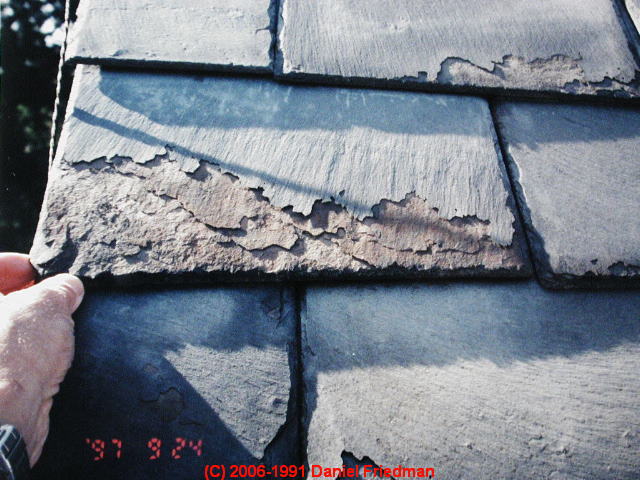
- Slate Roofing
has an installed cost of $900 - $1,000 per square, has
a SLATE ROOF LIFE EXPECTANCY of 30 - 100 years (or 300 or more in some cases), and weighs 500-1,000 pounds/square. Synthetic slates cost less, typically $700 -$900 per square.
SLATE ROOF INSPECTION & REPAIR - provides a virtual encyclopedia of slate roof inspection, diagnosis, repair, replacement, maintenance
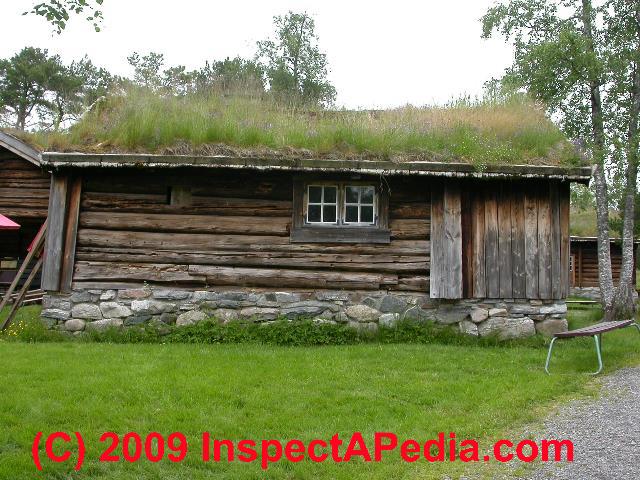
- Sod Roofing - traditional in rural areas of North America and for hundreds of years in Europe. Photo guide to construction techniques. Sod roof photo above; Molde Norway (DF).
SOD ROOFING - Sprayed Polyurethane Foam
discussed in NPS article "Roofing Today" use of modern roof materials on historic buildings:
Sprayed polyurethane foam is a contemporary system that is sometimes appropriate for use on historic structures. Sprayed polyurethane foam (SPF) accepts a variety of substrates and is readily adapted to recovering existing flat or low sloped roofs.
This roofing can be designed to incorporate increased slope for better drainage.
The foam also serves as insulation. A smooth or granular coating is usually applied to provide protection from sunlight.
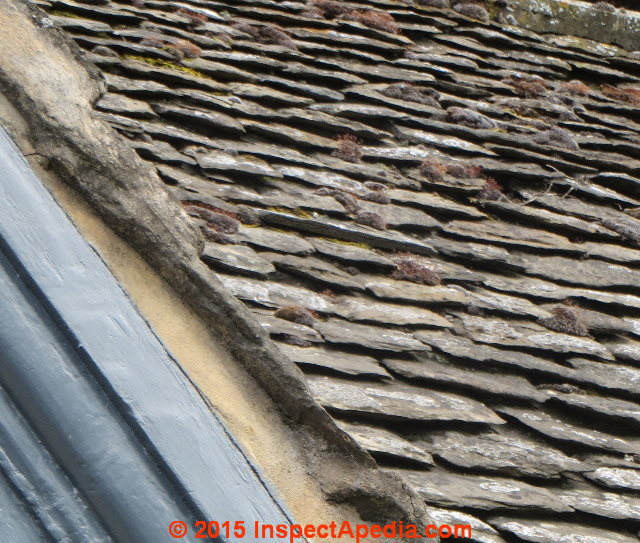
Stone roof above: Wolvercote, Oxford, U.K. by DF.
- Stone Roofing
STONE ROOFING includes stone slabs, and also
see SLATE ROOF INSPECTION & REPAIR

Thatched roof above, el Charco del Inginero, San Miguel de Allende (DF).
- Thatch Roofing
addresses natural fiber roofs using brush, grass, similar materials.
THATCH ROOFING - Tile roofing
TILE ROOFING - topic home - detailed discussion including ceramic tile, glazed tile and clay tile roof systems.
- Wood roofing shingles and shakes
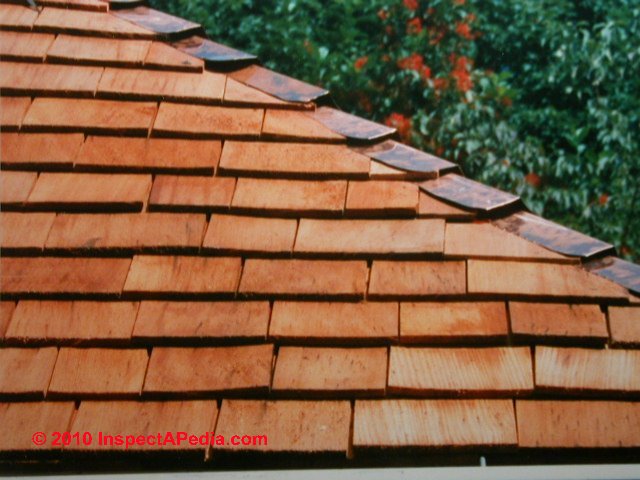
material cost $150-200 per square, with an installed cost of $130 - $160 / square. Wood shingle roofs have a typical life expectancy of 10-40 years, and weigh 300-400 pounds per square.
The life of a wood shingle roof can vary widely depending on the wood species of shingles used and the treatment of wood roof shingles with preservative.
WOOD SHAKE & SHINGLE ROOFING.
Other roofing variables
- The cost of roofing installations
varies considerably by geographic area as well as material selected, pitch and height of roof, and roof shape or design complexity.
Roofing cost estimates do not necessarily include the cost of any necessary structural or roof decking repairs that may be needed when re-roofing, nor do they include the cost of removing and disposing of old roofing materials. - All of these roofing materials have a fire rating
of A except wood shingles which, if treated with a fire retardant, are fire rated B. Untreated wood roof shingles have no fire rating and are not permitted by code in some areas.
A class A fire rated wood shingle roof can be installed using special procedures and materials that include plywood and gypsum board.
See ROOF COVERING FIRE RESISTANCE - The life expectancy of any roof depends
significantly on other factors besides its composition, including the installation workmanship, the condition of the roof decking, and proper roof ventilation. For best life expectancy, fiberglass based asphalt shingles should meet standard ASTM D-3462 and organic mat based asphalt roof shingles should meet standard ASTM D-225.
Architectural asphalt roof shingles can be expected to last longer than less costly three-tab asphalt roof shingles. - Older roof cost numbers:
"Choosing Roofing" in Fine Homebuilding Magazine (1995 data shows relative costs; absolute prices will have changed).
Roof Slope or Roof Pitch Definitions
Summary of Definitions of Roof Slope Types: Flat, Low Slope, Steep Slope Roofs
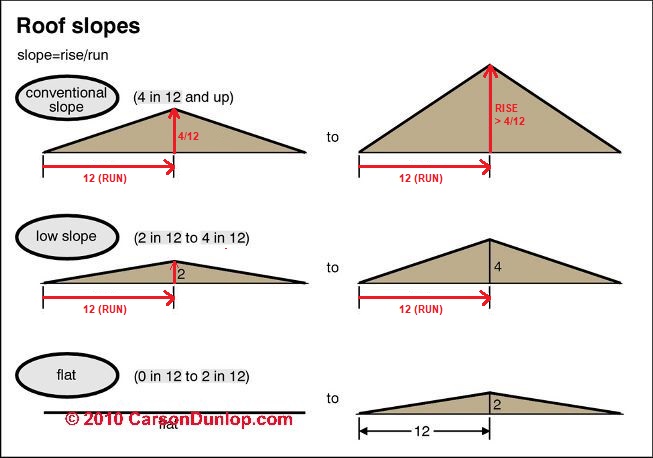
The illustration just above, courtesy of Carson Dunlop & Associates, summarizes the ranges of roof pitch or slope for flat, low-slope or conventional or "steep slope" roofing. Slope and pitch are synonymous terms for this topic.
Flat roof: 0-2" rise per foot of run
Low-Slope Roof: less than or equal to 3" rise per foot of run
Steep slope roof: 4" rise in 12 or more.
[Click to enlarge any image]
Details about how roof slope is measured or calculated along with examples of converting between angle, slope and grade are
at ROOF SLOPE DEFINITIONS.
Roof Covering Fire Resistance or "Fire Ratings"
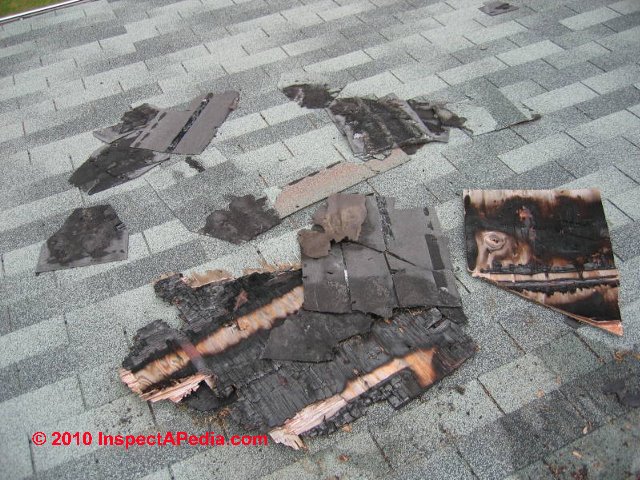
In the U.S. and most other countries, roof coverings are rated for their ability to resist fire and to avoid spreading fire if the building burns. Both UL 790 and ASTM E 108 fire classification tests use the same test methods.
Class "A" roof fire ratings mean that under the specifics of the UL (or ASTM) fire rating test definition, the roof is effective against severe fire exposure.
Class "B" roof fire ratings mean that the roof is effective against moderate fire exposure.
Class "C" roof fire ratings mean that the roof is effective against slight fire exposure only.
Details about roof fire resistance effectiveness and roof fire ratings are
at FIRE RATINGS for ROOF SURFACES.
...
Reader Comments, Questions & Answers About The Article Above
Below you will find questions and answers previously posted on this page at its page bottom reader comment box.
Reader Q&A - also see RECOMMENDED ARTICLES & FAQs
On 2023-09-18 by Sam - Identify this sticky yellow fluid on my torch-down roof
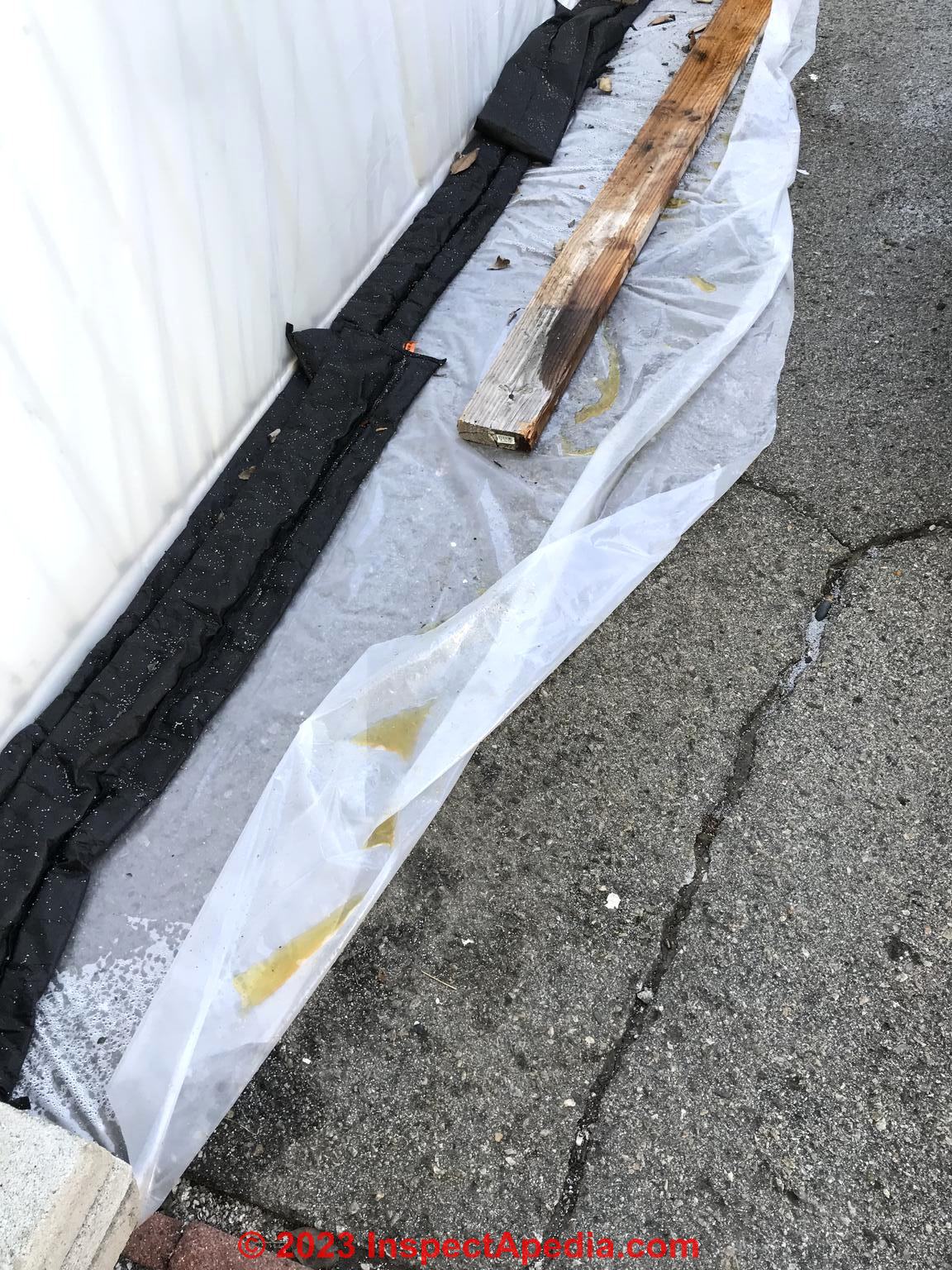
I just had roof material referred to as Torch Down which is an asphalt roofing system. After completion, the next day it rained a lot. The day after I woke up to this yellow liquid substance around the premeter of my house.
I did some research and tobacco juicing was the best terminology I ran into.
According to its description, a yellow sticky liquid the one on my property is not sticky is yellow more liquid like water and there's no oder to it either.
My question is could these be tobacco juicing? There seems to be an excessive amount its pooled on the ground as you can see in pictures. I think it may be something other than tobacco juicing?
On 2023-09-19 by InspectApedia DF (mod) - tobacco juicing from new asphalt roofing products
@Sam,
Your photo does look like "tobacco juicing" a brownish watery runoff from new asphalt roofing products. GAF and other companies say it's not a defect.
Here is GAF's TOBACCO JUICING ROOFING RUNOFF EXPLANATION [PDF]
On 2023-04-06 by Melanie Mix - How can I identify this defective asphalt shingle?
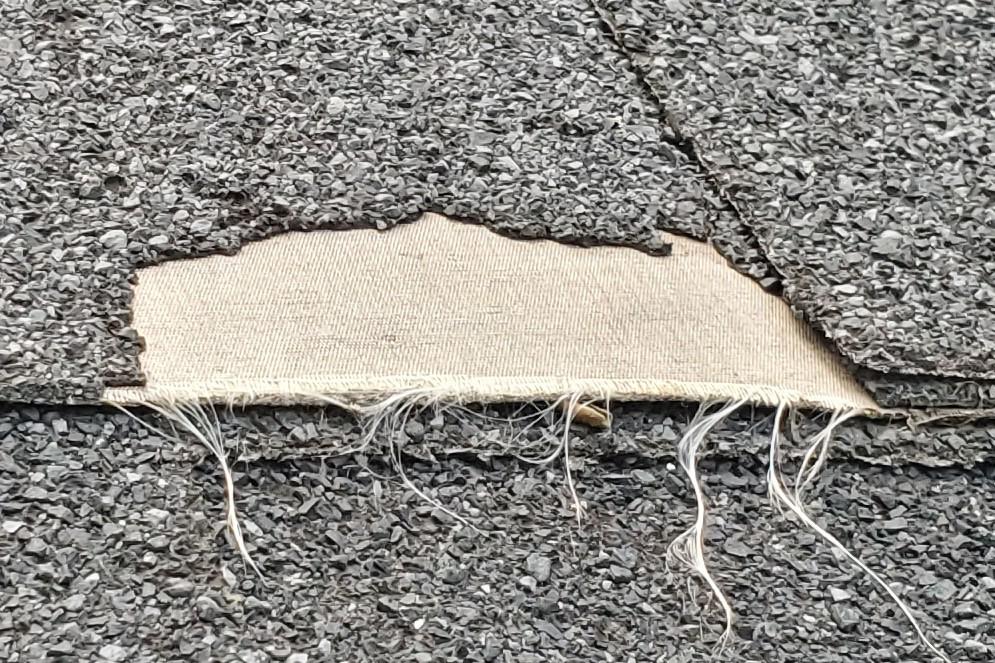
Recently had a new roof installed (Dec 2021) and I thought they were IKO shingles (per the contract) but after speaking with IKO they can not identify my shingles that were installed 16 months ago,
they say their architectural style shingles are made with a non woven fiberglass mat and that the tooth size doesn't match theirs, my shingles are showing a tightly woven jute/burlap type of fabric underneath the asphalt that had broken away. My shingles look like soggy wet cardboard and swell when wet.
I'm looking for some help to identify my shingles as everything I've researched here in the US and in Canada don't have a tightly woven natural type fiber mat or core. The contractor say's IKO and IKO say's they aren't and that they have never seen shingles like mine.
I also asked on the website Ask A Roofer and their opinions were the same as IKO and unable to identify them too.
Really worried about all the roof issues I'm having since having a new installed.
Thank you
On 2023-04-07 by InspectApedia Editor - defective roof shingles installed - is that a one-off "splice shingle"
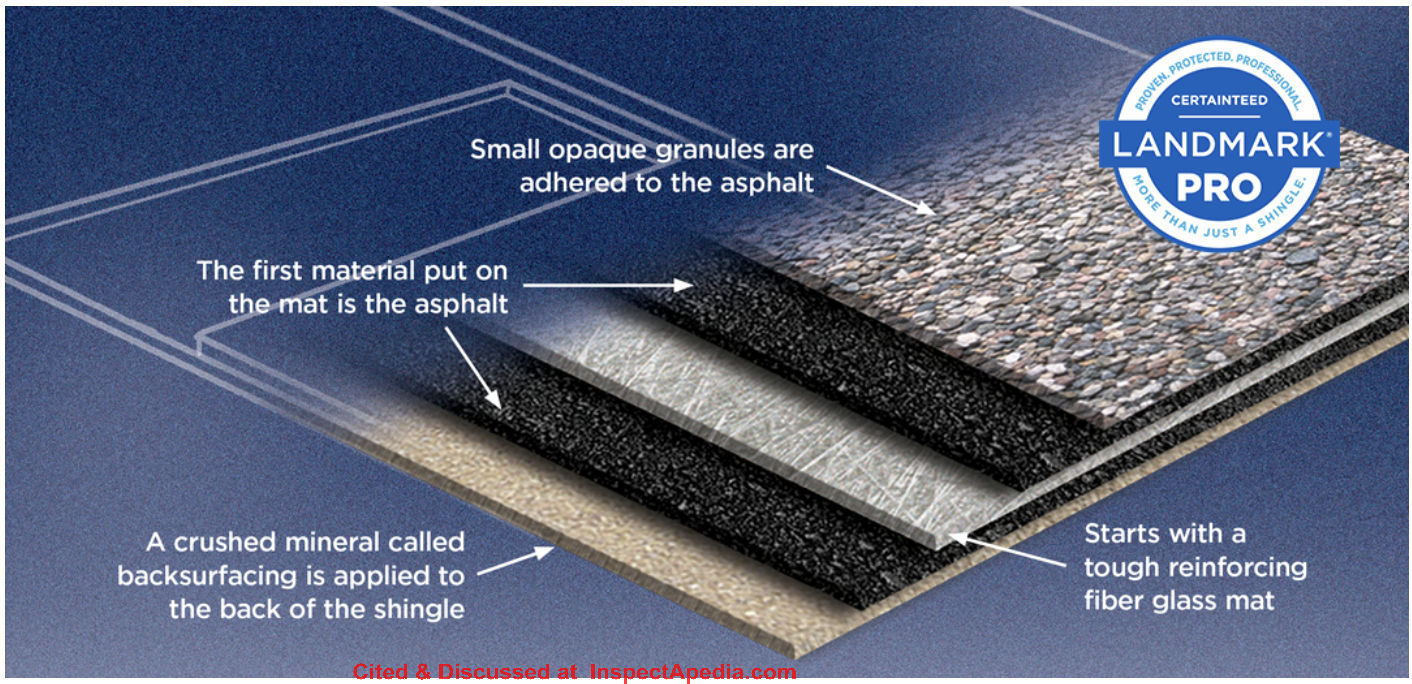
(Above: Asphalt shingle components from CertainTeed - original source https://blog.certainteed.com/2022/02/the-anatomy-of-a-shingle/ )
@Melanie Mix,
It looks like a defective product in which there is no asphalt impregnation of what looks like a canvas shingle backer, and the granular surface is not adhered to the backer.Watch out: Possibly that's a "one-off" splice shingle used to keep the asphalt shingle material moving at the factory. If so there should be just one or very few of these on your roof.
In the asphalt roof shingle factory on the production line, successive rolls of asphalt shingle raw material may be spliced together to keep the shingle cutting machine running. On occasion a "splice" gets made into shingles that ought to have been taken out of the package but were missed by everyone.
That could explain this odd case that looks as if there is canvas backing on your shingle.
That's more likely if there are just one or two of these odd shingles on your roof. If there are many of them, it's probably something else.
See details at
SPLICE DEFECTS on ASPHALT SHINGLES
If the roofer continues to insist that those are Iko shingles, he should be able to give you a receipt for their purchase.
If not I suspect he could be held obligated to replace the roof since there's no shingle manufacturer warranty and the product isn't that for which you contracted.
I suspect the roofing contractor is not going to want to do that (it's a big loss to the roofer) so you may end up in small claims court.
Frankly if you don't trust the roofer you may not want him to do the repair work.
Do you have any photographs of the roof work in process and in particular of the packaging of the shingles?
I'll do some further research to see if we can find something. But I have to say that like Iko, that's a shingle I have never seen before.
Let me know what happens and let me know if you have more information about the product from a receipt or from photos.On 2023-04-07 by Melanie
@InspectApedia Editor ,
Thank you so much for looking into this for me, I have been searching high and low for any information on these shingles for the past 6 months to no avail and when the manufacture even say's they aren't theirs,I kind of don't know where else to seek some advice, so I really do appreciate the input.
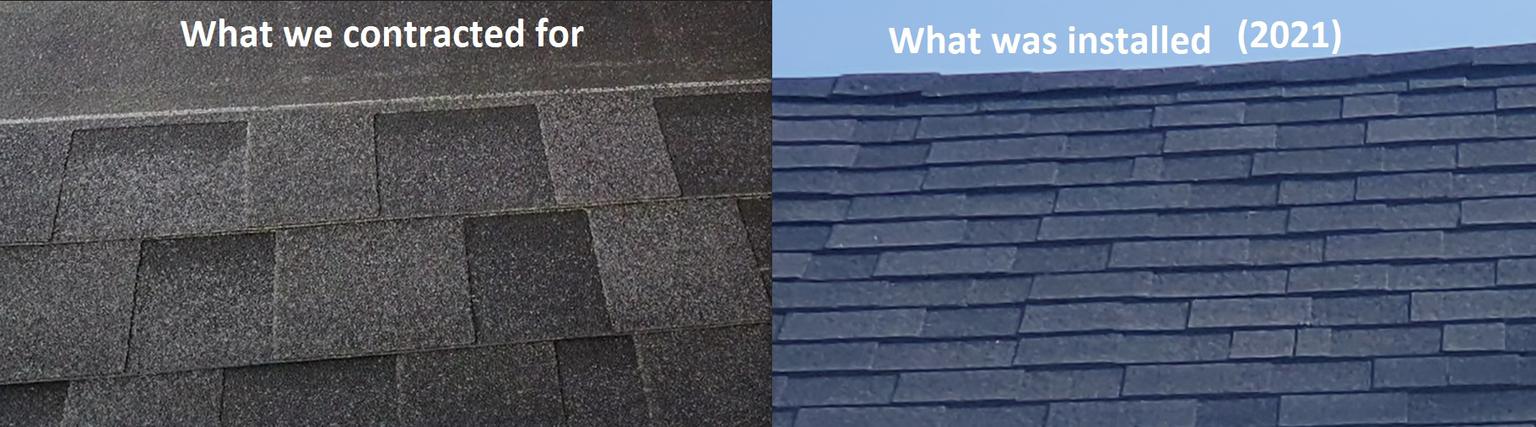
They do resemble IKO with the straight cut, but as IKO mentioned the tooth size doesn't match theirs, I'll add a side by side picture.
Sadly I don't have any pictures of the beginning stages of the roof install as at the time we trusted the professionals we had contracted with, it wasn't until the siding was started that we started noticing that something just don't seem right and started documenting a lot more.
IKO had mentioned that they have batch numbers on the back of their shingles, so I think I will have to remove and replace to get that number. The issue I'm coming down to is matching them as
IKO's look so different. Thank you again for the assistance.
On 2023-04-07 by InspectApedia Editor - wrong shingles installed - separate issue from that one bad shingle
@Melanie
Those are two completely-different shingle products.
Your Iko photo is of a laminated asphalt shingle that's intended to resemble cedar shakes or shingles in pattern on a roof.
Your photo of the shingles on your roof are a very different pattern, a combination of strip shingles - long tabs - with shorter tabs, and without that more-regular recessed, shaded shingle segment shown on the Iko shingle photo.On 2023-04-08 by Melanie
@InspectApedia Editor ,
I agree, I have no clue how to repair something that doesn't match anything I've looked at (sadly a repair is all I can do at the moment), hence my reason for asking as many places I can if anyone can identify them, do you think they are a mix of brands?
I am unable to find long tab shingles, just the flat 3 tab kind.
What is written on my contract is, Shingle Brand - IKO Cambridge, Type - Arch, Color - Dual Black, sadly that's all I have to go on.
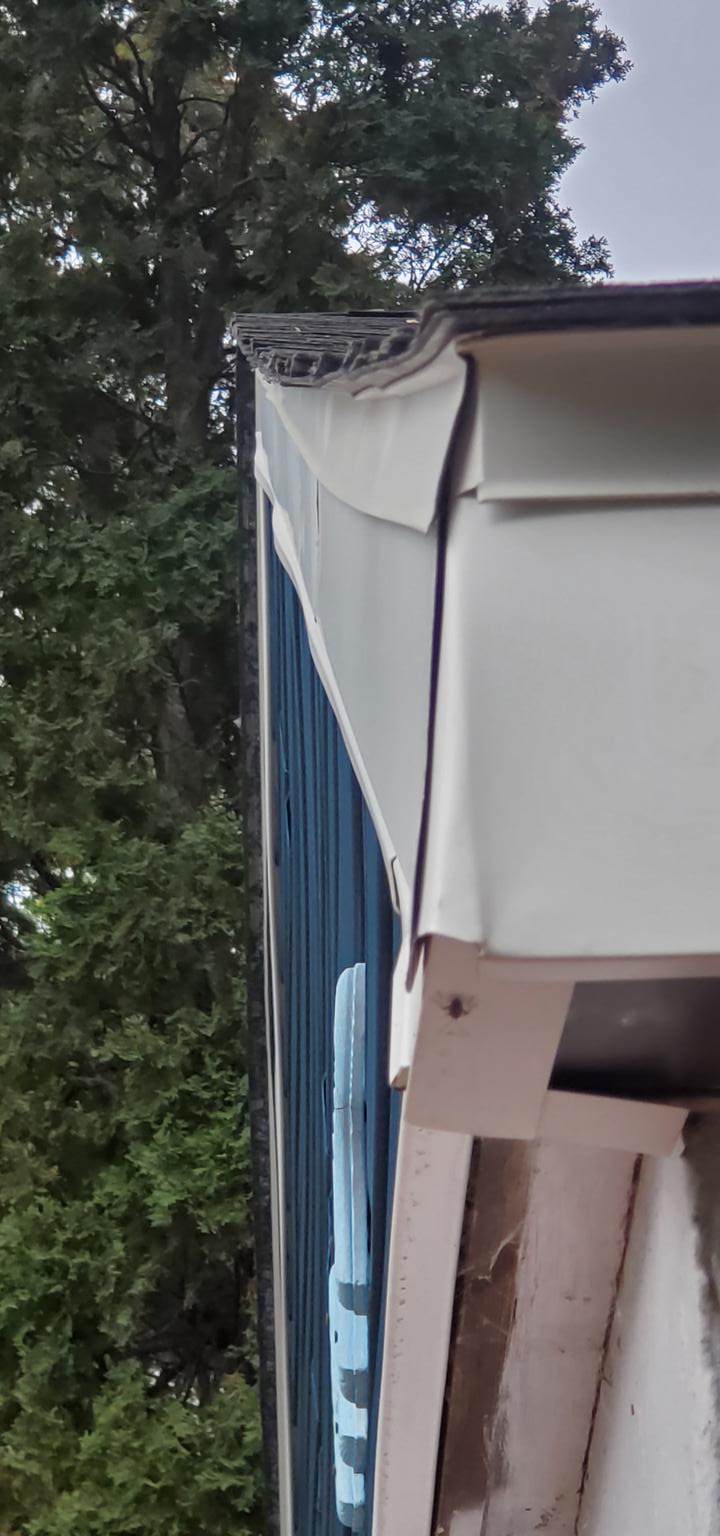
About 6 months after install I noticed the garage shingles starting to curl upwards and looking like cardboard with a slight dip in the corner of the roof, with in the next 6 months the roof was caving in with the siding buckling and bowing along with it,
the response from the contractor was it's an old house (was built 1950's). The shingles were installed in the middle of winter with a high of 21 F on that day, I remember asking the contractor if it was too cold to do and was told no it's fine, silly me was gullible and trusted them.
I don't know what they did to my roofs, but they look older now after 16 months old then the 20 year old shingles that were replaced.
I do have a structural engineer coming out on the 17th of this month so fingers crossed they may have some answers, they are already informed with lots of pictures to hopefully get a heads up on the situation.
I'm very concerned and confused as so far no one has been able to put a name to them.
I've added a recent picture of my garage with the now caving in roof. (It will be tarped after the Engineer has been out). The edges just look like cardboard to me.
My old shingles were a 3 tab and I broke a piece off an old spare one I had and I could clearly see fiberglass hair like strands sticking out, these new ones have no fiberglass, just the natural looking jute/burlap fabric, they are also a lot thicker then my old ones.
On 2023-04-08 by InspectApedia Publisher - Don't confuse structural problems on a building with a shingle type or brand.
@Melanie,
Let me know what your engineer has to say, and let me know what happens when you obtain a copy from your roofer of the receipt indicating what shingles he bought. And where he bought them and in what quantity on what dates -- that you can match to the work done on your home.
1. That canvas-like material is uncommon., even if it's a splice single.
IKO must be able to say whether or not they use it.
2. Post a photo or several, one per comment, showing roof condition. Splice shingles are few in number and ought not be all over a roof.
3. What's needed is the identity of the installing roofer and a copy of their receipt as showing where the shingles were bought and the product brand and model.
Finally, don't confuse structural problems on a building with a shingle type or brand.On 2023-07-03 by Melanie
@InspectApedia DF, Oh gosh, my apologies for not replying sooner, with everything going on I'm a tad overwhelmed. You could be right with it being a splice. I would hope that IKO knows the material they use to splice together their shingles and could identify it if it popped up like this.
The engineer came over and did a full inspection and sadly it's not good news there either, but to put it short and to the point of this post, they took measurements of the shingles and his words when measuring them "I've never seen anything like them, they are odd".
In the final report, it states that the shingles could not be verified as IKO, they are also crumbling, tearing and are splitting as well as pitting (per the report photo's), we also have these areas where they are creating a peak of sorts, a funny looking upside down V, we were informed it's because the sheathing is not proper for the type of shingle that was installed so the shingles are moving.
I have sent IKO another email asking for their measurements including tooth size measurement. I wish I was able to purchase a bundle of IKO shingles so I can lay them side by side and take measurements myself, but for some reason you have to be a contractor to purchase them and we never had any left here incase of these issues.
I don't know if I should keep trying to find out what they are, as per the engineer report, both our siding and roofs need to be redone or it will continue to decline quickly. Our siding and roof is not even 2 years old and it's all falling apart.
Thank you for any and all your insight to this. Very helpful.
On 2023-03-16 by Jason - Roofer Dispute over what color was installed
Selling home. New roof to be installed 2 days before closing. Roofer was informed that he needed to contact me do to hoa guidelines on shingle colors option of 2.
He ignored request to properly contact me so i could contact hoa and initiate process . He did roof his way, wrong color, and now hoa has problem and going to start to fine us. Roof is less than 2 weeks old.
Now buyers are hold 20k price i paid for roof, in case hoa does not approve, which will result in them keeping escrow to pay for a new roof that’s less than 2 weeks old. What can i do? This is on roofer!
On 2023-03-18 by InspectApedia Editor - wrong color shingles don't match HOA regulations
@Jason,
The good news is that since you are selling your home, and since you certainly would not enter into such an important contract without help from a real estate attorney, this is a legal question that you should bring to her as soon as possible.
Bring along complete documentation including the copy of your roofing contract, your home owners' association requirements, and photo-documentation of the shingles installed.If you can do so, photograph the packaging from the shingles too - look in local trash if they're not still on the ground at your house - so that you know the shingle manufacturer and product identification in complete detail.
Keep us posted. And use the "add image" button to post a photo of your new roof along with a note telling us the country and city of location.
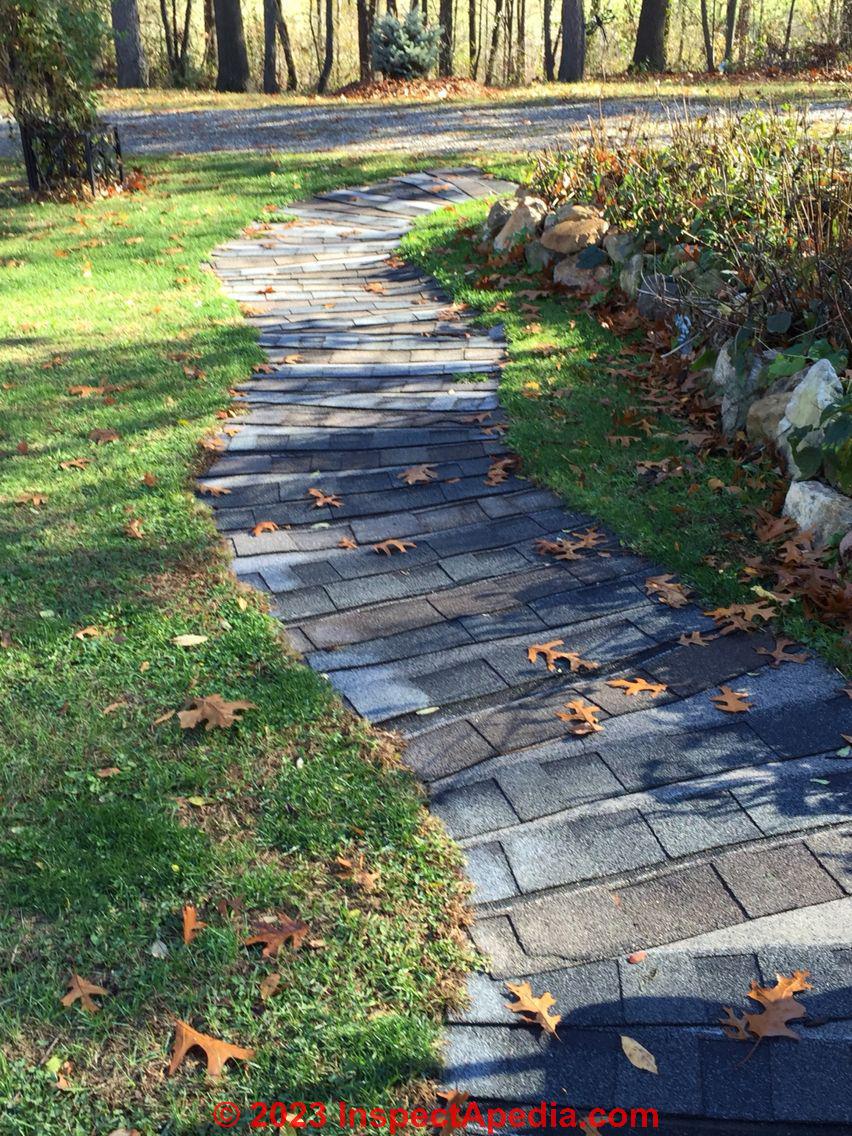
On 2022-07-26 by InspectApedia-911 (mod) - recycled use of roof shingles to make walkway
newpost
Thank you for the photo and shingle recycling idea - using stripped roof shingles as a walkway.
If stripped roof shingles are in good condition, indeed they may retain enough flexibility to be placed on the ground as a walking surface. Too often, in our own experience, by the time roof shingles need to be stripped from a roof there are multiple layers and shingle materials are fragile and brittle; the stripped material is also full of roofing nails.
We like the idea of re-using materials however. Nice photo.
For our readers: newpostroofing is in Fredricksburg, Virginia
Email: sales@newpostroofers [dot] com
Phone: 540-701-4173
Web: newpostroofers [dot] com
On 2022-07-26 by InspectApedia-911 (mod)
Re-posting without dis-allowed link (protect readers & website)
New Post Roofers · 11 hours ago
This is an amazing repository of roofing information. We have added a reference link to our website, thanks! We would like to share our newest blog article on alternative uses for roof tiles and shingles. Roof tiles can be reused or recycled, which is typically better than ending up in a landfill.
newpostroofers [dot]com /can-roof-tiles-be-reused-or-recycled/
Thank you again for putting this trusted roofing site together.
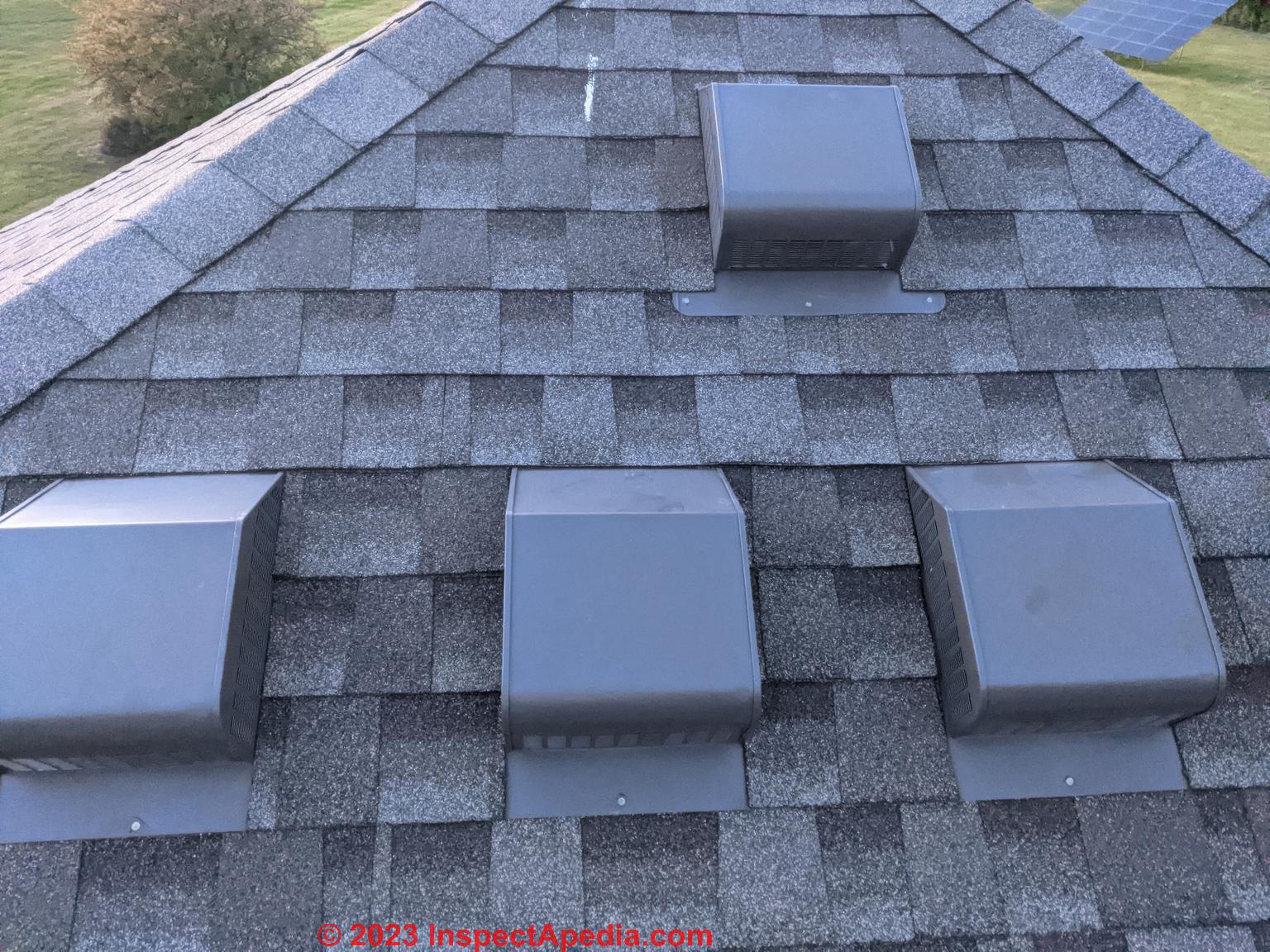
On 2022-10-04 by InspectApedia-911 (mod) - box vent installation on hip roof
@Chris Moody,
I can't see enough of all of the important details for those spot vents to say whether or not they are properly installed.
For example the flashing may be or may not be incorrect.
It looks to me as if someone's trying to vent a hip roof, which admittedly is difficult as there is no Ridge line on that roof area , but there are some special products for that purpose if you need better ventilation.
You can find those by searching this website for
hip roof ventilation.
On 2022-10-04 by Chris Moody
do these box vents look properly installed? The shingle at the back slope of the vents is actually creeping up the vents, and the shingle isnt stuck down across the 3 vents. They didnt trim around the vents at all.
On 2022-07-07 by Chris Moody
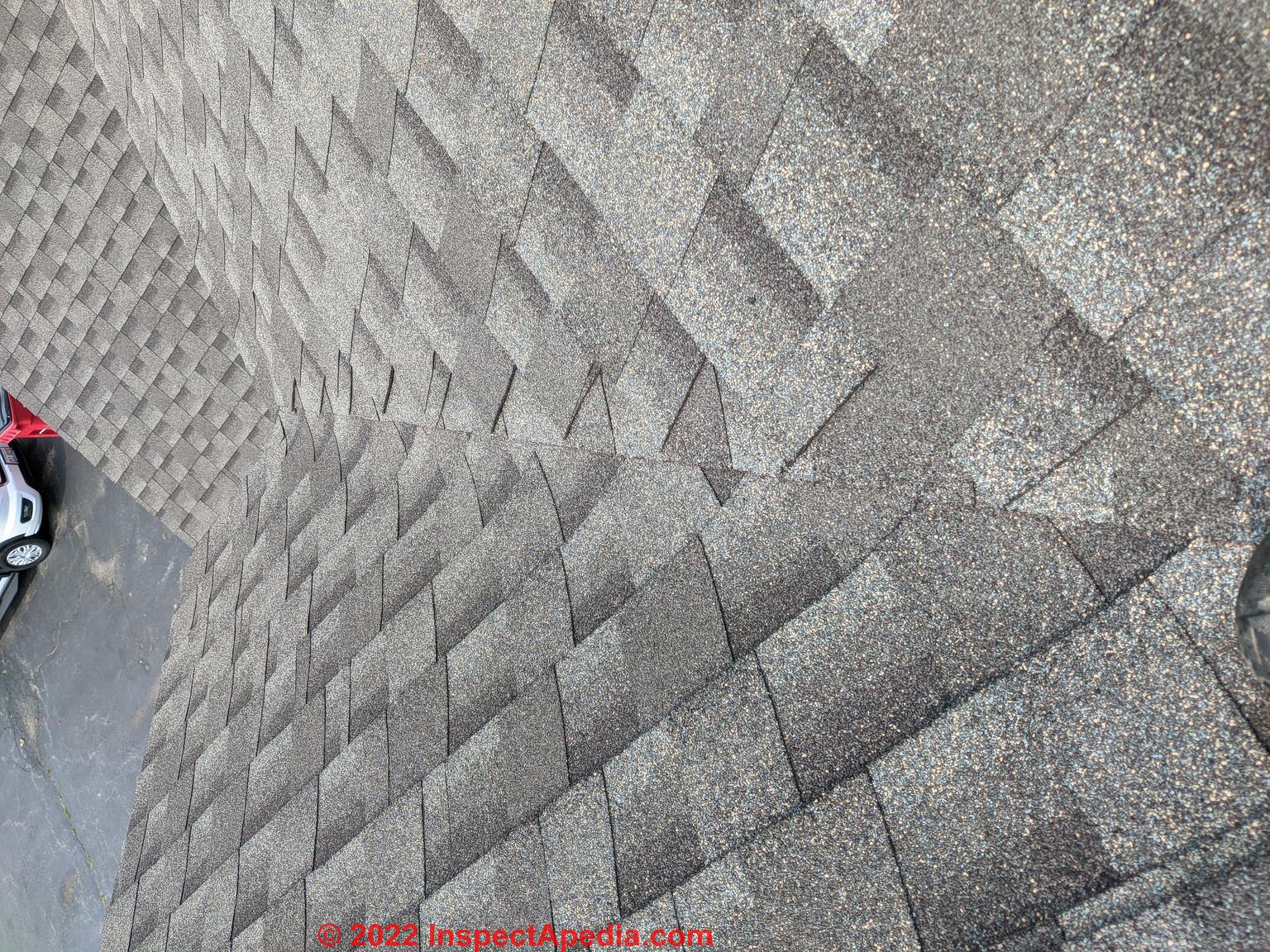
@InspectApedia-911, I believe California cut valley is not the same as closed cut because closed cut doesn't use the vertical shingle show here which goes opposite the pattern of the other shingles? closed cut would be overlapped from either side?
On 2022-07-06 by InspectApedia-911 (mod) - proper installation of asphalt roof shingles at ridge and valley
@Chris Moody,
Thank you for the helpful comment. I think perhaps you're using California Valley as a synonym for closed valley?
On 2022-07-06 by Chris Moody
@Chris Moody,
On 2022-07-06 by Chris Moody
@InspectApedia-911, it looks like a California cut valley based on the vertical shingle. This type of valley is not recommended by GAF.
Thank you to our readers for their generous comments
On 2023-10-19 by Jane
@InspectApedia DF, Thank you so much. The help you so generously provide to people (through the volume of information you've amassed and your willingness to answer people's questions) is an exceptional public service!
...
Continue reading at ALGAE, FUNGUS, LICHENS, MOSS on ROOFS or select a topic from the closely-related articles below, or see the complete ARTICLE INDEX.
Or see ROOFING INSPECTION & REPAIR FAQs - questions and answers posted originally on this page
Or see these
Recommended Articles
- ALGAE, FUNGUS, LICHENS, MOSS on ROOFS
- BEST ROOFING PRACTICES
- ROOF ARCHITECTURAL STYLES
- ROOFING INSPECTION & REPAIR - home
- ROOFING MATERIALS, AGE, TYPES
- ROOF STRUCTURE DEFECTS LIST
- STAIN DIAGNOSIS on ROOFS
Suggested citation for this web page
ROOFING INSPECTION & REPAIR at InspectApedia.com - online encyclopedia of building & environmental inspection, testing, diagnosis, repair, & problem prevention advice.
Or see this
INDEX to RELATED ARTICLES: ARTICLE INDEX to BUILDING ROOFING
Or use the SEARCH BOX found below to Ask a Question or Search InspectApedia
Ask a Question or Search InspectApedia
Share this article:Ask a Question or Search the InspectApedia website using the box just below.
Need to make a private comment? Email editor@inspectApedia.com. We welcome email with your website content critique, corrections, suggestions or questions. Email is monitored daily but our workload may prevent an immediate reply. For immediate results, we hope you'll first try asking your question using the search box just above.
Citations & References
In addition to any citations in the article above, a full list is available on request.
- ROOF ASSEMBLIES & ROOFTOP STRUCTURES [PDF], Chapter 8 of the 2013 California Building Code, California Office of State Fire Marshal, retrieved 2017/10/28, original source http://osfm.fire.ca.gov/codedevelopment/pdf/wildfire protection building construction/2013-Part-2-CBC-Sec1505.pdf
- ROOF COVERINGS & BEST PRACTICES [PDF] FEMA, retrieved 2017/10/28, original source https://www.fema.gov/media-library-data/ 20130726-1706-25045-9347/chapter8.pdf
- "Choosing Roofing," Jefferson Kolle, January 1995, No. 92, Fine Homebuilding, Taunton Press, 63 S. Main St., PO Box 5506, Newton CT 06470 - 800-888-8286 - see http://www.taunton.com/FineHomebuilding/ for the magazine's website and for subscription information.
- Owens Corning Corporation, One Owens Corning Parkway
Toledo, Ohio 43659
U.S.A.
Telephone: (419) 248-8000
Fax: (419) 248-5337
http://www.owenscorning.com Owens Corning is credited as the inventor of fiberglass when Owens Illinois [O-I] researcher Dale Kleist and his colleague John Thomas stumbled onto and then realized the significance of producing glass fibers in 1932. O-I formed a joint venture with the Corning Glass Works in 1935, leading to the formation of Owens Corning Corporation in 1938. More on Owens Corning's history is at
- Focus, Toledo, Ohio, Owens-Corning Fiberglas Corporation, October 1988. "A History of Innovation," http://www.owenscorning.com, 1997.
- Stewart, Thomas A., "Owens-Corning: Back from the Dead," Fortune, May 26, 1997.
- International Directory of Company Histories, Vol. 20. St. James Press, 1998.
- "Two-Year Wisconsin Thermal Loads for Roof Assemblies and Wood, Wood–Plastic Composite, and Fiberglass Shingles [on file as Roof_Thermal_Loads.pdf] - ", Jerrold E. Winandy Michael Grambsch Cherilyn A. Hatfield, US Department of Agriculture, US Forest Products Laboratory, Research Note FPL-RN-0301
- MASONITE WOODRUF® ROOFING OR MASONITE OMNIWOOD® SIDING LAWSUIT SETTLEMENT NOTICE - PDF file
- ARMA - Asphalt Roofing Manufacturer's Association - Asphalt Roofing Manufacturer's Association - https://www.asphaltroofing.org/
750 National Press Building, 529 14th Street, NW, Washington, DC 20045, Tel: 202 / 207-0917 - ASTM International, 100 Barr Harbor Drive, PO Box C700, West Conshohocken, PA, 19428-2959 USA The ASTM standards listed below can be purchased in fulltext directly from http://www.astm.org/
- NRCA - National Roofing Contractors Association - Website: www.nrca.net 10255 W. Higgins Road, Suite 600, Rosemont, IL 60018-5607, Tel: (847) 299-9070 Fax: (847) 299-1183
- UL - Underwriters Laboratories - https://www.ul.com/
2600 N.W. Lake Rd.
Camas, WA 98607-8542
Tel: 1.877.854.3577 / Fax: 1.360.817.6278 E-mail: cec.us@us.ul.com - copy on file as /roof/Roofing_Historic_NPS .pdf Roofing for Historic buildings", Sarah M. Sweetser, Preservation Brief 4, Technical Preservation Services, National Park Service, U.S. Department of the Interior, web search 9./29.10, original source:
http://www.nps.gov/history/hps/tps/briefs/brief04.htm - copy on file as /roof/Asbestos-to-Zinc_Metal_Roofing_NPS .pdf From Asbestos to Zinc, Roofing for Historic buildings, Metals", Technical Preservation Services, National Park Service, U.S. Department of the Interior, web search 9./29.10, original source:
http://www.nps.gov/history/hps/tps/roofingexhibit/metals2.htm - copy on file as /roof/Asbestos-to-Zinc_Metal_Roofing_NPS_3 .pdf From Asbestos to Zinc, Roofing for Historic buildings, Metals-part II, Coated Ferrous Metals: Iron, Lead, Zinc, Tin, Terne, Galvanized, Enameled Roofs", Technical Preservation Services, National Park Service, U.S. Department of the Interior, web search 9./29.10, original source:
http://www.nps.gov/history/hps/tps/roofingexhibit/metals.htm - copy on file as /roof/Asbestos-to-Zinc_Metal_Roofing_NPS_4 .pdf From Asbestos to Zinc, Roofing for Historic buildings, Metals-part III, Slate", Technical Preservation Services, National Park Service, U.S. Department of the Interior, web search 9./29.10, original source:
http://www.nps.gov/history/hps/tps/roofingexhibit/slate.htm - copy on file as /roof/Asbestos-to-Zinc_Metal_Roofing_NPS_5 .pdf From Asbestos to Zinc, Roofing for Historic buildings, Metals-part IV, Wood", Technical Preservation Services, National Park Service, U.S. Department of the Interior, web search 9./29.10, original source:
http://www.nps.gov/history/hps/tps/roofingexhibit/slate.htm - copy on file as /roof/Asbestos-to-Zinc_Metal_Roofing_NPS_5 .pdf From Asbestos to Zinc, Gutters", Technical Preservation Services, National Park Service, U.S. Department of the Interior, web search 9./29.10, original source:
http://www.nps.gov/history/hps/tps/roofingexhibit/gutters.htm - copy on file as /roof/Asbestos-to-Zinc_Metal_Roofing_NPS_2 .pdf From Asbestos to Zinc, Roofing for Historic buildings, Metals- Roofing Today", Technical Preservation Services, National Park Service, U.S. Department of the Interior, web search 9./29.10, original source:
http://www.nps.gov/history/hps/tps/roofingexhibit/roofingtoday.htm - copy on file as /exterior/NPS_Preserv_Brief_16_Subs_Mtls.pdf The Use of Substitute Materials on Historic Building Exteriors ",
Sharon C. Park, AIA, Preservation Brief 16, Technical Preservation Services, National Park Service, U.S. Department of the Interior, web search 9./29.10, original source:
http://www.nps.gov/history/hps/tps/briefs/brief16.htm - Best Practices Guide to Residential Construction, by Steven Bliss. John Wiley & Sons, 2006. ISBN-10: 0471648361, ISBN-13: 978-0471648369, Hardcover: 320 pages, available from Amazon.com and also Wiley.com. See our book review of this publication.
- Decks and Porches, the JLC Guide to, Best Practices for Outdoor Spaces, Steve Bliss (Editor), The Journal of Light Construction, Williston VT, 2010 ISBN 10: 1-928580-42-4, ISBN 13: 978-1-928580-42-3, available from Amazon.com
- The Journal of Light Construction has generously given reprint permission to InspectAPedia.com for this article. All rights and contents are ©Journal of Light Construction and may not be reproduced in any form.
- Architectural elements: the technological revolution: Galvanized iron roof plates and corrugated sheets; cast iron facades, columns, door and window caps, ... (American historical catalog collection), Diana S Waite, available used out of Amazon.
- Asphalt Roofing Residential Manual from ARMA the Asphalt Roofing Manufacturers Association Website https://www.asphaltroofing.org/product/residential-asphalt-roofing-manual/ ,
- Building Pathology, Deterioration, Diagnostics, and Intervention, Samuel Y. Harris, P.E., AIA, Esq., ISBN 0-471-33172-4, John Wiley & Sons, 2001 [General building science-DF] ISBN-10: 0471331724 ISBN-13: 978-0471331728
- Building Pathology: Principles and Practice, David Watt, Wiley-Blackwell; 2 edition (March 7, 2008) ISBN-10: 1405161035 ISBN-13: 978-1405161039
- Built-Up Roof Systems, Manual, C.W. Griffin, Mcgraw-Hill (Tx); 2nd edition (July 1982), ISBN-10: 0070247838, ISBN-13: 978-0070247833
- Concrete Folded Plate Roofs, C. Wilby PhD BSc CEng FICE FIStructE (Author), Butterworth-Heinemann, 1998, ISBN-10: 0340662662, ISBN-13: 978-0340662663
- Concrete Shell Roofs, C. Wilby PhD BSc CEng FICE FIStructE (Author),
- Concrete Dome Roofs (Longman Concrete Design and Construction Series),
- Concrete Roofing Tile, History of the, Batsford, 1959, AISN B000HLLOUC (available used)
- Copper Roofing, by CDA
- Copper Roofing, Master specifications for copper roofing and sheet metal work in building construction: Institutional, commercial, industrial, I.E. Anderson, 1961 (hard to find)
- Corrugated Iron, Building on the Frontier, Simon Holloway
- Green Roof Plants: A Resource and Planting Guide, Edmund C. Snodgrass, Lucie L. Snodgrass, Timber Press, Incorporated, 2006, ISBN-10: 0881927872, ISBN-13: 978-0881927870. The text covers moisture needs, heat tolerance, hardiness, bloom color, foliage characteristics, and height of 350 species and cultivars.
- Green Roof Construction and Maintenance, Kelley Luckett, McGraw-Hill Professional, 2009, ISBN-10: 007160880X, ISBN-13: 978-0071608800, quoting: Key questions to ask at each stage of the green building process Tested tips and techniques for successful structural design Construction methods for new and existing buildings Information on insulation, drainage, detailing, irrigation, and plant selection Details on optimal soil formulation Illustrations featuring various stages of construction Best practices for green roof maintenance A survey of environmental benefits, including evapo-transpiration, storm-water management, habitat restoration, and improvement of air quality Tips on the LEED design and certification process Considerations for assessing return on investment Color photographs of successfully installed green roofs Useful checklists, tables, and charts
- Historic Slate Roofs : With How-to Info and Specifications, Tina Skinner (Ed), Schiffer Publishing, 2008, ISBN-10: 0764330012 , ISBN-13: 978-0764330018
- Low Slope Roofing, Manual of, 4th Ed., C.W. Griffin, Richard Fricklas,
McGraw-Hill Professional; 4 edition, 2006, ISBN-10: 007145828X, ISBN-13: 978-0071458283
- Roof failure causes in depth (and specific methods for avoiding them)
- Roof design fundamentals and flourishes, based on voluminous industry research and experience
- New technologies and materials -- using them safely and correctly
- Comprehensive coverage of all major roofing systems pecifications, inspection, and maintenance tools for roofing work
- Metal Roofing, an Illustrated Guide, R.A. Knowlton , [metal shingle roofs],
- Patio Roofs, how to build, Sunset Books
- Problems in Roofing Design, B. Harrison McCampbell, Butterworth Heineman, 1991 ISBN 0-7506-9162-X (available used)
- Roofing The Right Way, Steven Bolt, McGraw-Hill Professional; 3rd Ed (1996), ISBN-10: 0070066507, ISBN-13: 978-0070066502
- Slate Roofs, National Slate Association, 1926, reprinted 1977 by Vermont Structural Slate Co., Inc., Fair Haven, VT 05743, 802-265-4933/34. (We recommend this book if you can find it. It has gone in and out of print on occasion.)
- Roof Tiling & Slating, a Practical Guide, Kevin Taylor, Crowood Press (2008), ISBN 978-1847970237,
If you have never fixed a roof tile or slate before but have wondered how to go about repairing or replacing them, then this is the book for you. Many of the technical books about roof tiling and slating are rather vague and conveniently ignore some of the trickier problems and how they can be resolved. In Roof Tiling and Slating, the author rejects this cautious approach. Kevin Taylor uses both his extensive knowledge of the trade and his ability to explain the subject in easily understandable terms, to demonstrate how to carry out the work safely to a high standard, using tried and tested methods.
This clay roof tile guide considers the various types of tiles, slates, and roofing materials on the market as well as their uses, how to estimate the required quantities, and where to buy them. It also discusses how to check and assess a roof and how to identify and rectify problems; describes how to efficiently "set out" roofs from small, simple jobs to larger and more complicated projects, thus making the work quicker, simpler, and neater; examines the correct and the incorrect ways of installing background materials such as underlay, battens, and valley liners; explains how to install interlocking tiles, plain tiles, and artificial and natural slates; covers both modern and traditional methods and skills, including cutting materials by hand without the assistance of power tools; and provides invaluable guidance on repairs and maintenance issues, and highlights common mistakes and how they can be avoided. The author, Kevin Taylor, works for the National Federation of Roofing Contractors as a technical manager presenting technical advice and providing education and training for young roofers. - In addition to citations & references found in this article, see the research citations given at the end of the related articles found at our suggested
CONTINUE READING or RECOMMENDED ARTICLES.
- Carson, Dunlop & Associates Ltd., 120 Carlton Street Suite 407, Toronto ON M5A 4K2. Tel: (416) 964-9415 1-800-268-7070 Email: info@carsondunlop.com. Alan Carson is a past president of ASHI, the American Society of Home Inspectors.
Thanks to Alan Carson and Bob Dunlop, for permission for InspectAPedia to use text excerpts from The HOME REFERENCE BOOK - the Encyclopedia of Homes and to use illustrations from The ILLUSTRATED HOME .
Carson Dunlop Associates provides extensive home inspection education and report writing material. In gratitude we provide links to tsome Carson Dunlop Associates products and services.
 |
HOME | ABOUT | ASK a QUESTION | CONTACT | CONTENT USE POLICY | DESCRIPTION | POLICIES | PRIVACY | |
| © 2026 - 1985 Publisher InspectApedia.com - Daniel Friedman | |||||||||