 Chimneys & Flue Draft Measurement & Setting FAQs
- POST a QUESTION or COMMENT about inspecting and adjusting the barometric damper or draft regulator on oil fired heating equipment
Questions & answers about how to measure draft at heating equipment or at chimneys.
This article series explains the methods of measurement and proper adjustment settings for draft regulators or barometric dampers on oil fired heating equipment.
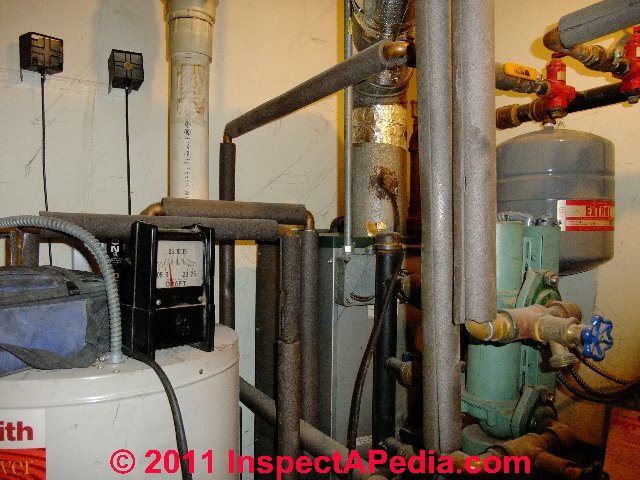
Page top photo: my draft gauge sits atop the water heater (arrow 1 at left in the photo) and its measuring tube has been inserted into a test hole in the breech or flue vent connector of this oil fired boiler (arrow 2 in the photo).
InspectAPedia tolerates no conflicts of interest. We have no relationship with advertisers, products, or services discussed at this website.
- Daniel Friedman, Publisher/Editor/Author - See WHO ARE WE?
Chimney or Heating Appliance Flue Draft Q&A
These questions & answers about measuring or adjusting chimney or flue draft were posted originally at DRAFT MEASUREMENT, CHIMNEYS & FLUES - be sure to read the detailed advice given there.
Article Contents
- DEFINITION of CHIMNEY DRAFT NUMBERS - MEANING OF INCHES OF WATER COLUMN
- FIREPLACE DRAFT MEASUREMENTS?
- WHEN to MEASURE DRAFT
- HOW to USE a DWYER DRAFT GAUGE - for residential chimneys or flues? Doubtful.
...
What does +.02WC Draft mean?
I'm having a problem understanding the +.02 w.c. under the barometric damper on my oil furnace.
- The flue temp is 470°F
- O2 = 8
- CO2 = 9
- I have a chimney liner that's 20 feet high. On 2018-02-24 by Joe
Reply by (mod) - Explanation of inches of water column as chimney draft & what goes wrong
Joe
I'll be glad to(try to) help.If you are saying that the draft seems too low, I agree if you are measuring it at the flue above your heater.
Typically I might see - 0.02 over the fire and may be twice that in the breech just below the damper.
And notice that chimney or flue draft measurement numbers will always be a negative number sinc we're measuring in effect a "suction" force that draws flue gases up the chimney. If the draft measurement were positive that would tell us that air is blowing down the chimney and your heater would not work properly, perhaps backdrafting.
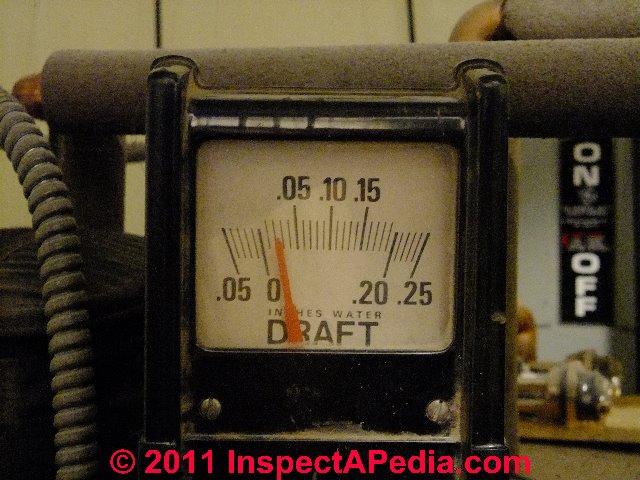
In my photo just above of my Bachrach draft gauge, notice that the red needle is just past the second index line above zero - this is a -.02" w.c. of draft - reasonable if I'm taking this measurement over the fire.
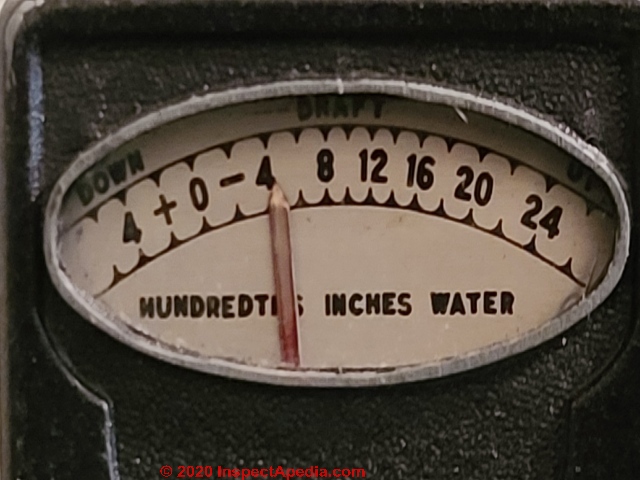
In my photo below, using my minature draft gauge, look more closely at the scale. Notice that at the right hand scale where most readings and all acceptable draft readings will be found, the numbers are negative.
The definition of positive (draft) is, however a pressure. It could, less elegantly be called a negative pressure or "suction".
Regardless of its direction (upwards or negative draft or pushing down or positive draft), it's measured in inches of water column or (in. w.c.) - a measure of the pressure that would be exerted by a column of water of that height.
We could translate inches of water column (in. w.c.) into psi as follows:
28" w.c. = 1 psi at 39.2°F or 4°C.
or
1" w.c. = .0360912 psi
So doing a little arithemetic, if we measure 0.05" w.c. and we are curious how many psi that would be, we calculate as follows.
1" w.c. = 0.036 psi then how much pressure is created by just 0.05 inches of water? (That's 5 hundredths of an inch, not 5 tenths of an inch!)
.05 x 0.36 = 0.0018 psi or a bit under two thousandths of an inch of draft.
That makes sense when you think about it. The force of draft in a chimney exerted by rising warm gases is hardly going to be equal to the force a garden hose!
All we need is enough draft that the flue gases want to exit at the chimney top rather than leaking into the building where they kill everyone.
For more details,
Take a look at DRAFT REGULATOR, DAMPER, BOOSTER for a review of the topic.
Also review DRAFT MEASUREMENT, CHIMNEYS & FLUES to be sure you're making the measurement correctly.
Watch out: if you measured your draft of 0.02" w.c. in the breech over your heater (not down at the fire) then we need to look for causes of inadequate draft such as:- damper open too far
- inadequate combustion air
- chimney leaks
Watch out: I've stumbled across a tech who was about to replace a "bad boiler" because she couldn't get proper draft.We took a look at the wall below the chimney, behind the boiler: the chimney cleanout door was wide open! That alone will explain poor chimney draft.
So, it's not just chimney height (20 ft should be enough) that we need to look at, it's also seeing what else is going on.
Outisde, down drafts, missing chimney cap, sometimes even roof shape or terrain features can also foul up draft.
See CHIMNEY DRAFT & PERFORMANCE where we start our discussion of the causes of and cures for inadequate draft.More information is at WATER PRESSURE per FOOT of HEIGHT
...
When to Measure Chimney Draft FAQs
Can draft be measured with the burner off?
Can the draft at the breech be measured with burner shut off or running and is that measurement (-5) always the same - (Mar 4, 2012) Donald Horvath
Reply: yes but not completely
Sure, you can measure draft in a flue or chimney (provided there is a suitable opening) any time, but let's keep in mind just what you are measuring.
If you measure chimney flue draft when the heating equipment is OFF you are measuring natural convection in the chimney, air leaks or heat loss up the flue, or a temporary condition.
The draft we see at a chimney is affected by temperature, barometric pressure, the chimney top or cap design, chimney condition: leaks, damage, obstructions, and other factors that indeed have some impact on the heating equipment when the burner is running.
But what you are NOT measuring is what the oil burner is seeing when it is running, nor can you properly adjust the oil burner air intake nor the barometric damper itself when the oil burner is off.
The burner needs to run and the system reach operating temperatures to make those measurements and adjustments.
Can I wait to measure and adjust draft after a future installation of a chimney liner?
I'm having a new chimney liner installed and I have a 3 year old boiler that was just serviced and had a combustion test.
The chimney installers told me I will need a new combustion test after they install the liner due to change in draft.
My furnace company can't get out for about 9 days after the liner. Is that an issue, or should it be tested and adjusted sooner? Thanks - On 2019-11-27 by Tom M
Reply by (mod) - No: safety concerns mean check/fix bad oil burner draft ASAP
Tom
The problem is that you might be okay but nobody with any sense is going to bet your life on a system they know nothing about.Your chimney installer is absolutely correct that changing the chimney changes the draft and that in turn could change how your heating system is operating.
In a minor case it is operating less efficiently.
But
Watch out:In the more serious case it's actually unsafe.
The system needs to be checked asap for safety.
...
Fireplace Draft Measurement FAQs
How do I measure fireplace draft?
How do i measure the draft in my chimney for a fireplace? - (Oct 22, 2012) fireplace chimney draft
Reply:
It is possible to measure fireplace chimney draft by making a suitable test opening into the chimney flue but this is not a usual practice and not something I recommend.
Measuring by waving an instrument at the fireplace opening or chimney top is in my opinion a waste of time, inaccurate, misleading, not useful.
So I think what most people do is
- Make sure that the chimney flue is of a reasonable size and of course of proper material for fireplace venting
See FIREPLACE FLUE SIZE SPECIFICATIONS - Make a visual observation of the adequacy of fireplace venting when they build a small fire in the fireplace, keeping an eye out for smoke curling up out of the fireplace and staining the hearth face.
See details at CHIMNEY DRAFT & PERFORMANCE
...
Do it yourself Draft Measurement FAQs
I adjusted my oil burner's draft myself - without any measurements
I don't have a Damper. it's a Rheem with a Becket .
I was having soot problems an started opening the shutters an it got better. I have no gages,is there such thing as to much air.6 techs couldn't figure it out I went on line an did it my self. - (3/3/2014) Steve Harris
Reply: DIY draft adjustment on an oil burner fired heating appliance is not a great idea, may be unsafe, wasting fuel
Yes Steve - too much combustion air will have these effects:
1. system runs too hot - potentially dangerous, as a fire hazard
2. system efficiency falls - more and more heat goes up the chimney instead of into the building
"techs couldn't figure it out" is odd; give your service manager a call, discuss the concern, ask for help from an experienced technician. No heating company likes to hear that you messed with the system.
Their completely reasonable fear is that you made the system unsafe but that they'll get blamed if something happens.
In the old days we could guesstimate oil burner adjustment (with slow speed 1725 rpm) motors: we'd blow cigar smoke at the air shutter and see it go in = adequate draft.
We'd spit on the flue vent connector and see it sizzle (about 450 F which was OK if a teensy hot) - but today's equipment, running at higher speed and higher efficiency, also requires training and tools to set up properly.
And Steve, if there is NO draft regulator installed, that alone indicates trouble, a compromise, a draft problem in the equipment or chimney, and it means that it is impossible to keep the system running at optimum and correct settings all the time.
Messed up my Draft settings for Canadian built Duo-Matic furnace
I am glad I found this commentary and photo descriptions. I have a Canadian built Duo-Matic furnace that uses fuel oil, and or wood/coal as a heating source. It is a hot air unit currently utilizing all three fuels.
Somehow I managed to get the damper 180 degrees from where it should be. I had the weights at the top. This may have happened during cleaning. I shifted them to the bottom and now the draft works as it should. - On 2019-02-12 by ehw2010
Reply by (mod) -
Eh
Sorry for the confusion but the fact is there are some draft Regulators that work correctly with the weight above the hinge and other models that work directly with the weight below the hinge.
For that reason it's really important to get the correct installation instructions for the draft regulator brand and model that you are installing.If you give me those details for yours and if you don't have those instructions I will help find them.
...
How do I Use a Dwyer 2300 Draft Gauge to measure chimney draft?
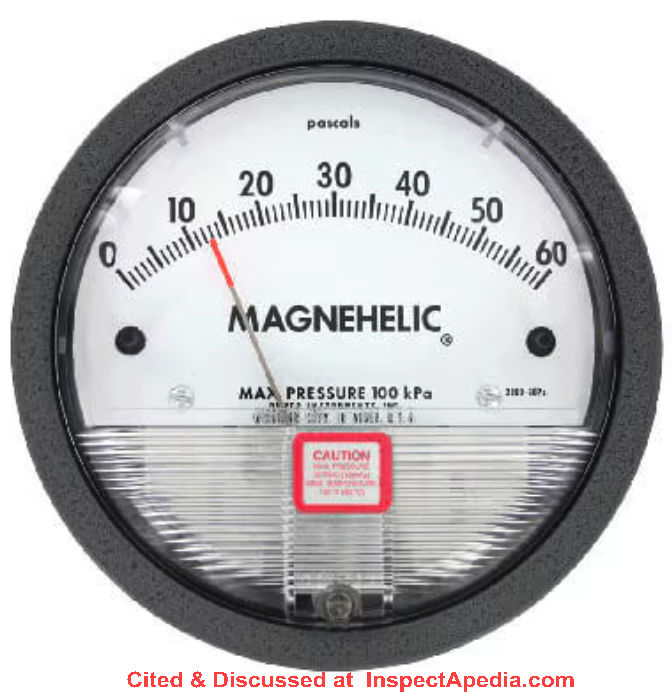 I have a Dwyer 2300 draft gauge to measure draft in my chimney.
Do I do this with the burner running, and hot gasses going out, or cold? I don't want to destroy the gauge. - (Apr 7, 2015) Chris
Reply:
To measure draft the burner must be on and should have run long enough that the flue, chimney, and heater are up to full operating temperature.
The temperatures can be quite hot - depending on your heating fuel. Oil fired heaters can produce temperatures anywhere from 300 to 1200 degF. (normal would be around 450F measured in the breech)
The draft gauge should have a metal probe that can tolerate high temperature.
Otherwise you've got something wrong. In this case you are not using the proper instrument.
Simple draft gauges sold for use with heating equipment are probably less precise than the Dwyer 2300 but are designed to include an appropriate stack or flue vent connector probe.
Also their scale is optimized for the range of draft for which heating equipment normally operates.
Give Dwyer Instruments a call at 1 800.872.9141 or contact the company at
DWYER INSTRUMENTS, INC. P. О. ВОX 373 MICHIGAN CITY, INDIANA 46360, U.S.A.Watch out: this gauge is not designed nor intended for measuring residential heating appliance or fireplace chimney drafts. See these instructions:
- Dwyer Series 2000 Magnehelic Air Filter Gauges IO Manual [PDF] (at Dwyer)
- Dwyer No A-610 Pipe Mounting Kit - for installing Dwyer gauges [PDF] (at Dwyer)
...
...
Continue reading at DRAFT MEASUREMENT, CHIMNEYS & FLUES - topic home, or select a topic from the closely-related articles below, or see the complete ARTICLE INDEX.
Or see these
Recommended Articles
- CHIMNEY DRAFT & PERFORMANCE
- CHIMNEY HEIGHT & CLEARANCE CODE required height of a chimney above the building roof.
- CHIMNEY HEIGHT EXTENSIONS
- CHIMNEY RESERVE DRAFT MEASUREMENT
- COALSTOVE DRAFT CONTROL
- CREOSOTE FIRE HAZARDS
- DAMPERS & DRAFT REGULATOR TYPES
- DRAFT INDUCER FANS
- DRAFT MEASUREMENT, CHIMNEYS & FLUES
- DRAFT REGULATOR, DAMPER, BOOSTER - home - inspection points, defects, hazards
- DRAFT REGULATORS / HOODS GAS HEATERS - on gas fired equipment
- DRAFT REGULATOR SOOT INSPECTION
- FIREPLACE & WOODSTOVE CONTAMINANTS
- PELLET STOVE DRAFT CONTROL
- WOOD STOVE, CATALYTIC PUFF-BACKS
- WOODSTOVE DRAFT CONTROL
- WOOD STOVE DRAFT TEST
- WATER PRESSURE per FOOT of HEIGHT
Suggested citation for this web page
DRAFT MEASUREMENT & ADJUSTMENT FAQs at InspectApedia.com - online encyclopedia of building & environmental inspection, testing, diagnosis, repair, & problem prevention advice.
Or see this
INDEX to RELATED ARTICLES: ARTICLE INDEX to HEATING SYSTEMS
Or use the SEARCH BOX found below to Ask a Question or Search InspectApedia
Or see
INDEX to RELATED ARTICLES: ARTICLE INDEX to CHIMNEYS & FLUES
Or use the SEARCH BOX found below to Ask a Question or Search InspectApedia
Ask a Question or Search InspectApedia
Share this article:Search the InspectApedia website
Need to make a private comment? Email editor@inspectApedia.com. We welcome email with your website content critique, corrections, suggestions or questions. Email is monitored daily but our workload may prevent an immediate reply. For immediate results, we hope you'll first try asking your question using the search box just above.
Citations & References
In addition to any citations in the article above, a full list is available on request.
- In addition to citations & references found in this article, see the research citations given at the end of the related articles found at our suggested
CONTINUE READING or RECOMMENDED ARTICLES.
- Carson, Dunlop & Associates Ltd., 120 Carlton Street Suite 407, Toronto ON M5A 4K2. Tel: (416) 964-9415 1-800-268-7070 Email: info@carsondunlop.com. Alan Carson is a past president of ASHI, the American Society of Home Inspectors.
Thanks to Alan Carson and Bob Dunlop, for permission for InspectAPedia to use text excerpts from The HOME REFERENCE BOOK - the Encyclopedia of Homes and to use illustrations from The ILLUSTRATED HOME .
Carson Dunlop Associates provides extensive home inspection education and report writing material. In gratitude we provide links to tsome Carson Dunlop Associates products and services.
 |
HOME | ABOUT | ASK a QUESTION | CONTACT | CONTENT USE POLICY | DESCRIPTION | POLICIES | PRIVACY | |
| © 2026 - 1985 Publisher InspectApedia.com - Daniel Friedman | |||||||||