 Toilet Repair Q&A
- POST a QUESTION or COMMENT about this article topic.
Toilet Repair FAQs:
Questions & answers about how to diagnose and fix a toilet: how to fix a clogged toilet, slow flushing toilet, or a noisy or leaky toilet? How do toilet valves & controls work? How do I fix a toilet that is loose or wobbly. These replies to reader questions help diagnose and fix most toilet troubles.
This article series discusses the cause, diagnosis, and repair of toilet problems (water closet problems) such as a toilet that does not flush well, clogged toilets, slow-filling toilets, running toilets, loose wobbly toilets, and odors at leaky toilets. Here we explain how to diagnose and repair problems with toilets, leaks, flushes, odors, noises, running and wasted water.
InspectAPedia tolerates no conflicts of interest. We have no relationship with advertisers, products, or services discussed at this website.
- Daniel Friedman, Publisher/Editor/Author - See WHO ARE WE?
Toilet Fill, Flush, Drain, Odor, Noise, Problem FAQs
Questions & answers about how to repair toilet problems, posted originally
at TOILET REPAIR GUIDE - home - be sure to review the toilet trouble diagnosis and repair advice given there.
Also see our index to all toilet troubleshooting and repair questions and answers at TOILET REPAIR FAQs
Article Index
- TOILET WATER RISES HIGH in BOWL then SUDDENLY FLUSHES
- POWER TOILET FLUSH TROUBLE - SIPHONING
- USING HOT WATER TO FLUSH TOILET
...
Our Toilet Gets High Water in the Bowl Followed by a Sudden Flush
New house: My when I flush the bowl fills up to the top (likes it's going to overflow...but doesn't) and then finally flows out quickly.
When I opened the tank to inspect, there were two bricks in the tank. Clog or too much water? How to determine? And how to fix? Please advice.On 2017-08-19 by Patti
by (mod) - Sound more like a drain clog
Patti
Bricks in the toilet flush tank are a "trick" we used to use to reduce the flush water volume in older toilets. And I'd agree that if there's not enough flush volume the toilet may flush poorly.
But from your description it sounds to me as if the drain is clogged or there is a missing or blocked plumbing vent.
What's happening is that the greater volume of water in the toilet bowl when it's filled to nearly the rim top is enough to force the flush water past a nearby obstruction in the toilet drain line.
Sometimes that high water volume in the bowl will temporarily clear the obstruction - such as a wad of toilet paper - but if the drain line is partially blocked, say by a hard obstruction, it will collect softer waste such as toilet paper and build up anew until the toilet is blocked again.
See these articles for detailed suggestions and then let me know if questions remain and we'll take it from there.TOILET CLOG REPAIR, UN-BLOCK
TOILET FLUSHES POORLY slow draining or inadequate flush water volume
...
Power Flush Toilet Operating Problems FAQs
Tip: See POWER TOILET FLUSH TROUBLE - SIPHONING
Power flush toilet problems: water surging in bowl
Have 2 bathrooms with a common wall between them. Now have 2 new toilets, back to back on the common wall between them.
When one flushes the water bounces in the opposite bowl and the water level in the bowl not flushed slowly drops.
It is a straight run between the 2 toilets, the pipe crossing the drain at a right angle (older house).
Assuming the water is being flushed with greater force than in the old toilet, and that it is being pushed across the straight run causing the bounce in they other bowl, why is the bowl water level dropping? On 2018-03-10 by Mark
Explanation by (mod) - back to back toilets, flush siphons water out of bowl
Mark
I think that you've diagnosed the root cause: faster or more-powerful flush of the new toilet.I add in speculation that that more powerful surge of wastewater into the drain, perhaps combined with marginal venting of the toilets, is siphoning some of the water out of the idle toilet on the other side of the wall.
Several plumbers have commented at InspectApedia that power flush toilets installed back to back and flushing into a common drain are particularly prone to these problems.
Just removing water from the bowl will not trigger the now-lower-bowl-water-level-toilet to add makeup water from the tank.
This situation might, if the toilet bowl water level is too low, also cause poor-flushing at that toilet.
Fixes for poor flush include setting the flush tank water level a bit higher and investigating and fixing any vent inadequacy.
When I flush one toilet water splashes up in the other one
I have 2 second floor toilets back to back in separate rooms. Its works fine until 1 toilet was replaced. Now when I flush the new one
water splashes up in the other toilet. The plumber will not return my calls.
On 2015-08-16 by Michael
Answer by (mod): 3 solutions to splashy pressure-assisted flush toilet problems
Michael, if your toilets are power-flush units it's common for toilets plumbed close together on the same drain, perhaps even back to back, to cause the splash-up problem you describe.
First consider reducing your bulding's water pressure a bit to see if that fixes the trouble. While it won't change pressure (just flow volume) you can also try partly closing the water supply valve to the toilets.
If that doesn't work for you you could install a pressure reducing valve right on the water supply line to the toilets themselves. That would allow you to leave the rest of your building's water pressure undisturbed.
If your toilet is a power flush model that permits adjustments, you may be able to reduce the trouble by adjusting the power flush to the minimum volume and pressure needed for a clean toilet flush.
See this
- SLOAN FLUSHMATE TOILET REPAIR PARTS & TROUBLESHOOTING GUIDE [PDF] Sloan, Pressure-Assisted Toilets or call Flushmate custeomer support at +1 (800) 533-3460 Local copy saved as Sloan-Pressure-Assist-Water-Closets-MaintGuide.pdf
Our "Water conservation toilets" (Power flush toilets) Through Fecal Waste Up onto the Toilet Seat Lid
Ever since we had "water conservation" toilets installed every flushing throws fecal matter up onto the underside of the toilet lid. I am sick of cleaning this off.
Guests of course wouldn't know to do this so the next person sitting down is actually resting their back against dried fecal matter. How do I fix this? I mentioned it to a plumber once and his response was "...a lot of people complain about that.." Hello??!
Is there a fix? Thanks. On 2016-10-09 by MetalTiger
by (mod) - how to fix a power-flush toilet that splashes
Good question, Tiger.
Fixing a splashing or too-strong power-flush type toilet:
Power-flush toilets can misbehave in ways similar to conventional flush toilets: e.g. running, or a weak flush. those troubles are typically fixed by adjustment and cleaning, for example you may need to clean the intake screen on the water supply assembly.A Sloan flushmate toilet that runs may be caused by insufficient water pressure to the toilet or simply misadjustment of the actuator flush rod or push-button.
A clogged inlet screen can cause the same troubles as low water pressure.
But
Excessive power in a power-flush toilet can splash sewage so unpleasantly that it can drive users back to the outhouse.The trouble may be simply one of adjustment of the power flush system, or it may require cleaning or repair of the air regulator.
First: check the water level in the toilet bowl after the toilet has been flushed and the flush-tank refill cycle has completed.If the toilet bowl water level is too high that can cause splashing.
Some flush systems allow adjustment of the bowl fill level, some by a simple plastic squeeze valve mounted on (or added onto) the plastic tube conducting water to the toilet bowl during toilet tank refill.
Next: check for an obstruction, crud, debris blocking the front of the toilet bowl = a source of splash-up. (and unlikely IMO)
Next: check the building water pressure level and compare that with the operating range specified by your power flush toilet brand and model. Send me (page bottom CONTACT) a photo of the toilet, its flush mechanism, labeling, model name and I can help research this for you.If the incoming water pressure is too high you will need to install a pressure regulator to drop it back. Just closing a supply valve part way won't fix the trouble.
Next: check for mineral or crud clogging the water holes around the toilet rim.During a toilet flush water directed out of the bowl rim is designed to clean the bowl and to assist the flush. But if the holes are clogged too much water may be directed through other holes or through the primary water supply path causing ugly splashing or a "too-strong toilet flush" that is downright violent.
A newly-installed Flushmate type toilet probably won't have rim hole clogs.In that case, since the pressurizing system is set at the factory and is not user adjustable, you're left with installing a whole-house pressure regulator
OR
a pressure regulator on a water line supplying jut the toilet Set that output pressure down to closer to the minimum operating pressure of the power flush toilet, typically 20-30 psi.
let us know how that works for you.
Last: replace the toilet.Really? Yes. Some power flush toilets suffered from such bad behavior that they were recalled.
Joe Barrett reported on this in the Wall Street Journal (Barrett, Joe, "High-Pressure Toilets Shake Up Bathrooms" The Wall Street Journal, Dec. 18, 2002), noting that pressure assist flush toilets were particularly noisy and troublesome.
A Kohler power flush toilet model actually could break (talk about dangerous!) and was recalled. Later power-flush toilet models should have corrected the worst of these problems.
More instruction manuals and details are at LOW WATER USAGE / POWER FLUSH TOILETS
...
Is it OK to use HOT water to flush my toilet?
Hallo,
The cold water in my room doesn't work and it needs some time to repair that.
But I need to use the toilet, I use that now with pouring the hot water (a bucket) to have power directly in the toilet.
It works but I am afraid if it will ruin the toilet itself.
Will it ruin something if I just pouring the hot water directly in to the toilet? Thank you On 2017-04-26 by Schaefer
Answer by (mod) - warnings about over filling a toilet tank and about using very hot water to flush the john
Schaefer
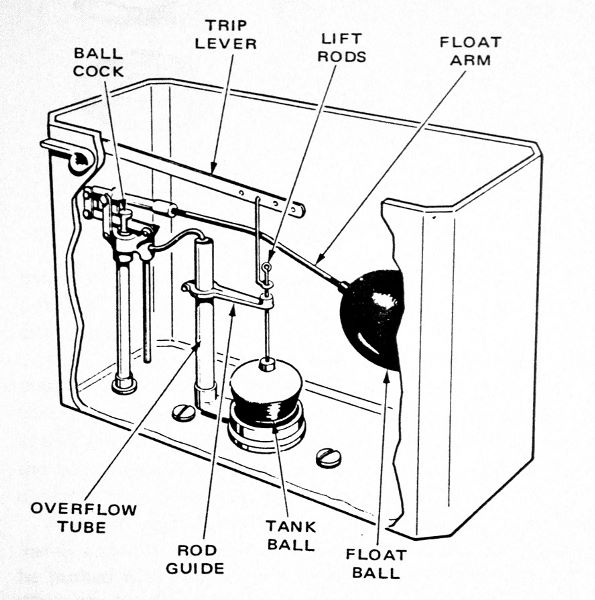
It's perfectly fine to us a plastic container to fill the toilet flush tank UP TO THE WATER LINE MARKED in the TANK in order to flush the toilet.
Watch out: Don't overfill the tank or water may spill out around the toilet flush lever.
Watch out: If your only water supply is hot water, I would let the container of hot water cool before pouring it into the toilet.I'd say if you can put your hands into the hot water comfortably then it's probably not so hot as to cause damage to the toilet.
Do not pour very hot water into the flush tank as that might damage plastic parts therein. You say you're not doing that, so what about pouring hot water directly into the toilet bowl?
I would not pour very hot water into a very cold ceramic toilet tank as it might crack the tank itself.
If you prefer, as I do, objective data, then if your hot water is at 100°F (37.7°C) or below, it's safe to pour into a toilet.
Supporting expert source:
- WA DHA, How hot is the hot water in your home? Washington State Department of Health & Human Services, citing in turn the American Burn Association, the May Clinic, the U.S. Department of Energy, and the U.S. Fire Administration - sources on avoiding scalding burns. Local copy saved as Hot-Water-Temperature-WA-DDA.pdf
...
...
Continue reading at TOILET REPAIR GUIDE - topic home, or select a topic from the closely-related articles below, or see the complete ARTICLE INDEX.
Or see these
Recommended Articles
- BLOCKED DRAIN REPAIR
- CLOGGED DRAIN DIAGNOSIS
- SEPTIC SYSTEM INSPECT DIAGNOSE REPAIR onsite waste disposal systems - septic tanks, drainfields
- SEWER GAS ODORS
- TOILETS, INSPECT, INSTALL, REPAIR - home
- TOILET TYPES, CONTROLS, PARTS - home
Suggested citation for this web page
TOILETS REPAIR FAQs-4 at InspectApedia.com - online encyclopedia of building & environmental inspection, testing, diagnosis, repair, & problem prevention advice.
Or see this
INDEX to RELATED ARTICLES: ARTICLE INDEX to TOILET INFORMATION
Or use the SEARCH BOX found below to Ask a Question or Search InspectApedia
Ask a Question or Search InspectApedia
Share this article:Search the InspectApedia website
Need to make a private comment? Email editor@inspectApedia.com. We welcome email with your website content critique, corrections, suggestions or questions. Email is monitored daily but our workload may prevent an immediate reply. For immediate results, we hope you'll first try asking your question using the search box just above.
Citations & References
In addition to any citations in the article above, a full list is available on request.
- In addition to citations & references found in this article, see the research citations given at the end of the related articles found at our suggested
CONTINUE READING or RECOMMENDED ARTICLES.
- Carson, Dunlop & Associates Ltd., 120 Carlton Street Suite 407, Toronto ON M5A 4K2. Tel: (416) 964-9415 1-800-268-7070 Email: info@carsondunlop.com. Alan Carson is a past president of ASHI, the American Society of Home Inspectors.
Thanks to Alan Carson and Bob Dunlop, for permission for InspectAPedia to use text excerpts from The HOME REFERENCE BOOK - the Encyclopedia of Homes and to use illustrations from The ILLUSTRATED HOME .
Carson Dunlop Associates provides extensive home inspection education and report writing material. In gratitude we provide links to tsome Carson Dunlop Associates products and services.
 |
HOME | ABOUT | ASK a QUESTION | CONTACT | CONTENT USE POLICY | DESCRIPTION | POLICIES | PRIVACY | |
| © 2026 - 1985 Publisher InspectApedia.com - Daniel Friedman | |||||||||