
InspectAPedia® FREE Encyclopedia of Building & Environmental Construction, Diagnosis, Maintenance & Repair |
Question? Just ask us! InspectAPedia
|
 Diagnose and Cure Sewer Gas Smells and Septic Tank Odors
- POST a QUESTION or COMMENT about tracking down sewer gases, sewage odors, "rotten egg smells", and septic tank smells
Sewer or septic gas odor diagnosis & cure:
This septic or sewer gas odor cure article series, beginning here, describes how to diagnose, find, and cure odors in buildings including septic or sewage or sewer gas smells or "gas odors" in buildings with a focus on homes with a private onsite septic tank but including tips for owners whose home is connected to a sewer system as well.
What makes the smell in sewer gas?
Sewer gases are more than an obnoxious odor. They can be dangerous.
InspectAPedia tolerates no conflicts of interest. We have no relationship with advertisers, products, or services discussed at this website.
- Daniel Friedman, Publisher/Editor/Author - See WHO ARE WE?
How to Track Down & Cure Hard-to-Find Sewer Gas Odors in buildings
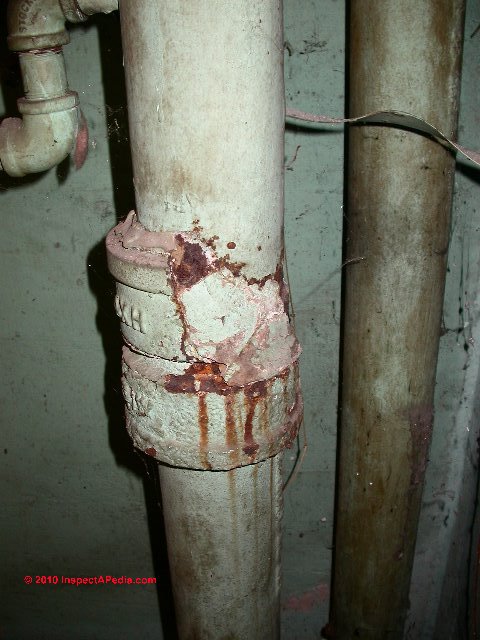 Watch out: we warn in all sewer or septic gas odor articles that because sewer gas contains
methane gas (CH4) there is a risk of an explosion hazard or even fatal asphyxiation.
Watch out: we warn in all sewer or septic gas odor articles that because sewer gas contains
methane gas (CH4) there is a risk of an explosion hazard or even fatal asphyxiation.
Article Contents
Sewer gases also probably contain hydrogen sulfide gas (H2S). In addition some writers opine that there are possible
health hazards from sewer gas exposure, such as a bacterial infection of the sinuses (which can occur due to any sinus irritation).
Depending on the sewer gas source and other factors such as humidity and building
and weather conditions, mold spores may also be present in sewer gases
Question: How do You Check & Track Down Sewer Gas Smells?
How do you measure or check sewer gases to see if the smell we have coming out of our bathroom is a gas or just a smell? and does it measure the smell/gas to see if its at a dangerous level? - K.E.
Hello, I read the article on sewer odors, it was very helpful, I would just like to know what service I should contact to diagnose the exact problem? Do I call a plumbing service, or a duct work service? I am in the dark as to who can actually, accurately, diagnose. - Anonymous by private email 2016/09/19
Reply: Start Tracking Down Sewer Gas or Septic Gas Indoor Odors Right Here: whom to call, what to do.
 Good questions, thanks for asking. Whom you need to call about a sewer odor problem depends on the situation.
- Watch out: If sewer gas odors or other gas odors are judged as strong in a building connected to municipal sewer and/or if municipal sewer or gas lines are present in the neighborhood, you need to consider both possible health hazards and the risk of a methane gas or natural or propane gas explosion.
For strong and especially sudden sewer gas odors and certainly for propane or natural gas odors I'd leave the building (along with all occupants) and call for help from emergency services.
This advice is a bit extreme, but I'm considering the problem of offering advice to a stranger in an unknown situation in a context where on occasion such catastrophes occur.
For example, as early as January 4, 1895 a sewer gas explosion occurred in the basement of Edward Keeley's Saloon in Chicago. (Eight men were injured.) On 29 May 1937 a sewer gas explosion sent a manhole cover airborne, killing a Chicago man.
Watch out: In addition, because some building occupants may mistake a gas leak for sewer gas, even more severe explosion hazards can be present. It would be smarter and safer to get out of such a building and call for help.
In June 2015 the National Transportation Board concluded that in 2014 a large explosion in East Harlem in Brooklyn NY that destroyed two five-story buildings and killed eight people was probably caused by a poorly welded joint in a Con Edison gas line and a break in an old city sewer line. The NTSB had previously found a leak in a cast iron gas main that had been installed in 1887.
Our photo shows Con Edison workers performing gas line replacement & repair work on Washington Avenue in Brooklyn, NY in April 2015.
In considering our warning above, it's worth noting that the NTSB panel also found that an emergency services dispatcher had failed to make a follow-up call to the New York Fire department, possibly preventing a partial evacuation of the destroyed buildings.
Con Edison, New York City's gas utility, in turn blamed the blast on negligent street maintenance. - Sources: Cavlieri, Victoria, "Crews Focus on Gas Line in NY Explosion", Duluth News Tribune, 17 March 2014; CBS New York, retrieved 2016/09/19, original source: http://newyork.cbslocal.com/2015/06/09/east-harlem-explosion-ntsb-report/
See also METHANE & SEWER GAS HAZARDS - If you smell sewer odors in a building but cannot find the source, a building inspector, home inspector, hygienist, or plumber might be able to help track down the origin of the smell, but it is economical and sensible to try to do some basic problem solving yourself first by noting where odors are strongest and checking for obvious snafus like a loose toilet, gurgling drains, or odors at a specific drain that my have a dry trap.
Many such inspectors supplement their visual inspection with gas detection instruments discussed below in this same article. - IF the sewer gas odor is traced to the plumbing drain/waste/vent system then you need the help of a licensed plumber to correct the problem. In addition to effecting necessary repairs, more sophisticated plumbers may perform a smoke or pressure test of the drain venting system and may also send a remote camera through the drain system to diagnose its condition.
- IF the sewer gas odor is due to a failing or blocked septic system (private onsite waste disposal system) you need a septic pumping company and then a septic repair contractor to diagnose and correct the system.
A competent onsite inspection by an expert usually finds additional clues that help accurately diagnose a problem. That said, here are some things to consider:
- About a specific bathroom where odors occur, that has already narrowed down the problem to a single room, in your case.
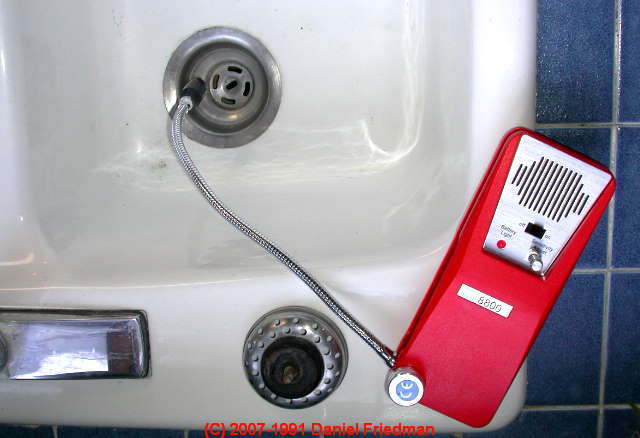
A visual inspection or further plumbing investigation might discover various causes of odor - there shouldn't be any other than of course normal bathroom odors occurring during use. Improper venting of plumbing drains, vent or sewer piping leaks, even a loose toilet can be a cause of the problem. - Narrow down the odor source: It may help to narrow down the problem to a specific fixture by testing with an instrument or your nose or by running fresh water into traps or by using a sensitive gas detection instrument such as the TIF8800
TIF 8800 GAS DETECTOR.
If odors are traced to gas piping the gas supply should be shut off immediately and depending on the level of gas odor the building evacuated.
See GAS LEAK DETECTION, LP / NG - About the hazard level of the sewer gas you smell: a measure of sewer gas or methane level might in some circumstances indicate an unsafe level (from an explosion risk perspective) but we wouldn't' rely on that approach since changing building conditions can cause big changes in the level of gas output.
The first potential hazard is an explosion; there may also be a bacterial or pathogenic hazard in the building, depending on just where the leak is and what is its cause - for example a leaky toilet seal may be leaking sewage into the ceiling below or onto a bathroom floor. More details are
at DANGEROUS SEWER GAS CONDITIONS
Also see TESTS for SEWER GAS INDOORS
andDRAIN PIPING & SEWER ODORS - At First Steps to Check for the Source and Cure of Sewer Gas Odors, [just below] we discuss diagnosing and fixing sewer gas odors. Please take a look at that text and don't hesitate to ask if that info is incomplete or unclear. Be sure to also see the list of sewer gas diagnosis and repair articles at the end of this article.
- Or see this separate SEPTIC / SEWER ODOR SOURCE TABLE
- Also see ODORS GASES SMELLS, DIAGNOSIS & CURE - topic home, where we offer a complete guide to tracking down the sources of smells & odors.
- Also see PLUMBING SYSTEM ODORS - home for guidance in tracking down plumbing smells
First Steps in Septic or Sewer Smell Diagnosis: Check for the Source and Cure of Sewer Gas Odors
What steps are useful to avoid smelling (or blowing up from) the gases that form and naturally want to escape from residential septic systems? How can we diagnose sewer odors at a building site to determine if it's a venting problem, a failure of the septic system, or the failure of a neighbor's septic system, or perhaps even a leak from a fuel gas line or appliance?
First Check for Very Dangerous Conditions: fuel gas leaks, sewer gas leaks, gas accumulation
 Watch out: both hydrogen sulfide gas and methane gas are potentially explosive
Check for leaks in fuel gas lines and appliances: the mercaptan put into LP gas and natural gas is inserted there by the
gas company as a safety feature so that people may notice that they have a dangerous (explosive) gas leak in
their home. Some people may confuse this odor with a septic tank gas odor.
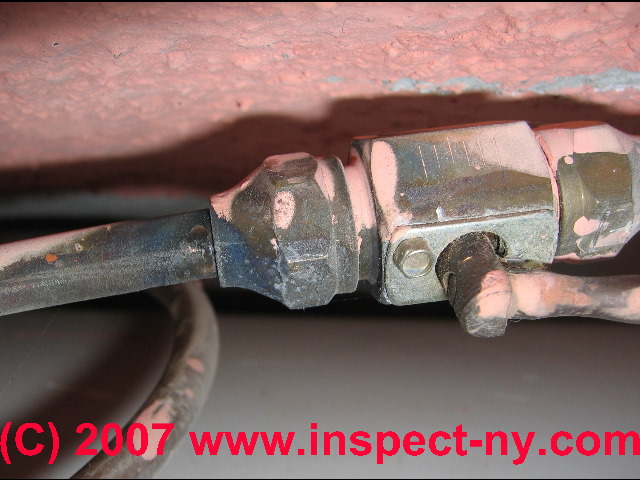
The photo shows black stains on copper tubing at the flare fitting connecting an LP gas line to a shutoff valve. Some service technicians
point to stains on piping as an evidence of a possible chronic leak in the gas line at this point.
If you suspect that there is a fuel gas leak in a home, or even if there is a gas odor from any source, leave the building and call
your fire department for assistance.
Even so simple a task as dialing a telephone could provide a dangerous spark and cause an explosion. In New York City there seems to be about one terrible gas explosion
a year that is blamed on either a fuel gas leak or a sewer gas leak which accumulated explosive gas in a building.
Also see GAS PIPING & TANK DEFECTS.
Observe septic system safety procedures When opening a septic tank for service or repair, observe the safety precautions I describe earlier on this web page.
We have had reports of a septic pumper having his face burned by exploding methane when he lit a cigarette during pumping, a homeowner who generated an explosion of the septic tank that rocked the entire neighborhood when he built a brush fire atop the septic tank.
We have also read of deaths occurring when untrained service people entered a pumped-out septic tank to inspect it.
Also Check for the presence of Chinese drywall: because it is easy to mistake other sulphur odors for sewer gas, if your building was built or remodeled between 2001 and 2007, especially in 2006 or 2007,
see
CHINESE DRYWALL HAZARDS - the corrosive outgassing of Chinese drywall can make smoke detectors and carbon monoxide detectors unsafe and it may also be an indoor air quality concern in some buildings.
At SEPTIC & CESSPOOL SAFETY we explain that gases produced in a septic tank are dangerous, as a potential source of explosion and as a cause of death by asphyxiation if someone falls into or deliberately enters a septic tank.
- See DRAIN PIPING & SEWER ODORS for the full discussion of odors from building drains & drain piping.
- See SEPTIC or SEWER PIPING LEAKS for odors from septic systems and sewer lines.
- See PLUMBING VENT DEFECTS & NOISES for an explanation of sewer gas leaks from building drain vent piping.
- Also see METHANE & SEWER GAS HAZARDS for more sewer gas test advice and reference material.
Also
see Using the TIF 8800 Gas Detector. - Illustrations of a leaky cast iron sewer line that sent sewer gases into the building's transite (asbestos cement) heating duct system can be seen
at TRANSITE PIPE AIR DUCTS
and
at CAST IRON DRAIN PIPING.
Hydrogen Sulfide Gas H2S Properties, Exposure Pathology, Symptoms, Treatment, Prognosis
In low concentrations (less than 0.15 mg per liter), hydrogen sulfide may produce inflammation of the eyes, nose, and throat if breathed for periods of 1/2 to 1 hour.
Higher concentrations (0.75 mg per liter or greater) are rapidly fatal, presumably by combination of the hydrogen sulfide with the respiratory tissue pigments and the subsequent paralysis of the respiratory center.
The symptoms depend upon the concentration of the gas. At the lowest concentrations, the effects are chiefly on the eyes; that is, conjunctivitis, swollen eyelids, itchiness, smarting, pain, photophobia, and blurring of vision. At higher concentrations, respiratory tract symptoms are more pronounced.
Rhinitis, pharyngitis, laryngitis, and bronchitis may occur. Pulmonary edema may result. At very high concentrations, unconsciousness, convulsions, and cessation of respiration rapidly develop.
Watch out: higher concentrations of hydrogen sulfide (H2S) gas (0.75 mg per liter or greater) are rapidly fatal, presumably by combination of the hydrogen sulfide with the respiratory tissue pigments and the subsequent paralysis of the respiratory center.
Details about hydrogen sulfide gas are
at HYDROGEN SULFIDE GAS where we discuss the effects of exposure to H2S and H2S exposure limits.
Question: How do I Seal a Septic Gas Leak Entering the House Through Electrical Conduit?
The original discussion at this location has been moved to a separate article
at SEWER SEPTIC GAS CONDUIT LEAKS Through Electrical Conduit? - Separate article
Question: There is a Septic Tank Odor Coming from a Vent Under My Air Conditioner: Who do I Call?
The original discussion at this location has also been moved to a separate article now
at - SEWER SEPTIC ODORS in HVAC DUCTS
Biogas Plants: Using Septic Gas or Sewer Gas for Fuel
Please
see BIO-FUEL PRODUCTION & USE for our full article on this topic.
A few readers have asked if they could just capture methane gas from their septic tank to use as a household fuel for heating, cooking, or gas lighting. And there are septic-tank-like systems designed for that purpose, but as we warn below, don't just try hooking up your septic tank to a gas burner.
Indeed biogas can be produced, captured, compressed (like natural gas) and used as a fuel, including powering vehicles.
See BIODIESEL HEATING FUELS for information about using biodiesel in oil burners designed for heating appliances: boilers, furnaces, water heaters
...
Reader Comments, Questions & Answers About The Article Above
Below you will find questions and answers previously posted on this page at its page bottom reader comment box.
Reader Q&A - also see RECOMMENDED ARTICLES & FAQs
On 2021-12-01 by Inspectapedia Com Moderator (mod) - sewage odor in wet weather
@Janet,
The observation that you observe odors in wet weather may be a clue that the septic system is backing up or that there's a leak;
Try pinpointing the odor source to a specific drain, like that washing machine standing drainpipe.
Let me know what you find.
On 2021-11-30 by Janet
Seven weeks ago we had a new septic tank & field installed.
Since then, an awful smell akin to rotten eggs has manifested itself in our laundry room. It seems to be stronger on the days when we use water a lot i.e. laundry, showers, etc. or a heavy rainfall.
We are wondering if when the new tank was installed as to whether the pipe leading from the house was disturbed in some way. We have tried to pinpoint the odor with no luck.
On 2021-12-01 by Inspectapedia Com Moderator (mod) - periodic septic smell in bathroom
@Mary,
It doesn't seem likely that an outdoor septic odor would concentrate back just in a laundry room; I'd be looking for a plumbing vent that's downdrafting in windy conditions.
On 2021-06-08 by Mary
Septic smell: We have lived in our house for 40 years. We gave a septic system. All of a sudden we get a horrible septic smell in our bathroom but only at certain times. We’ve checked for leaks, made sure if there are no dry traps, etc.
Can our septic air be held in an area with low wind from a particular direction, causing it to not vent away from the house and accumulate, causing the smell? We can go months with no issue and then suddenly the smell is back. Seem on no or low wind days.
On 2021-04-07 - by (mod) - don't just seal openings to abandoned septic tank
@Steve,
For safety it's best to pump out, clean, then fill-in abandoned septic tanks.
See SEPTIC TANK ABANDONMENT GUIDE
On 2020-08-20 by Steve
Our old gravity feed septic system failed last fall, field was over 50 years old. We had a new system installed comprising of new tank, lift pump in a separate tank and a raised bed field. We started noticing septic odors this spring, usually after doing laundry or running dishwasher. The tank pumper chamber are at the side of the house within 20 feet.
The raised bed is at the front of the house 40 feet away. The odors were coming from the vicinity of the tanks. I did find that there were only 3 screws in each lid where there should have been 6. I installed the missing screws and tightened the 3 lids down.
This made a big improvement but the was still some odors in the area when using appliances. The only other place I could trace the odor source to is a 3” PVC pipe the runs from the pump chamber to the side of the house, it carries the power supply and alarm wiring to the panel on the front of the house.
It is not sealed airtight, only a cap with a notch cut into it. Could this be the source, can I seal it without impacting anything? We never had any odors with our old failing system, just slow draining and back ups.
On 2014-12-04 by Anonymous - smelly latrines at nearby school
we have school on backside of our home...there is passage where windows from lounge and bedroom open... they constructed latrines there for students with wall of our house...smell unbearable what can we do?
On 2014-11-29 by Anonymous
Desperate for help! I have lived in my house 14 years, new construction not by us. The previous owners home burned down they built a new home on the old foundation, with a new septic, due to building a larger home.
We have had a septic smell since moving into this home. The smell very rarely happens in the warm weather, occurs with heavy water load ie: laundry. The smell is coming from the basement, we have had several plumbers in to help, no one can find this smell. Seems to just "float" across the ceiling and thru the rest of the house. We have a woodstove in the basement and when it's burning its about a 100% chance of getting the smell.
The basement was unfinished, we finished and added a full bath using the rough in that was there, it did not change the smell issue. It gets so bad sometimes we get headaches. The last plumber we had replaced the main drain into the house, the smell comes from that area but it made no difference.
The smoke test has been recommended to us but I am afraid if it is behind the walls that $500.00 fee will be for nothing. We need help. I have read through your information here and just do not know what to do next? Thank you in advance.
On 2014-11-15 - by (mod) - Sewer smell really bad coming from floor drain in basemen
Rhonda
Your plumber can install a one-way drain vent/trap at the floor drain to stop back-venting of sewer gases but some diagnosis would be more useful: there may be a partly blocked drain or improper drain venting. Let us know what your plumber thinks.
On 2014-11-15 by Rhonda
Sewer smell really bad coming from floor drain in basement. We have had the main replaced out front and a broken pipe under basement floor. We have even cleaned vent pipes on roof. The drain still emits a blowing sewer smell. We replaced an upstairs toilet a few years back with a low flow one. Can this be the problem? Please help, the smell is starting to make us sick
On 2014-10-13 by mod -
Look for a clogged laundry drain or a failing drywell or septic system.
On 2014-10-13 by Anonymous - smell during laundry
Every time I am doing laundry...the kitchen sink starts burping and bubbling noises. Then a terrible smell of gases... What is it.
On 2014-09-12 - by (mod) - Sewage piping clogs can indeed push sewer gases out
Sewage piping clogs can indeed push sewer gases back up into a building where, particularly if there are dry traps, leaky toilet wax rings, or any defects in the vent system, odors show up inside.
By the way, cutting out roots is only a brief band-aid fix for root clogged pipes.
On 2014-09-09 by Michelle
Almost two months ago my septic backed up and we had to have the plumber come out and cut the roots out of the pipes. They came back three days later and emptied the septic for the first time in 6 years. Since then, every time we use water in larger amounts.
ie, washer, dishwasher, multiple showers - my house FILLS with a moldy, mildewy smell and we can't seem to pinpoint where it is coming from. Any ideas??
On 2014-09-02 - by (mod) - smell in new house bathroom
Check for incomplete or improper drain, waste, or vent plumbing for the smelly bathroom
On 2014-09-01 by Fiona
Can anyone help please. New house, two bathrooms finished, terrible smell from one.
Then installed the next en suite and the smell is now in that room and gone from the previous room? We put a new toilet in the old room that smelt and new toilet in the new en suite but used the same cistern.
We still have another en suite to complete but the smell in the new one is awful. We have an eco friendly septic tank. Does anyone have any ideas please?
...
Continue reading at SEWER GAS ODORS in COLD / WET WEATHER or select a topic from the closely-related articles below, or see the complete ARTICLE INDEX.
Or see SEWER GAS SMELL FAQs - questions and answers about how to find the source of and fix septic, sewer, or similar odors in or around buildings, posted originally at this article
Or see these
Recommended Articles
- BACKDRAFTING & SEWER / SEPTIC ODORS
- BUILDING DRAIN ODOR SOURCES
- CONCRETE CORROSION DUE TO HYDROGEN SULFIDE
- PLUMBING VENT BLOCKAGE ODORS
- DRAIN LINE SEWER ODORS
- DRAIN PIPING & SEWER ODORS
- DRAINFIELD ODORS, FAILURES
- FLOOR DRAIN / TRAP ODORS
- GAS DETECTION INSTRUMENTS
- HYDROGEN SULFIDE GAS
- INDOOR SEPTIC ODOR, OUTDOOR CAUSES
- METHANE GAS HAZARDS SEPTIC / SEWER
- METHANE GAS SOURCES
- ODORS GASES SMELLS, DIAGNOSIS & CURE - home
- ODORS, PLUMBING SYSTEM - home
- ODOR SENSITIVITIY VARIES by PERSON
- OTHER ODORS BLAMED on SEPTIC / SEWER
- OUTDOOR SEWER ODORS
- PLUMBING FIXTURE TRAPS
- PLUMBING VENT DEFECTS & NOISES
- SEPTIC SYSTEM ODOR CURES
- SEPTIC / SEWER ODOR SOURCE TABLE - where smells may originate inside or outside of buildings
- SEPTIC / SEWER PIPING LEAKS
- SEPTIC SYSTEM INSPECTION & TESTING
- SEPTIC SYSTEM ODORS - home
- SEWAGE PUMP ODORS
- SEWAGE ODOR SOURCE LOCATION - track down sewer gas smells that were hard to diagnose.
- SEWAGE PUMP ODORS
- SEWER GAS ODORS
- SEWER GAS ODORS in COLD / WET WEATHER
- SEWER GAS ODOR REMEDIES - home
- SITE WEATHER or NEIGHBOR'S SEWER ODORS
- SULPHUR & SEWER GAS SMELL SOURCES
- TESTS for SEWER GAS INDOORS
- TOILET SEAL LEAKS & ODORS
- TOXIC GAS TEST PROCEDURES
- TRACK SEPTIC ODORS to SOURCE
- TRACK SEWER ODOR by WEATHER
- TRAP SIPHONAGE & SEWER GAS
- WATER POLLUTANT SOURCES
- WET WEATHER SEWER ODORS
Suggested citation for this web page
SEWER GAS ODORS at InspectApedia.com - online encyclopedia of building & environmental inspection, testing, diagnosis, repair, & problem prevention advice.
Or see this
INDEX to RELATED ARTICLES: ARTICLE INDEX to DRAIN SEPTIC SEWER PIPES
Or use the SEARCH BOX found below to Ask a Question or Search InspectApedia
Ask a Question or Search InspectApedia
Try the search box just below, or if you prefer, post a question or comment in the Comments box below and we will respond promptly.
Search the InspectApedia website
Note: appearance of your Comment below may be delayed: if your comment contains an image, photograph, web link, or text that looks to the software as if it might be a web link, your posting will appear after it has been approved by a moderator. Apologies for the delay.
Only one image can be added per comment but you can post as many comments, and therefore images, as you like.
You will not receive a notification when a response to your question has been posted.
Please bookmark this page to make it easy for you to check back for our response.
IF above you see "Comment Form is loading comments..." then COMMENT BOX - countable.ca / bawkbox.com IS NOT WORKING.
In any case you are welcome to send an email directly to us at InspectApedia.com at editor@inspectApedia.com
We'll reply to you directly. Please help us help you by noting, in your email, the URL of the InspectApedia page where you wanted to comment.
Citations & References
In addition to any citations in the article above, a full list is available on request.
- "HydrogenSulfide", United States Department of Labor, OSHA, reference, retrieved 2/2/2014, original source https://www.osha.gov/dts/chemicalsampling/data/CH_246800.html
- [1] Thanks to Slade Franklinfor the reminder that a leaky wax ring at a toilet can lead to septic odors in bathrooms. 11/2007
- [2] Thanks to J.V. (privacy protected) for the reminder to make a detailed inspection of the plumbing vent system when sewer gas odors are present. 07/2008
- [3] American Industrial Hygiene Association, 1962. Hydrogen Sulfide. Hygienic Guide Series. Detroit, Michigan.
- [4] Amoore, J.E. and Hautala, E., 1983. Odor as an aid to chemical safety: odor thresholds compared with threshold limit values and volatilities for 214 industrial chemicals in air and water dilution. Journal of Applied Toxicology 3, 272-290.
- [5] Bates, M.N., Garrett, N. and Shoemack, P., 2002. Investigation of health effects of hydrogen sulfide from a geothermal source. Archives of Environmental Health, 57(5): 405-411.
- [6] Gangolli, S. (Ed.), 1999. The Dictionary of Substances and their Effects, 2nd edn. The Royal Society of Chemistry. Cambridge.
- [7] Sax, N.I. and Lewis, R.J., Sr., 1989. Dangerous Properties of Industrial Materials, 7th edn. Van Nostrand Reinhold. New York.
- [8] Snyder, J.W., Safir, E.F., Summerville, G.P. and Middleberg, R.A., 1995. Occupational fatality and persistent neurological sequelae after mass exposure to hydrogen sulfide. American Journal of Emergency Medicine, 13(2): 199-203.
- [9] Thanks to Roger Hankey & Cheryll Brown, www.hankeyandbrown.com, ASHI home inspectors in Minnesota, for the deteriorated transite pipe gas flue vent photograph and comments. Mr. Hankey is a past chairman of the ASHI Technical Committee, serves as co-chairman of ASHI legislative committee, and has served in other ASHI professional and leadership roles. 7/2007.
- Thanks to astute reader Conrad for discussion of the procedure for diagnosing and curing the cause of sewer gas odors in ductwork, 01/31/2010. Additional measures useful in tracking down the source of odors coming from duct work can be found at DUCT & AIR HANDLER ODORS.
- "Q+A on Not Wasting Waste: "I've heard that cow manure, but not human waste, can be used for energy production. Is it possible?", The New York Times, 11 May 2010, p. D2.
- Kigali Institute for Science and Technology, Kigali, Rwanda, www.kist.ac.rw/ see biogas plants.
- "Biomethane fuelled vehicles – the carbon neutral option", (bio-methane or bio methane), John Baldwin, CNG Services LTD., Claverton Energy Conference, Bath UK, 24 November 2008
- U.S. Army Field Manual FM-8-285-Noxious_Chemicals discusses Ammonia, Carbon Monoxide, Hydrogen Sulfide, Oxides of Nitrogen, Hazards caused by fire,
- "7 Killed by Blast in Mexico Resort", The New York Times, 15 November 2010, p. A9, reported (via AP) that in Playa del Carmen, Mexico, seven people were killed on 11/14/2010 when an explosion occurred in a large resort hotel in Mexico south of Cancun. Twelve others were injured. Authorities believed that swamp gas may have accumulated under the hotel that was constructed on a concrete slab over a swampy area near the beach.
- Advanced Onsite Wastewater Systems Technologies, Anish R. Jantrania, Mark A. Gross. Anish Jantrania, Ph.D., P.E., M.B.A., is a Consulting Engineer, in Mechanicsville VA, 804-550-0389 (2006). Outstanding technical reference especially on alternative septic system design alternatives. Written for designers and engineers, this book is not at all easy going for homeowners but is a text I recommend for professionals--DF.
- In addition to citations & references found in this article, see the research citations given at the end of the related articles found at our suggested
CONTINUE READING or RECOMMENDED ARTICLES.
- Carson, Dunlop & Associates Ltd., 120 Carlton Street Suite 407, Toronto ON M5A 4K2. Tel: (416) 964-9415 1-800-268-7070 Email: info@carsondunlop.com. Alan Carson is a past president of ASHI, the American Society of Home Inspectors.
Thanks to Alan Carson and Bob Dunlop, for permission for InspectAPedia to use text excerpts from The HOME REFERENCE BOOK - the Encyclopedia of Homes and to use illustrations from The ILLUSTRATED HOME .
Carson Dunlop Associates provides extensive home inspection education and report writing material. In gratitude we provide links to tsome Carson Dunlop Associates products and services.
 | HOME | ABOUT | ASK a QUESTION | CONTACT | CONTENT USE POLICY | DESCRIPTION | POLICIES | PRIVACY | |
| © 2025 - 1985 Publisher InspectApedia.com - Daniel Friedman | |||||||||