
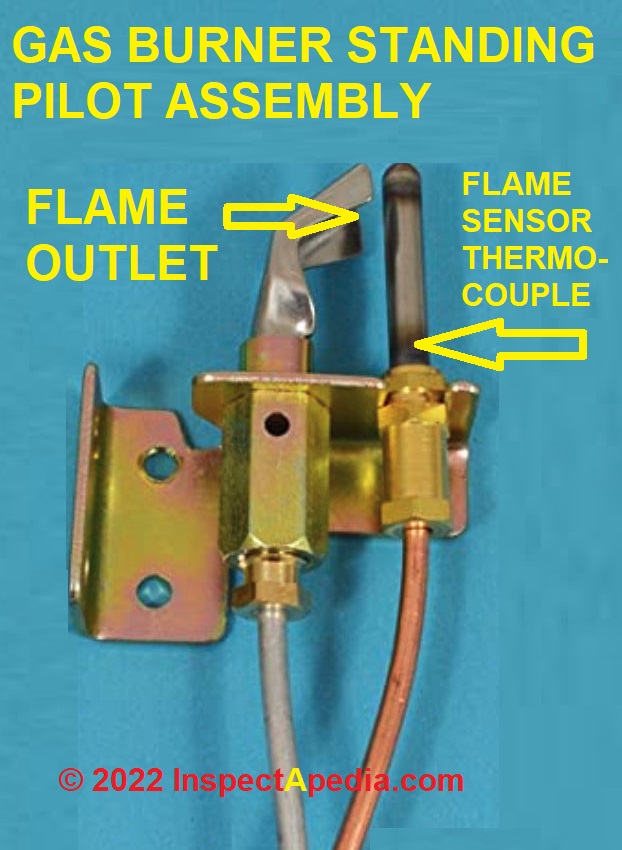
 Gas Pilot Light Repair
Gas Pilot Goes Out, Won't Stay Lit, or Won't Light: pilot & thermocouple failure causes, & cures

- POST a QUESTION or COMMENT about thermocouples used on heating equipment & water heaters
Gas appliance or heater pilot light diagnosis and repair.
This article describes the reasons that the pilot light won't stay lit on some gas appliances and offers repair suggestions that range from quick and trivial like positioning the pilot light sensor properly to a bit more work like replacing the thermocouple sensor itself.
This article series explains what a thermocouple (or thermopile) is, how these similar devices work to support a pilot light on a gas burner, where they are installed, and what goes wrong with thermocouples.
InspectAPedia tolerates no conflicts of interest. We have no relationship with advertisers, products, or services discussed at this website.
- Daniel Friedman, Publisher/Editor/Author - See WHO ARE WE?
Gas Pilot Light Troubleshooting & Repair
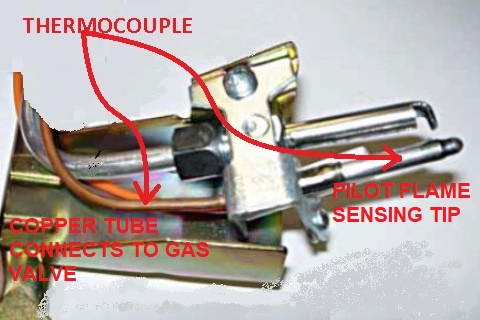
Article Contents
- CHECK FIRST - try re-lighting the pilot & watch for any of these three cases
- THERMOCOUPLE DIAGOSTIC CHECKLIST- PILOT WON'T STAY LIT - pilot light used to work but now keeps going out or won't stay lit
- THERMOCOUPLE INSTALLATION SNAFUS - pilot light has never worked well
- THERMOCOUPLE FAILURE RESEARCH
Watch out: here are some typical manufacturer warnings involving lighting pilot lights on gas heating equipment, both propane and natural gas:
If you are not qualified, do not light pilot lights, perform service, or make adjustments to appliances on the Propane Gas system.
If you are qualified, consciously think about the odor of Propane Gas prior to and while lighting pilot lights or performing service or making adjustments.
Sometimes a basement or a closed-up house has a musty smell that can cover up the Propane Gas odor.
Do not try to light pilot lights, perform service, or make adjustments in an area where the conditions are such that you may not detect the odor if there has been a leak of Propane Gas.
- source: EMPIRE INFRARED HEATER with THERMOSTAT [PDF] Models SR10TW, SR18TW, SR30TW
...
Troubleshoot Thermocouple on Gas Fired Heating Equipment
If the Pilot Light Keeps Going Out, First confirm that the problem is the thermocouple
Start by re-lighting the gas pilot light.
Typically the gas burner control is pushed-in or held in a spring-loaded position to force gas through the pilot light assembly to permit manually lighting the pilot flame. Instructions for your gas appliance control are usually right on the control.
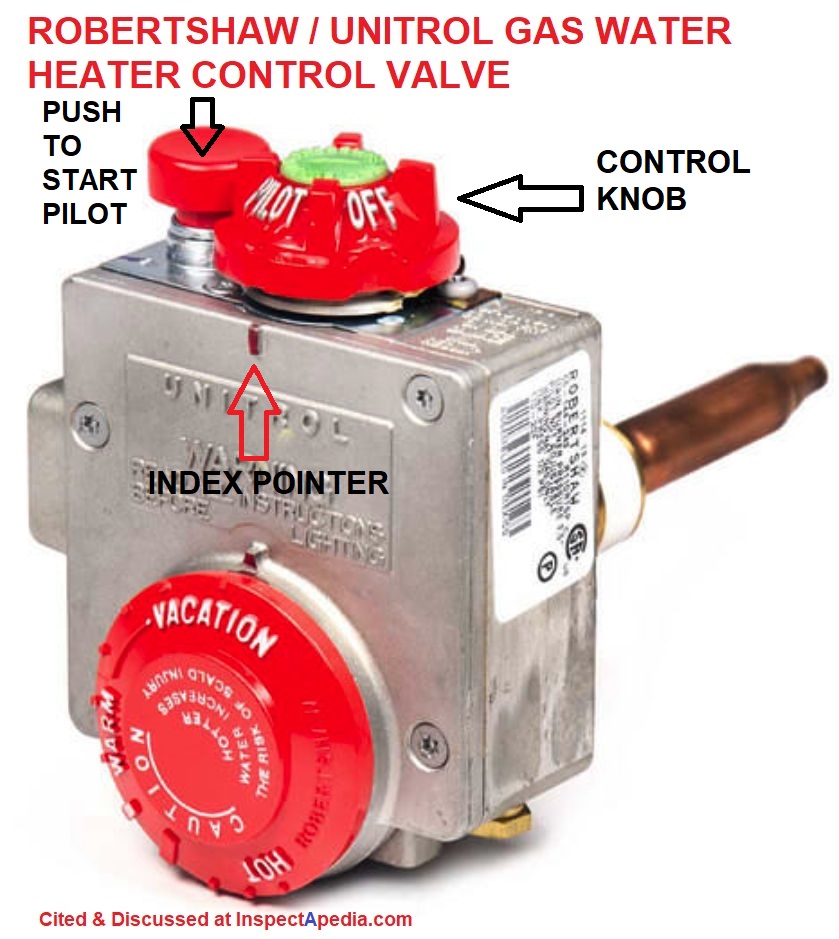 If you don't know how to light the pilot light, it's easy and safe: details are
at GAS BURNER PILOT LIGHT PROCEDURE
Here is a typical example using the gas water heater control valve shown just above.
- Turn gas supply valve to the appliance on.
Watch out: if you smell a gas leak, turn the gas back off immediately and call for repair. Else continue.
- Turn the gas control knob so that the PILOT
position is opposite the index pointer. - Press the large red button
atop the control down and hold it: this forces gas to flow to the pilot light. - Light the pilot light
with a gas lighter or match - you may have to hold the gas "on" for a minute for gas to reach the pilot light assembly, and you will need to continue to hold the gas supply "ON" until the thermocouple has heated up - as much as an additional 15-30 seconds.
- Release the gas control button.
- Does the pilot remain lit or does it go out?
Below we give two cases with instructions of what to do if the pilot won't stay lit.
Case #1: If you are able to light the pilot on the gas fired appliance but when you release the gas control from it's "LIGHT" position the pilot immediately goes out, if there was a good solid flame that was clearly touching and heating the thermocouple,
that is, the thermocouple was properly positioned in the pilot flame, and if you are sure that you held the control in the LIGHT position long enough for the thermocouple to heat up normally (30 seconds is plenty), then most-likely the thermocouple is defective and simply should be replaced.
In that case,
see THERMOCOUPLE INSTALLATION or REPLACEMENT
But if you want to be thorough and meticulous, read through the Thermocouple Problem Checklist below on this page first. You'll feel as silly as I do [DF] if you go buy a new thermocouple and then at the start of the replacement procedure you find that the existing thermocouple simply wasn't tightly-connected at the gas valve!
Case #2: If you are able to light the gas pilot and it stays lit for minutes or longer but eventually goes out, the cause is probably one of those listed just below.
Before reading through our complete list of gas pilot light thermocouple troubles, check these most-common issues:
- The thermocouple sensor tip is not properly located and secured in position in the gas flame
- The thermocouple connecting tubing has been mechanically damaged, crimped, cut or nicked or is sooty from a dirty or improper flame.
- The gas flow to the pilot light is obstructed:
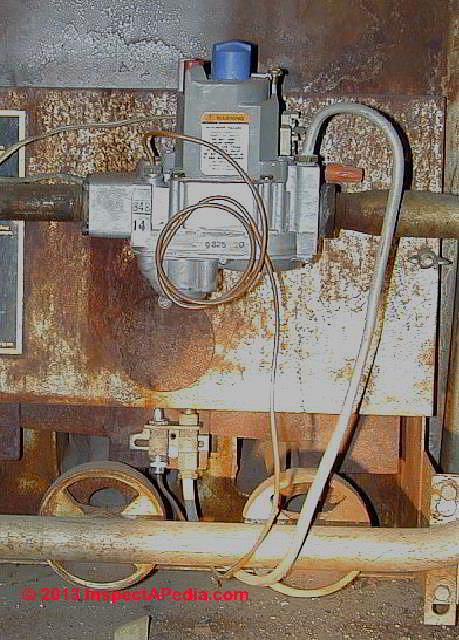 Watch out: Before trying a new thermocouple check for debris in the pilot light orifice or tubing.
In gas fired equipment that remains shut down for long intervals we sometimes find spiders or insects have nested in the equipment, even mud-dauber wasps, blocking proper gas flow or gas appliance venting.Photo at left: red arrows indicate the thermocouple tubing and assembly; blue arrows indicate the pilot light tubing & assembly on a horribly rusted Holland brand gas furnace.
We have run into this problem and also read other accounts of it concerning the Gaffers and Sattler Model S 80 FDF gas fired furnace and similar gas fired heating equipment but this debris clog problem is widespread and may show up on just about any pilot-lit gas fired appliance, even gas log fireplaces and portable heaters.
Check for debris blockage right at the pilot light, inside the gas tube between the pilot light and the gas control valve, and using a fine wire (don't scratch or enlarge the orifice) try cleaning the orifice at the pilot light itself.
Other symptoms of bad thermocouple or dirty thermistor on gas fired equipment:
Short cycling or unexplained on-off cycling of heating equipment has also been traced (by one reader) to a dirty or failing thermocouple (possibly the reader meant a dirty thermistor).
See THERMISTORS in ROOM THERMOSTATS
This condition was reported in the FAQs by a reader commenting
at HEAT ANTICIPATOR ADJUSTMENT

If you don't immediately see case 1 or 2 or 3 above, continue with our complete diagnostic list of gas pilot troubles given below on this page.
Case #3: If you are able to light the gas pilot and it stays lit but the main gas valve never opens
and the main gas burner won't ignite, it's possible that the thermocouple tubing has not been properly-connected at the gas valve end.
In this case you can light the pilot flame and it will stay lit, but the gas valve will never open.
...
Thermocouple Problem Checklist - What causes of loss of the gas pilot flame?
Why does the pilot flame keep going out on my hot air furnace?
What would cause standing pilot flame to keep going out . thermocouple was replaced on my air furnace - Bruce 11/17/12
If your gas appliance pilot light worked previously but now keeps going out, check the causes listed just below.
If your gas appliance pilot light has NEVER worked properly and has had problems with "going out" since the heater or thermocouple was first installed, check our second diagnostic list
at THERMOCOUPLE INSTALLATION SNAFUS.
In residential appliances such as gas boilers, furnaces, ovens and water heaters, the causes of thermocouple failure are listed below, roughly in order of probability, with the most-probable listed first.
Gas Pilot Light Won't Stay Lit
- Thermocouple sensor tip out of position
not properly mounted, secured in the flame path. The sensor tip should be surrounded by the pilot flame. - Thermocouple's indicating end loose
not fully secured into the gas valve. Not fully seated. - Thermocouple indicating end damaged
at the gas valve control, if the sensor connector has been cross-threaded, it may seem to be fully tightened but in fact is not screwed fully in place.
Watch out: If the thermocouple end at the gas valve has been cross-threaded, the threads may have been damaged so that you may never obtain a proper connection to the gas valve: both thermocouple and the gas valve itself may need to be replaced. - A bad replacement thermocouple
or thermocouple tubing that was bent, kinked, damaged during installation - Sudden drafts blow out pilot
We often find this problem in southern climates where heating equipment may be installed outdoors or in a shelter exposed to wind.
If there is no chimney cap, other site properties (slope, obstructions) could cause the wind to blow down the chimney and extinguish the pilot light. - Low gas pressure
results in a weak pilot flame, the flame will be small and more easily extinguished. Low gas pressure or flow rate at a gas heating appliance might be caused by
-- improper adjustment of the pilot light: some pilot lights such as on gas stoves have an adjustment screw that makes the pilot flame larger or smaller. Too small = easily blown-o0ut
-- improper gas regulator adjustment? Unlikely but possible. When a gas burner is "on" its gas use is enormously greater than when just the pilot alone is on. If the burner flame is adequate then there is almost certainly plenty of gas supply for the pilot alone
-- running out of LP gas? If your gas supply is from a local propane tank, and if the tank is very close to empty it's possible for the LP gas pressure to fall below the normal rate delivered by the LP gas regulator. Check the gauge on your LP tank. If it's at or close to empty that could be the trouble. - Inadequate combustion air
Watch out: this produces dangerous carbon monoxide, very dangerous, can be fatal - Dirt on the equipment burner or on the pilot light assembly
thermocouple, connections or at control wiring can cause intermittent failures of the pilot and gas valve. - Dirt or debris or insects
(spiders) clogging the pilot orifice or pilot light gas tube - Thermocouple Sooting
from improper gas flame adjustment, causing improper temperature sensing
Watch out: a sooty gas flame is a sign of dangerous and improper burner operation, risking production of fatal carbon monoxide. - Thermocouple Oxidation or Corrosion
may occur in some locations where there are unusual moisture or corrosive gas sources; Oxidation inside or at joints, occurring if the thermocouple sensor or tubing connections are bent, cracked, damaged, leaky. - Failed gas control valve
less likely problem, the valve fails to open to deliver gas to the burner even though the thermocouple is properly connected and working. - Water heater (or boiler) leak
Particularly with a water heater, and less often a boiler, a leak in the water heater (or boiler) that happens to drip right onto the pilot light can put out the pilot flame. - Thermocouple Burnout
due to exposure to higher temperatures than the particular thermocouple was designed to handle. Possibly the wrong thermocoule type was installed. - Metal fatigue -
on older installations, more-likely if the thermocouple is exposed to vibration or movement or abrasion or where the parts are exposed to extreme temperature changes
...
Thermocouple Installation SNAFUS
- Damage during installation,
such as sharp bends, nicks, gouges in the thermocouple tubing or failure to properly route the thermocouple tubing so as to avoid damage
Note: some equipment or appliances include a protective grommet intended to protect the thermocouple tubing from damage where it passes through openings in the equipment. Be sure such grommets, if provided, are in place and intact.
Damage due to cross-threading or failing to provide a thermocouple with the proper thread direction. - Improper installation:
wrong placement of the sensor, gas valve connection under-tightened or over-tightened (stripped) - Damaged wiring
or wire connections at the gas control (not actually a thermocouple issue)
- Something else we haven't thought of - please use the page top or bottom CONTACT link to add to this list.
...
Research on Thermocouple Failure Causes
- Anderson, R. L., and R. L. Ludwig. Failure of sheathed thermocouples due to thermal cycling. No. CONF-820306-5. Oak Ridge National Lab., TN (USA); Oak Ridge Y-12 Plant, TN (USA), 1982.
- Gates, K., and S. Benhaddad. "Failure analysis of a high-temperature thermocouple." Journal of Failure Analysis and Prevention 5, no. 4 (2005): 14-19.
- Gaffers and Sattler cited above in this article, was an appliance brand (kitchen ranges, heating equipment, air conditioning) owned by Maytag and actually preceded "Maytag" as a company name.
The Gaffers Sattler and Maytag Washing Machine Company was founded in 1893 by businessman Frederick Maytag. G&S cooking ranges were identified as a subsidiary of MagicChef in 1969. Magic Chef found its way back to Maytag in 1986.If you are looking for parts for Gaffers and Sattler equipment check with Maytag. Separately a Gaffers & Sattler appliance company still does business in Murray UT.
- Mandal, Shyamapada, B. Santhi, S. Sridhar, K. Vinolia, and P. Swaminathan. "Minor fault detection of thermocouple sensor in nuclear power plants using time series analysis." Annals of Nuclear Energy 134 (2019): 383-389.
- Zhong, X. Y., X. Q. Wu, E. H. Han, and X. B. Song. "Corrosion failure analysis of pure nickel thermocouple sheath used in BaTiO3 hydrothermal synthesis reactor." Engineering Failure Analysis 17, no. 6 (2010): 1404-1412.
...
Reader Comments, Questions & Answers About The Article Above
Below you will find questions and answers previously posted on this page at its page bottom reader comment box.
Reader Q&A - also see RECOMMENDED ARTICLES & FAQs
Can the copper tube touch the iron case of the oven?
Great site !
I have replaced the thermocuple succesfully on my kitchen gas oven. It works right....
But when I inspected the old one I have noticed that its copper tube was degradated just wher it comes out of the oven, a 1,5 hole for a 4 mm diameter tube....
Can the copper tube touch the iron case of the oven or that will produce another thermocuple side effect that produce the oxydation in that contact point ?
Or is the water produced in the gas combustion ? Or perhaps a minimmal almost invisible spark from the thermocuple current between the two metals ?
Hoping being clear with my doubt... Thanks ! On 2022-07-29 by Diego
by InspectApedia-911 (mod) -
@Diego,
That's an interesting question.
We're in the realm of OPINION here, as I haven't found authoritative research data on abrasion or oxidation damage to the thermocouple tubing where it passes through appliance openings.
Post some sharp photos (one per comment) of your old thermocouple so that we can see what you see and perhaps a photo as well of how the tubing passes through parts of your gas oven.
The typical thermocouple installation instructions given on this page at
https://inspectapedia.com/heat/Thermocouple_Replacement.php#ThermocoupleInstall
do discuss routing.
The tubing needs to be protected from mechanical damage, and extra length safely coiled and placed out of harm's way.
Needless to say experts have researched thermocouple failure. I'll add some of that to the article above.
thanks for asking
Thermopile pilot light flickers
I am troubleshooting an older Williams wall heater. The thermopile “flickers” when it connects with the the lit pilot light.
The pilot light stays lit and steady with the “flickering” thermopile. Flame color is good. The heater works well. The continuous flicker noise is disturbing. Ideas? On 2020-11-29 by Michelle
Reply by (mod) - flickering pilot light - clean the pilot assembly
I'd clean all of the components, tighten the connection at the gas valve, and if the flickering continues I'd replace the thermopile or thermocouple.
Fix Pilot Light on old Luxaire furnace using a White-Rodgers 21D18-3 gas system.
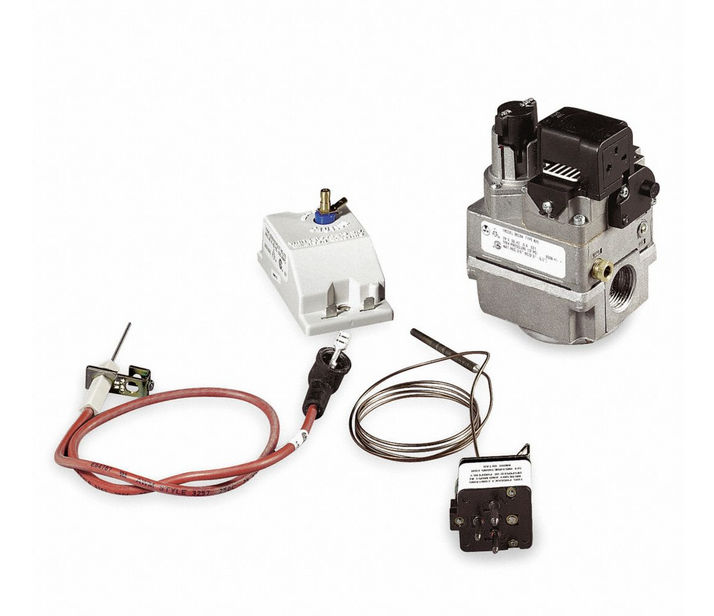 I have an old Luxaire furnace using a White-Rodgers 21D18-3 gas system.
If the furnace sits idle for any length of time (say overnight) the furnace is unable to produce any spark whatsoever to ignite the pilot.
However, once I light the pilot manually and the furnace runs through a cycle, the furnace can produce a consistent strong spark on subsequent cycles, as long as the furnace has not sat idle for too long between these cycles.
It reminds me of a car with a failing battery.
You might require a charge (or a jump) in the morning to get it going, but once started you can run any number of errands, successfully restarting the car a number of times.
But let it sit overnight, and in the morning another jump is needed.
This have vexed me for some time and I would be thankful for any guidance. On 2020-10-13
by Jerry
Reply by (mod) -
Jerry
I don't know what's wrong for sure, Jerry,
a bad thermocouple, a bad thermocouple connection to a gas valve, even a bad igniter or igniter wire or igniter module can all cause the symptom that you describe. Sometimes when a component is failing it is more-vulnerable to moisture or to low temperature, and it will behave differently once warmed-up.That can explain why your furnace will re-start OK on subsequent on-cycles but won't start up on its own when it's been off for a longer interval.
I'd consider replacing the control; you might want to take a look at the White Rodgers replacement option for the original 21D18-3 gas ignition system described in this
WHITE RODGERS RETROFIT for WR 21D18-3 GAS CONTROL [PDF]
Near the end of those instructions is a helpful gas burner ignition troubleshooting flowchart that I recommend.
I will re-post this Q&A at GAS REGULATORS & APPLIANCE / HEATER CONTROLSas that article may also be helpful to you
Where do I connect the two little wires at my gas valve / thermocouple / thermopile?
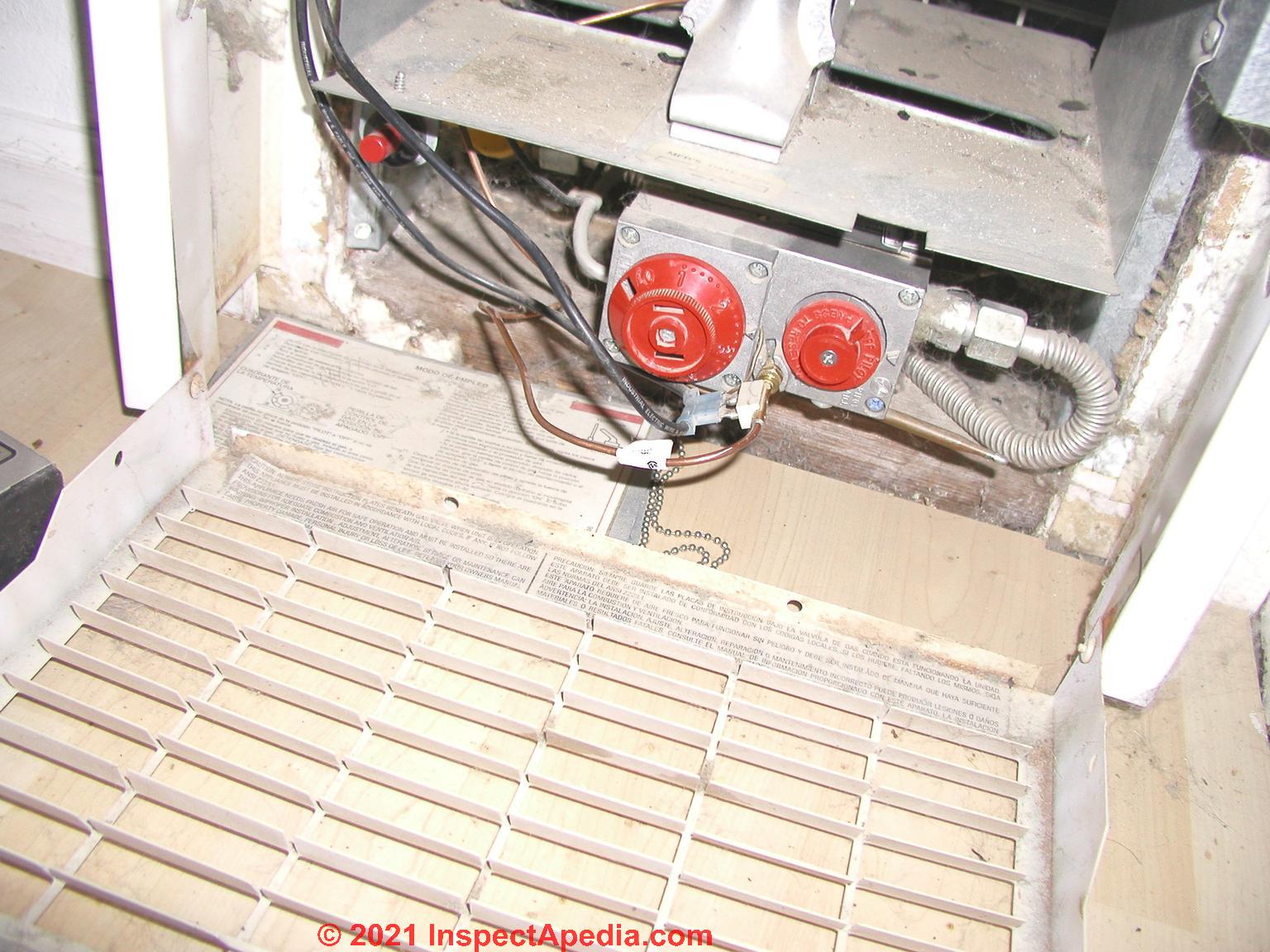
Thank you for your answer of 5/2/19 to my on going problem.
This thermocouple has a little side thing on the connector that has two black wires.
Now I cannot get the pilot to even try to light. I seem to remember reading something about them being for safety or something.
I had to leave the door open to the heater because the connector sticks out too far and when moved the pilot goes out.
A little giggle and it would work for awhile. Something is loose inside, I think.
Any advice. I could replace the thermocouple again, but now I cannot finknob colors may be red not black) d one with that extra wire thing. Do I have to have that? I have added a picture [above] for you. Thank you. On 2020-03-27 by Karen
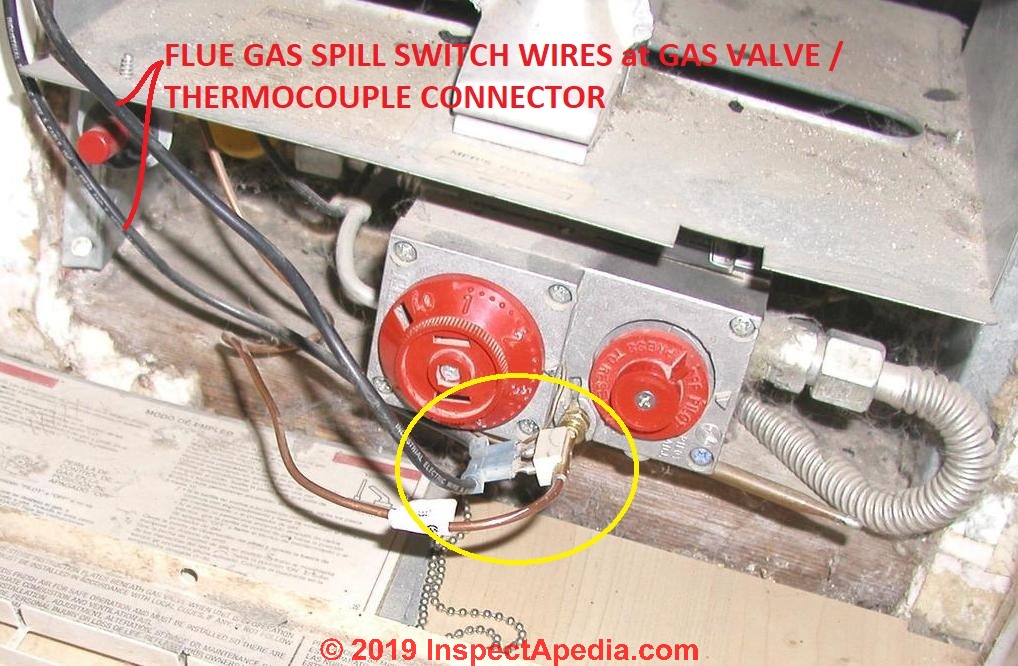
Moderator reply: flue gas spill switch wires may connect to gas valve
Karen
Take a look (and post a photo) of where those two black wires lead. I am GUESSING that they lead to a couple of spill switches that might be located on the draft hood of your heater or right near the burner opening.
Those devices sense dangerous spillage of flue gases, are usually heat-activated, and some models require that the switch be manually-reset by pressing a reset button on the switch after it has cooled.
See details at FLUE GAS SPILL SWITCH TRIPPING & RESETLet me know if that helps you out.
Thermocouple keeps failing too frequently - was the tube connected properly at the gas valve?
I have had to replace my thermocoupler 3 times in 4 years the last one only lasted 3 months can you recommend a brand name and why is this continuing to happen My gas boiler is 35 years old and in good condition
The boiler is a Hydrotherm On 2020-02-24 0 by Tony Risolo
Reply by (mod) -
Tony
It would be unusual to get a batch of bad thermocouples such that you have to keep replacing them because of an inherent defect in the thermocouple itself. Not unless they were all made by the same company in the same batch.
When I have run into this recurrent thermocouple problem before it has usually been traced to a problem at one of the two ends of the thermocouple.
One end, at the pilot, needs to be located exactly properly, mounted and placed in the flame of the pilot light.
The other problem at the other end of the thermocouple is more subtle. You can think that you have fully screwed in the connector that pushes the end of the thermocouple into the bottom of the gas valve but it may not actually be fully seated. That could be mistaken for a thermocouple failure, as poor contact can get intermittent or poor thermocouple performance.
It's also possible that the gas control valve itself is damaged or its thermocouple connector threads cross threaded or damaged so that you can't get a good thermocouple connection. That is a less common problem in my experience.
Lastly, it's possible that the defect is in a gas flow or clog problem in the pilot light itself.
Furnace pilot goes out
Lennox g12 furnace pilot light keeps going out. sometimes it will stay lit for weeks sometimes not even a day .
I've cleaned Ive checked for fresh air. My only thought is when it calls for gas, the gas shoots out to fast and blows pilot out. (Nov 3, 2014) Todd
Reply:
Todd
Watch out: what you describe sounds dangerous - unsafe. I would shut down the system and have ot repaire. Sounds like a gas regulator problem.
Todd said:
I am fully aware of the hazard. And if I could simply afford to have it repaired , I dont think i would be on here trying to get help. sorry if I seem rude but not a flipping idiot.
Reply:
Sorry, Todd. Please appreciate the iffiness of giving repair advice for remote systems involving life safety and where only very limited information about site conditions is known. No one thinks you're an idiot. A service tech would probably check gas pressures, the regulator, piping for blockages, etc.
The simplest repair that's worth trying first is to just replace the thermocouple that senses the flame. It's a standard part - just buy the proper length and check the mount fittings that hold the sensor element in the proper position.
Irregular gas burner ignition, slow to ignite
Do you have any advice about how to check that the boiler doesn't have a problem with irregular ignition of gas, or what I should ask of someone who comes out to inspect it?
As I said, I already mentioned this issue to the technician during our inspection and maintenance appointment (~1 week ago) and he didn't know what could be causing the problem.
A little more information: The boiler is from Burnham and was likely built around 1978.
One year ago, the boiler’s gas valve was replaced with a Honeywell V800A1070, and a new thermocouple was installed at the same time.
According to the technician who just did our inspection, we likely had a gas valve that opened slowly at first, and then eventually opened to full, whereas our new gas valve opens fully right away
(My guess is he is referring to the step-wise vs. standard-opening pressure regulator options). Could the booming be caused by this change? Thank you again for your advice. On 2019-02-14 by Mo
by (mod) - check fuel pressure, delivery rate, and gas valve
That's a job for a trained gas heat service technician but it sure sounds to me as if there is either bad gas pressure (a bad regulator or undersized gas piping) or a bad gas valve.
Steps in diagnosing intermittent pilot ignition: Armstrong Ultra 80 Furnace traced to gas supply
Trying to troubleshoot my intermittent pilot ignition on my Armstrong Ultra 80 furnace. The problem is that the spark is intermittent.
It will take 5 minutes of the exhaust fan running with no spark or attempt to light. Then it will light and the blower will run for 2 minute, then be off for 2 minutes, then the blower will run another 2 minutes, shut for 2 minutes and after this it will stay on fine.
But occasionally, it will only run for about 10 minutes then the blower will shut and the burners and pilot will be out while the exhaust fan continues to run and there is no further attempt to restart the pilot light.
This intermittent problem happens several times a day and the only solution I have found is to shut the heat at the thermostat and wait for 20-30 minutes.
Then I put the thermostat back to heat and the furnace goes through the same sequence of running for a few minutes on/a few minutes off for about 3 times before it stays on long enough to bring the temperature up to the thermostat.
However, sometimes it just will not light at all. The pilot assembly is only about 5 years old.
I have a White Rodgers model 50d50-843 ignition model which should have diagnostic LED flashes for troubleshooting but there are not lights flashing.
I have checked that all the connections are on fully. My next thought was that perhaps they need to be cleaned as I thought that perhaps dust, buildup or perhaps rust could cause the spark to fire sometimes and not others. -PJ 2021/11/10 / Regina Caeli
Daniel Friedman Mod reply to PJ
Have you tried replacing the gas flame sensor thermocouple?
Regina Caeli to Mod: Daniel Friedman
I have replaced the flame sensor and the pilot light orifice. Since then I can hear the gas value open, hear about three clicks of the spark igniter, but the pilot doesn't come on. I used a BBQ lighter to light the pilot and the burners came on right away with a very clean blue flame throughout all burners.
The pilot light is split with one side going to the spark igniter and the other side not hitting the flame sensor directly. The burners stay lite until the blower comes on, then after a couple minutes, all the burners go out.
I plan to replace the pilot light assembly and feel this will solve the problem with the split flame and the spark igniter. However, I am wondering if that will also keep the burners from going out.
I watched the fan limit switch and once the middle tab is reached, the blower comes on but the temperature goes down rapidly, in fact, it jumped 20 degrees rather then moving gradually.
I have the middle tab at 130 and the lower tab at 70 trying to keep the burners from going out because of the drop in temperature.
The only return for this furnace is at the furnace and the air is very cold coming in (currently about 40 degrees) so that I feel this is contributing to the inability of the burners to stay on. My service and parts supplier thinks that the ignition control module may be the problem even though there is only a constant unblinking LED rather than any error codes.
Best, PJ 2022/01/14
Daniel Friedman Mod to Regina Caeli - problem sounds like a blocked gas line - no gas flow
At first read that sounds like a blocked gas line to the pilot; typically there is a small-diameter tube from gas valve to pilot and a larger connection of gas valve to the actual burner.
Check the flame sensor placement: it needs to be centered in the flame.
Before replacing the whole pilot assembly we want to verify that it's not something trivial like the flame sensor mount bent so that it's not putting the thermocouple right in the flame.
I am assuming that by "flame sensor replacement" you refer to what I call the thermocouple.
Also be darn sure that the other end of the thermocouple is tightly screwed into the gas valve - else it won't report the flame properly to the valve.
Regina Caeli to Mod Daniel Friedman
I did replace the pilot assembly because I found cracks in the wire to the spark ignition. However, it still does not light, only hear the gas value open, maybe a small click and then nothing. I can still light the burners and pilot with a BBQ lighter.
The service/parts place I deal with felt that if the new pilot assembly did not solve the spark issues, then it must be the ignition module.
I can't think of anything else since now the pilot, the flame sensor and the spark ignition are all new. I would welcome your thoughts on whether a faulty ignition module could have been the issue for the intermittent sparking over the last month and now no spark at all even with a new pilot assembly.
Daniel Friedman Mod to Regina Caeli
I should have suggested the ignition module myself but was a bit confused by our discussion and your description of the heater.
Indeed if a gas burner uses an igniter that in turn ignites a pilot that in turn ignites the burner, and if on a call for heat you see no spark or hear no clicking at the igniter, then I suspect in this order:
1. the igniter wiring - cracked, loose, poor connection, wet
2. the igniter itself - cracked, shorted ceramic or dirt around the igniter or the spark contact surfaces
3. the igniter module - that generates the spark
Regina Caeli to Mod Daniel Friedman
I now have a Residio replacement ignition module. There is a terminal for 24V (ground) on it. The old module has TR (transformer?). Can I put the wire from the old TR terminal on the new module's 24V (ground)?
Daniel Friedman Mod to Regina Caeli 2022/01/14
Look carefully at the installation instructions,
I note in the version of
- Resideo IGNITION MODULE INSTRUCTIONS [PDF] that I found,
the following
Gas ignition module grounding instructions
3. A common ground is required for the S8910U and the main burner. The 24V (GND) terminal internally grounds one side of the transformer.
Any auxiliary controls or limits must not be in the grounded leg. In addition, the appliance should be earth-grounded.
If you're uncertain contact them:
- Resideo Technologies, Inc., 1985 Douglas Drive North, Golden Valley, MN 55422 1-800-468-1502
Regina Caeli Daniel Friedman
Checked with Resideo and they confirmed to put the wire which was on the old module at TR in the 24V(ground) terminal.
Now that the unit is in, I hear the gas valve open to supply gas to the pilot light, I hear the spark igniter clicking repeatedly (about 6 clicks and a slight pause and then repeat this sequence).
But no pilot light flame. Do you have ANY suggestion as to what to try next? Any help will be greatly appreciated as this is day 12 without any running furnace.
Daniel Friedman Mod to Regina Caeli - If the igniter clicks but there is no ignition
If the igniter clicks but there is no ignition you could have
- no gas supply or inadequate gas supply
- bad electrical contact: dirty contact surfaces between the spark generator and the spark-to surface.
- a cracked or damaged igniter
Have you take a look at our igniter diagnosis and repair article series?
Found by searching InspectApedia.com for "igniter repair" you'll see to start at
Regina Caeli Daniel Friedman
Thank you for all your help.
Daniel Friedman Mod Regina Cael - If there is AIR in the gas line
If there is AIR in the gas line from recent work on the system you might have to try 4 or 5 times or several minutes, certainly not hours.
If you can manually ignite the burner that says there is gas supply and the problem is with a control or sensor or valve.
Ask your service technician to confirm that there is gas flowing through the gas line.
Regina Caeli to Daniel Friedman Mod - problem solved: gas supply was turned "off"
The burners are running and the blower is running but the temperature is not going up. The flame is strong and blue, the filter is new, all the registers are unobstructed.
The only return is the one on the furnace itself which is at floor level and since the house has been cold for 12 days, it is still pretty cold air going into the furnace. Is there any other possible reasons that the temperature is stuck at 64 even though the burners and blowers have been working constantly now?
I have moved the fan limit tabs and settled at 150 for blower on and 80 for blower off. This has allowed the furnace to finally reach the 70 that it was set at. My question now is whether this 150 is safe to keep the furnace at?
It was actually a very simple reason it wasn't working.
After you listed the 3 possible reasons, I knew it had to be the gas supply. That is when I recheck and I had forgotten to turn the gas back on. Now my problem is that the burners have stayed lit but the blower keeps short cycling. The house was at 42 F when the furnace started working again.
It has been 20 hours and it is only at 60 F. It took about 4 hours to go from 42 up to 56. In that time the outdoor temperate went from 17 down to 10. Over night the furnace stayed at 56 and the outdoor temperature dropped to 6.
The furnace now is up to 60 and the outside is up to 24. There is only the return at the furnace and while it is on the ground floor, it is right at the floor and the air there is probably about 45 going into the furnace.
I have adjusted the fan limit switch to try to keep the blower on longer by dropping the lower limit but the best I can do it get the blower to run a minute and then off for a minute.
The flames are strong and blue. I think it is just too much cold air coming in. Is it possible that this issue will gradually resolve as the indoor temperature (and outdoor temperature) rises?
I had a similar issue with short cycling before but once the furnace reached 60 it started to run a normal cycle length. Currently it is right at 60 and has been there for about 4 hours.
...
Continue reading at THERMOCOUPLE REPAIR / REPLACEMENT or select a topic from the closely-related articles below, or see the complete ARTICLE INDEX.
Or see THERMOCOUPLE TROUBLESHOOTING FAQs - questions & answers posted originally at this article
Or see these
Recommended Articles
- FLUE GAS SPILL SWITCH TRIPPING & RESET
- GAS BURNER FLAME & NOISE DEFECTS
- GAS BURNER SOOT CAUSE & CURE
- GAS BURNER PILOT LIGHT PROCEDURE
- GAS FIRED HEATING BOILER PROBLEMS
- GAS FIRED WATER HEATERS
- GAS FIREPLACES & GAS LOGS
- GAS IGNITER DIAGNOSIS & REPAIR
- GAS REGULATORS & APPLIANCE / HEATER CONTROLS
- GAS WATER HEATER CONTROL VALVES
- THERMISTORS in ROOM THERMOSTATS
- THERMOCOUPLE REPAIR / REPLACEMENT
Suggested citation for this web page
GAS PILOT WON'T STAY LIT at InspectApedia.com - online encyclopedia of building & environmental inspection, testing, diagnosis, repair, & problem prevention advice.
Or see this
INDEX to RELATED ARTICLES: ARTICLE INDEX to HVAC THERMOSTATS
Or use the SEARCH BOX found below to Ask a Question or Search InspectApedia
Ask a Question or Search InspectApedia
Share this article:Try the search box just below, or if you prefer, post a question or comment in the Comments box below and we will respond promptly.
Search the InspectApedia website
Note: appearance of your Comment below may be delayed: if your comment contains an image, photograph, web link, or text that looks to the software as if it might be a web link, your posting will appear after it has been approved by a moderator. Apologies for the delay.
Only one image can be added per comment but you can post as many comments, and therefore images, as you like.
You will not receive a notification when a response to your question has been posted.
Please bookmark this page to make it easy for you to check back for our response.
IF above you see "Comment Form is loading comments..." then COMMENT BOX - countable.ca / bawkbox.com IS NOT WORKING.
In any case you are welcome to send an email directly to us at InspectApedia.com at editor@inspectApedia.com
We'll reply to you directly. Please help us help you by noting, in your email, the URL of the InspectApedia page where you wanted to comment.
Citations & References
In addition to any citations in the article above, a full list is available on request.
- In addition to citations & references found in this article, see the research citations given at the end of the related articles found at our suggested
CONTINUE READING or RECOMMENDED ARTICLES.
- Carson, Dunlop & Associates Ltd., 120 Carlton Street Suite 407, Toronto ON M5A 4K2. Tel: (416) 964-9415 1-800-268-7070 Email: info@carsondunlop.com. Alan Carson is a past president of ASHI, the American Society of Home Inspectors.
Thanks to Alan Carson and Bob Dunlop, for permission for InspectAPedia to use text excerpts from The HOME REFERENCE BOOK - the Encyclopedia of Homes and to use illustrations from The ILLUSTRATED HOME .
Carson Dunlop Associates provides extensive home inspection education and report writing material. In gratitude we provide links to tsome Carson Dunlop Associates products and services.
 |
HOME | ABOUT | ASK a QUESTION | CONTACT | CONTENT USE POLICY | DESCRIPTION | POLICIES | PRIVACY | |
| © 2026 - 1985 Publisher InspectApedia.com - Daniel Friedman | |||||||||