 Air Vent Leak Repair FAQs

- POST a QUESTION or COMMENT about troubleshooting problems bleeding the air out of hot water heating system radiators, baseboards, convectors etc.
Leaky hot water heating system vent repairs - how to repair a leaky hot water air vent or bleeder valve.
Here we explain how to repair or replace both manual heating system air bleed valves and automatic float type air vents that are leaky.
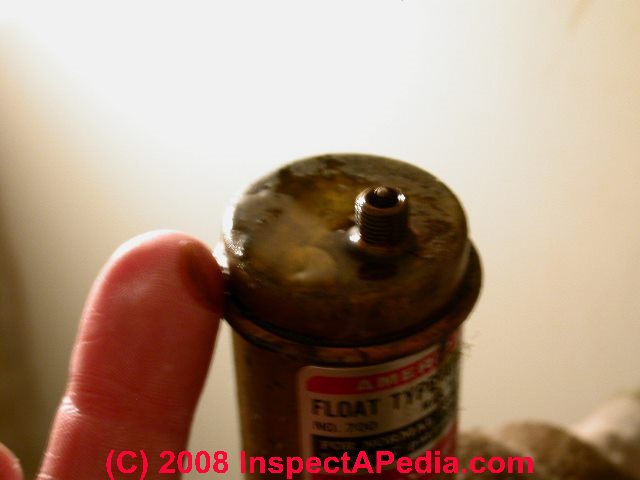
Float type automatic vents on hot water heating systems are normally left "open" to automatically purge air from the system.
But a float vent that leaks water will stop working, may leak onto and damage equipment, and is often left "closed" or shut off as a temporary measure. And a manual air vent that is leaky or that no longer vents due to corrosion and clogging is not going to do the job when your heating system is airbound and radiators or baseboards are cold.
Page top photo: if water won't stop coming out of the float type air vent valve then the vent should be replaced.
InspectAPedia tolerates no conflicts of interest. We have no relationship with advertisers, products, or services discussed at this website.
- Daniel Friedman, Publisher/Editor/Author - See WHO ARE WE?
Air Bleed Valve Leak Repair: How to Inspect and fix or replace leaky float-type automatic or manual air bleeder valves (air vents):
These questions and answerss about how to troubleshoot and fix or replace air removal devices and air bleeder valves on hot water heating systems were posted originally
at AIR BLEED VALVE LEAK REPAIR - be sure to see the advice given there.
Also see this AIRBOUND HEAT REPAIR FAQs INDEX - to all questions & answers about fixing airbound hot water heating systems including air bleeder valves, air vents, and air removal methods.
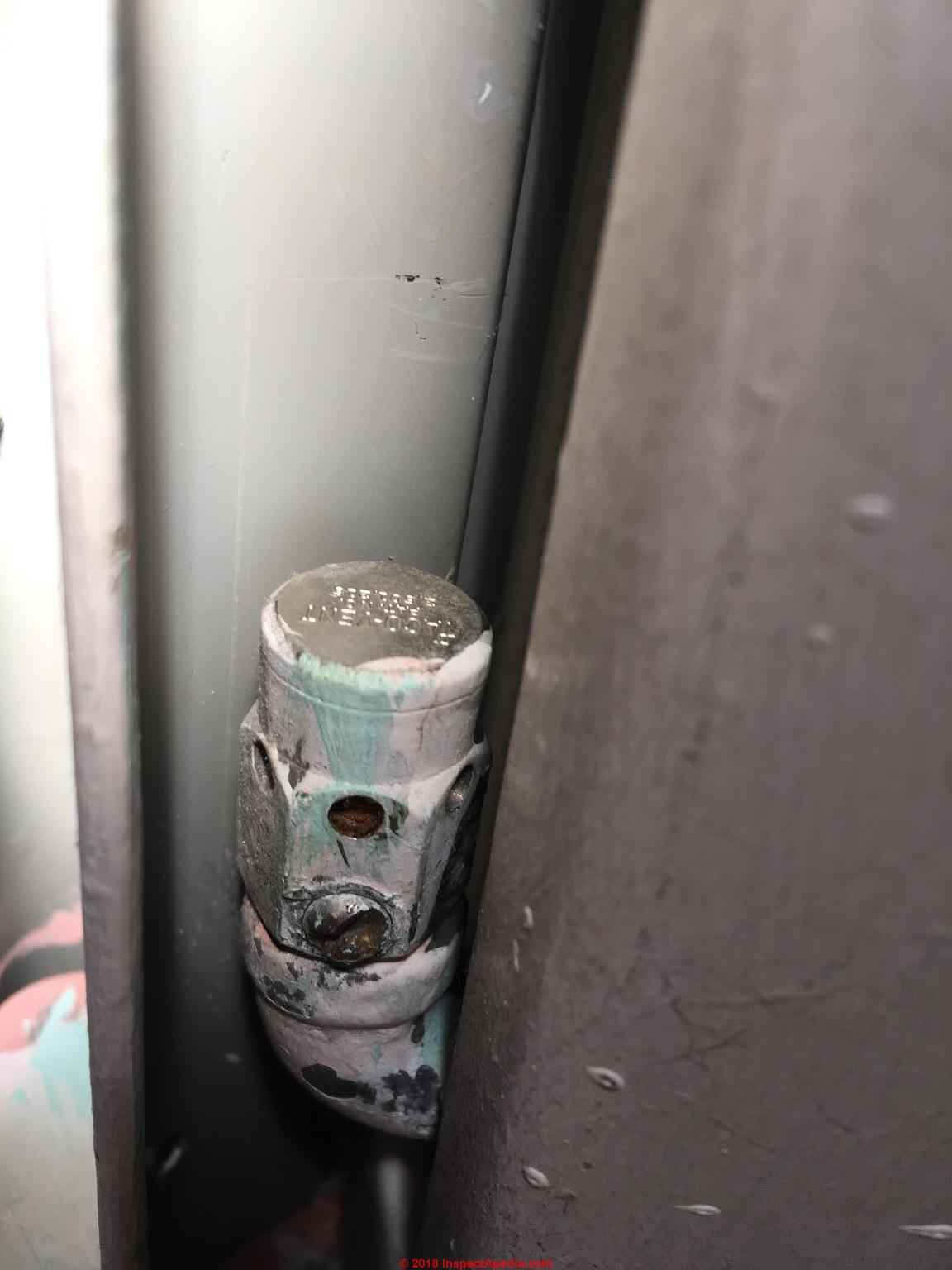
Photo: an antique Taco coin vent on a radiator, courtesy of reader Dave. The history and replacment of this vent are discussed below.
Below is our index to questions & answers about hot water heating system air bleeder valve FAQs.
Article Contents
- AIR BLEEDER VALVE LEAK FAQs - air leaks in, water leaks out at air vents or bleeder valves
- AIR BLEEDER VALVE REPLACEMENT FAQs - installing a new or replacement air vent or bleeder
- AIR BLEEDER VALVE STEM REPLACEMENT FAQs
- AIR BOUND HEAT vs AIR VENT NOT WORKING FAQs
- ANTIQUE TACO COIN VENT AIR VENT - history, photos, use, replacement
- BOILER COMPONENT LEAKS - Boiler Leaks: Expansion tank vs relief valve vs air vent vs boiler pressure, don't replace the expansion tank for the wrong reason
- WATER LEAKS at AIR BLEEDER or AIR VENT
...
Air Bleeder Valve Water Leak FAQs
Tip: Also our detailed advice on this condition at AIR BLEEDERS NOT WORKING - NO AIR COMES OUT, ONLY WATER - we open the vent and just get water, no air
Also see AIR BLEEDER NOT WORKING - NO AIR COMES OUT, ONLY WATER, FAQs - we open the vent and just get water, no air
if there was an air leak that would mean there’s also a water leak, right?
Not that I’m an expert but if there was an air leak that would mean there’s also a water leak, right? Even if just a tiny one. And because I use the boiler for hot water all summer any leak would allow water to show in its vicinity because the pipes wouldn’t be hot to evaporate it?
I think it’s more likely that it’s generally something I do each winter and haven’t done it for 2-3 years and the dissolved air just accumulated creating a bigger amount of air.
Do you know if because it’s a Venturi that it’s possible that the air while as a large bubble can’t be sucked through in reverse while draining the return?
When the temp was soaring when I cranked the thermostat and I heard the gurgle approaching the area I tapped on the pipe under the valve where the water enters that convector and what water did come out carried several very tiny bubbles visible in the length of clear tubing.
There were virtually no long lengths of air released. I think I failed to mention that initially I did have good heat from the smaller convector but when I (got greedy) decided to purge the larger one I not only wasn’t able to get the air out of that one but also the heat stopped working in the other one.
️ Now because I have gotten some air and also water I do not believe there are any minerals or other debris clogging the bleeder. On 2018-02-19 1 by Anonymous
by (mod) - Sometimes but not always
Quite so, sometimes, but we may see air leaks in, for example at a bleeder valve when a system cools, lowering pressure or even creating a vacuum.
Also on hot components you may never see actual water. Small leaks out may just evaporate. Look for corrosion or scale build-up instead.And air that is entrained in boiler water is converted to a gas when the boiler gets hot, so we need to handle that regardless of any actual leaks.
Plumber warns air may enter at automatic air bleeders; also, our relief valve leaks
I've had a plumber come and remove the air and it still returns within 48 hours.
He also closed off the automatic bleeders to prevent the possibility of air being sucked in through those.
Maybe worth mentioning.
The boiler pressure relief valve is producing water, not dripping but there must be occasions where it either opens or leaks because the bucket beneath it is collecting water.
After my plumber last removed the air he also emptied the bucket. Within 48 hours there was air in the pipes again. Using the auto fill valve I refilled the system by popping the lever on the top of the auto fill for 3 seconds.
After doing that the sound of air in the pipes was almost gone. 3 seconds of city pressure is roughly equivalent to the amount of water that had collected in the bucket under the relief valve.....coincidence ?
Also, with me using the autofill valve "wide open" - where did the air go ? The bleeders are still closed.
The top half of my expansion tank is warm, the bottom is cool so I assume that's ok. It's only 2 years old.
The running PSI is about 24 which I realize is higher than normal. If I lower it to 15 won't I just get even more air in more quickly ?
It's driving me nuts and I'm trying to sell the house.....I really don't want to have to disclose that the heating isn't working properly...need to fix it !
Forgot to add. if the relief valve is leaking or letting water out, why isn't the auto fill replenishing it ? On 2017-01-06 by Anonymous
by (mod) - a few caveats
Anon:
Watch out: if your relief valve is leaking the heating system may be unsafe; the plumber/heating tech needs to find and fix the cause or at least try replacing the relief valve.About disclosing your heat not working: my OPINION is that you're avoiding a lawsuit and making your buyer more confident in the condition of the home than if they sense that things are being hidden. In my view, there are very few repairs that a home needs that would be a reason not to buy it.
Why not get the system fixed?
Some boilers use only a manual re-fill valve;
But more often, the pressure-reducer valve is treated as an automatic water feeder even though the manufacturer says (CYA) not to rely on that feature.
I recently removed a pressure-reducer-feeder that we discovered was totally blocked - it wasn't feeding at all. Nobody noticed the problem for years until finally the boiler leaked enough to lead one of the heating zones to become airbound.
On servicing the old style bladderless expansion tank we drained the tank then observed that when we turned the water valve back on no water entered the boiler nor tank. We replaced the pressure reducer.
If you search InspectApedia.com for AIR BOUND HEATING SYSTEM you'll see a couple of methods for forcing troublesome air out of the piping when simple bleeder valves aren't doing the trick.
New Maid-O-Mist air bleeder valve keeps dripping water - it leaks!
My installed a new air bleed maid o mist 1/8 on the water heating unit on the 2nd floor room.
Now it is continuously dripping. What can I do to stop the water from dripping out of it? On 2017-01-02 by Amar
by (mod) - two repair options
Amar:
The repair depends on where the leak is occurring. If the leak is at the base of the air bleeder that screws into the heating unit, then the vent needs to be removed, its threads prepped again with teflon tape or pipe dope, then re-installed. That risks a bigger water leak - such a repair is done with the heating system cool and pressure off or at least reduced.
If the leak is at the vent opening at the top of the device, then the device is defective and needs to be replaced.A temporary - emergency repair: just screw the valve cap shut.
...
Air Bleeder Valve Replacement
How hard is it to remove an old and broken-off air bleeder valve?
How hard is it to remove an air bleeder valve (1/8 inch) on a hot water system installed in 1980.
The house is 96 years old and was heated by oil with the change coming in 1979 but the first heating season in 1980.
It's a manual valve which used a skate key to bleed but the stem seems t have broken off.
There is no leakage of water just concerned about being able to remove the old valve and not cracking the valve with the threaded portion left inside the radiator. The radiator is made of solid cast iron. 2017-07-31 by Fred
Reply by (mod) -
Fred,
It's a perfectly fair question: but one that involves a bit of arm-waving to answer. Normally it's trivial to un-screw a small-tapped or threaded plumbing part. The arm-waving is that if there have been leaks or the connection is quite old it may be rusty as heck.In that case I would NOT try this repair during the heating season when we might be left having to leave the heat off because we tried to remove the bleeder, broke it off and now have a radiator with a hole in it.
First: it may be possible to replace just the bleeder core. See our AIR BLEEDER VALVE REPAIR article
Else you'll have to remove and replace the bleeder. First buy a new one of the same sized tapping.
Then ...
Off season, heat off, system cooled down, no pressure, try squirting a bit of Liquid Wrench on the threads, then try un-screwing the valve using a suitably-sized wrench that turns the valve from its base.
To install a new valve you may need to clean up threads and use teflon tape or paste.
Use the page top or bottom CONTACT link if you want to send me photos of the situation and perhaps we can comment further.
How do I add an air bleeding vent since my baseboard is covered by a cabinet?
I have a hot water system and my 1 baseboard.
Where would would bleed it? It is covered by a permanent cabinet is there a way to add a vent were it's not blocked ? On 2017-11-18 by Charlie
by (mod) - add an air vent to get at otherwise inaccessible baseboards?
Charlie,
It's possible to add an air vent along the run of a heating baseboard but not as easy as you might think.You would need to have a plumber remove some of the thin material cut the baseboard and solder in a copper tea that had a tapping in the tub into which you can screw an air bleeder.
That location however will not be as effective as having an air bleed valve at the high end of the baseboard run.
Watch out: if your baseboard is really covered by cabinetry you are increasing your heating bills since the cabinetry will block heat transfer into the room.
...
Is my Air Vent Clogged or is the Piping Airbound?
Tip: see also AIR BLEEDERS NOT WORKING - NOTHING COMES OUT - we open the vent and nothing happens
Boiler Water Never Reaches the Cold Radiator with its Air Valve
Just had a hydronic kick heater installed. There is a manual bleeder valve at the 2nd to last elbow on incoming copper pipe.
With system up and to pressure, the hot water is not reaching this heater. All pipes cold. all other radiators are working properly..
When bleeder valve is opened, hot water immediately begins flowing, pipes immediately become hot and fan kicks on.
Also, when manually bleeding the water coming out is dribbling-not really under pressure. And the air sounds don't really seem to stop. Then as soon as bleeder valve is closed, incoming pipe no longer receives hot water. Any idea what's happening here? On 2017-10-27 by Frank
Reply by (mod)
Frank, your hot water heating system is air bound.
IF your boiler is up to normal pressure and temperature on a call for heat and the radiator is cold, somewhere in the piping before that cold radiator there is a bolus of air.
At AIR-BOUND HEATING SYSTEMS - home you'll find step by step procedures to fix this problem. Let's start there.
Trouble getting the air out of an apparently air-bound heating system
We have a 2 zone hot water heating system that operates off of one thermostat. When calling for heat the 1st zone going to the 1st level of the home works good. The 2nd zone on the 2nd level has 6 baseboards and 3 seem to work good but 3 do not radiate heat at all.
Each one has a air bleeder on them and when I went to bleed the one off I got a little air but then got nothing, no water either.
Is it normal to have no pressure on them when not calling for heat or do I have an obstruction in the line such as frozen or some sort of debris? - K.C. 1/27/14
Reply:
I suggested looking for clogged air bleeders or for low system pressure.
See AIR BLEED VALVE LEAK REPAIR
and
See PRESSURE & TEMPERATURE SETTINGS, CONTROLS
Reader Follow-up:
The heating system is at my moms and I went over there yesterday to take a look at it and couldn't find a pressure gauge or not much of a place to put one with out taking apart some thing.
When I got there I had noticed that the water supply valve was shut coming from the water well going to the make up point of the hot water system and wasn't sure if that was suppose to be left open so I opened it and it sounded like it was taking some.
Let me know if that is suppose to be left open or not or will it hurt something if I do.
When I did have it on and went to bleed the air I found quite a bit of air but when the air stopped I didn't get water and if I shut it and waited al little bit I could get some more air but no water.
Shouldn't there be enough pressure on the system to keep on forcing the air out until you get water so maybe the bladder is bad or I need to add some pressure to it somehow.
I did find out that it is a loop system and there is a 1" pipe looping along side the out side of the house between the floor and ceiling of the upper and lower level and pipes Ting off of it to the baseboards.
That is why we are still getting good heat at 2 baseboards at the beginning of the run and 1 at the end of the run but 3 in the middle you will get the one end of the pipe might be warm to hot but at the other end might be luke warm to cold.
Could there be a blockage in those pipes caused by sediment from the water? Or maybe the pump that moves the hot water isn't working right. Let me know your thought. Thanks for your time and help. - K.C. 1/28/2014
Reply:
I cannot give safe advice about operating the controls on a heating system I can't see - there are just too many unknowns.
If the water to the boiler was shut off it may be that the system has ONLY a manual water feed. If this is hot water heat, (not steam heat) and if the boiler is not leaky, it may rarely ever need water added
; if you pushed water in you may have overpressurized the boiler, which in turn can make the relief valves leak when the system heats up (another unsafe condition).
If on the other hand the boiler starting pressure was low, you might have addressed the original boiler pressure worry. But unless you bleed air until water comes out of the air bleeder valve, you have left air in the system - which can leave it air bound.
I think I would try forcing water into the system until I got water out at the air bleeder.
Then if I found I had too much pressure in the system, after bleeding out all the air one can always open a drain at the boiler to reduce the water pressure. (of course when you TOUCH an old part that nobody has touched for years it may break, leak or jam).
Watch out: for an old, not-working heating system that does not even seem to have normal safety controls and is in unknown condition, I don't think it's safe to keep fooling with it - you need to figure it's time to call a heating professional. We may try to offer some tips by email or online, but we are limited by your eyes - what you see and report.
Often a pro will be able to home in on the no-heat problem almost immediately (that's a benefit of having a lot of experience).
Reader Follow-up:
Thank you for your help. The resent info was some good advice.
I did shut the water valve off today and it didn't seem to set off any reliefs but I did notice that there was a bleeder on top of the bladder assembly and the cap was on and when I took it off it seem to bleed alot of air out and then seem to bleed it out in spurts like it was an automatic air bleeder
and when it did that I could hear water moving through the pipes better and went upstairs and was able to bleed air out of one of the baseboard until it came onto water which hadn't been able to do before and one of the shorter baseboards that she said hadn't been working in awhile was working now. sounds like slowly but surly things are starting to work.
I know it is hard to give info when not here looking at it but thanks for the info you have given.
At least it gave me some knowledge and will call some one in if can't get things working safely and normal.
Reply:
Sounds like progress. What's hard to determine from our conversation is to confirm that the system is air-bound (which I suspect) and whether you have found the bleed valves necessary to get that air out without having to call a heating service tech to force the air out of the system (using a pony pump at the boiler).
If you can keep bleeding air until water comes out at a bleeder that's what you want to do.
If you hear water moving through the pipes that was not moving before, you're making progress and we know the circulator must be working.
If you feel piping and it's hot for a ways from the boiler then is cold, that's probably where the air is blocking the system.
...
Antique Taco Coin Vent Air Bleeder Valve Use
 How do I Identify & Use this Antique Heating Boiler Coin Vent?
I have an air bleed valve on my hot water baseboard heater that is similar to the one pictured on the https://inspectapedia.com/heat/Air_Bleed_Valve_Repair.php page of your website under the section "How to Fix or Replace Corroded or Leaky Manual Air Bleeder Valves".
I am trying to open this valve to remove air from this section of baseboard, but I am not sure how to operate the valve.
It is attached to a 90 degree threaded elbow. My valve also has a small setscrew on it, but the head is stripped, so I am guessing that the setscrew must be loosened to open the valve.
If that is in fact how it operates, what can I do to open the valve? If the setscrew needs replaced, do you have any idea what size I would need to replace it so that I can make a quick fix when I am able to remove it.
Otherwise, I will have water leaking while I go to buy one. Or, would you recommend installing a different type of valve at the end of the heating season. On 2018-01-03 by Dave P.
Reply by (mod) -
That air valve should vent air automatically as long as it's screw cap cover has been left loose.
Check the valve by removing the screw cap and pressing in the ce nter valve stem pin. If water squirts out there is no air needing venting at that location.by Dave P.
[Now moved to the start of this discussion] is a photo of the valve that I referred to.
How do I bleed it or does it bleed automatically?
by (mod) - manually operated air bleeder valve ("coin vent")
The air vent in your photo appears to be connected to a hot water heating radiator and is opened for bleeding by turning that small screw counter-clockwise. If the vent releases air it's helping you out; if only water comes out, close it promptly to avoid a soaked floor.
At AIR BLEEDER VALVES we detail how to use each type of air bleeder valve on hot water heating systems.
Before seeing your photo I belived that your response referred to a product that is sold by Lowes Home Improvement Store and referred to as a Durst Air Eliminator
Item # 91982 Model # A973, https://www.lowes.com/pd/Durst-Air-Eliminator/3457234.
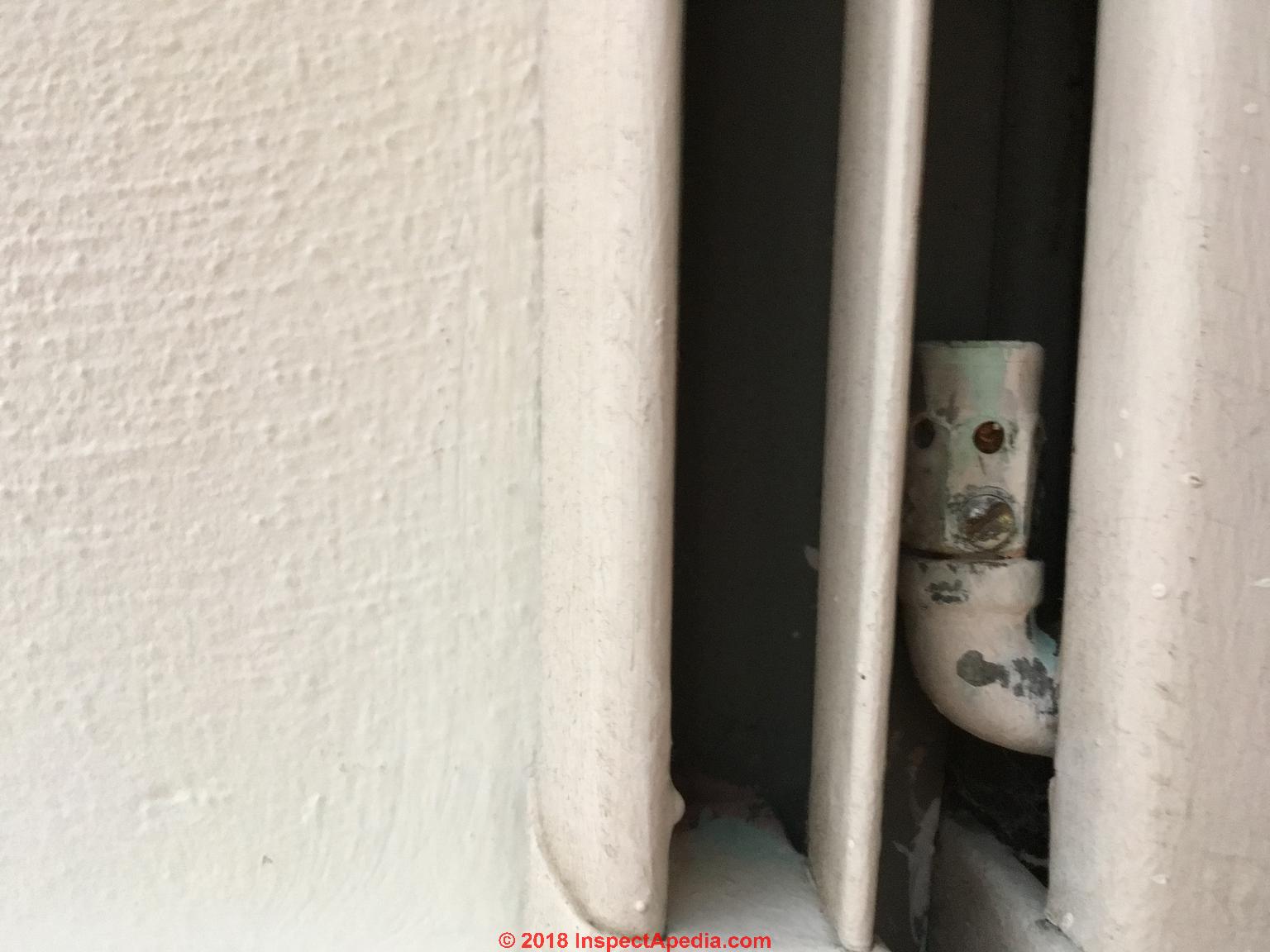
by Dave P - Here's a closer look at this antique Taco air vent
I am resending another photo of the valve in question. As you can see from the photo, there is no mechanism on the endcap to manually use a square key to bleed the valve.
The only way to turn anything on the existing valve is to turn the set screw on the side of the valve, but the screw head is worn and can no longer be turned with a screwdriver.
I was able to turn the screw on one of my 6 valves, and when I do, it emits water Any other ideas? Thanks!
I just noted that there is also a label stamped on the end of this valve. Taco Vent Patent ( I believe the number is R 601,216)
by (mod) - manually-operated Taco coin vent air bleeder valve
Dave,
Now that I can see your air bleeder control more clearly, we can be more accurate.
The type of air bleeder valve in your photo is opened manually.
Looking at your photo now provided I think this may be a Taco coin vent.
This is an air bleeder valve that sports a small screw that is opened by a coin or screwdriver to permit air to escape the valve.
Other such valves have a square stem in the valve top that is turned to open it, using, usually, a square key.
We discuss opening valves of that type
Reply by (mod) - History & Details of Taco Coin Vent & Earlier Air Bleeding Valves
Dave,
Often we can turn a screw with damaged slot simply by using a larger screwdriver blade, occasionally after improving the slot using a Dremel tool cutting wheel, occasionally by gripping it with a small pair of Vise Grips.
If you cannot successfully open and close the air vent in question you can replace it. It looks as if the vent screws into a standard NPT 1/4" pipe elbow but I'm only guessing size from your photos. See AIR BLEED VALVE SOURCES at https://inspectapedia.com/heat/Air_Bleed_Valve_Sources.php
The procedure for replacing a bad air vent or coin vent or air bleeder valve is given in this article.
The difficulty I suspect is that the location of your air vent is very cramped, making selection of an air vent that can be operated from the side rather than from its top a desirable choice.
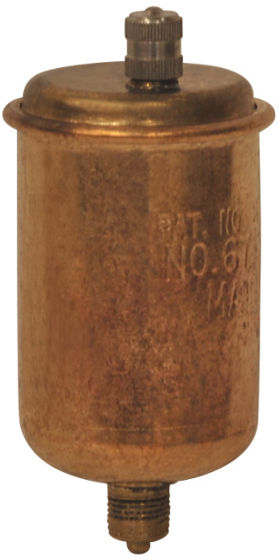
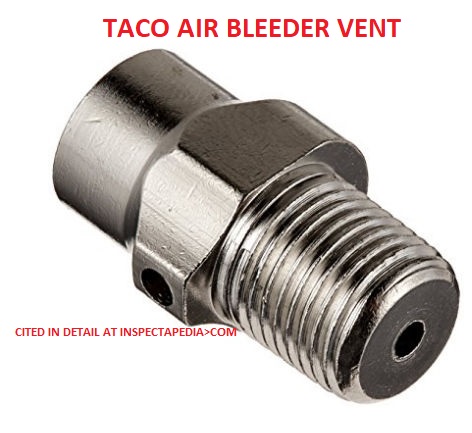
My first photo below is a traditional Taco type coin vent
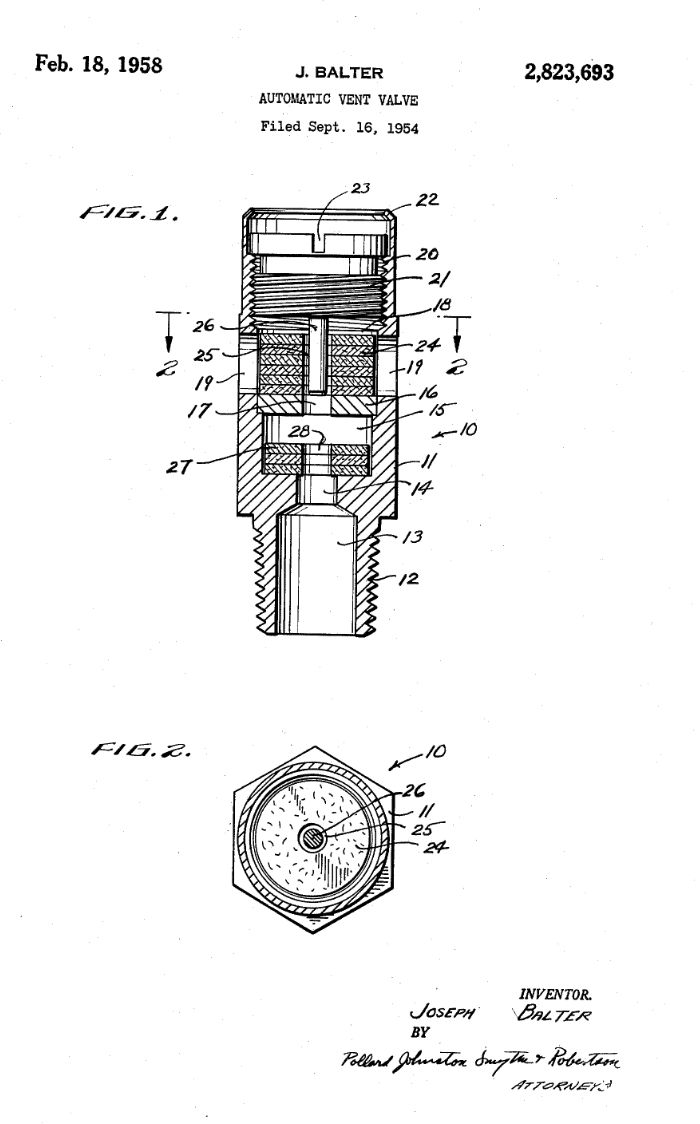
I did not find the patent number you cited associated with Taco but below I show the original air vent patent by Joseph Balter who assigned this air vent patent to Taco Heaters Inc. in 1958.
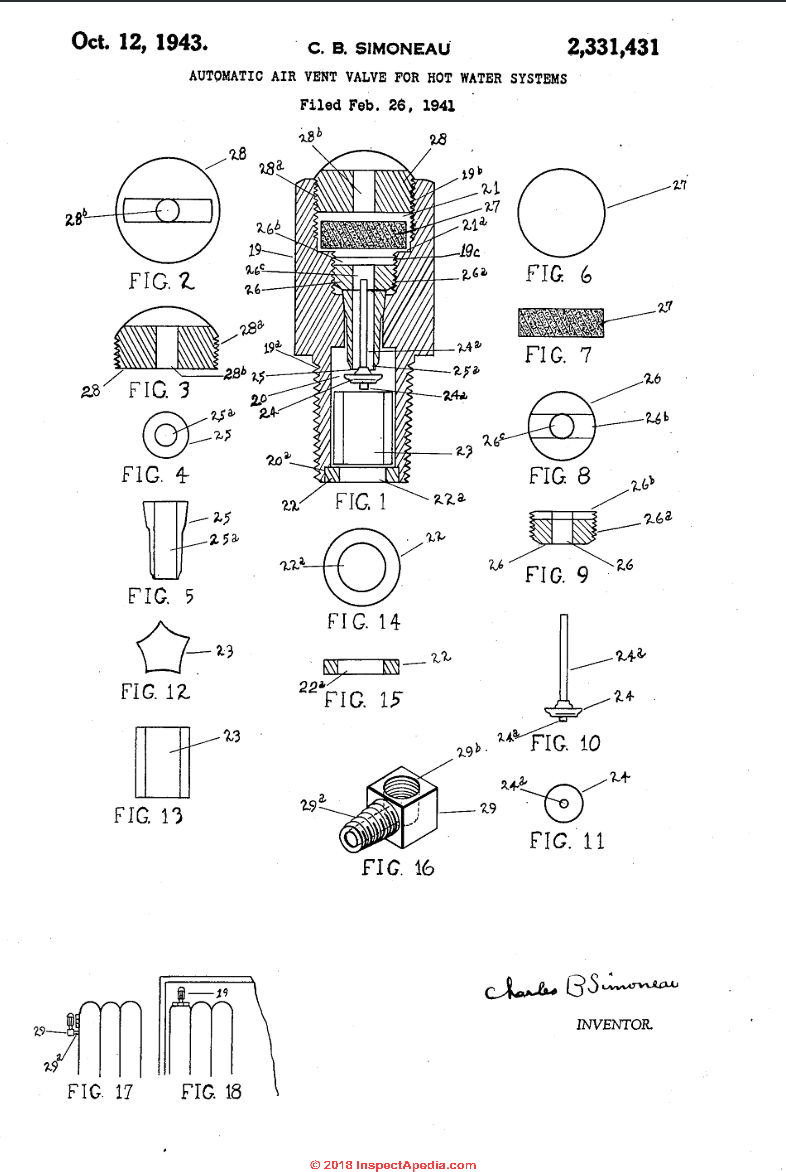
There were, of course earlier versions of air bleeders and vents for steam and hot water radiators in the long history of modern heating systems, such as Simoneau's automatic air vent for hot water systems in 1943 - when I was a baby.
[Click to enlarge any image]
Simoneau's patent includes a nice explanation of the need to vent air from radiators and baseboards.
- Joseph, Balter. "Automatic vent valve." U.S. Patent 2,823,693, issued February 18, 1958. Assigned to Taco Heaters, Inc.,
Excerpt: This invention relates to an automatically operating vent valve permitting the passage of air or other dry gases therethrough and closing off the passage of steam or other moist vapors when the latter reaches the valve, the steam or moist vapor condensing so as to cause the valve to shut off, such a valve being especially adaptable for use in a steam heating system, or other system requiring venting of air or gas.
- Simoneau, Charles B. "Automatic air vent valve for hot water systems." U.S. Patent 2,331,431, issued October 12, 1943.
Excerpt:
Various means, such as screw plugs, pet cocks, etc., are in common use for venting air from hot water heating systems, the plugs, cocks or other devices being opened and closed manually when it is deemed necessary to free the systems from pent up air. This often results in situations where there may be an accumulation of air which impedes circulation and reduces the ef ficiency of the systems.
To remedy the unsatisfactory condition resulting from the presence of air, it is often necessary to call in a plumber, steam fitter or other service man to remove the air and return the system to normal condition. As is well known to those who are skilled in the art, when preparing a hot water heating system for operation, all parts are filled with water to a point above the highest radiator or the upper floor line.
While the filling operation is going on, all radiator plugs, pet cocks, etc., where air might gather and make air pockets, are opened manuallyto vent air from the system.
As the water rises to these open vents they are closed by hand as the appearance of the water at the vents shows that the air has been expelled, thus creating a theoretically perfect circulatory system.
It is found in practice, however, that air pockets form in the radiators and continue to increase in area without the knowledge of the user until a condition arises where due to the air pockets the radiators fail to function properly.
Then the system is tapped by hand to release the air, as referred to above.
It is well known that water expands when heated. The result is that when the burner is started after the system has been filled with water and the air expelled, the radiators work efiiciently. During the off-cycles the water cools and manual vents that are. not 100 percent sealed take in air.
When the burner goes on and heats the water the water expands again as stated and often the vents cannot release the air quickly enough to avoid forming air pockets, thus cutting down the water circulation in the radiators and lowering their heating efllciency.
For example, during an on and off cycle there may be a decrease in efficiency of, let us say, 5 percent. During each successive cycle this deficiency builds up, due to increased amounts of air in the radiators. It is a known fact that air pockets are detrimental to the efficiency of hot water heating systems because circulation and radiation capacities are lowered thereby.
It is also common experience that one or more radiators in every installation having manual vents must be relieved of accumulated air frequently, sometimes several times per week.
I have devised a means, which I will describe fully hereinafter, by which but water heating systems are automatically vented so that air does not interfere with the circulation and so that perfect circulation is maintained at all times.Other angled automatic air separators or air vents: Aercal from Caleffi
Continuing:
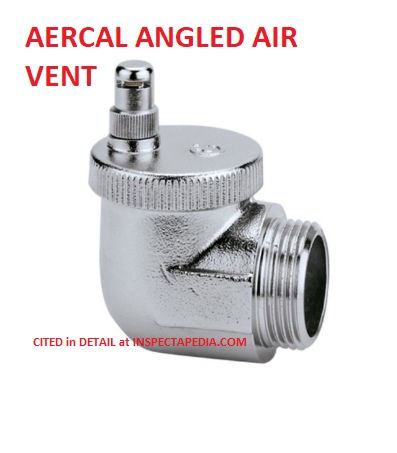
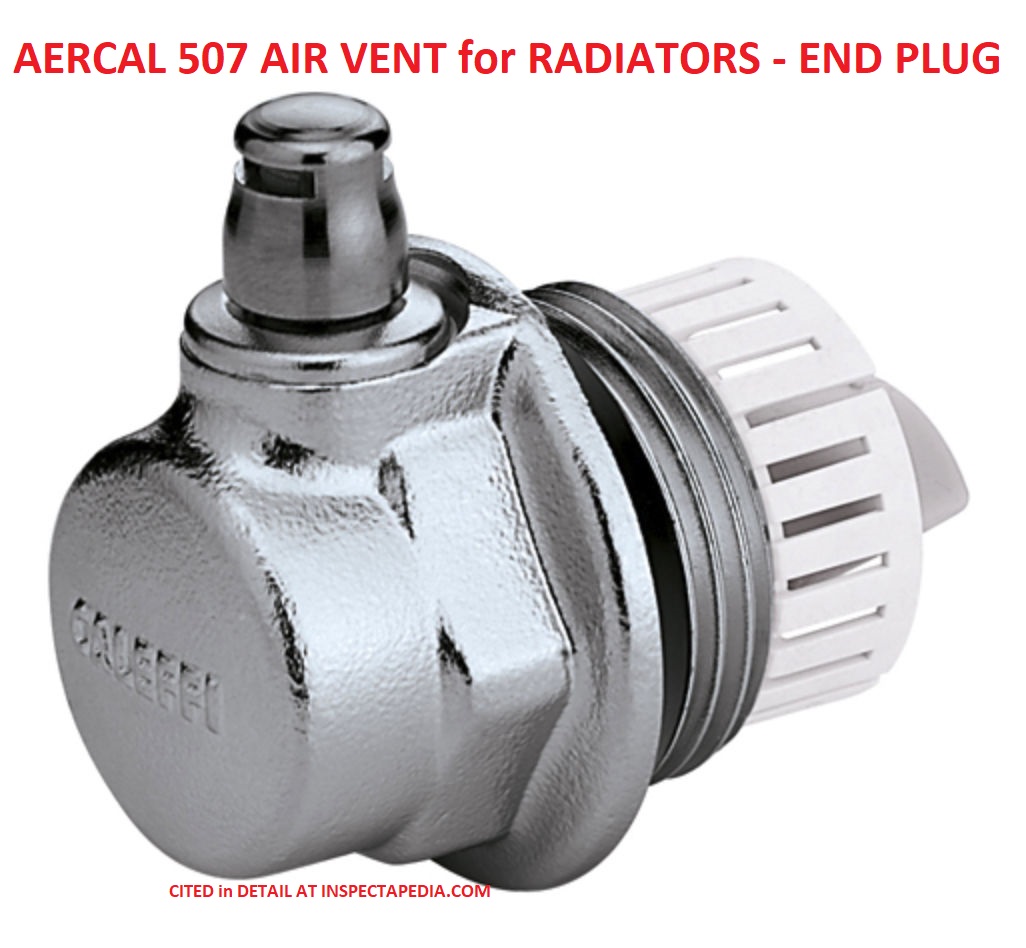
If you can fit an automatic vent into the space that might make your life easier.Shown below, are two angled air vents produced by Caleffi Hyrdonic Solutions, an Italian company, and marketed unde the AERCAL brand.
Above is the Aercal 504 air separator is an automatic air vent used in radiators.
Below is the Aercal 507 automatic air vent, also produced by Caleffi and used in the end plug on radiators instead of in a separate tapping on the radiator body.
This vent is sold in four models.
- Caleffi S.p.A., S.R. 229 N. 25, 28010 Fontaneto dAgogna (NO) Italy, Tel: +39-0322-8491 Email: info@caleffi.com
You will find Caleffi and other air bleeders and vents
by (mod) - Examples of early air eliminators and air bleeder valves
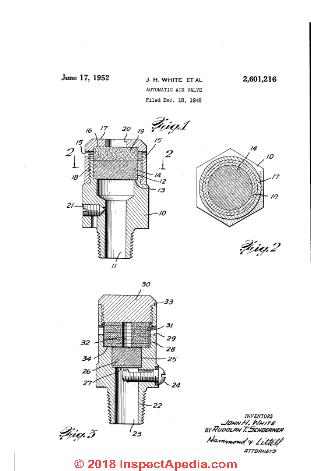
Your original vent might be one of these
- White, John H., and Rudolph T. Schoerner. "Automatic air valve." U.S. Patent 2,601,216 A, issued June 17, 1952, Assigned to Taco Heaters.
Or you might need to eliminate or add to that small street-ell that appears to be screwed into the radiator side to make your new vent more-easily accessible.
Also there are some radiator air vents using a larger knurled control knob that might be able to be operated in the space in your photos.If when you open an air bleeder on a radiator and WATER comes out then close the valve again - there is no air to be bled at that location.
If that radiator remains cold I suspect that there is an air blockage in piping ahead of the radiator or the radiator's inlet valve is closed or blocked, or, less likely, the radiator itself has so much rust at its water inlet that it's not accepting hot water.by Dave P. - coin vent has worn screw valve - I should replace it?
That looks like the valve I am dealing with. Thanks for the great research help. Any idea where I might locate more info/specs on this particular valve?
I suspect that if I can determine the size of the screw listed as part #24 on the drawing, I can make the repair rather simply.
Unfortunately, the head on the screw is rather worn and soft, will not accept a screwdriver of any size, and there is not much to work with for the dremel or vice grips.
by (mod) - replace air eliminator or bleeder valve that can't be opened or can't be closed
I would replace the valve - there are many suitable replacements that can work, such as the modern Taco air vent shown below.
See options at AIR BLEED VALVE SOURCES
Watch out: I prefer to have alternative parts on hand before trying to remove and replace a radiator air vent, so as to minimize water spillage.
AIR BLEEDER VALVES and our other articles in this series illustrate lots of options for you.
AIR BLEED VALVE INSTALLATION describe how to replace or install a new air vent. - Daniel Friedman
...
Air Bleeder Valve Stem Replacement FAQs
Can I use an automobile tire valve in a hot water heat system air bleeder valve?
Can I use a tire stem valve in the air bleeder? On 2015-03-15 by Linda
by (mod) - No; here's why:
No.
The part may look identical but the pressure rating of its spring (for an auto tire) is set for much higher pressures. An automatic air bleed valve won't continue to bleed air automagically if you replace the valve stem with one of the wrong rating.
Stop by your plumbing supplier and ask for a new stem or just replace the whole bleeder.
...
Continue reading at AIR BLEEDER VALVES - home, or select a topic from the closely-related articles below, or see the complete ARTICLE INDEX.
Or see this AIRBOUND HEAT REPAIR FAQs INDEX - questions & answers about fixing airbound hot water heating systems
Or see these
Recommened Articles
- AIR BLEEDER VALVES - home
- AIR BLEED VALVE INSTALLATION
- AIR ELIMINATOR / FLOAT VENT REPLACEMENT
- AIR BLEED VALVE LEAK REPAIR
- AIR BLEED VALVE SOURCES
- AIR BLEEDER VALVE FUNCTIONS
- EXPANSION TANK AIR VALVE LEAKS for leaks at the air adjustment valve on a boler expansion/compression tank
- RADIATOR PLUG REMOVAL
- RADIATOR VALVES & HEAT CONTROLS
Suggested citation for this web page
AIR BLEED VALVE LEAK REPAIR FAQs at InspectApedia.com - online encyclopedia of building & environmental inspection, testing, diagnosis, repair, & problem prevention advice.
Or see this
INDEX to RELATED ARTICLES: ARTICLE INDEX to HEATING RADIATORS
Or use the SEARCH BOX found below to Ask a Question or Search InspectApedia
Or see
INDEX to RELATED ARTICLES: ARTICLE INDEX to HEATING BOILERS
Or use the SEARCH BOX found below to Ask a Question or Search InspectApedia
Ask a Question or Search InspectApedia
Share this article:Search the InspectApedia website
Need to make a private comment? Email editor@inspectApedia.com. We welcome email with your website content critique, corrections, suggestions or questions. Email is monitored daily but our workload may prevent an immediate reply. For immediate results, we hope you'll first try asking your question using the search box just above.
Citations & References
In addition to any citations in the article above, a full list is available on request.
- In addition to citations & references found in this article, see the research citations given at the end of the related articles found at our suggested
CONTINUE READING or RECOMMENDED ARTICLES.
- Carson, Dunlop & Associates Ltd., 120 Carlton Street Suite 407, Toronto ON M5A 4K2. Tel: (416) 964-9415 1-800-268-7070 Email: info@carsondunlop.com. Alan Carson is a past president of ASHI, the American Society of Home Inspectors.
Thanks to Alan Carson and Bob Dunlop, for permission for InspectAPedia to use text excerpts from The HOME REFERENCE BOOK - the Encyclopedia of Homes and to use illustrations from The ILLUSTRATED HOME .
Carson Dunlop Associates provides extensive home inspection education and report writing material. In gratitude we provide links to tsome Carson Dunlop Associates products and services.
 |
HOME | ABOUT | ASK a QUESTION | CONTACT | CONTENT USE POLICY | DESCRIPTION | POLICIES | PRIVACY | |
| © 2026 - 1985 Publisher InspectApedia.com - Daniel Friedman | |||||||||