
InspectAPedia® FREE Encyclopedia of Building & Environmental Construction, Diagnosis, Maintenance & Repair |
Question? Just ask us! InspectAPedia
|
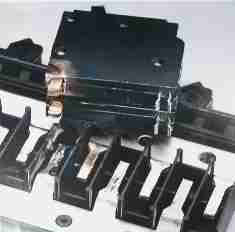 Square D Warning regarding Classified Circuit Breakers
Also: Square D Circuit Breaker Recalls
- POST a QUESTION or COMMENT about the hazards of using non OEM or "replacement" circuit breakers - Classified circuit breakers - warning by Square-D corporation
Square D warning on Classified Circuit Breakers:
This article reports on safety concerns with use of non OEM circuit breakers in various electrical panels, specifically the use of Classified circuit breakers or other interchangeable circuit breakers in Square D electrical panels.
The concerns raised by Square-D in this notice may pertain to use of interchangeable circuit breakers in other electrical panel brands as well.
This page also refers readers to two Square-D circuit breaker recalls issued in 2013 to suppliers and OEMS using certain FA, FH, FI, FY & KI Circuit Breakers.
This website provides information about a variety of electrical hazards in buildings, with articles focused on the inspection, detection, and reporting of electrical hazards and on proper electrical repair methods for unsafe electrical conditions.
InspectAPedia tolerates no conflicts of interest. We have no relationship with advertisers, products, or services discussed at this website.
- Daniel Friedman, Publisher/Editor/Author - See WHO ARE WE?
Square D Warns Against Use of Classified Circuit Breakers
Use of different circuit breakers from those sold by the electrical panel manufacturer, such as Cutler-Hammer and Square D.
The concerns raised by Square-D in this notice may pertain to use of interchangeable circuit breakers in other electrical panel brands as well. Guide to Electrical Hazards in buildings: inspection, detection, & repair advice.
Square D Company (Groupe Schneider)
August 30, 1995
TO: Electrical Inspectors
FROM: Jim Pauley, Manager, Industry Standards
SUBJECT: Classified Circuit Breakers
Square D Company recognizes the important electrical safety role played by electrical inspectors. because of this role, we want you to be aware of the possible reduction in the level of public safety from the use of Classified circuit breakers and other types of interchangeable circuit breakers.
Square D opposes the use of Classified circuit breakers and other forms of interchangeable circuit breakers in panels not listed or labeled to accept them. Our position is based on the National Electrical Code (NEC) Section 110-3(b) that requires equipment to be "used or installed in accordance with any instructions included in the listing or labeling," and our concern with public safety.
Enclosed is literature on the topic and photos of actual field failures involving Classified circuit breakers that were installed in Square D panels. As you can see, use of these circuit breakers may result in reduced electrical protection, loss of warranty, and a reduced level of safety.
Many of your fellow electrical inspectors regard use of these circuit breakers as a Code violation.
Square D's reputation was built on quality, unsurpassed electrical protection, and a concern for public safety.
That reputation, and the safety of our customers, may be threatened by the use of Classified and interchangeable circuit breakers.
That's why we have taken a leadership role in the education of the public regarding the possible risks associated with the use of Classified and interchangeable circuit breakers.
We encourage you to use the information enclosed to maintain the excellent record of safety we enjoy in U.S. electrical Installations.
Jim Pauley
Manager, Industry Standards
[Enclosed photographs and data are reproduced below.]

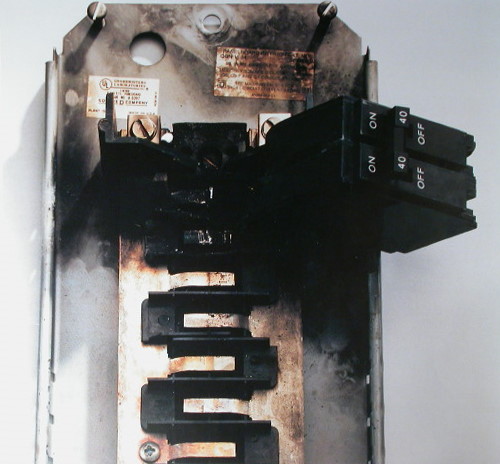
Here is an example of what could happen when a Classified circuit breaker is used with a Square D load center. Square D load centers are designed as a system with mechanical, electrical and heat dissipation standards which exceed minimum standards.
Square D's warranty is void when a Classified breaker is installed.
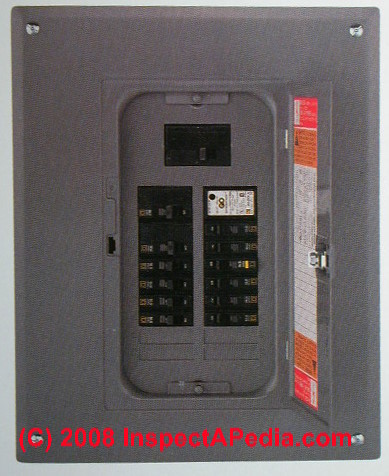 A consumer information flyer from Square D includes text citing that Genuine QO circuit breakers are available only from Square D. Though circuit breakers that fit Square D QO load centers are available, Square D's flyer informs consumers that imitations ar rarely as good as the real thing.
Square D's flyer continues that QO circuit breaker 15A and 20A QWIK-OPEN® breakers can trip "faster than the blink of an eye on overcurrents as low as 200 amps."
["Load Centers" are listed and marked as panelboards but commonly called "load centers".]
The flyer points out that QO circuit breakers have been tested and are UL Listed as a system for use in all QO load centers and panelboards. UL Classified imitation QO circuit breakers have not undergone the same testing as genuine QO circuit breakers, and have not been tested in all equipment marked to accept QO circuit breakers.
While the standard QO load center has a 22,000/10,000 amperes short circuit current rating, UL Classified imitation QO breakers are prohibited from use in series rated applications, or applications where there is greater than 10,000 amperes available fault current.
The only way to be certain of a UL Listed combination and proper application is to use only genuine QO circuit breakers in Q) equipment.
Schneider Electric Square-D Breaker Recall Notices
SCHNEIDER ELECTRIC SAFETY ALERT FA, FH, FI, FY-1 (1, 2, & 3 Pole, 15-100A) & KI (2 & 3 Pole, 110 – 250A) Circuit Breakers [PDF] (08/28/2013) Schneider Electric Services, ATTN: Product Support Services, 8848 Red Oak Blvd, Suite A, Charlotte, NC 28217-5519 USA original source: Schneider-Electric-Breaker-Notice-2013.pdf - link dead in 2023 - see separate recall notices below
SCHNEIDER ELECTRIC SAFETY ALERT FA, FH, FI, FY-2 (1, 2, & 3 Pole, 15-100A) & KI (2 & 3 Pole, 110 – 250A) Circuit Breakers [PDF] (12/05/2013) Schneider Electric Services, ATTN: Product Support Services, 8848 Red Oak Blvd, Suite A, Charlotte, NC 28217-5519 USA original source: https://www.borderstates.com/UserFiles/safety-notices/2013-12-05-schneider-electric-square-d-circuit-breakers-fa-fh-fi-fy-ki.pdf - dead link in 2023 - see notices below
These notices were provided to electrical suppliers for distributors & OEMs of these products: Excerpt from the second notification:
FA, FH, FI, FY & KI Circuit Breakers built to the UL489 standard may have a nonconforming latch in the mechanism. If the latch is nonconforming, there is a risk that the circuit breaker will not trip on an overload condition.
This will result in the potential for PROPERTY DAMAGE AND PERSONAL INJURY.
We are committed to offer you the highest level of reliability in products you purchase from Schneider Electric. Hence the decision was made to replace these products.
Schneider Electric Recalls Square D-Brand F and K Frame Circuit Breakers Due to Fire Hazard
March 18, 2014 – This recall involves Square D brand models FA, FH, FI and FY one-, two- and three-pole circuit breakers rated 15 to 100 amps, and model KI two- and three-pole circuit breakers rated 110 to 250 amps.
The F model breakers were manufactured May 8, 2013 through June 10, 2013 and have date codes 13193 through 13241. The K models were manufactured May 2, 2013 through June 21, 2013 and have date codes 13184 through 13255. The date codes are YYWWD format (example: 13184 = year 2013, week 18, day of the work week 4/ Thursday).
The circuit breakers have a yellow label with the words “Square D” or the Square D logo. Model information can be found on the faceplate.
- U.S. Consumer Product Safety Commission Schneider Electric SQUARE D D F K FRAME CIRCUIT BREAKER RECALL NOTICE [PDF] (2014) - original source: cpsc.gov/Recalls/2014/Schneider-Electric-Recalls-Square-D-Brand-F-and-K-Frame-Circuit-Breakers
Schneider Electric Second Safety Alert for FA, FH, FI, and FY and KI circuit breakers
A second containment activity is required for Offer Safety Alert (PRB-75865/RC104) for FA, FH, FI, FY (1, 2 and 3 Pole Circuit Breakers, 15A to 100A) manufactured from May 8th, 2013 through June 10th, 2013 (date codes 13193 – 13241 inclusive) and KI (2 and 3 Pole Circuit Breakers, 110 – 250A) manufactured from May 2, 2013 through June 21, 2013 (date codes 13184 – 13255 inclusive).
Prior containment at Schneider Electric was not effective and a second escape of affected product did occur. As a result, products shipped from Schneider Electric between the dates of August 23, 2013 through November 13, 2013 may have included these impacted products within the date code range of the first containment.
The affected circuit breakers may have a nonconforming latch in the mechanism. If the latch is nonconforming, there is a risk that the circuit breaker will not trip on an overload condition.
This will result in the potential for property damage and personal injury. Schneider Electric is committed to offer the highest level of reliability in our products; therefore the decision was made to replace these products. Corrective actions have been put in place and production has resumed. Inventory is available in our Distribution Centers.
Schneider Electric Services will be contacting customers to notify them of the affected circuit breakers and provide instructions for replacement.
For more information, contact Schneider Electric Services at 1-800-634-8730.
...
Continue reading at ELECTRIC PANEL INSPECTION - home where additional listings of failing electrical panels & wiring types are provided, or select a topic from the closely-related articles below, or see the complete ARTICLE INDEX.
Or see these
Electrical Circuit Breaker Articles
- AFCIs ARC FAULT CIRCUIT INTERRUPTERS
- CIRCUIT BREAKER FAILURE RATES
- BACK-WIRED ELECTRICAL DEVICES
- BRYANT ELECTRICAL PANEL AGE & PROPERTIES
- Classified CIRCUIT BREAKER WARNING
- FEDERAL PIONEER PANEL SAFETY
- FEDERAL PACIFIC FPE HAZARDS - home
- FPE FAILURE FIELD REPORTS
- MURRAY CIRCUIT BREAKER HAZARDS
- MURRAY SIEMENS Recall
- PUSHMATIC - BULLDOG PANELS
- SIEMENS MURRAY Recall
- SPLIT BUS ELECTRICAL PANEL HAZARDS
- SQUARE-D AFCI RECALL 2004
- SQUARE-D COUNTERFEIT BREAKER RECALL
- TEST MAIN BREAKERS & FUSES
- UBI FPE CIRCUIT BREAKER TEST RESULTS
- ZINSCO CIRCUIT BREAKER INDEPENDENT TESTS
- ZINSCO CIRCUIT BREAKER TEST REPORT
- CIRCUIT BREAKER / FUSE INSPECTION
- CIRCUIT BREAKER MAIN or FUSE TEST
- CIRCUIT BREAKER REPLACEMENT
- CIRCUIT BREAKER RESET STEPS
- CIRCUIT BREAKER RELIABILITY TESTS
- GFCI DEVICE SELECTION & WIRING
Suggested citation for this web page
Classified CIRCUIT BREAKER WARNING at InspectApedia.com - online encyclopedia of building & environmental inspection, testing, diagnosis, repair, & problem prevention advice.
Or see this
INDEX to RELATED ARTICLES: ARTICLE INDEX to ELECTRICAL INSPECTION & TESTING
Or use the SEARCH BOX found below to Ask a Question or Search InspectApedia
Ask a Question or Search InspectApedia
Questions & answers or comments about the hazards of using non OEM or "replacement" circuit breakers - Classified circuit breakers - warning by Square-D corporation.
Try the search box just below, or if you prefer, post a question or comment in the Comments box below and we will respond promptly.
Search the InspectApedia website
Note: appearance of your Comment below may be delayed: if your comment contains an image, photograph, web link, or text that looks to the software as if it might be a web link, your posting will appear after it has been approved by a moderator. Apologies for the delay.
Only one image can be added per comment but you can post as many comments, and therefore images, as you like.
You will not receive a notification when a response to your question has been posted.
Please bookmark this page to make it easy for you to check back for our response.
IF above you see "Comment Form is loading comments..." then COMMENT BOX - countable.ca / bawkbox.com IS NOT WORKING.
In any case you are welcome to send an email directly to us at InspectApedia.com at editor@inspectApedia.com
We'll reply to you directly. Please help us help you by noting, in your email, the URL of the InspectApedia page where you wanted to comment.
Citations & References
In addition to any citations in the article above, a full list is available on request.
- "Electrical System Inspection Basics," Richard C. Wolcott, ASHI 8th Annual Education Conference, Boston 1985.
- "Simplified Electrical Wiring," Sears, Roebuck and Co., 15705 (F5428) Rev. 4-77 1977 [Lots of sketches of older-type service panels.]
- "How to plan and install electric wiring for homes, farms, garages, shops," Montgomery Ward Co., 83-850.
- "Simplified Electrical Wiring," Sears, Roebuck and Co., 15705 (F5428) Rev. 4-77 1977 [Lots of sketches of older-type service panels.]
- "Home Wiring Inspection," Roswell W. Ard, Rodale's New Shelter, July/August, 1985 p. 35-40.
- "Evaluating Wiring in Older Minnesota Homes," Agricultural Extension Service, University of Minnesota, St. Paul, Minnesota 55108.
- "Electrical Systems," A Training Manual for Home Inspectors, Alfred L. Alk, American Society of Home Inspectors (ASHI), 1987, available from ASHI. [DF NOTE: I do NOT recommend this obsolete publication, though it was cited in the original Journal article as it contains unsafe inaccuracies]
- "Basic Housing Inspection," US DHEW, S352.75 U48, p.144, out of print, but is available in most state libraries.
- In addition to citations & references found in this article, see the research citations given at the end of the related articles found at our suggested
CONTINUE READING or RECOMMENDED ARTICLES.
- Carson, Dunlop & Associates Ltd., 120 Carlton Street Suite 407, Toronto ON M5A 4K2. Tel: (416) 964-9415 1-800-268-7070 Email: info@carsondunlop.com. Alan Carson is a past president of ASHI, the American Society of Home Inspectors.
Thanks to Alan Carson and Bob Dunlop, for permission for InspectAPedia to use text excerpts from The HOME REFERENCE BOOK - the Encyclopedia of Homes and to use illustrations from The ILLUSTRATED HOME .
Carson Dunlop Associates provides extensive home inspection education and report writing material. In gratitude we provide links to tsome Carson Dunlop Associates products and services.
 | HOME | ABOUT | ASK a QUESTION | CONTACT | CONTENT USE POLICY | DESCRIPTION | POLICIES | PRIVACY | |
| © 2025 - 1985 Publisher InspectApedia.com - Daniel Friedman | |||||||||