 Air Conditioning / Heat Pump Condensate Drip Trays
- POST a QUESTION or COMMENT about air conditioner and heat pump condensate drip trays, overflow pans, and safety switches, controls, and drains
Condensate drip trays:
This air conditioning repair article discusses the inspection and repair of air conditioning condensate systems, including Air Conditioning Condensate Drip Trays, Defects, and Leaks.
Condensate overflow or drip tray leaks, piping, and float switches can shut down an air conditioner or heat pump.
These leaks can also damage the building, even causing costly mold contamination. Health and safety concerns of A/C or heat pump condensate leaks are also reviewed.
This article is part of our series of diagnostic & repair articles for cooling system condensate piping, traps, drains, condensate pumps, and the detection and hazards of air conditioning system condensate leaks in buildings.
InspectAPedia tolerates no conflicts of interest. We have no relationship with advertisers, products, or services discussed at this website.
- Daniel Friedman, Publisher/Editor/Author - See WHO ARE WE?
Condensate Drip Tray or Condensate Overflow Pan Installation, Inspection, & Diagnosis
 Article Contents
- AUXILIARY CONDENSATE DRAIN LINE
- MISSING CONDENSATE OVERFLOW PAN
- IMPROPERLY CONNECTED CONDENSATE DRAINS
- FLOAT SWITCH on CONDENSATE DRAIN
- LEAKS in CONDENSATE OVERFLOW PAN
Using an auxiliary condensate drain line from condensate overflow pan
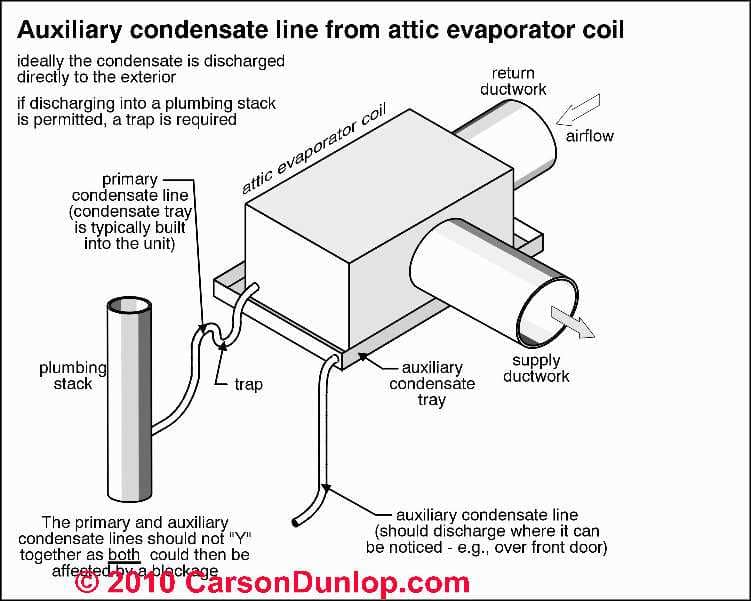
As Carson Dunlop Associates ' sketch (above) illustrates, one method of insuring against building damage due to a clogged A/C condensate disposal line is the installation of a second, auxiliary drain line to empty the condensate overflow pan that should be installed beneath the indoor cooling unit
[Click to enlarge any image]
When an air conditioning unit is located in an attic where damage may result from air conditioning system condensate overflow from the primary condensate collection and drain equipment, an additional water-tight corrosion-resistant pan (an air conditioner condensate drip tray or "drip pan") should be installed below the air conditioning equipment to catch overflowing AC condensate should the primary AC condensate drain become clogged.
The sketch illustrates that the condensate drain from the auxiliary condensate tray is not only separated from the primary condensate drain, it is best routed to a different destination and one at which the discharge will be noticed, prompting a repair.
Also, a basement air conditioning system condensate pump can overflow and spill into the living area if the condensate pump fails or if the condensate pump drain line becomes kinked or clogged.
Missing air conditioner condensate overflow pans
A missing air conditioning system condensate drip tray risks leaks into the attic ceiling, where air conditioner condensate can damage the building or cause a (hidden) mold problem, especially if condensate is leaking onto the upper, hidden (by insulation) attic side of drywall forming a ceiling of a room located below the equipment.
Both the drywall and the insulation itself may become mold reservoirs.
Improperly connected or joined air conditioner condensate drain lines and overflow pan drains

Air conditioning drip pan drains
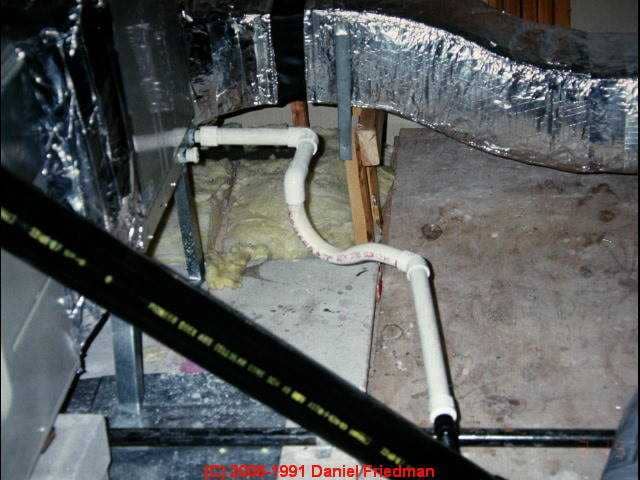
The air conditioner's condensate overflow pan or tray requires its own separate drain. In the photo above, the overflow pan has its own drain line, but it joins with the main air conditioner condensate drain line almost immediately.
A blockage in the condensate drain is going to lead to leaks out of the air handler into the overflow pan but since the overflow pan itself shares the same drain the pan will overflow into the building ceiling, inviting a mold problem or other damage.
But this is the most common way we see these drains installed.
Most likely the installer is considering that the main risk of a blockage in the condensate drain system is going to be inside the air handler unit itself. We're not sure what data supports this view.
The float switch approach, discussed next, might be a safer approach.
Float switches on air conditioning condensate overflow pans
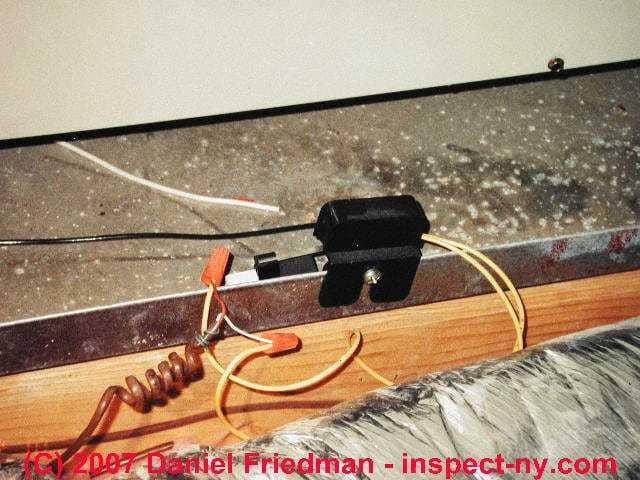 A condensate leak or overflow into the drip tray can trip this switch, shutting down your air conditioner or heat pump system.
Float switches on condensate trays
Some air conditioning system air handler installations provide a float switch in the condensate overflow tray. This switch has a floating lever resting in the overflow pan.
The lever senses the presence of water and "floats up" until it shuts down the air conditioning system.
This may be inconvenient in hot weather, but the installer or owner have chosen to protect the building against a potentially costly mold or other leak-related problem by shutting down the air conditioner, forcing attention to the problem.
Remember that if the condensate float tray switch senses condensate in the tray (or is otherwise defective), it will shut the air conditioning system down - if your air conditioning system seems ok but won't turn on, this switch could be one of the items to check. Thanks to Lester Richter for this tip.
Watch out: if your air conditioner has suddenly shut off and won't start, don't forget to check the condensate overflow tray for water, and if this switch was used (instead of a second condensate drain pipe), see if the switch is keeping your air conditioner turned off.
If your condensate tray switch is a lever type (shown in our photo), try pushing the lever down to see if the A/C will turn back on. Other switches may have no moving parts: you'll need to remove the condensate and dry the switch.
Details are at CONDENSATE PAN SWITCH LOCKOUT
An air conditioner condensate pan or drip tray float switch installed, the cost will principally be the fee for an HVAC service call to install the switch in the pan (trivial) and wire it to the A/C controls (less than an hour). Figure $100 to $150 for a service call to install the switch if none is already present.
If there is an drain pan overflow shutoff switch already installed but needing replacement, it should be a simpler operation since it's just a swap-in part. The wiring to the HVAC system controls will already be in place.
The condensate pan or overflow pan safety switch itself, such as the Safe-T-Switch Model SS3 made by Rectorseal and sold as a drip pan overflow shut-off switch, retails from $30.00 to $50.00 U.S. [1]
Don't forget to find and fix the cause of condensate leakage into the overflow tray or you'll continue to have air conditioner operating problems.
See CONDENSATE PAN OVERFLOW SWITCH
Evidence of leaks into an A/C condensate overflow pan may indicate trouble
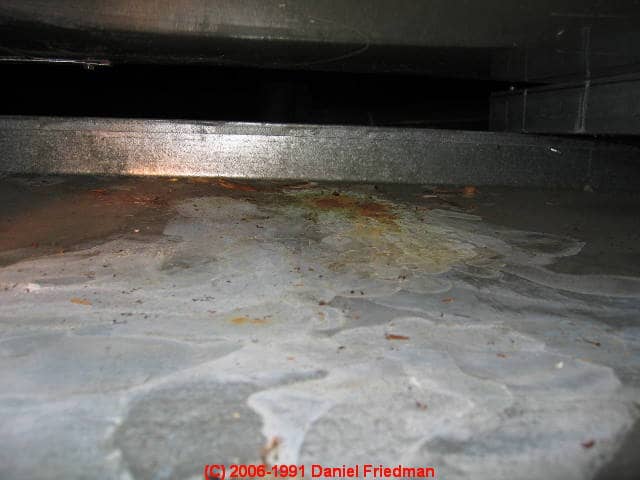
The photograph above shows the the interior of an air conditioner overflow drip pan or tray. The air conditioning system condensate overflow tray shows evidence of leaks.
Since normally condensate produced in the indoor air handler is carried from the air handler interior to a condensate drain, we don't expect to see condensate falling into the condensate overflow drip tray as a normal event.
If we see evidence of leaks into the condensate tray, the air conditioning system service technician should investigate the cause of this condition.
Readers who need to clean or unclog a blocked or leaky overflowing A/C or heat pump condensate drain should
see CONDENSATE DRAIN CLEAN & DE-CLOG.
...
Reader Comments, Questions & Answers About The Article Above
Below you will find questions and answers previously posted on this page at its page bottom reader comment box.
Reader Q&A - also see RECOMMENDED ARTICLES & FAQs
Reader Question: My condensate drain seems clean but the overflow tray still is leaking
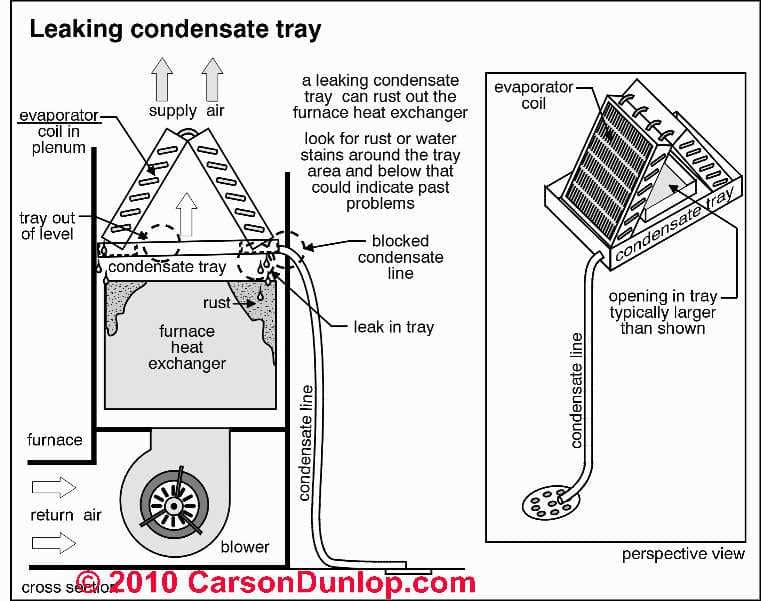 My AC unit inside unit overflows into the crawling space.
I have cleaned the drain pipe and the air handler coil but the unit still overflows out of the coil tray. What could be the cause(s) of this? - Angel J 6/16/11
Cleaned out the condensate drain pipe with shop vac, bleach, and weak mattress blower.
Only observed draining from the primary pipe during the day (85 - 100 degrees F) but noticed a little dripping from the overflow pipe at night (not continuous). Guessing up to a cup of water from overflow.
Primary condensate pipe still clogged? What kind of plastic tube would work as snake? - Mark 6/27/11
Reply:
Angel: Carson Dunlop Associates ' sketch (above left) illustrates what happens when a condensate tray leaks, risking costly damage to the equipment.
Your question is why the condensate keeps flowing out of the tray when you are confident that the drain is not blocked.
When the air handler condensate system is leaking into the crawl space and you are sure that the condensate drain pipe is unclogged and properly pitched, I have to guess that there is a problem with the condensate collection pan inside the air handler such as:
- the drain in the pan itself is clogged with debris - you'll need to turn off and look inside the air handler
- the drain pan is corroded through and leaks - it will need patching or replacement;
- the drain pan or the whole air handler is not properly leveled - it may be sloped away from the condensate pan drain opening so that condensate collects in and runs over the edge of the pan in another direction.
Let us know what you find - it'll help other readers.Mark:
There is a nearly overwhelming number of products and methods sold for cleaning out A/C condensate lines, drains, and traps, and various tricks of the trade that fit to individual installations and situations.
I've used a small flexible bottle brush to clean A/C condensate traps; if the blockage is further along the line I've successfully used a small diameter flexible plastic tube bought at the local hardware store. - DF
Question: is a condensate tray required by California Code
Is an overflow pan underneath my AC condenser in the attic mandatory per the building code in CA?
My house was built five years ago without one, now a leak damaged my ceiling.
My AC contractor says a pan is mandatory per CA code, but I cannot find any applicable code. 2020/05/07 Jeff Hedtke
Moderator reply: not exactly, but something is required to address condensate leaks: an overflow pan & drain or a condensate overflow switch control
Jeff
Above on this page we state:When an air conditioning unit is located in an attic where damage may result from air conditioning system condensate overflow from the primary condensate collection and drain equipment, an additional water-tight corrosion-resistant pan (an air conditioner condensate drip tray or "drip pan") should be installed below the air conditioning equipment to catch overflowing AC condensate should the primary AC condensate drain become clogged.
However your local building or plumbing inspector might permit alternative measures such as a leak detection system that shuts down the AC system in the event of a leak.
You'll see in California's adoption of the mechanical code, that there are options permitted. Here is a direct quote from California's building code on condensate handling:
310.2 Condensate Control
Where an equipment or appliance is installed in a space where damage is capable of resulting from condensate overflow, other than damage to replaceable lay-in ceiling tiles, a drain line shall be provided and shall be drained in accordance with Section 310.1.
An additional protection method for condensate overflow shall be provided in accordance with one of the following:
- A water level detecting device
that will shut off the equipment or appliance in the event the primary drain is blocked.- An additional watertight pan of corrosion-resistant material, with a separate drain line,
installed beneath the cooling coil, unit, or the appliance to catch the overflow condensate due to a clogged primary condensate drain.- An additional drain line at a level that is higher
than the primary drain line connection of the drain pan.- An additional watertight pan of corrosion-resistant material with a water level detection device
installed beneath the cooling coil, unit, or the appliance to catch the overflow condensate due to a clogged primary condensate drain and to shut off the equipment.The additional pan or the additional drain line connection shall be provided with a drain pipe of not less than 3/4 of an inch (20 mm) nominal pipe size, discharging at a point that is readily observed.
Here is the entire section from the
California Mechanical Code on Condensate Handling
AC Drip Pan Overflowed and now the inside unit won't start
My A/C drip pan over flowed and water ran all over the unit. We have cleaned the clog but now the unit inside will not start. The fan is turning outside. - On 2011-06-22 by Dana -
Reply by (mod) check the condensate tray overflow switch
It's possible that a safety switch in your condensate tray has become debris clogged or stuck - that will keep the system turned OFF.
See the diagnosis and repair steps
Thank you to our readers for their generous comments
On 2011-06-12 by Happy Florida Girl in the Summer
This tip fixed our issue! Yay!
...
...
Continue reading at CONDENSATE HANDLING, HVAC or select a topic from the closely-related articles below, or see the complete ARTICLE INDEX.
Or see CONDENSATE DRIP TRAY FAQs for answers to questions posted originally at this article.
Or see these
Recommended Articles
- CONDENSATE HANDLING, HVAC
- CONDENSATE LEAKS
- CONDENSATE PUMPS
- CONDENSATE DISPOSAL, IMPROPER
- CONDENSATE DRAINS, CODES
- CONDENSATE DRAIN CLEAN & DE-CLOG
- CONDENSATE DRAIN INSULATION REQUIREMENTS
- CONDENSATE DRAIN PROBLEMS
- CONDENSATE DRIP TRAY DEFECTS
- CONDENSATE PAN SWITCH LOCKOUT
- Legionella BACTERIA & HVAC EQUIPMENT
- CONDENSING BOILER/FURNACE CONDENSATE DRAIN
Suggested citation for this web page
CONDENSATE DRIP TRAY DEFECTS at InspectApedia.com - online encyclopedia of building & environmental inspection, testing, diagnosis, repair, & problem prevention advice.
Or see this
INDEX to RELATED ARTICLES: ARTICLE INDEX to AIR CONDITIONING & HEAT PUMPS
Or use the SEARCH BOX found below to Ask a Question or Search InspectApedia
Ask a Question or Search InspectApedia
Share this article:Ask a Question or Search the InspectApedia website using the box just below.
Need to make a private comment? Email editor@inspectApedia.com. We welcome email with your website content critique, corrections, suggestions or questions. Email is monitored daily but our workload may prevent an immediate reply. For immediate results, we hope you'll first try asking your question using the search box just above.
Citations & References
In addition to any citations in the article above, a full list is available on request.
- [1] Safe-T-Switch Model SS3, Rectorseal, 2601 Spenwick Dr., Houston TX 77055, Tel: 713-263-8001 or 800-231-3345, web search 8/11/11, original source: rectorseal.com Thanks to Mike Giaquinto and Scott at SJM Inspect for technical editing remarks, 5/16/07
- [2] Thanks to Lester Richer, a professional home inspector, for the reminder that a bad air conditioner condensate drip tray switch can shut the whole system down.
- [3] Modern Refrigeration and Air Conditioning, A. D. Althouse, C.H. Turnquist, A. Bracciano, Goodheart-Willcox Co., 1982
- [4] Principles of Refrigeration, R. Warren Marsh, C. Thomas Olivo, Delmar Publishers, 1979
- [5] "Air Conditioning & Refrigeration I & II", BOCES Education, Warren Hilliard (instructor), Poughkeepsie, New York, May - July 1982, [classroom notes from air conditioning and refrigeration maintenance and repair course attended by the website author]
- [6] Refrigeration and Air Conditioning Technology, 5th Ed., William C. Whitman, William M. Johnson, John Tomczyk, Cengage Learning, 2005, ISBN 1401837654, 9781401837655 1324 pages
- [7] Carson Dunlop, Associates, Toronto, have provided us with (and we recommend) Carson Dunlop Weldon & Associates'Technical Reference Guide to manufacturer's model and serial number information for heating and cooling equipment ($69.00 U.S.).
- [8] ASBESTOS HVAC DUCTS & FLUES field identification photos and guide
- [9] FIBERGLASS HAZARDS Indoor Air Quality Investigations: Fiberglass in Indoor Air, HVAC ducts, and Building Insulation
- [10] Fred Nickols, "Solution engineering: choosing the right problem solving approach", Veracruz University, 2000, Web search 7/30/12, original source: http://cdigital.uv.mx/handle/123456789/5997 - Quoting: "Then he asked himself, “What should be happening here?” He was not an expert on air conditioning systems, but he knew enough to realize that condensate from the evaporator was sup- posed to run down into the drip tray, out the ..."
- [11] AP Sawant, N. Agrawal, "Performance assessment of an evaporative cooling-assisted window air conditioner", nt. J. Low-Carbon Tech. (2011) doi: 10.1093/ijlct/ctr029 First published online: November 23, 2011 Abstract:
Substantial growth in refrigeration and air-conditioning industry has made a significant impact on net energy consumption. Condenser pressure is one of the critical parameters in the energy-efficient operation of refrigeration and air-conditioning systems. A novel system is developed to use the condensate, available at the cooling coil, for condenser cooling of a window air-conditioner unit by employing evaporative cooling. Performance testing of the system has shown 13% savings in energy and up to 18% enhancement in coefficient of performance. The maximum benefit of the evaporative cooling cycle over the basic cycle was found to be in the region of moderate climatic conditions. - [12] Yunho Hwang, Reinhard Radermacher, William Kopko, "An experimental evaluation of a residential-sized evaporatively cooled condenser
Evaluation expérimentale d'un condenseur à refroidissement évaporatif en application résidentielle", International Journal of Refrigeration
Volume 24, Issue 3, May 2001, Pages 238–249, Abstract:
In this paper, the performance of an innovative evaporatively cooled condenser is compared with that of a conventional air-cooled condenser for a split heat pump system. The system was tested in an environmentally controlled test chamber that was able to simulate test conditions as specified by ASHRAE Standard 116. Tests to optimize refrigerant charge and short tube restrictor size were conducted using refrigerant HCFC-22. The wheel rotation speed of the evaporative condenser was also optimized experimentally to maximize the coefficient of performance. Using these optimum parameters, steady state and cyclic performance tests were conducted. The experimental results showed that the evaporative condenser has a higher capacity than the air-cooled condenser by 1.8 to 8.1%, a higher COP by 11.1 to 21.6%, and a higher SEER by 14.5%.
Résumé Dans cette communication, on examine la performance d'un nouveau condenseur refroidi par évaporation ; on compare sa performance à celle d'un condenseur refroidi par air classique utilisé dans un système split de pompe à chaleur. On a testé ce système dans une chambre à environnement contrôlé afin d'obtenir des conditions d'essai requises par la norme ASHRAE 116. On a réalisé des essais destinés à optimiser la charge en frigorigène et les détendeurs pour HCFC22. On a optimisé de façon expérimentale la vitesse du moteur de rotation du condenseur évaporatif afin d'augmenter le coefficient de performance le plus possible. A partir de ces paramètres optimaux, on a effectué des essais en régime permanent et sur la performance du cycle. Les résultats expérimentaux montrent que le condenseur évaporatif a une puissance supérieure à celle du condenseur refroidi par air (de 1,8 à 8,1 %), un COP de 11,1 à 21,6 % supérieur, et un SEER* de 14,5 % supérieur.* SEER (Seasonal Energy Efficiency Ratio) = Rapport d'efficacité énergétique saisonnier - In addition to citations & references found in this article, see the research citations given at the end of the related articles found at our suggested
CONTINUE READING or RECOMMENDED ARTICLES.
- Carson, Dunlop & Associates Ltd., 120 Carlton Street Suite 407, Toronto ON M5A 4K2. Tel: (416) 964-9415 1-800-268-7070 Email: info@carsondunlop.com. Alan Carson is a past president of ASHI, the American Society of Home Inspectors.
Thanks to Alan Carson and Bob Dunlop, for permission for InspectAPedia to use text excerpts from The HOME REFERENCE BOOK - the Encyclopedia of Homes and to use illustrations from The ILLUSTRATED HOME .
Carson Dunlop Associates provides extensive home inspection education and report writing material. In gratitude we provide links to tsome Carson Dunlop Associates products and services.
 |
HOME | ABOUT | ASK a QUESTION | CONTACT | CONTENT USE POLICY | DESCRIPTION | POLICIES | PRIVACY | |
| © 2026 - 1985 Publisher InspectApedia.com - Daniel Friedman | |||||||||