 Definition of Septic System Failure
- POST a QUESTION or COMMENT about the definition of septic system failure or drainfield failure
Criteria for defining septic system failure: this septic system inspection and test article discusses the Definition of Septic System Failure - septic system failure criteria - the types of septic system failure in the drain field, leach field, seepage bed, or similar component. W
e list the causes of each type of septic component failure, and list the septic component failure criteria or in other words what conditions are defined as "failure"?
InspectAPedia tolerates no conflicts of interest. We have no relationship with advertisers, products, or services discussed at this website.
- Daniel Friedman, Publisher/Editor/Author - See WHO ARE WE?
Onsite Waste Disposal System Septic System Failure Criteria
How can you distinguish between a blocked pipe, a septic tank that needs pumping, and a clogged drainfield that needs replacement? This is an important question as it distinguishes between relatively low cost maintenance or repair task and a costly septic leach field replacement. We also discuss what can be planted over and near a septic drainfield and what should be avoided.
Massachusetts Title 5 lists specific failure criteria and serves as a good model for septic inspections anywhere.
- Backup anywhere in the system
- Discharge of effluent to the surface, stream, etc. regardless of whether or not septic dye is observed
- Static effluent level above outlet in the D-box
- System has to be pumped more than four times a year
- Metal septic tanks (municipality dependent; note that in special site conditions small metal tanks may be the "only" solution and may be approved by local officials. An owner/buyer must be informed of the implications of such installations.)
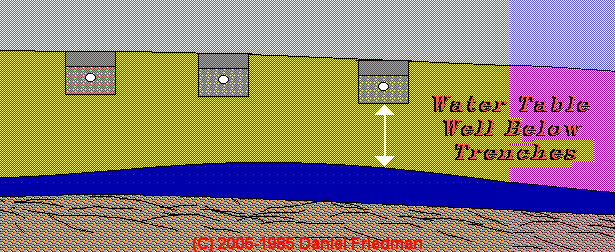
- Soil Absorption System (or cesspool, etc) is at a depth exposing it to the maximum groundwater level - as shown in our illustration, above-left.
Cesspool failure criteria
- Less than 6" of freeboard (free area between top of the effluent in the cesspool and top of the cesspool container)
- Less than 1/2 day's storage
- Within100 feet of a pond or dug well (surface water supply)
- Within 50 feet of a private well (modern sanitary well)
- Between 50 and 100 feet from a private well if well fails bacteria test
- In Massachusetts, within Zone 1 of a public well
- BOH (board of health) evaluation is required if septic system components or evidence of failure are within 50 feet of any surface water
For details see CESSPOOL FAILURE CRITERIA.
Soil Absorption System Failures (leach fields, drain fields, seepage pits)
- Breakout of effluent observed (& I consider odors as well)
- BOH evaluation in MA if within 100 ft of surface water supply
- within Zone 1 of a public well
- within 50ft of a private well
- between 50ft and 100ft of a private well if well fails bacteria test.
Septic Drainfield Failure Standards
Since homeowners may receive vague advice about the condition of their septic system, here we present specific failure criteria for septic systems. For alternative septic system designs or advanced septic systems using more specialized equipment, a failure of that equipment is more often a needed repair than a total system failure.
The most basic definition of septic system failure would be a septic system that will no longer treat and dispose of septic effluent. A "blocked" septic system may or may not be a "failed" system - it depends on the cause of blockage. Is it a blocked pipe, a clogged septic filter, or is the drainfield saturated and no longer accepting effluent?
Here are some of the specific criteria that can reliably be taken to describe a failed or non-functional septic system:
- Breakout of septic effluent observed at the property surface (& I consider odors as well)
- Appearance of septic effluent, for example seen by use of a tracer dye, in nearby waterways, streams, lakes, or drainage catch basins
- Too close to water supply or other boundaries: Board of Health evaluation in Massachusetts defines a septic system as unacceptable (technically not working" if a septic system (or in some cases its drainfield) is located within 100 ft of surface water supply or any of the next three locations:
- A septic system (or in some cases its drainfield) located within Zone 1 of a public well
- A septic system (or in some cases its drainfield) located within 50ft of a private well
- A septic system (or in some cases its drainfield) located between 50ft and 100ft of a private well if well fails bacteria test.
...
Continue reading at SEPTIC FAILURE LAWSUIT or select a topic from the closely-related articles below, or see the complete ARTICLE INDEX.
Or see these
Recommended Articles
- AEROBIC ATU SEPTIC FAILURE RATES, COSTS
- DISPOSAL vs TREATMENT - getting rid of effluent isn't the same as avoiding contamination
- SEPTIC DRAINFIELD INSPECTION & TEST - home
- PLUMBING DRAIN NOISE DIAGNOSIS.
- SEPTIC DISPOSAL FIELD CLOGGING INSPECTION
- SEPTIC DRAINFIELD FAILURE CAUSES
- SEPTIC DRAINFIELD FAILURE DIAGNOSIS
- SEPTIC FAILURE CRITERIA
- SEPTIC FAILURE LAWSUIT
- SEPTIC FAILURE SIGNS
- SEPTIC FAILURE SPOTS
- SEPTIC ODORS INDICATING DRAINFIELD FAILURE
- SEPTIC TANK GRASS or SNOWMELT
- SEPTIC TROUBLE SIGNS, OTHER
- SOAKBED SOIL CONDITIONS
- SEPTIC DRAINFIELD LIFE
- SEPTIC DRAINFIELD LOCATION
- SEPTIC DRAINFIELD RESTORERS?
- SEPTIC DYE TEST PROCEDURE - testing septic system function.
- SEPTIC TANK, HOW TO FIND
- SEPTIC TESTS: DYE & LOADING TESTS
- SEPTIC SYSTEM ODORS
- SEPTIC / SEWAGE SOIL CONTAMINATION HAZARDS
- SEWAGE BACKUP, WHAT TO DO IMMEDIATELY
- SEPTIC TANK & SYSTEM CARE BASICS - specific advice about the septic tank
- SEPTIC TANK LEVELS of SEWAGE
Suggested citation for this web page
SEPTIC FAILURE CRITERIA at InspectApedia.com - online encyclopedia of building & environmental inspection, testing, diagnosis, repair, & problem prevention advice.
Or see this
INDEX to RELATED ARTICLES: ARTICLE INDEX to SEPTIC SYSTEMS
Or use the SEARCH BOX found below to Ask a Question or Search InspectApedia
Ask a Question or Search InspectApedia
Share this article:Search the InspectApedia website
Need to make a private comment? Email editor@inspectApedia.com. We welcome email with your website content critique, corrections, suggestions or questions. Email is monitored daily but our workload may prevent an immediate reply. For immediate results, we hope you'll first try asking your question using the search box just above.
Citations & Reviewers
In addition to any citations in the article above, a full list is available on request.
- New York State Department of Health, APPENDIX 75-A WASTEWATER TREATMENT STANDARDS - INDIVIDUAL HOUSEHOLD SYSTEMS , [PDF] New York State Department of Health, 3 February 2010, retrieved 3/1/2010, original source: https://www.health.ny.gov/regulations/nycrr/title_10/part_75/appendix_75-a.htm
- Cesspool SAFETY Warnings include dangers of cave-in and fatality
- Failure SIGNS - Septic Systems for Septic Systems, septic tanks, septic drainfields, cesspools, drywells, distribution piping
- Failure TEST - Drainfields: how to inspect septic leach fields & what causes septic field failure
- SEPTIC FAILURE SPOTS - Where septic system trouble is likely to show up regardless of septic dye testing
- Pennsylvania State Wastewater Treatment Fact Sheet SW-161, Septic System Failure: Diagnosis and Treatment
- Pennsylvania State Wastewater Treatment Fact Sheet SW-162, The Soil Media and the Percolation Test
- Pennsylvania State Wastewater Treatment Fact Sheet SW-l64, Mound Systems for Wastewater Treatment
- Pennsylvania State Wastewater Treatment Fact Sheet SW-165, Septic Tank-Soil Absorption Systems
- Document Sources used for this web page include but are not limited to: Agricultural Fact Sheet #SW-161 "Septic Tank Pumping," by Paul D. Robillard and Kelli S. Martin. Penn State College of Agriculture - Cooperative Extension, edited and annotated by Dan Friedman (Thanks: to Bob Mackey for proofreading the original source material.)
- In addition to citations & references found in this article, see the research citations given at the end of the related articles found at our suggested
CONTINUE READING or RECOMMENDED ARTICLES.
- Carson, Dunlop & Associates Ltd., 120 Carlton Street Suite 407, Toronto ON M5A 4K2. Tel: (416) 964-9415 1-800-268-7070 Email: info@carsondunlop.com. Alan Carson is a past president of ASHI, the American Society of Home Inspectors.
Thanks to Alan Carson and Bob Dunlop, for permission for InspectAPedia to use text excerpts from The HOME REFERENCE BOOK - the Encyclopedia of Homes and to use illustrations from The ILLUSTRATED HOME .
Carson Dunlop Associates provides extensive home inspection education and report writing material. In gratitude we provide links to tsome Carson Dunlop Associates products and services.
 |
HOME | ABOUT | ASK a QUESTION | CONTACT | CONTENT USE POLICY | DESCRIPTION | POLICIES | PRIVACY | |
| © 2026 - 1985 Publisher InspectApedia.com - Daniel Friedman | |||||||||