
InspectAPedia® FREE Encyclopedia of Building & Environmental Construction, Diagnosis, Maintenance & Repair |
Question? Just ask us! InspectAPedia
|
 Chimney/Vent Sizing Tables & Formulas
Home Page
- POST a QUESTION or COMMENT about size requirements for chimney flues
Chimney & flue sizing tables by type, BTUH, building codes, and other factor:
This article series describes the size requirements for chimney flues for different categories of heating appliances.
We include excerpts from UMC tables along with additional commentary to assist in sizing metal or masonry chimneys according to chimney diameter, height, materials, and the input BTUH of the appliance(s) to be vented.
InspectAPedia tolerates no conflicts of interest. We have no relationship with advertisers, products, or services discussed at this website.
Sizing of Metal & Masonry Chimney Flues, Flues, Vents - Category I Draft Hood and Fan Assisted Appliances
Watch out: Check with your local building code officials for local building code requirements when designing, building, or installing chimneys and vents.
NFPA 1992 (7.5.3) states that draft hood appliances, Category I appliances and other appliances that use Type B vents must have a
chimney flue area not less than the area of the largest vent outlet plus 50% of the area of the additional flue outlet.
The 1992 GAMA vent sizing tables for single-wall metal vent connectors attached to a tile lined masonry chimney uses Table 8. The result of those calculation using a 38,000 BTU water heater with a 3" draft hood and a 37,500 BTU boiler with a 4" draft hood connected to a 20' high chimney is to use a common flue with an area of 28 square inches or a 6" flue vs a 5" flue in the previous examples.
Details about factors that go into calculating the size of a chimney or flue are discussed separately at CHIMNEY SIZE FACTORS.Tables of Chimney, Flue, or Vent Size Requirements vs. BTUs of Appliances being Vented
A Guide to Chimney Sizing Tables for Venting Heating Appliances: Which Chimney Sizing Table to Use
Here is a quick guide to the UMC's chimney sizing & BTUH venting capacity tables when sizing a metal or masonry chimney diameter to match the total input BTUH of the heating appliances (boiler, furnace, water heater) being vented. Note that different chimney sizes are required for venting fireplaces and woodstoves.
Masonry fireplace chimney size requirements are at FIREPLACES & HEARTHS.
Chimney Type |
Number of Appliances to be Vented |
|
Metal B-Vent Chimney (Vent) |
Single Appliance |
Multiple Appliances |
Which Chimney Flue / Vent Sizing Table to Use |
||
| Single Wall Flue Vent Connector | Table C-9-E |
|
| Double Wall B-vent Flue Vent Connector1 | Table C-9-D (two part table) |
|
| Masonry Chimney2 | ||
| Single Wall Flue Vent Connector | Table C-9-F (two part table) |
|
| Minimum Input BTUH, Single appliance, natural gas, B-vent connector vs chimney height, size, & outdoor temperature | ||
Notes to the Table Above
1. A flue vent connector is the horizontal/sloped metal pipe connecting the heating appliance to the entry point of the chimney. Flue vent connectors and their materials, sizing requirements, & fire clearances are
at FLUE VENT CONNECTORS, HEATING EQUIPMENT
At double-wall B-vent chimneys the flue vent connector between the appliance and the chimney entry point may be single-wall metal flue vent connector or it may be a double-wall Type-B flue vent material.
2. At most masonry chimneys the flue vent connector or "stackpipe" or "smokepipe" is single wall metal, though for fire clearance needs it may be amended to use sections of insulated metal chimneys.
See CHIMNEY CROSS SECTION SHAPE EFFECTS for the effects of square vs round chimney sectional areas
Types of metal chimneys and their properties and fire clearances are
Table C-9-A (Excerpts): Single Appliance Venting, B-Vent Chimney Capacities for Venting a Single Heating Appliance where a Single Wall Metal Flue Vent Connector is Used Between the Appliance and the Chimney
BTU Color Coding Note: in the tables below we use colors to indicate where an example-approximate appliance BTUH vent capacity rating falls across various chimney parameter combinations. The Gray color indicates that this chimney height and diameter combination cannot be used.
Total Chimney/Vent Height (ft) |
Lateral (horizontal) Run (ft) |
Table of B-Vent Diameter (inches) for a Single Appliance Chimney |
|||||||||
3 in. |
4 in. |
5 in. |
6 in. |
7 in. |
8 in. |
Comments |
|||||
Maximum (single) Appliance BTU Input Rating (thousands of BTUs) |
|||||||||||
6 ft. |
0 |
39 |
70 |
116 |
170 |
232 |
312 |
||||
2 |
31 |
55 |
94 |
141 |
194 |
260 |
|||||
5 |
28 |
51 |
88 |
128 |
177 |
242 |
|||||
8 ft |
0 |
42 |
76 |
126 |
185 |
252 |
340 |
||||
2 |
32 |
61 |
102 |
154 |
210 |
284 |
|||||
5 |
29 |
56 |
95 |
141 |
194 |
264 |
|||||
10 |
49 |
86 |
131 |
180 |
250 |
||||||
10 ft |
0 |
45 |
84 |
138 |
202 |
279 |
372 |
||||
2 |
35 |
67 |
111 |
168 |
233 |
311 |
|||||
5 |
32 |
61 |
104 |
153 |
215 |
289 |
|||||
10 |
54 |
94 |
143 |
200 |
274 |
||||||
15 |
84 |
130 |
186 |
258 |
|||||||
15 ft. |
0 |
49 |
91 |
151 |
223 |
312 |
420 |
||||
2 |
39 |
72 |
122 |
186 |
260 |
350 |
|||||
5 |
67 |
110 |
170 |
240 |
325 |
||||||
10 |
103 |
158 |
223 |
308 |
|||||||
15 |
144 |
207 |
291 |
||||||||
20 |
195 |
273 |
|||||||||
20 ft. |
101 |
163 |
252 |
342 |
470 |
770 |
|||||
80 |
136 |
210 |
286 |
392 |
641 |
||||||
123 |
192 |
264 |
364 |
610 |
|||||||
178 |
246 |
345 |
571 |
||||||||
163 |
228 |
326 |
550 |
||||||||
306 |
525 |
||||||||||
30 ft. |
183 |
276 |
384 |
529 |
878 |
||||||
230 |
320 |
441 |
730 |
||||||||
210 |
296 |
410 |
694 |
||||||||
274 |
388 |
656 |
|||||||||
366 |
625 |
||||||||||
344 |
596 |
||||||||||
540 |
|||||||||||
Table C-9-B (Excerpts): Single Appliance Venting, B-Vent Chimney Capacities for Venting a Single Heating Appliance where a Double-Wall B-Vent Flue Vent Connector is Used Between the Appliance and the Chimney
See FLUE SIZE SPECIFICATIONS_TABLE_C_9_B
Table C-9-C (Excerpts): Single Appliance Venting, BTU Capacity of Masonry Chimneys where a Single Wall Metal Flue Vent Connector is Used Between the Appliance and the Chimney
See FLUE SIZE SPECIFICATIONS_TABLE_C_9_C
Table C-9-D (Excerpts): Multiple Appliance BTU Vent Capacity of Type B Double-Wall Vents where a Double Wall Metal B-Flue Vent Connector is Used Between the Appliance and the Chimney
See CHIMNEY FLUE SIZE SPECIFICATIONS_TABLE_C_9_D
Watch out: the first portion of Table C-9-D specifies the maximum input BTUH capacity of any individual heating appliance that is to be vented along with other appliances out through a single chimney. An additional table, the Continuation of C-9-D gives the chimney specifications for the total input BTUH of all of the appliances, combined.
Table C-9-E (Excerpts) Multi-Appliance BTUH Venting Capacity of Double-Wall B-Vent Chimneys where a single-wall metal vent connector is used between the appliances and the chimney
This two-part table gives the chimney specifications for the total input BTUH of all of the appliances combined and joined into a single vent when the flue is a Type-B double wall metal chimney and when the flue vent connector (between the appliance and the chimney entry point) is a single wall metal component.
See CHIMNEY FLUE SIZE SPECIFICATIONS_TABLE_C_9_E
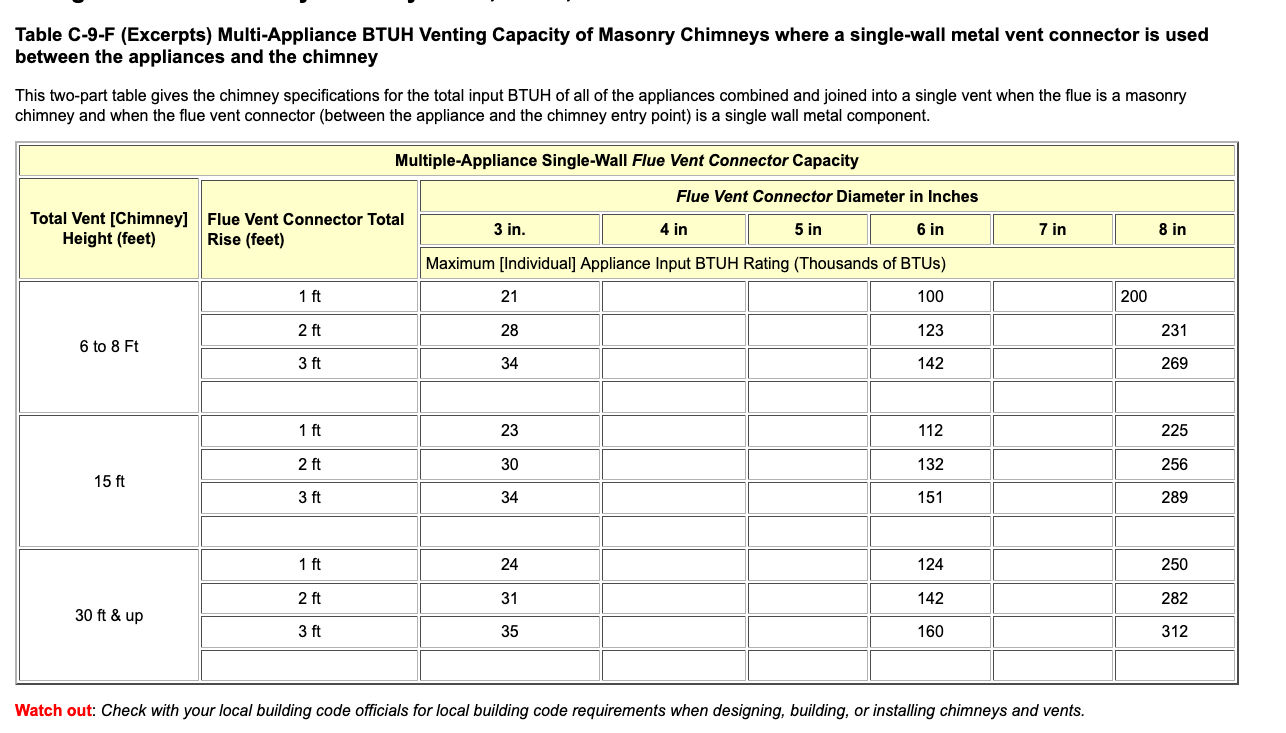
Table C-9-F (Excerpts) Multi-Appliance BTUH Venting Capacity of MASONRY CHIMNEYS where a single-wall metal vent connector is used between the appliances and the chimney
This two-part table gives the chimney specifications for the total input BTUH of all of the appliances combined and joined into a single vent when the flue is a masonry chimney and when the flue vent connector (between the appliance and the chimney entry point) is a single wall metal component.
See CHIMNEY FLUE SIZE SPECIFICATIONS TABLE C-9-F
Table 504.2(6) Exterior Masonry Chimneys Venting Natural Gas Appliances
See CHIMNEY FLUE SIZE SPECIFICATIONS TABLE 504.2
Details About Chimney Cross Sectional Areas and Effects on Venting Capacity of Masonry Chimneys - Translating Rectangular Chimney Flues to Round Flue Equivalents
The UMC Appendix C Table C9-G, "Masonry Chimney Liner Dimensions with Circular Equivalents" translates square or rectangular chimney flue inside dimensions into an equivalent "round" flue diameter and into equivalent square inches of venting capacity.
Why does this translation matter? The venting capacity of a rectangular or square masonry flue, if translated directly into actual or measured square inches of cross section, is less than a round chimney flue of the same square inches of venting capacity.
For example an 8" x 8" square nominal clay chimney flue tile liner has inside dimensions of 6 3/4" x 6 3/4". Just muliplying these dimensions together (6.75 x 6.75) = 45.56 sq.in. But chimney experts and draft measurements show that in a rectangular flue not all of the cross-sectional area is equally effective in developing draft. The effective square inches of venting area, translated to an equivalent round flue, would be less - or aboutd 42.7 square inches.
So when calculating the venting capacity of a square or rectangular clay chimney flue tile or liner by looking at its cross section, we use the UMC's Table C9-G of "round chimney flue equivalents" to get the effective chimney flue vent cross sectional area before we enter the masonry chimney BTUH venting capacity tables 6-9-C (single wall flue vent connectors and single heating appliances) or 6-9-F (single wall flue vent connectors and multiple appliances).
[Note: pending clarification, we have not provided excerpts of Table C-9-G because, frankly, some of its data is confusing. - Ed.]
Watch out: Check with your local building code officials for local building code requirements when designing, building, or installing chimneys and vents.
Reader Comments, Questions & Answers About The Article Above
Below you will find questions and answers previously posted on this page at its page bottom reader comment box.
Reader Q&A - also see RECOMMENDED ARTICLES & FAQs
On 2020-09-30 by (mod) - Determine the size for the flue vent connector that vents two or more heating appliances to the chimney
[Click to enlarge any image]
Mary:
Thank you for a helpful question: how do I get the required size for the flue vent connector that vents two or more heating appliances into my masonry chimney?
To get the correct chimney size (or to see the limitations of what your 8x8" chimney can possibly vent in BTUs,
see
CHIMNEY FLUE SIZE SPECIFICATIONS TABLE C-9-F
To avoid confusion, we call the vertical venting system the "chimney"
The (roughly-horizontal but actually sloped "up") metal "pipe" that connects one or more heating appliances to the entry thimble in the masonry chimney is called a
flue vent connector - typically single wall metal, 24-gauge steel -
Notice that ultimately the maximum size of your masonry chimney is 8x8 or 64 sq.in.
The size of your flue vent connector or "flue pipe" needed depends on several variables including:
- the size and input BTUH of each of the appliances being vented
- the size of the flue-vent connector on each of those appliances (this will be the bare minimum and is typically the size of the vertical flue vent connector between the appliance and the horizontal flue vent connector that continues on into the chimney thimble or point of entry)
- The length of horizontal run
- The slope of horizontal run
To get the correct flue vent connector size when venting multiple appliances into a single chimney or flue
see CHIMNEY FLUE SIZE SPECIFICATIONS_TABLE_C_9_E
Watch out: also Important are the heating appliance manufacturer's installation instructions
- follow those
Watch out: your 8x8" clay flue tiles forming the actual masonry chimney flue also set a limit on the total input BTUH that the chimney itself can handle - again affected by height and other factors.
More helpful chimney and flue vent connector sizing articles are suggested above on this page and in the ARTICLE INDEX
Herewith I attach an excerpt from CHIMNEY FLUE SIZE SPECIFICATIONS TABLE C-9-F that gives sizing for flue vent connectors.
On 2020-09-30 by mary
first question-what is the proper gauge for this application and secondly, what size duct do i use as common pipe after wye junction?
when 2 gas appliances are vented through category 1 single wall galv. duct to a 8x8 clay tile flue
i have two questions.
On 2020-02-28 - by (mod) - smaller flue ok for some heating systems
Thanks for the follow-up, Ron.
On 2020-02-28 by Ron
Regarding the question below, the oil tech said that it should be OK for our setup. He will come out at some point to adjust the draft if needed. Thank you for your help!
On 2020-02-27 - by (mod) -
Yes, Flue, going to a smaller diameter main flue in a chimney may reduce the draft. The total effect depends on several variables including chimney height, ambient temperature range, and oil burner/heater input BTUH and burner adjustments.
At the very least you need to have a trained service technician inspect, measure, and if necessary adjust the draft and draft regulator for your old Weil Mclain heater. She check combustion air and will measure draft over the fire, draft in the breech, stack temperature and CO2 or O2. With those measurements she can determine if the burner is operating properly.
If, after adjusting the draft regulator for your heater she cannot obtain sufficient draft for your heater it might be necessary to add a draft inducer fan.
Get this inspecting and testing done soon since leaving a heater working improperly (if it is) can lead to unsafe operation.
Let me know what the tech finds.
On 2020-02-27 by Flue reducer
I have a 30 yr old oil furnace (Weil Mclain) with a 7 inch flue going into chimney. A company installed a new galvanized steel chimney liner with a 6 in diameter and connected them with a reducer. Will this reduction affect anything?
On 2020-02-22 - by (mod) - what causes a direct vent Rais propane stove to over fire?
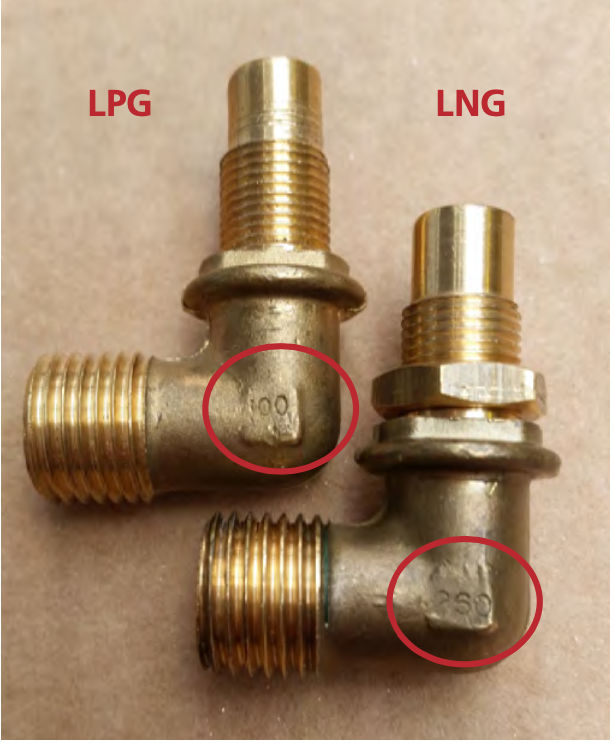 Anon I'm sure there are a number of installation, adjustment or maintenance defects that can cause a propane stove to over-fire, and that there are specific defects and serious safety issues that are specific stove type, brand, and model dependent.
Among the obvious are
- Improper gas burner orifices - set perhaps for the wrong fuel, such as mixing LPG and Natural gas set-up procedures ( this could be your trouble), or an improper pressure regulator setting, or improper burner adjustment.
- Improper ceramic log positioning could also cause improper gas flame.
Watch out: ANY improper gas burner operation is unsafe.
FIRE OR EXPLOSION HAZARD. Failure to follow safety warnings exactly could result in serious injury, death, or property damage.
For other readers, Rais is a Danish manufacturer of wood and gas burning stoves. https://us.rais.com/about-rais.html is the company's US site and the company's main gas fireplace website: https://www.rais.com/en/gas-fireplaces
Shown below, a Rais QTEE-II gas stove for which you can read the RAIS QTEE GAS STOVE MANUAL [PDF] at
Manual excerpts:
The stove is supplied configured for natural gas or Propane gas but can be converted. The conversion must only be carried out by an authorised gas engineer. Use conversion kit with article number 3713595 NG to LPG or 3713596 LPG to NG. The conversion kit’s contains 4 new nozzles.
The stove is preset to provide the correct amount of heat (kW) as described under specifications. There is no need for further adjustment.
"Inlet pressure" and ”Burner pressure” must ALWAYS be measured. - additional instructions are on p. 53
Watch out: if this is not your Rais stove model then of course you need to follow the instructions for your specific stove.
On 2020-02-22 by Anonymous
what cause a direct vent Rais propane stove to over fire
On 2020-01-07 - by (mod) -
Anon
Ratio of fireplace opening Dimension to chimney flue size
A reasonable rule of thumb giveing the ratio of fireplace opening size to the cross-sectional area of the fireplace flue vent opening is 10 to 1.
So just do the calculation of square inches of your fireplace opening and take one tenth of that and you'll be in the right ballpark for the chimney flue dinensions.
Keep in mind that a number of other important factors will affect the chimney draft and will make your fireplace work well or note such as availability of outdoor combustion air and the proper cake of the fireplace itself as well as the throat and chimney to follow the description of the Rumford fireplace figured out revolutionary times. If you search this website for a Rumford fireplace you'll find more details.
On 2020-01-07 by Anonymous
we have a fireplace opening 5feet wide and 30 inches high . what size flu do we need
On 2016-04-17 - by (mod) - Can a 3" metal flue exhaust into a 6" flue at the roof?
Good question, Charles. I don't know. Assuming that the connection can be made safely between the different chimney diameters and materials, and that the above-roof height is just a few feet, that may be ok. My concern is that changes in diameter of a flue have impact on the draft. 3" venting into 6" is quite an increase. I'd want to know
1. what's being vented and is the 3" vent adequate in the first place. Too small OR too large a flue can make venting difficult and even unsafe
2. what are the vertical dimension involved and what will be the draft impact.
I would give a call to the manufacturer of the metal flue you're using to ask their opinion.
It may also be possible to simply make some careful draft measurement under various conditions (heater in use, various outdoor & flue temperatures & wind conditions) that can support the design.
On 2016-04-16 2 by Charles Stanmyre
Can a 3" metal flue exhaust into a 6" flue at the roof?
On 2016-03-18 - by (mod) -
Jerry, I can't say, but you might find the information you need in your woodstove's installation manual where the manufacturer will specify the minimum flue size for your particular stove.
On 2016-03-18 by Jerry
I'm going to install a clay lined brick chimney in my 2 story home for a wood burning stove! Chimney will be 25'-30' in height when completed. What would a correct clay flu liner size should I use?
Question: chimney size vs. btuh ratings
(Aug 30, 2011) david said:
what if you had a 4" furnace outlet and 2 3" outlets. is it the same formula or do you go off of actual btus
Reply:
David I don't quite understand the question. But in general the chimney venting requirements are set by the fuel type and the BTU rating of the appliance.
Question: standard chimney heights
(Sept 9, 2011) Graham said:
What is the standard height above a tiled roof to the top of chimney ?
Reply:
Graham please see CHIMNEY HEIGHT & CLEARANCE CODE
Question: reduce furnace flue vent connector size below furnace outlet size?
(Oct 13, 2012) Brent said:
I have a single 2650 sq ft home that was once subdivided, one side had a 133,000 btu oil boiler and I have a 115,000 gas boiler. I want to purchase a new boiler to heat both sides which I have zoned.
My question is that my looad calculation calls for a 136,000 btu furnace, in this range I'm looking at a 142,000 furnace.
My chimney (30 ft tall) has a stainless 6 " liner but the new furnace outlet is 7"
Can I safely reduce the outlet from 7" to 6" ? I also have a gas hot water heater on the same flue in a "y" connection.
Brent
Reply:
No
Question: ok to share chimney flue if heaters don't run at the same time?
(Jan 27, 2014) (mod) said:
Bill, I am re-posting your question without the imbedded hyperlink - our system doesn't permit links in comments for reasons of security.
"My coal boiler and oil boiler vent into the same chimney. I never use both at the same time. The chimney is about 30 feet high. The stove pipes are 6" single wall.
The coal boiler enters below the oil boiler and on the opposite side of the chimney. There is no rise to the coal boiler's stove pipe, it enters straight into the chimney and runs slightly down hill. I'm burning bituminous coal get smoke billowing out the door when I open it even though I have lots of draft. I'm thinking it may be due to the way it has been piped causing a limitation in flow.
It looks to me like the coal boiler's input was changed when the 6" square clay liner was installed. There is a knock out cemented over that I can use, I would just have to cut an opening into the clay liner.
The coal boiler would then enter about 6" above the oil boiler. I don't have any room to go higher. This would put about 16" of rise on the coal boiler's smoke pipe. I stuck 2 old elbows in to prove to myself that I have room to rearrange the pipe, you can see them in the pic.
Do you think this alternate piping might make an improvement? "
Before thinking about sharing a chimney flue - generally prohibited as a safety concern but permitted in some jurisdictions, particularly with gas and oil fuels provided proper venting arrangement - I'd check with your local building department about what they permit. Permission may also depend on the chimney type and design.
Safety issues aside for a moment there can be draft control and operating difficulties - any solution has to prevent automatic draft from one appliance from fouling up the other.
Reply:
You might find draft conflicts (can't optimize for both appliances), fire hazards (one heater igniting deposits from the other), code violations, and fire spread safety hazards.
Question: shared Y connection for chimney connection?
(Apr 2, 2014) sal avanzato said:
my chimeney [30ft tall] has8"x13"terracotta flue liner with 7" round terracotta crock going into the flue liner. can I safely hook up gas boiler 175000 btu and water heater 75000 btu into 7" round crock on the same flue in a"Y"connection
Reply:
Sal,
You have 175,000 + 75,000 BTUH = 250,000 BTUH venting required
You don't give the horizontal distances of your 7" flue vent connector(s) between the appliances and the chimney, nor do you say if the appliances are natural draft or forced draft, so we don't have the total answer to your question, nor am I confident commenting on "safety" for an unknown system since a mistake can be fatal.
At the start of the article above we give some help choosing which tables to use to answer chimney questions.
If we are venting multiple appliances into a single chimney flue we use Table C-9-F
(two part table) in the article above.
Your chimney cross section area is 8 x 13" = 104 sq.in. Your chimney height is 30 ft. (which gives good draft).
But an important limit here is the input 7" flue diameter. And some jurisdictions (see Seattle WA code for example) limit the horizontal run distance (to about 10 ft. for 7" flue vent connectors OR you have to reduce the assumed venting capacity of the system)
There are also assumptions about outdoor temperatures that affect the chimney draft conditions.
Not shown anyway in our table (I'll add some data) is that per the AGA NFPA code, if I assume the horizontal flue vent connector distance is 10 feet or less and the chimney height is 30 feet,
assuming an outdoor temperature range of 27 to 36 degF or higher (colder ranges give better draft once the chimney has heated-up so this is a cautious assumption) your 104 sq. in. chimney (assuming that's *internal* area, falls between two standards:
a 78 sq. in. 30 foot masonry chimney in this outdoor temperature range can vent 445,000 input BTUH
a 113 sq. in. 30 foot masonry chimney in this temperature range can vent 485,000 input BTUH.
So as your chimney is in between those two and even the smaller internal size chimney can vent more BTUH than you are connecting the chimney itself meets the standards as I read them. (Check with your local building code officials for safety and local code compliance and of course check that the chimney is in fact intact, not leaking, damaged, blocked, that there is safe combustion air etc. or ALL of this discussion would be nonsense since there could be very unsafe conditions, even fatal ones, present).
Adding about outdoor chimney temperatures vs. working chimney height, there is a second concern that in cold conditions it is more difficult to get draft working in a taller exterior masonry chimney since the flue gas from the appliance has to overcome the weight of a tall column of cold air.
Question: moving a wood heater insert into a shop
13 Jan 2015 Steve Said:
I took a 20 year old wood heater insert out of my fire place. Im putting it in my shop.The heater does not have a pipe collar .It has a 7 x 8 inch opening where i can put a collar.I dont know what size to put 6 inch or 8 inch? Inside measurements of heater are 24 inch wide by 19 inch deep by 18 inch height 24x19x18 inside
Height from proposed collar to ceiling 13feet 4inches through metal roof and insulation 2inches roof has a 1 by 12 pitch.. What size stove pipe do i use and why
Reply:
Steve,
Generally a larger vent is functional and safe as long as the chimney size and height are not so large that the heating appliance won't develop adequate draft. It's not just stove pipe size you need to consider, but proper fire-rating of the flue or chimney materials, clearances from combustibles, cleanout access and code.
Watch out: But keep in mind that most likely you need to obtain a building permit and inspections for installing any new heater anywhere - don't view that as a stumbling block but rather as an extra inspection that might help avoid a fire.
...
Continue reading at CHIMNEY FLUE SIZE SPECIFICATIONS_TABLE_C_9_B or select a topic from the closely-related articles below, or see the complete ARTICLE INDEX.
Or see these
Recommended Articles
- CHIMNEY CODES complete list of online chimney code PDF files.
- CHIMNEY DRAFT & PERFORMANCE
- CHIMNEY FLUE SEPARATION REQUIREMENTS
- CHIMNEY FLUE SIZE SPECIFICATIONS - home
- CHIMNEY FLUE SIZE SPECIFICATIONS TABLE 504.2 - Minimum Allowable Chimney Input BTUH for Heating Appliances
- CHIMNEY FLUE SIZE SPECIFICATIONS_TABLE_C_9_B - B-Vent Chimney Capacities Venting a Single Heating Appliance
- CHIMNEY FLUE SIZE SPECIFICATIONS_TABLES C9_C - Masonry Chimney Venting Capacities Venting a Single Appliance, BTU Capacity
- CHIMNEY FLUE SIZE SPECIFICATIONS_TABLE_C_9_E - Multi-Appliance BTUH Venting Capacity of Double-Wall B-Vent Chimneys
- CHIMNEY FLUE SIZE SPECIFICATIONS TABLE C-9-F - Multi-Appliance BTUH Venting Capacity of Masonry Chimneys
- CHIMNEY HEIGHT & CLEARANCE CODE
- CHIMNEY INSPECTION, FLUE INTERIOR
- CHIMNEY SIZE FACTORS that go into calculating the size of a chimney or flue
- FIREPLACES & HEARTHS
- FLUE TILE DAMAGE in CHIMNEY
Suggested citation for this web page
CHIMNEY FLUE SIZE SPECIFICATIONS at InspectApedia.com - online encyclopedia of building & environmental inspection, testing, diagnosis, repair, & problem prevention advice.
Or see this
INDEX to RELATED ARTICLES: ARTICLE INDEX to CHIMNEYS & FLUES
Or use the SEARCH BOX found below to Ask a Question or Search InspectApedia
Ask a Question or Search InspectApedia
Try the search box just below, or if you prefer, post a question or comment in the Comments box below and we will respond promptly.
Search the InspectApedia website
Note: appearance of your Comment below may be delayed: if your comment contains an image, photograph, web link, or text that looks to the software as if it might be a web link, your posting will appear after it has been approved by a moderator. Apologies for the delay.
Only one image can be added per comment but you can post as many comments, and therefore images, as you like.
You will not receive a notification when a response to your question has been posted.
Please bookmark this page to make it easy for you to check back for our response.
Our Comment Box is provided by Countable Web Productions countable.ca
Citations & References
In addition to any citations in the article above, a full list is available on request.
- [6] NFPA # 54-7.1 1992 - Specific to venting of equipment with fan-assisted combustion systems.
- [7] GAMA - Gas Appliance Manufacturers' Association has prepared venting tables for Category I draft hood equipped central furnaces as well as fan-assisted combustion system central furnaces.
- [8] National Fuel Gas Code, an American National Standard, 4th ed. 1988 (newer edition is available) Secretariats, American Gas Association (AGA), 1515 Wilson Blvd., Arlington VA22209, and National Fire Protection Association (NFPA), Batterymarch Park, Quincy MA 02269. ANSI Z223.1-1988 - NFPA 54-1988. WARNING: be sure to check clearances and other safety guidelines in the latest edition of these standards.
- [9] Fire Inspector Guidebook, A Correlation of Fire Safety Requirements Contained in the 1987 BOCA National Codes, (newer edition available), Building Officials and Code Administrators International, Inc. (BOCA), Country Club HIlls, IL 60478 312-799-2300 4th ed. Note: this document is reissued every four years. Be sure to obtain the latest edition.
- [10] Uniform Mechanical Code - UMC 1991, Sec 913 (a.) Masonry Chimneys,
refers to Chapters 23, 29, and 37 of the Building Code.
See the complete table of the "Capacity of Double-Wall or Asbestos-Cement (Transite) Type B vents with Single Wall Connectors Serving a Single Appliance", Table C-9-A in Appendix C.
See the complete table of the "Capacity of Type B Double Wall Vents with Type B Double Wall Vent Connectors Serving a Single Appliance", Table C-9-B in Appendix C. - New York 1984 Uniform Fire Prevention and Building Code, Article 10, Heating, Ventilating, and Air Conditioning Requirements
- [11] New York 1979 Uniform Fire Prevention & Building Code, The "requirement" for 8" of solid masonry OR for use of a flue liner was listed in the One and Two Family Dwelling Code for New York, in 1979, in Chapter 9, Chimneys and Fireplaces, New York 1979 Building and Fire Prevention Code:
- [12] "Top Ten Chimney (and related) Problems Encountered by One Chimney Sweep," Hudson Valley ASHI education seminar, 3 January 2000, contributed by Bob Hansen, ASHI
- [13] Chimney Inspection Checklist, Carson Dunlop, Associates, Toronto, Ontario
- "Rooftop View Turns to Darkness," Martine Costello, Josh Kovner, New Haven Register, 12 May 1992 p. 11: Catherine Murphy was sunning on a building roof when a chimney collapsed; she fell into and was trapped inside the chimney until rescued by emergency workers.
- [14] "Chimneys and Vents," Mark J. Reinmiller, P.E., ASHI Technical Journal, Vol. 1 No. 2 July 1991 p. 34-38.
- [16] Natural Gas Weekly Update: http://tonto.eia.doe.gov/oog/info/ngw/ngupdate.asp Official Energy Statistics from the U.S. Government
- [17] US Energy Administration: Electrical Energy Costs http://www.eia.doe.gov/fuelelectric.html
- Thanks to Luke Barnes for suggesting that we add text regarding the hazards of shared chimney flues. USMA - Sept. 2008.
- [6] NFPA # 54-7.1 1992 - Specific to venting of equipment with fan-assisted combustion systems.
- [7] GAMA - Gas Appliance Manufacturers' Association has prepared venting tables for Category I draft hood equipped central furnaces as well as fan-assisted combustion system central furnaces.
- [8] National Fuel Gas Code, an American National Standard, 4th ed. 1988 (newer edition is available) Secretariats, American Gas Association (AGA), 1515 Wilson Blvd., Arlington VA22209, and National Fire Protection Association (NFPA), Batterymarch Park, Quincy MA 02269. ANSI Z223.1-1988 - NFPA 54-1988. WARNING: be sure to check clearances and other safety guidelines in the latest edition of these standards.
- [9] Fire Inspector Guidebook, A Correlation of Fire Safety Requirements Contained in the 1987 BOCA National Codes, (newer edition available), Building Officials and Code Administrators International, Inc. (BOCA), Country Club HIlls, IL 60478 312-799-2300 4th ed. Note: this document is reissued every four years. Be sure to obtain the latest edition.
- [10] Uniform Mechanical Code - UMC 1991, Sec 913 (a.) Masonry Chimneys,
refers to Chapters 23, 29, and 37 of the Building Code.
See the complete table of the "Capacity of Double-Wall or Asbestos-Cement (Transite) Type B vents with Single Wall Connectors Serving a Single Appliance", Table C-9-A in Appendix C.
See the complete table of the "Capacity of Type B Double Wall Vents with Type B Double Wall Vent Connectors Serving a Single Appliance", Table C-9-B in Appendix C. - New York 1984 Uniform Fire Prevention and Building Code, Article 10, Heating, Ventilating, and Air Conditioning Requirements
- [11] New York 1979 Uniform Fire Prevention & Building Code, The "requirement" for 8" of solid masonry OR for use of a flue liner was listed in the One and Two Family Dwelling Code for New York, in 1979, in Chapter 9, Chimneys and Fireplaces, New York 1979 Building and Fire Prevention Code:
- [12] "Top Ten Chimney (and related) Problems Encountered by One Chimney Sweep," Hudson Valley ASHI education seminar, 3 January 2000, contributed by Bob Hansen, ASHI
- [13] Chimney Inspection Checklist, Carson Dunlop, Associates, Toronto, Ontario
- "Rooftop View Turns to Darkness," Martine Costello, Josh Kovner, New Haven Register, 12 May 1992 p. 11: Catherine Murphy was sunning on a building roof when a chimney collapsed; she fell into and was trapped inside the chimney until rescued by emergency workers.
- [14] "Chimneys and Vents," Mark J. Reinmiller, P.E., ASHI Technical Journal, Vol. 1 No. 2 July 1991 p. 34-38.
- [15] "Chimney Inspection Procedures & Codes," Donald V. Cohen was to be published in the first volume of the 1994 ASHI Technical Journal by D. Friedman, then editor/publisher of that publication. The production of the ASHI Technical Journal and future editions was cancelled by ASHI President Patrick Porzio. Some of the content of Mr. Cohen's original submission has been included in this more complete chimney inspection article: CHIMNEY INSPECTION DIAGNOSIS REPAIR . Copies of earlier editions of the ASHI Technical Journal are available from ASHI, the American Society of Home Inspectors.
- [16] Natural Gas Weekly Update: http://tonto.eia.doe.gov/oog/info/ngw/ngupdate.asp Official Energy Statistics from the U.S. Government
- [17] US Energy Administration: Electrical Energy Costs http://www.eia.doe.gov/fuelelectric.html
- Our recommended books about building & mechanical systems design, inspection, problem diagnosis, and repair, and about indoor environment and IAQ testing, diagnosis, and cleanup are at the InspectAPedia Bookstore. Also see our Book Reviews - InspectAPedia.
- NFPA 211 - 3-1.10 - Relining guide for chimneys
- NFPA 211 - 3-2 - Construction of Masonry Chimneys
- NFPA 211 - 3-3 - Termination Height for chimneys
- NFPA 211 - 3-4 - Clearance from Combustible Material
- NFPA 54 - 7-1 - Venting of Equipment into chimneys
- Brick Institute of America - Flashing Chimneys
Brick Institute of America - Proper Chimney Crowns
Brick Institute of America - Moisture Resistance of Brick - American Gas Association - New Vent Sizing Tables
- Chimney Safety Institute of America - Chimney Fires: Causes, Effects, Evaluation
- National Chimney Sweep Guild - Yellow Pages of Suppliers
- In addition to citations & references found in this article, see the research citations given at the end of the related articles found at our suggested
CONTINUE READING or RECOMMENDED ARTICLES.
- Carson, Dunlop & Associates Ltd., 120 Carlton Street Suite 407, Toronto ON M5A 4K2. Tel: (416) 964-9415 1-800-268-7070 Email: info@carsondunlop.com. Alan Carson is a past president of ASHI, the American Society of Home Inspectors.
Thanks to Alan Carson and Bob Dunlop, for permission for InspectAPedia to use text excerpts from The HOME REFERENCE BOOK - the Encyclopedia of Homes and to use illustrations from The ILLUSTRATED HOME .
Carson Dunlop Associates provides extensive home inspection education and report writing material. In gratitude we provide links to tsome Carson Dunlop Associates products and services.
 | HOME | ABOUT | ASK a QUESTION | CONTACT | CONTENT USE POLICY | DESCRIPTION | POLICIES | PRIVACY | |
| © 2024 - 1985 Publisher InspectApedia.com - Daniel Friedman | |||||||||