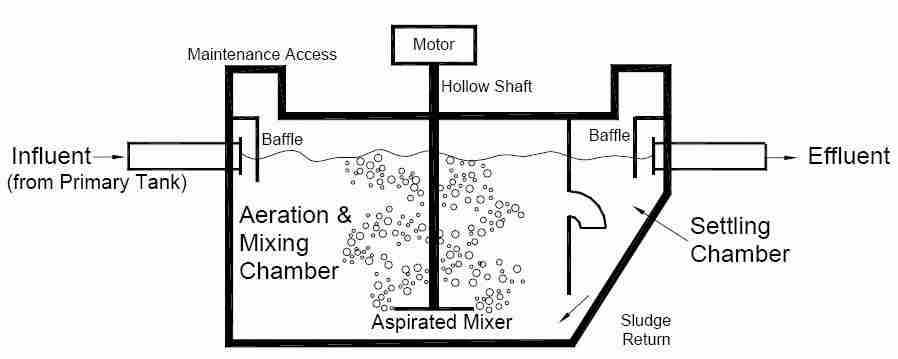
 Disinfection of Septic Effluent Discharged from Aerobic Septic Systems - use of Swimming Pool Chemicals

- POST a QUESTION or COMMENT about septic effluent disinfection systems - chemicals to use and others to avoid using
Aerobic septic system disinfection using swimming pool tablets:
This septic system effluent treatment article explains why we should not use swimming pool chemicals as a substitute for proper aerobic system disinfectants. What are the proper disinfectants to use in aerobic septic systems? There are fines levied for use of swimming pool chemicals in septic systems. Septic system and sewage discharge causing coliform hazards to oyster beds.
InspectAPedia tolerates no conflicts of interest. We have no relationship with advertisers, products, or services discussed at this website.
- Daniel Friedman, Publisher/Editor/Author - See WHO ARE WE?
Disinfection of Septic Effluent Discharged from Aerobic Septic Systems
Use of proper and approved septic effluent disinfectants is required for aerobic septic systems. This article, contributed by a company which produces aerobic septic system disinfectants, explains that while some aerobic septic system operators may have used ordinary swimming pool chlorine tablets for this purpose, such use is improper and illegal according to the U.S. EPA.
It is a violation of federal law to use swimming pool products for the "treatment" of septic effluent in aerobic septic systems. Environmental Protection Agency personnel are targeting the misapplication of chlorine products for more stringent enforcement.
According to the EPA. spokesman, use of swimming pool chlorine products in the treatment of wastewater effluent is a violation of Federal Insecticide, Fungicide, and Rodenticide Act Sections 136a-2g and 136j(a)2g. The FIFRA regulations essentially state anyone who is using a chlorine product for applications other than those stated on the product's labeling is potentially subject to a fine and/or imprisonment.
Individual users can be fined $500 or first offenses and $2000 for subsequent violations. Suppliers, dealers, distributors and manufacturers are subject to much more severe penalties - up to $25,000 in fines. Prison sentences can vary from 30 days to a maximum of one year.
EPA Regional branch managers have stated their offices intend to coordinate efforts of both federal and state inspection and enforcement organizations. On the federal level, these include the local EPA offices and the U.S. Coast Guard and Minerals Management Service. In Texas, Louisiana, Mississippi, Alabama, and Georgia state agencies involved in the crackdown are the Departments of Agriculture and the Departments of Environmental Quality.
Coliform bacteria has become a major threat to oyster beds and other vital seafood resources in Louisiana and to public health in general throughout the country.
The technology exists to combat the problem but implementation of its use has been slow in developing DEQ and Department of Agriculture personnel are working to see that permitted treatment facilities are working properly and utilizing approved chemicals and equipment to process their organic waste.
Industrial waste water treatment suppliers can easily protect their customers and themselves from exposure to enforcement of the EPA regulations by providing them with chlorine products that are properly registered and labeled for specific wastewater applications.
Equipment manufacturers can avoid similar headaches by providing their clients with hardware that conforms to standards established by the state and federal regulatory agencies.
By careful attention to the laws currently in place, all involved in correcting the deficiencies of the past can do so safely and legally.
Reader contribution & research via web 6/13/2006, edited by Daniel Friedman 8/23/06 © 2010 - 2006 All Rights Reserved. Reproduction in any form, electronic or otherwise is strictly prohibited unless written permission has been obtained.
Reader the chlorine tablets in our aerobic septic system haven't dissolved - is that OK?
The last 2 tablets we put in haven't dissolved. Is that a problem? Thanks! - Spike 2/14/12
Reply:
Spike, if you have an aerobic system that requires disinfectant tablets, and they are not dissolving, that might be normal - they don't dissolve entirely immediately. Check back each day for a few days and let me know what you see.
Also see AEROBIC SEPTIC DISINFECTANTS - Calcium Hypochlorite - make sure you are using the right kind of disinfectant tablets. Do not use swimming pool chlorine.
...
Continue reading at AEROBIC SEPTIC SYSTEM ATU SUPPLIERS & MANUALS or select a topic from the closely-related articles below, or see the complete ARTICLE INDEX.
Or see these
Recommended Articles
- AEROBIC SEPTIC SYSTEMS, ATUs - home page for Aerobic Septic Systems
Suggested citation for this web page
AEROBIC SEPTIC DISINFECTANTS - Pool Chlorine at InspectApedia.com - online encyclopedia of building & environmental inspection, testing, diagnosis, repair, & problem prevention advice.
Or see this
INDEX to RELATED ARTICLES: ARTICLE INDEX to SEPTIC SYSTEMS
Or use the SEARCH BOX found below to Ask a Question or Search InspectApedia
Ask a Question or Search InspectApedia
Share this article:Search the InspectApedia website
Need to make a private comment? Email editor@inspectApedia.com. We welcome email with your website content critique, corrections, suggestions or questions. Email is monitored daily but our workload may prevent an immediate reply. For immediate results, we hope you'll first try asking your question using the search box just above.
Citations & Reviewers
In addition to any citations in the article above, a full list is available on request.
- New York State Department of Health, APPENDIX 75-A WASTEWATER TREATMENT STANDARDS - INDIVIDUAL HOUSEHOLD SYSTEMS , [PDF] New York State Department of Health, 3 February 2010, retrieved 3/1/2010, original source: health.ny.gov/regulations/nycrr/title_10/part_75/appendix_75-a.htm
- Original Author:
Maurice Davis,
Product Line Manager,Water Utility Chemicals, Inc.
Aerobic Chlorine Division, PO Box 1057, Caldwell, TX 77836, 979-567-7960 maurice@wucinc.com - "International Private Sewage Disposal Code," 1995, BOCA-708-799-2300, ICBO-310-699-0541, SBCCI 205-591-1853, available from those code associations.
- "Manual of Policy, Procedures, and Guidelines for Onsite Sewage Systems," Ontario Reg. 374/81, Part VII of the Environmental Protection Act (Canada), ISBN 0-7743-7303-2, Ministry of the Environment,135 St. Clair Ave. West, Toronto Ontario M4V 1P5 Canada $24. CDN.
- Advanced Onsite Wastewater Systems Technologies, Anish R. Jantrania, Mark A. Gross. Anish Jantrania, Ph.D., P.E., M.B.A., is a Consulting Engineer, in Mechanicsville VA, 804-550-0389 (2006). Outstanding technical reference especially on alternative septic system design alternatives. Written for designers and engineers, this book is not at all easy going for homeowners but is a text I recommend for professionals--DF.
- US EPA ONSITE WASTEWATER TREATMENT SYSTEMS MANUAL [online copy, free] Top Reference: US EPA's Design Manual for Onsite Wastewater Treatment and Disposal, 1980, available from the US EPA, the US GPO Superintendent of Documents (Pueblo CO), and from the National Small Flows Clearinghouse. Original source http://www.epa.gov/ORD/NRMRL/Pubs/625R00008/625R00008.htm Onsite wastewater treatment and disposal systems, Richard J Otis, published by the US EPA. Although it's more than 20 years old, this book remains a useful reference for septic system designers. U.S. Environmental Protection Agency, Office of Water Program Operations; Office of Research and Development, Municipal Environmental Research Laboratory; (1980)
- Eco John® Innovative Toilet Solutions, Global Inventive Industries, Fountain Valley CA, PDF, product brochure
- "International Private Sewage Disposal Code," 1995, BOCA-708-799-2300, ICBO-310-699-0541, SBCCI 205-591-1853, available from those code associations.
- "Manual of Policy, Procedures, and Guidelines for Onsite Sewage Systems," Ontario Reg. 374/81, Part VII of the Environmental Protection Act (Canada), ISBN 0-7743-7303-2, Ministry of the Environment,135 St. Clair Ave. West, Toronto Ontario M4V 1P5 Canada $24. CDN.
- US HEW, MANUAL of SEPTIC TANK PRACTICE [PDF] 1975, U.S. Department of Health, Education and Welfare, Public Health Servicve, original source: https://nepis.epa.gov/
- Manual of Septic Tank Practice, US Public Health Service's 1957, reprinted in 1963, 1967, 1969 and in a 1975 edition given just above.
- In addition to citations & references found in this article, see the research citations given at the end of the related articles found at our suggested
CONTINUE READING or RECOMMENDED ARTICLES.
- Carson, Dunlop & Associates Ltd., 120 Carlton Street Suite 407, Toronto ON M5A 4K2. Tel: (416) 964-9415 1-800-268-7070 Email: info@carsondunlop.com. Alan Carson is a past president of ASHI, the American Society of Home Inspectors.
Thanks to Alan Carson and Bob Dunlop, for permission for InspectAPedia to use text excerpts from The HOME REFERENCE BOOK - the Encyclopedia of Homes and to use illustrations from The ILLUSTRATED HOME .
Carson Dunlop Associates provides extensive home inspection education and report writing material. In gratitude we provide links to tsome Carson Dunlop Associates products and services.
 |
HOME | ABOUT | ASK a QUESTION | CONTACT | CONTENT USE POLICY | DESCRIPTION | POLICIES | PRIVACY | |
| © 2026 - 1985 Publisher InspectApedia.com - Daniel Friedman | |||||||||