 Yellow Colored Asphalt Asbestos & Vinyl Asbestos Floor Tiles
- POST a QUESTION or COMMENT about how to identify yellow-hued brands & types of vinyl & vinyl-asbestos floor tiles & sheet flooring & about the asbestos content of these products
Photo guide to yellow or mostly-yellow or gold or similarly-colored asphalt asbestos and vinyl asbestos floor tiles, 1900 -1986 using dominant floor tile color to identify the probable asbestos-containing floor tile brand, pattern, and age.
Here is an asbestos floor tile identification key sorted by primary flooring color: yellow or principally-yellow-gold colored flooring that may contain asbestos.
This article series provides a guide to identifying asphalt-asbestos flooring (1917 - ca 1960) & vinyl asbestos floor tile (ca 1952 - 1986): identification photographs, product names, styles, colors, and vinyl-asbestos floor patterns, and colors for asbestos-containing floor tile products made between about 1930 and 1986 - flooring materials that are reported to or have been confirmed to contain asbestos in asbestos fiber or asbestos powder-filler form.
These flooring products typically contain chrysotile asbestos, and possibly other asbestos forms.
InspectAPedia tolerates no conflicts of interest. We have no relationship with advertisers, products, or services discussed at this website.
- Daniel Friedman, Publisher/Editor/Author - See WHO ARE WE?
Examples of Yellow or Gold Floor Tiles Containing Asbestos

Here are examples of popular yellow, yellowish, gold, or mostly yellow floor tiles that contained asbestos. Click the pattern names to see images not already shown, or
[Click to enlarge any image]

- CONCORD YELLOW 742 shown above, from Armstrong's 1956 floor tile catalog
-
EXCELON CUSTOM GLENMORE GOLD 57132 - shown above
Excelon designer series floor tiles were provided in Colors: Sand Beige 762, Maur tiles for 1958, (tile size not given, presumed 9 x 9)available in 1/16" & 1/8" in these colors: Mint Green 760, Silver Gray 761, Mauve Taupe 764, Rose Taupe 765, Sienna Copper 765,
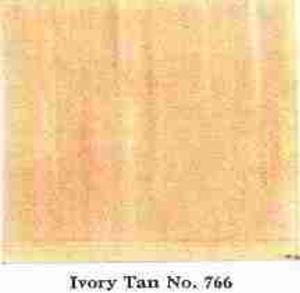
EXCELON IVORY TAN 766 - new in 1958, shown above

- GOLD 54523 floor tile from 1973 - above
- MAPLEWOOD 863 [click to see]


- MING YELLOW 759, shown above, from 1954
- SEMINOLE YELLOW 774 [click to see]


- SHATTERED STONE GOLD 51172 - from 1973 - above

-
SPATTER style (Stratford ivory 729) - from 1964 - shown above

-
STANDARD straight grain (CATAWABA YELLOW 712) shown above is an example of Armstrong 1964 floor tiles.

- STYLETONE floor tiles in Mossstone 827, PEACHTONE 837 (1964) illustrates that some floor tiles you might think will be yellow-ish are more tan or brown.
- Plain Yellow 793 Excelon feature strips

- COUNTRY BRICK 12" x 12" regular brick pattern Armstrong vinyl asbestos floor tiles sold in a range of colors in 1978; ALMOND 57403 is shown above
- Also see ASBESTOS FLOOR TILE IDENTIFICATION BEIGE BROWN TAN or WOOD TONE

Armstrong and other floor tile or sheet flooring manufacturers often offered several patterns with a particular dominant color that can help quickly identify the flooring brand and style. We include some examples here.
Above is the color key to Armstrong Feature solid color floor tiles & accent strips 12" x 12" x 1/8" solid color floor tiles and 1" x 24" solid color vinyl-asbestos flooring accent strips in the colors shown. These tiles were intended for accent spots, not for tiling an entire floor, because the solid color flooring would show scratches.
Abestos-containing floor tile pattern number key
Kentile, Congoleum and other manufacturers used various names and numbers for their flooring series and styles.
For Armstrong floor tiles, the three digit color or pattern numbers originated in the 1950's or 1960's while the five-digit color or pattern numbers date typically from the 1970's or 1980's.
...
Reader Comments, Questions & Answers About The Article Above
Below you will find questions and answers previously posted on this page at its page bottom reader comment box.
Reader Q&A - also see RECOMMENDED ARTICLES & FAQs
12x12" Tiles, Yellowish adhesive. Is this non-toxic linoleum?
 House built 1920. 3 season porch flooring date unknown.
12x12 in. tiles. Daily soft, flexible yet brittle.
Yellowish adhesive with slight tack (in this heat). Is it possible this is linoleum, or non-toxic? On 2021-06-06 by Bryan
Answer - by (mod) - 12x12 tiles are not linoleum.
@Bryan,
Thank you for the photo and question.
That looks like a floor tile, at least the square in your photos.
Linoleum, though occasionally cut into squares or strips, is in essence a sheet flooring.
SeeLINOLEUM & OTHER SHEET FLOORING - includes additional Images of Congoleum linoleum sheet flooring products
From a photo one can’t answer your "toxic" question with certainty. (Better would be to say "hazardous asbestos")
Popular flooring patterns were continued, without asbestos, after 1986. Have a sample of the flooring tested, or you can make a reasonable *guess* at whether or not the floor contains asbestos by answering the few easy questions found at
DOES THIS FLOORING CONTAIN ASBESTOS? - 5 easy steps that can help you make a reasonable guess at whether or not the floor you ask about contains asbestos.
Asbestos is safe and legal to remain in homes or public buildings as long as the asbestos materials are in good condition and the asbestos can not be released into the air. - US EPA
The safest and least costly approach is to leave the flooring alone, in place, and to cover it with new material.
If the floor is in poor condition or must be removed then see the asbestos floor removal and asbestos hazard reduction articles found in the ARTICLE INDEX at the end of any of these pages.
So I'm not sure I'd use the word "toxic".
Is this 1988 Armstrong Vernay pattern an asbestos risk?
 Hello — I just discovered this under carpet in my basement.
It looks like the Armstrong Vernay pattern on this site, which you say didn’t contain asbestos. Is that right?
What’s odd is that it says it was stopped manufacturing in 1982,
but records from the previous homeowner show this wasn’t installed until 1988?!
Am I safe to remove this?
From the previous On 2021-04-08 by Katie
by (mod) - 1980s Armstrong Vernay floor tile patterns - Asbestos?
@Katie,
Interesting; flooring made after 1986 in the U.S. will not be likely to contain asbestos; it's possible that flooring made up to 1982 was stored somewhere and installed as "new old stock" at some later time.
So nobody would bet your life that the floor in your photo is asbestos free.
But when you can remove a flooring material by simply picking it up or rolling it up, without making a dusty mess by sanding, grinding, chopping, etc., then there isn't likely to be a detectable asbestos hazard - it's not a friable material.
Best option is leave in place and cover-over.
How old is this yellow Arabesque pattern floor in my kitchen and is it an asbestos worry?

What do you think? My house was built in 1956, I’m not sure if this is the original kitchen floor or not. On 2021-03-31 by Lauren
Asbestos risk in Moroccan Mosaic Arabesque / clover / lantern pattern sheet flooring?
@Lauren, probably that flooring is from 1960s or later.
On 2021-03-31 - by (mod) -I'd treat the floor as presumed to contain asbestos. DF.
Is this 12x12" 1970's yellowish floor remodeling tile recognizable as an asbestos product?

House is 95 years old. By style I’d guess remodeled in 1970’s. Is this a recognized asbestos-containing tile? On 2020-05-01 by Dawn W.
12x12 no idea of manufacturer
Photo enclosed
House built in 1970 we believe
Asbestos?
Reply by (mod) -
I don't know that exact pattern but warn that popular patterns were often made and thus sold both with asbestos and later without.
See
DOES THIS FLOOR CONTAIN ASBESTOS? - 5 easy questions to tell if your FLOOR probably contains asbestosYes it would make sense to either test a sample or treat the floor as presumed to contain asbestos, Dawn.
Does this brown/yellow floor tile pattern contain asbestos?

Does this tile have abestos? On 2020-02-06 by Stephanie
by (mod) - Does this tile have abestos?
It might, Steph but since the pattern alone isn't sufficient to determine if a flooring has asbestos see
DOES THIS FLOOR CONTAIN ASBESTOS
where the simple questions can help make a reasonable guess
Asbestos risk in painted over floor tiles in a 1950s home

My house was built in 1950 and has these painted over 9x9 tiles on the basement. Can you help me identify if they are asbestos?
They are yellow in color and the color seems to go all the way through so they don't look dyed or painted.
The back is a medium grayish color. The top is yellow with what looks like glitter in it. Fortunately these were not glued down.
Whoever did this laid down 2 additional inches of cement and installed these in the wet cement. Strange. Also, the tiles are hard and do not flex, but break and shatter. They feel like clay or ceramic. I've attached a pic for you to look at. Thanks! On 2020-09-05 by Brian
by (mod) - asbestos in yellow 9x9 1950s floor tiles?
Sorry Brian;
I can't tell from your photo and note if this is original 1950's flooring (it doesn't look like it).
When answering this asbestos in flooring question, all we have really to go on in this case is the age of the material - or you can make a more-confident guess about the asbestos question at
DOES THIS FLOOR CONTAIN ASBESTOS? - 5 easy questions to tell if your FLOOR probably contains asbestos - found at the end of this page.If the tiles are from the 1950s or early 60s they're likely to contain asbestos.
1970s 12x12 inch floor tile: is there asbestos content in the yellow stuff?

House was built in 1977. Tile is 12x12 and is 1/16 thick. Adhesive appears to be yellow. Thoughts on if it potentially contains asbestos? Accidentally pulled a piece up while doing some rehab work. 2019/10/12
Jeff Thompson
Reply:
Jeff
At least *some* 12x12 vinyl floor tiles from the late 1970's contains asbestos; Pulling up one tile intact isn't likely to produce a detectable hazard however, unless you ground, chopped, sawed the material;
See DOES THIS FLOOR CONTAIN ASBESTOS?
for 5 easy questions that help you either make a reasonable guess about your floor's asbestos (or not) content, or to decide to have a sample tested.
If you do go ahead with a test, do send us the result as well as a photo of the tile pattern so that we can include that in our library for other readers.
Thanks
...
Continue reading at DOES THIS MATERIAL CONTAIN ASBESTOS? - 5 easy questions to tell if a BUILDING MATERIAL probably contains asbestos, or select a topic from the closely-related articles below, or see the complete ARTICLE INDEX.
Or see these
Recommended Articles
- ASBESTOS FLOORING IDENTIFICATION GUIDE INDEX - all brands, all years
- ASBESTOS FLOOR TILE PHOTO ID GUIDE - home
- ASBESTOS FLOOR TILE IDENTIFICATION COLOR KEY
- ASBESTOS FLOOR TILE IDENTIFICATION BEIGE BROWN TAN or WOOD TONE
- ASBESTOS FLOOR TILE IDENTIFICATION BLACK
- ASBESTOS FLOOR TILE IDENTIFICATION BLUE
- ASBESTOS FLOOR TILE IDENTIFICATION GRAY
- ASBESTOS FLOOR TILE IDENTIFICATION GREEN
- ASBESTOS FLOOR TILE IDENTIFICATION RED
- ASBESTOS FLOOR TILE IDENTIFICATION WHITE
- ASBESTOS FLOOR TILE IDENTIFICATION YELLOW
- ASBESTOS FLOORING HAZARD REDUCTION
- ASBESTOS FLOORING LEFT IN PLACE
- ASBESTOS FLOORING REMOVAL GUIDE
- DOES THIS FLOOR CONTAIN ASBESTOS? - 5 easy questions to tell if your FLOOR probably contains asbestos -
- FLOOR TILE / SHEET FLOORING PHOTO GUIDES - photo guides, all brands, all years
Suggested citation for this web page
ASBESTOS FLOOR TILE IDENTIFICATION YELLOW at InspectApedia.com - online encyclopedia of building & environmental inspection, testing, diagnosis, repair, & problem prevention advice.
Or see this
INDEX to RELATED ARTICLES: ARTICLE INDEX to ASBESTOS HAZARDS
Or use the SEARCH BOX found below to Ask a Question or Search InspectApedia
Ask a Question or Search InspectApedia
Share this article:Search the InspectApedia website
Need to make a private comment? Email editor@inspectApedia.com. We welcome email with your website content critique, corrections, suggestions or questions. Email is monitored daily but our workload may prevent an immediate reply. For immediate results, we hope you'll first try asking your question using the search box just above.
Citations & References
In addition to any citations in the article above, a full list is available on request.
- [1] Armstrong ® Residential Flooring - Website 05/15/2010 https://www.armstrongflooring.com/ lists current flooring products provided by the Armstrong Corporation, including Armstrong's current vinyl floor tile products at https://www.armstrongflooring.com/flooring/products/vinyl-floors
- [2] Armstrong Corporation, Corporate History - https://www.armstrongflooring.com/corporate/corporate-history.html - Web Search 05/19/2010
- [3] Armstrong vinyl asbestos floor tiles: photos of asbestos-vinyl floor tiles as catalog pages (PDF form) are at www.asbestosresource.com/asbestos/tile.html
- [6] "Asbestos Floor Tile Removal", the University of Minnesota's advice on removing VAT (vinyl asbestos or asphalt asbestos floor tile) can be read in detail at www.health.state.mn.us/divs/eh/asbestos/floortile/index.html
- [8] Resilient Floor Covering Institute, 1030 15th St. NW, suite 350, Washington D.C.
- [12] Congoleum Corporation, "Company History", Congoleum Corporation, Department C, P.O. Box 3127, Mercerville, NJ 08619-0127 1-609-584-3601, www.congoleum.com web-search 03/14/2011, original source: http://www.congoleum.com/history.html
- [16] EVER WEAR TILE CO is currently (2009) in the Terrazzo, Tile, Marble, and Mosaic Work industry in Fallon, NV. 775) 423-6221. [We do not know the company history nor whether there is an association with EverWear vinyl asbestos floor tiles discussed in this article.]
- [17] Kentile KenFlex flooring photographs:Flickr web search 5/15/2010 - see original material and other asbestos product photos
- [18] "Plastic Flooring Spreads Through the House", Jackson Hand, Guide to Home-Improvement Materials, Popular Science, April 1969, p. 154-158
- [30] ASBESTOS IN YOUR HOME U.S. EPA, Exposure Evaluation Division, Office of Toxic Substances, Office of Pesticides and Toxic Substances, U.S. Environmental Protection Agency, Washington,D.C. 20460
- In addition to citations & references found in this article, see the research citations given at the end of the related articles found at our suggested
CONTINUE READING or RECOMMENDED ARTICLES.
- Carson, Dunlop & Associates Ltd., 120 Carlton Street Suite 407, Toronto ON M5A 4K2. Tel: (416) 964-9415 1-800-268-7070 Email: info@carsondunlop.com. Alan Carson is a past president of ASHI, the American Society of Home Inspectors.
Thanks to Alan Carson and Bob Dunlop, for permission for InspectAPedia to use text excerpts from The HOME REFERENCE BOOK - the Encyclopedia of Homes and to use illustrations from The ILLUSTRATED HOME .
Carson Dunlop Associates provides extensive home inspection education and report writing material. In gratitude we provide links to tsome Carson Dunlop Associates products and services.
 |
HOME | ABOUT | ASK a QUESTION | CONTACT | CONTENT USE POLICY | DESCRIPTION | POLICIES | PRIVACY | |
| © 2026 - 1985 Publisher InspectApedia.com - Daniel Friedman | |||||||||