
InspectAPedia® FREE Encyclopedia of Building & Environmental Construction, Diagnosis, Maintenance & Repair |
Question? Just ask us! InspectAPedia
|
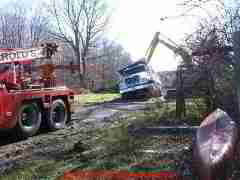 Cesspool Safety
Inspecting, Testing, & Maintaining Residential Septic Systems - Cesspool Collapse Hazards
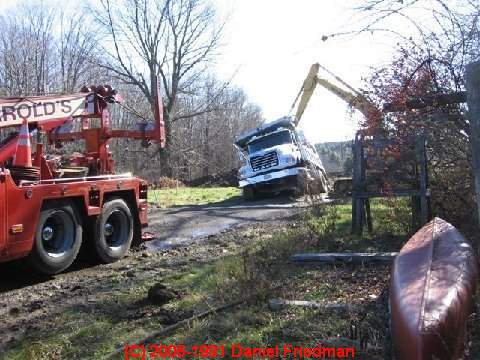
- POST a QUESTION or COMMENT about safety hazards, collapses, explosions, fires, toxics, injuries and fatalities involving septic tanks, cesspools, drywells, and other septic system components
Septic & Cesspool or Drywell Safety Hazard Warnings:
This document explains and describes some critical safety concerns for people owning and maintaining cesspools for onsite waste treatment. Cesspools, depending on how they have been constructed and how they are serviced, can present particularly dangerous conditions and risk collapse and fatal injury. The hazards described here in discussing cesspools can also be present at drywells and seepage pits.
InspectAPedia tolerates no conflicts of interest. We have no relationship with advertisers, products, or services discussed at this website.
- Daniel Friedman, Editor/Publisher - See WHO ARE WE?
Cesspool Safety Warnings and Cesspool Capacity Limitations
 Quoting from our sink holes article:
The bare minimum that a property owner needs to know about sinkholes or any other sudden subsidence of soils at a property is that these conditions might be very dangerous.
Someone falling into a sink hole or into a collapsing septic tank could be seriously injured or even die. If a suspicious hole, subsidence, or depression appears at a property the owner should rope off and prevent access to the area to prevent anyone from falling into the opening, and then should seek prompt assistance from a qualified expert, geotechnical engineer, septic contractor, excavator, or the like.
This document is a subchapter of our online text about cesspool design, cesspool installation, cesspool maintenance and cesspool inspection. These pages explain what a cesspool is, gives important safety and maintenance advice for cesspool systems, and defines the criteria for cesspool failure.
We also provide critical safety warnings concerning cesspool systems as with some older and especially site-built cesspools there is a risk of dangerous collapse or cave-ins.
This material is a chapter of our Septic Systems Online Book: That document explains septic system inspection procedures, defects in onsite waste disposal systems, septic tank problems, septic drainfield problems, checklists of system components and things to ask. Septic system maintenance and pumping schedules. Citation of this article by reference to this website and brief quotation for the sole purpose of review are permitted. Use of this information in books or pamphlets for sale is reserved to the author.
Some technical review by industry experts has been completed-reviewers are listed at "References." Review comments and content suggestions are invited. Home buyers should see the Home Buyer's Guide to Septic Systems.
Also see SEPTIC & CESSPOOL SAFETY - Septic System, Septic Tank, & Cesspool Safety Warnings for Septic Inspectors, Septic Pumpers, and Homeowners.
Very Important Cesspool Safety Warnings
- Watch Out: do not walk over the top of or close to the edges of a cesspool or any other onsite pit or excavation because
of the danger of fatal collapse. Keep pets and children away from such systems.
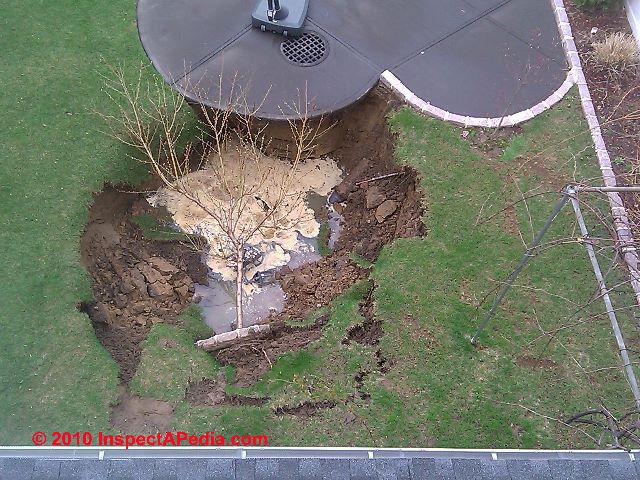
Our photo (left) shows a sudden back yard collapse that may have been due to an old drywell or cesspool, discussed in detail at Sinkholes in New York. - Watch Out: there is a high risk of cesspool collapse, risking fatality if someone falls in to one of these systems. This is particularly true for older site-built systems that were often made of dry-stacked stone or concrete block, and more-so if such systems are not protected by a very secure cover.
- Watch Out: pumping cesspools is dangerous since older site-built systems may be more likely to collapse inwards
when relieved of their contents.
Also, pumping a cesspool from the bottom, in an attempt to break up the sludge layer and "rejuvenate" the cesspool is likely to undermine the structure's walls and in the case of dry-laid concrete block or stone, as we warn just below, can lead to a dangerous and sudden collapse of the cesspool.
Experienced septic pumpers who attempt this "cesspool rejuvenation" method despite severe safety warnings not to do so, will still avoid pumping much waste out of the cesspool in hopes to avoid a collapse. - Hydrojetting a pre-cast cesspool in good condition and standing on stable soil (not sand) may be less dangerous and is usually performed after a partial pumpout. Before taking any action, review your cesspool repair plan with your local health and building departments for both building code and site safety concerns can be grave when a cesspool is disturbed.
- Watch Out: hydrojetting a cesspool, aerating or agitating sludge at the bottom of a cesspool in an attempt to renew its function or extend its
life also risk system collapse - in particular if the cesspool is an older type of site-built structure, typically made of dry-stacked stone or concrete blocks, jetting the cesspool bottom, and even pumping out the cesspool can undermine the cesspool walls leading to collapse of the system.
We are informed of a serious fatality involving a cesspool that was jetted and then collapsed, burying the owner. Don't do this.
Cesspools that are collapse-resistant pre-cast concrete structures are safer in this regard. However many municipalities define the end of life of a cesspool in terms of its static full level and do not provide for rejuvenation attempts. - See CESSPOOL FAILURE CRITERIA.
- Watch Out: do not drive over cesspools (nor over septic tanks, septic piping, or drainfields) as there is risk of collapse or cave-in. The photographs of a collapsed seepage pit (which could as well have been a cesspool collapse) at the top of this page and just below show what happens when a heavy truck drove over a seepage pit which was not designed to carry such a heavy traffic load.
- See DRIVING or PARKING OVER SEPTIC
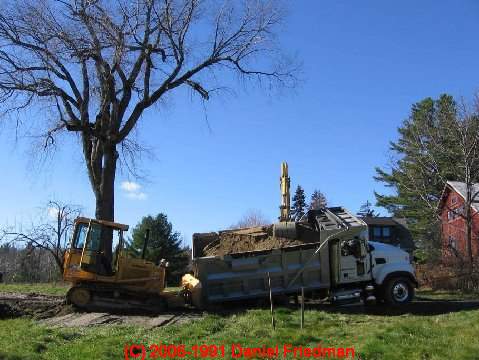
In Summary:
Watch out for cave-ins, keep away: cesspools, particularly older site-built cesspools present a very high risk of collapse from an unsafe cover or following some types of service involving pumping, aeration, or hydro-jetting.
Adults or children should not walk over or even near cesspools because of the risk of falling-in followed by collapse, a virtually certain cause of death.
If the presence of a cesspool is known or suspected at a property its location should be roped off to prevent access and it should be investigated by a professional.
When to Install a New Cesspool or Drywell
Question: When is the best time to install a new cesspool?
I need a lot of information because I am going to buy a new cesspool. When is the best time to buy one? I was told winter is the best time to buy a new cesspool? But the ground is frozen now. What temp is right? What is the average price? House was built 1950 (maybe). Does new cesspool come with new cover? Can I have my clothes line on top of old cesspool? How do I get rid of odor in my basement? When they put the new cesspool in do they check pipelines in and out of house? If so how? Do I need to get new pipes in side? Does a plumper know best, when to replace pipes? - S.H.
Reply: Wet warm weather
The season in which a cesspool is to be installed affects the cost and may affect the outcome too:
- If the ground is frozen it may cost more to excavate to install the cesspool, and of course if there is very deep snow cover it may be difficult to deliver the unit and drop it into the new hole as well as to deliver the necessary gravel underneath and around the unit.
- If the ground where you intend to install a cesspool is found to be flooded - which you can discover if the excavation is performed in the in wet season - you will know the cesspool won't work in that location
So it's probably cheaper and smarter to dig during the un-frozen wet season.
Of course, if your building relies on a cesspool or drywell to function and the present system has failed, you may be forced to install the new cesspool or drywell without waiting.
Cesspool cover:
Cesspools, if you buy a pre-fab pre-cast unit, are made of concrete. You may have a choice of cover - a heavier duty one that can be driven-over without collapsing is smart. But a safe cover must be included in your bid price regardless.
Watch out: falling into a cesspool or drywell is likely to be fatal.
Putting a Clothes Line over a Cesspool:
A clothes line won't hurt the cesspool if you don't drive a post into the cesspool top.
Getting rid of Old Sewage Backup Odors:
Odors go away by cleaning and sanitizing the area of any sewage backup and airing it out. If odors remain you may have an outdoor failure and outdoor sewage odors as a source, or you might have an indoor plumbing vent problem.
See ODORS GASES SMELLS, DIAGNOSIS & CURE for details.
Building Codes, Permits, Approvals for Cesspools and Drywells
You need an experienced plumber and cesspool. installer to help locate the new cesspool, connect existing building drains to it, and to assure that the building drain/waste/vent piping are working properly.
Don't forget to obtain a building department or health department permit and approval, and to install it correctly and safely.
Watch out: Some municipalities do not allow cesspools - so check with your building department.
Reader Comments, Questions & Answers About The Article Above
Below you will find questions and answers previously posted on this page at its page bottom reader comment box.
Reader Q&A - also see RECOMMENDED ARTICLES & FAQs
On 2019-10-30 - by (mod) -
Yes Anon, depending on just how plumbing is routed and the country, city and local cite conditions, rodents and other pests can appear in a toilet bowl - both by climbing up onto the bowl and falling in or by swimming and crawling up through an un-protected sewer pipe from a municipal sewer line.
On 2019-10-30 by Anonymous
Can any type of rodent etc end up in your toilet?
On 2018-10-05 - by (mod) -
Watch out:
if the cesspool cover is damaged or inadequate someone can fall into the cesspool - usually meaning a quick and ugly death. Rope off the area, keep people away, and let your septic or excavation contractor explore the condition of the cesspool and its safety.
On 2018-10-05 by frank
ground above cesspool cover is bulging up
On 2017-11-19 by Doug
Thanks for the input Joe! We contacted the County about our dilemma and we may qualify to drain our septic into our existing cesspool. We have a septic specialist coming out, and if promising, we'll follow-up with an inspection to get qualification. Hopefully, we'll get the green light and pull the permit for the system that will fit our situation for about$10K.
On 2017-11-09 - by (mod) -
Doug,
You're right that a cesspool is in a sense a vertical leach line except that it also contains raw sewage. Unfortunately a vertical absorption system cannot properly treat sewage effluent since it lacks adequate bacteria at depth. That's one reason that many municipalities will not approve new cesspools nor the extension of use of an existing one when you are adding onto a property. If you are site to space is quite limited you need to get help from a septic design engineer. It may be possible to install an on-site treatment system that will process effluent to a sufficient level that you can meet local code Authority approval. Before doing anything expensive be sure you know what your local officials will approve.
On 2017-11-09 by Doug
I have a cesspool, but am required to install a septic since I'm adding a bedroom to my house. Can I route the discharge of my new septic tank into my existing cesspool? I live on a steep hill and don't have any logical location for leach lines - thinking that the cesspool would be a sort-of vertical leaching line, plus the water has already been treated by the septic.
On 2016-08-25 by Dee
Can a septic tank drain lines be buried 4 ft and zigzagged about a foot apart draining downhill?
On 2015-04-28 - by (mod) -
Darlene
If you worry that there is an unsafe cesspool into which someone could fall, you should
1. notify the neighbor immediately orally and if necessary in writing. Access to the area should be blocked off to prevent a child or adult from wandering by or falling in.
2. if the neighbor does not take immediate safety measures you have no choice but to ask for advice from your local building and health departments, also orally and in writing.
On 2015-04-28 by darlene austin lang
o my gosh I read your imformation I know my neighbor has a cesspool uncovered in her backf yard close to our property line I caught the old woman running her washing machine water in it who do I report this to I am so afraid of cavein now the place is a hundred year old trash ben
...
Continue reading at CESSPOOL FAILURE CRITERIA or select a topic from the closely-related articles below, or see the complete ARTICLE INDEX.
Or see these
Recommended Articles
- CESSPOOLS
- CESSPOOL FAILURE CRITERIA
- CESSPOOL AGE ESTIMATES
- CESSPOOL SAFETY WARNINGS
- CISTERNS, WATER STORAGE
- DRYWELL DESIGN & USES
- GREYWATER SYSTEMS
- METHANE & SEWER GAS HAZARDS
- SEPTIC TANK ABANDONMENT GUIDE
- SEEPAGE PITS
- SEPTIC TANKS - home
Suggested citation for this web page
CESSPOOL SAFETY WARNINGS at InspectApedia.com - online encyclopedia of building & environmental inspection, testing, diagnosis, repair, & problem prevention advice.
Or see this
INDEX to RELATED ARTICLES: ARTICLE INDEX to SEPTIC SYSTEMS
Or use the SEARCH BOX found below to Ask a Question or Search InspectApedia
Ask a Question or Search InspectApedia
Questions & answers or comments about safety hazards, collapses, explosions, fires, toxics, injuries and fatalities involving septic tanks, cesspools, drywells, and other septic system components.
Try the search box just below, or if you prefer, post a question or comment in the Comments box below and we will respond promptly.
Search the InspectApedia website
Note: appearance of your Comment below may be delayed: if your comment contains an image, photograph, web link, or text that looks to the software as if it might be a web link, your posting will appear after it has been approved by a moderator. Apologies for the delay.
Only one image can be added per comment but you can post as many comments, and therefore images, as you like.
You will not receive a notification when a response to your question has been posted.
Please bookmark this page to make it easy for you to check back for our response.
Our Comment Box is provided by Countable Web Productions countable.ca
Citations & References
In addition to any citations in the article above, a full list is available on request.
- New York State Department of Health, APPENDIX 75-A WASTEWATER TREATMENT STANDARDS - INDIVIDUAL HOUSEHOLD SYSTEMS , [PDF] New York State Department of Health, 3 February 2010, retrieved 3/1/2010, original source: https://www.health.ny.gov/regulations/nycrr/title_10/part_75/appendix_75-a.htm
- Thanks to Denise Cermola for permission to use the photo at page top (email 11/16/06 to 12/10/06). The contractor drove over this seepage pit connected to septic tank and caused total destruction of the system. Luckily there were no injuries in this event.
- Thanks to reader - S.H. for discussing the timing of when to install a new cesspool, February 2011
- Our recommended books about building & mechanical systems design, inspection, problem diagnosis, and repair, and about indoor environment and IAQ testing, diagnosis, and cleanup are at the InspectAPedia Bookstore. Also see our Book Reviews - InspectAPedia.
- In addition to citations & references found in this article, see the research citations given at the end of the related articles found at our suggested
CONTINUE READING or RECOMMENDED ARTICLES.
- Carson, Dunlop & Associates Ltd., 120 Carlton Street Suite 407, Toronto ON M5A 4K2. Tel: (416) 964-9415 1-800-268-7070 Email: info@carsondunlop.com. Alan Carson is a past president of ASHI, the American Society of Home Inspectors.
Thanks to Alan Carson and Bob Dunlop, for permission for InspectAPedia to use text excerpts from The HOME REFERENCE BOOK - the Encyclopedia of Homes and to use illustrations from The ILLUSTRATED HOME .
Carson Dunlop Associates provides extensive home inspection education and report writing material. In gratitude we provide links to tsome Carson Dunlop Associates products and services.
 | HOME | ABOUT | ASK a QUESTION | CONTACT | CONTENT USE POLICY | DESCRIPTION | POLICIES | PRIVACY | |
| © 2024 - 1985 Publisher InspectApedia.com - Daniel Friedman | |||||||||