
InspectAPedia® FREE Encyclopedia of Building & Environmental Construction, Diagnosis, Maintenance & Repair |
Question? Just ask us! InspectAPedia
|
 Mold Testing Guide for Home Inspectors
Should Home Inspectors Perform Mold Inspections and Testing?
- POST a QUESTION or COMMENT about including mold inspecting and testing as part of a home inspection
Should home inspectors provide mold testing services?
If so what tests are valid & useful? If not, who should be testing fo rmold?
Here we present a compendium of several authors' presentation notes on the question of whether or not home inspectors should perform mold testing and inspection.
In this article, text shown in indented italics contains comments that we offered in response to an individual who was planning to present a class to home inspectors on the advisability (and profitability) of offering mold test services during home inspections.
InspectAPedia tolerates no conflicts of interest. We have no relationship with advertisers, products, or services discussed at this website.
- Daniel Friedman, Publisher/Editor/Author - See WHO ARE WE?
Mold Sampling as Part of a Home Inspection
Are "Mold Tests" provided as part of a home inspection a Valuable Service or Fraud?
 Is routine mold sampling in buildings ever justifiable?
Testing every house for mold in the course of a home inspection would be ineffective (as a “test” without a thorough and invasive inspection is inconclusive), a waste of money, unreliable, and unethical.
Mold testing is appropriate and useful in a number of circumstances.
But as with other ENVIROMENTAL SCARE topics (public fear cycles in response to currently-advertised environmental hazards), in several fields practitioners may simply view added test services as a safe source of extra revenue, while the tests that they offer are unreliable, inaccurate, improperly conducted.
Such practitioners will also disclaim any responsibility for the accuracy or usefulness of the test.
Home buyers or home owners who are concerned about mold and who are considering a mold "test" should read the following articles with care:
When should a home be tested for mold?
We should inspect a building for probable significant visible or hidden mold contamination when there is a good reason – see “why test” that follows, but simple "mold tests" without a thorough expert inspection are quite unreliable.
See BUYERS GUIDE to HOME INSPECTIONS for MOLD
And see MOLD / ENVIRONMENTAL EXPERT, HIRE ?.
Our photo, left, shows a series of carpet vacuum sample tests being arranged to screen a home carpet for mold contamination following a nearby mold remediation project.
How should we test a building for mold?
It is far better to rely on visual inspection – that’s where 90 % of the value lies. We should not ever rely on test methods alone (without inspection) and we should not ever use test methods that are innately unreliable (air, culture, swab)
That does not mean that the inspector is promising anything about the presence or absence of mold. But our OPINION is that it is reasonable and can be safe (if properly put) to offer an opinion about the presence or absence of external, visual evidence that suggests that the topic should be pursued.
What are the consequences of mold testing?
Why Test for toxic or allergenic mold in a building? What mold question are we trying to answer?
Is there an expensive or dangerous problem here that deserves attention?
The degree to which we should even ASK the question depends on an initial risk assessment – the home inspection tells us the leak-risk-level including history of leaks not just present ones; the occupants tell us if there are unusual health risks – evaluating these risks and thus deciding if it is appropriate (and ethical) to go further is explained
at MOLD / ENVIRONMENTAL EXPERT, HIRE ?.
How do I find out if there’s mold in a home?
We already know the answer to this question
(Mycologists say All mold is everywhere all the time. The more interesting question is “is there evidence of a large problematic mold reservoir in a building?” The answer starts with looking at the building for visible mold or mold-friendly conditions that might have produced hard to see or hidden mold in large quantity.
Also professionals who examine buildings previously "tested" for mold using unreliable methods hold a dim view of home inspectors or "mold inspectors" who are simply doing a CYA job by reporting “attic mold” and scaring buyers – too often people sample mold on attic plywood – (usually Cladosporium sphaerospermum or Aureobasidium pullulans - allergens) and think that they are testing “the problem” when what they are testing is “the symptom” where the real problem is either
– ABSENT or
- HIDDEN
such as gross Penicillium or Aspergillus growing in the attic insulation and blowing down into a home because the attic is being pressurized by a whole house fan (not the usual circumstance) or sucked into the HVAC air handler in the attic (also not the usual circumstance)
– in effect we are directing people in the wrong direction and missing the real problem as well as too often wasting cleanup money on a non-problem while missing a serious problem in a basement or crawl space or living area.
To screen for mold we can’t see?
Screening tests for non-visible mold by air or culture or swab, especially used without an extensive, expert visual inspection combined with a history taking of the building and perhaps even a risk assessment for its occupants are complete junk science. Totally unreliable.
Why? To find out how much mold is in the home? How should we go about this? What is a harmful level of mold in buildings?
It depends – we have actually measured clients having severe reactions to levels of airborne mold that are substantially below commonly printed standards.
MOLD EXPOSURE STANDARDS has collected standards from around the world.
Basically we should not even ask this question as home inspectors. But we can say whether or not there is evidence that mold needs to be cleaned up professionally – if there is more than 30 sqft of contiguous mold that is not just cosmetic, it needs to be professionally removed. That’s the substantive point.
What is a safe level of mold indoors?
Lots of subjective opinions abound. See previous comments.
How Should We Go About Determining if a Building is Mold-Safe or Mold Dangerous?
Visual inspection. Wait, we already do that!
Air Sampling for mold?
Junk science when used alone as a "screen" for building mold contamination – airborne mold and other indoor particle levels vary by 2 to 4 orders of magnitude from moment to moment, so any LOW “count” of particles per m3 is unreliable. HIGH counts should be taken to mean “probably there is a problem” but low counts can’t be taken to mean anything.
See MOLD TESTING METHOD VALIDITY
Swabs – to test for mold?
Swabs destroy the identifying structures; only 10 % of the 1.5 million mold species will grow on ANY culture under ANY conditions, so we are 90% wrong when we open the culture package.
Mold cultures to screen a building for problem mold?
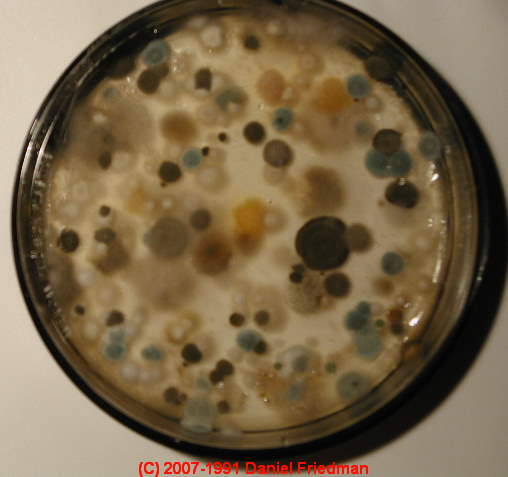
Junk science. 90% of molds won't grow in culture - so you're 90% "wrong" at the start of a test; furthermore, what grows in a culture is what mold most likes that media - so even if two mold spores settle on the culture plate, and if one of them is from an important indoor mold problem, it's possible that it will be obscured by growth of the other mold.
See CULTURES to TEST FOR MOLD for details.
Bulk sampling to screen a building for mold?
Appropriate as part of special handling of problem materials in buildings during a full building survey, never during a home inspection.
We use this method to screen building insulation for hidden Aspergillus or Penicillium contamination in areas where fiberglass insulation has been wet or exposed to high moisture.
See INSULATION MOLD CONTAMINATION TEST
Surface samples of mold or dust using clear adhesive tape?
If you mean TAPE Sampling to collect surface mold, surface debris, or a screening sample of settled dust, , this is the best way to collect indoor mold or screening dust samples to do a qualitative analysis for evidence of a problem, BUT
EVERYTHING depends on where you stick the tape – so you had better know where to stick it.
See TEST KIT for DUST, MOLD, PARTICLES: INSTRUCTIONS for detailed procedures using the mold tape test method.
This method is also suitable for dust screening or for other particle screening in settled building dust, such as the level of allergenic particles, dust mite fecals, insect fragments, fiberglass fragments, and potentially asbestos particles.
Wall Cavity Vacuum Samples to Test a Building for Mold Contamination?
We did a study on these – we wall cavity vacuumed then demolished and inspected the walls in a moldy new Orleans house (with Louis Relle a few yrs ago) the wall vacuums were nearly totally ineffective in finding what was really in the building.
Air Sampling as a Building Mold Test?
What’s an acceptable number of spores in a dry building in a dry climate?
Depends on who you ask
Assume < 500 S/M3
Variation – Will exceed 1000 S/M3 10% of the time
Clean house single sample may exceed 3000 S/M3
- Caoimhín P. Connell Forensic Industrial Hygienist Indoor Fungal Concentrations
Air Sampling
How valid is our sample?
Typical 1 indoor and 1 outdoor sample
Point in time
Large spatial variations
Large temporal variations
Environmental variations during sampling
Building Conditions
Occupants
Air movement, fans
We have done field studies of this. Found 3 orders of magnitude in airborne Aspergillus at a moldy basement pool table:
- #1 On the table top, passive collection of an air test – just got traces of spores
- #2 On the table top, aggressive collection during air testing by waving my notebook at the table, got a few thousand spores/m3 of air
- #3 Below the table on the floor (under the moldy underside of the table) using passive collection I got nearly 10x #2 above.
- #4 Below the table,same location, aggressive collection, I got 100x the table top spore level of Aspergillus.
Temporal Variations in airborne mold levels mean that wildly different mold test results will be obtained in most buildings.
Which Value is Correct?
Valid Results
In order to obtain valid results
Precise
Reproducible, variance characterized
Accurate
How close is our measurement to the true value?
Relevant
Does this answer the question we are asking?
Comparable?
How relevant are indoor to outdoor levels?
Outdoor vs. Indoor
What if there are more spores outdoors than indoors?
Advise clients to stay indoors, going outside must be bad for their health if mold is bad for us. . .
Total count vs. speciation
Time of year
Environmental conditions
Rain
Snow
There are SURGES of certain spore genera/species depending on many different weather changes in temperature, humidity, rainfall, light or dark, wind, even time of year or day of month in some cases.
Especially a surge of Basidiomycetes that at the spore level (in air samples) are hard to distinguish from some of the bad boys indoors (Aspergillus and Penicillium for two) so there are rampant errors in this comparison with indoors and outside.
Furthermore, the underlying premise is wrong. Indoor air changes do NOT mean that we get anywhere near the same particle mix as outdoors, not ever.
Indoor air is dominated by fabric fibers, skin cells, and in kitchens and baths we see starch granules, and everywhere we see dust mite fecals and a few typical outdoor spores and some pollen.
We need to be looking for either unusual indoor quantities (high Pen/Asp) or unusual structures that even at low counts indicate an indoor problem (Aspergillus spores appearing in chains)
Air Sampling Reliability
Air Sampling Risk
Point in time sampling can give a false assurance that there’s not a problem, when there really is a problem. . .
It can also suggest there is a problem when there isn’t one. . .
How does that affect your liability. . .
I think you can debunk air sampling as well as swabs and cultures very quickly and could spend less time on them than I see herein Mark.
Swab or Bulk Sampling
If we can see mold to swab it, does it matter what type of mold it is?
Swab (Culture) is wrong 90% of the time before you start – Not a valid method for assessing a building
Ok so I see you already knew this.
Wall Cavity Sampling
Mold inside walls does not present an significant exposure issue ???
This is not necessarily right. The truth is, it depends on air movement, openings, individual sensitivity, lots of stuff. Burge at Harvard said we could ignore wall cavity mold, I’ve seen in the field that that is not always so.
E.g. at the Watergate in Washington DC you could actually FEEL a WIND of moldy air coming out of some wall cavities. (Condelezza Rice’s ceiling fell down in the dining room)
Advice on Mold Test Result Interpretation
How does your advice to your client differ, now that you know what type of mold they have?
OK, You Have Mold
Lab results come back
Now what do you tell the client?
What amount of mold is safe?
Nah – first off they’re terrified of a usually not airborne “black mold” Stachybotrys chartarum and they are not even being TOLD (because the procedure didn’t find) that there is a greater health risk in the building from a large but not-seen Aspergillus colony (easily airborne etc).
What’s an Acceptable Mold Level?
There are no regulations or exposure limits for molds or mycotoxins.
What Do Authoritative Sources Say about Mold?
- CDC
- EPA
- Universities
- Medical Doctors
- EPA Web Site
In most cases, if visible mold growth is present, sampling is unnecessary.
But You might look at my small list of exceptions on this point e.g. distinguishing black cosmetic Ceratocystis/Ophistoma on framing lumber from Stachybotrys (a water indicator and predictor of Aspergillus or Penicillium or usually both)
Also if we are going to do a costly cleanup, before and after samples from both IN and OUT of the remediation area are absolutely essential to be sure the job is done right.
Since no EPA or other federal limits have been set for mold or mold spores, sampling cannot be used to check a building's compliance with federal mold standards.
Surface sampling may be useful to determine if an area has been adequately cleaned or remediated. Sampling for mold should be conducted by professionals who have specific experience in designing mold sampling protocols, sampling methods, and interpreting results.
Sample analysis should follow analytical methods recommended by the American Industrial Hygiene Association (AIHA), the American Conference of Governmental Industrial Hygienists (ACGIH), or other professional organizations.
CDC Web Site
If you can see or smell mold, a health risk may be present. You do not need to know the type of mold growing in your home, and CDC does not recommend or perform routine sampling for molds.
No matter what type of mold is present, you should remove it. Since the effect of mold on people can vary greatly, either because of the amount or type of mold, you can not rely on sampling and culturing to know your health risk.
Also, good sampling for mold can be expensive, and standards for judging what is and what is not an acceptable quantity of mold have not been set. The best practice is to remove the mold and work to prevent future growth.
CDC – Mold Prevention Strategies and Possible Health Effects in the Aftermath of Hurricanes and Major Floods
Sampling for mold is not part of a routine building assessment (9,16,18,19). In most cases, appropriate decisions about remediation and the need for PPE can be made solely on the basis of visual inspection. If visible mold is present, then it should be remediated regardless of what types of microorganisms are present, what species of mold is present, and whether samples are taken.
CDC
Other than in a controlled, limited, research setting, sampling for biologic agents in the environment cannot be meaningfully interpreted and would not substantially affect relevant decisions about remediation, re-occupancy, handling or disposal of waste and debris, worker protection or safety, or public health.
If sampling is being considered, a clear purpose should exist. For example:
To help evaluate a source of mold contamination. For example, testing the types of mold and mold concentrations indoors versus outdoors can be used to identify an indoor source of mold contamination that might not be obvious on visual inspection.
To help guide mold remediation. For example, if mold is being removed and it is unclear how far the colonization extends, then surface or bulk sampling in combination with moisture readings might be useful.
CDC - Mold FAQs
Standards for judging what is an acceptable, tolerable, or normal quantity of mold have not been established.
If you do decide to pay for environmental sampling for molds, before the work starts, you should ask the consultants who will do the work to establish criteria for interpreting the test results.
They should tell you in advance what they will do or what recommendations they will make based on the sampling results.
NYC Dept. of Health position on mold testing
Environmental sampling is not usually necessary to proceed with remediation of visually identified mold growth or water-damaged materials. Decisions about appropriate remediation strategies can generally be made on the basis of a thorough visual inspection. Environmental sampling may be helpful in some cases, such as, to confirm the presence of visually identified mold or if the source of perceived indoor mold growth cannot be visually identified.
However consumers should beware of launching a costly mold cleanup operation, especially involving "black mold" found on framing lumber, before testing to determine if that mold is simply a cosmetic artifact dating from original construction.
-- See BLACK COSMETIC MOLD for details.
NYC Dept. of Health
If environmental samples will be collected, a sampling plan should be developed that includes a clear purpose, sampling strategy, and addresses the interpretation of results. 11,12 Many types of sampling can be performed (e.g. air, surface, dust, and bulk materials) on a variety of fungal components and metabolites, using diverse sampling methodologies.
Sampling methods for fungi are not well standardized, however, and may yield highly variable results that can be difficult to interpret.11-17
Currently, there are no standards, or clear and widely accepted guidelines with which to compare results for health or environmental assessments.
Article: Mold Testing
Nathan Yost, MD
Joseph Lstiburek, Ph.D, P.Eng.
Terry Brennan, MS
Mold testing procedures were not developed to determine whether a home is “safe” or “healthy” or “clean”.
Presently no standards exist to determine “safe”, “healthy” or “clean”.
There are no numerical standards to which tests can be compared making interpretation difficult.
THIS IS NOT CORRECT – there is a plethora of “standards” in fact it’s worse than that. There are many different numbers, and besides, what is “a mold spore” – spores vary enormously in toxicity, size, mass, airborne or other transmission characters, in fact toxicity of even a known-high-toxic spore may be switched on or off depending on what the mold is growing on
– what it is eating – so a real standard would have to be a number for every single genera and SPECIES on all surfaces. – not manageable. See Mold_ Standards for details.
That’s why the guidelines are focused on calling for professional cleanup based on the size of the cleanup area.
Adverse Human Health Effects Associated with Molds in the Indoor Environment
002 American College of Occupational and Environmental Medicine
Most fungi generally are not pathogenic to healthy humans.
THIS can be a tricky and misleading statement.
A healthy person may be totally unaffected by even a fairly high brief exposure – but chronic exposure can make even a healthy and previously non-allergic person have a very severe reaction to molds in the future – this is common among mold workers, investigators, etc. as well as among people who do their own cleanup. Some reactions can be severe and in a few cases (rare) even cause death.
We are aware from our own cases of an apartment-mold death (of an asthmatic) in Ellenville NY, and two contractors who each lost an eye to a fungal infection, some pet deaths, quite a few hospitalizations. As an example of the development of sensitivity, after clients bought a wet moldy modular home (all of the mold was hidden in wall and ceiling cavities) the mrs.
X Developed severe respiratory illness, allergic reactions, possibly Aspergillosis, and was hospitalized for weeks while the source was identified – I had to cut the walls open to find it – all of my work began after this event:
In the hospital, she was “better” and was ready to leave the hospital – her husband went home and took some clean clothes out of a bedroom closet for her. When he brought the clothing into her hospital room she went into anaphylactic shock and nearly died. This was someone previously healthy with no known mold allergy.
So this next statement about pathogenic hazards might be misleading- there are other hazards besides pathogenic.
Only individuals with the most severe forms of immunocompromise need be concerned about the potential for opportunistic fungal infections. These individuals should be advised to avoid recognizable fungal reservoirs including, but not limited, to indoor environments where there is uncontrolled mold growth.
Outdoor areas contaminated by specific materials such as pigeon droppings should be avoided as well as nearby indoor locations where those sources may contaminate the intake air.
- Individuals with M. canis and T. mentagrophytes infections should have their pets checked by a veterinarian.
No other recommendations are warranted relative to home, school, or office exposures in patients with superficial fungal infections.
Adverse Human Health Effects Associated with Molds in the Indoor Environment
2002 American College of Occupational and Environmental Medicine
Except for persons with severely impaired immune systems, indoor mold is not a source of fungal infections. Current scientific evidence does not support the proposition that human health has been adversely affected by inhaled mycotoxins in home, school, or office environments.
Position Paper
The medical effects of mold exposure
- American Academy of Allergy Asthma & Immunology, Journal of Clinical Immunology Feb 2006
Paper looks at what is and is not supported by scientific evidence
THE RELATIONSHIP OF MOLDS TO ALLERGY AND ASTHMA
Atopic patients (those with allergic asthma, allergic rhinitis, and atopic dermatitis) commonly have IgE antibodies to molds as part of polysensitization.
Allergic responses to inhaled mold antigens are a recognized factor in lower airway disease (ie, asthma).
Currently available studies do not conclusively prove that exposure to outdoor airborne molds plays a role in allergic rhinitis, and studies on the contribution of indoor molds to upper airway allergy are even less compelling.
Current studies do not conclusively demonstrate a causal relationship of airborne mold exposure and clinical manifestations of allergic rhinitis
Toxic Effects of Mold
The occurrence of mold-related toxicity (mycotoxicosis) from exposure to inhaled mycotoxins in non occupational settings is not supported by the current data, and its occurrence is improbable.
Irritant Effects of Mold Exposure
The occurrence of mold-related irritant reactions from exposure to fungal irritants in non occupational settings are theoretically possible, although unlikely to occur in the general population given exposure and dose considerations.
Further information about thresholds for irritant reactions in at-risk populations is needed to better define the role of molds, mold product
Immune Dysfunction and Mold Exposure
Exposure to molds and their products does not induce a state of immune dysregulation (e.g., immunodeficiency or auto immunity).
The practice of performing large numbers of nonspecific immune-based tests as an indication of mold exposure or mold-related illness is not evidence based and is to be discouraged.
Measurement of Mold
Air sampling is a snapshot of limited value
Total fungi spores that are greater in concentration in indoor than outdoor air might be potential evidence of increased fungal presence indoors. However, in normal indoor environments xerophillic fungi, such as Aspergillus and Penicillium species, might be found indoors at levels above those measured outdoors on a given day.
Even when the fungal levels are greater indoors than those outdoors, health risks would be limited in most cases, except to the subject specifically allergic to the mold in question.
Measurement of mold
Bulk, surface, and within-wall cavity measurements of fungi, although sometimes indicating the presence of fungi, do not provide a measure of exposure.
ABOVE is quite right. EXPOSURE LEVEL is so difficult to measure that it’s virtually not worth the bother.
But for sure I’ve seen exposures lead to serious problems for some clients – usually I’d divide this into two groups:
- sudden, new, acute onset is during very high exposure such as demolition of moldy drywall
- chronic exposure to lower levels
this is not addressing specifically mycotoxins – often we don’t know just what effects are at work, and often there are multiple effects and they are thus confounding the research –
- respiratory – very common
- neurological – apparently or possibly occurring, hard to prove, less common
- allergic – skin rashes, lesions, very common
- fungal infections and aspergillosis are indeed rare in my experience
Fungi found in these places require a route of exposure through air (aerosolization and entry into the patient’s respirable air) that involves many factors not included in these measurements. Such testing should not be used to assess exposure.
Exposure by skin contact, especially eye contact, can be serious.
Sampling of both indoor and outdoor air for mold spores provides a measure of potential exposures and can be useful in certain clinical conditions, but it has
many shortcomings.
Bulk, surface, and within-wall cavity measurement or molds or mycotoxins, although having potential relevance for other purposes, cannot be used to assess exposure.
Testing for airborne mycotoxins in nonagricultural environments cannot be used to diagnose mold exposure.
But testing for ANY single problem such as Mycotoxins is likely to give false results as we don’t know which of several possible problems are present – looking for one of them and concluding anything about overall problem or risk is unreliable.
American Academy of Environmental Medicine
Molds and Mycotoxins (Toxic Molds) in Human Health
It is commonly recognized that a large body of medical literature and extensive clinical experience indicates that sufficiently high exposures to indoor airborne mold can lead to disease in otherwise healthy individuals.
We agree but suggest reminding people that it can be either due to chronic or due to single but very high exposure
And that it seems to be unpredictable, probably related to a genetic predisposition that is present in some but not all people. It is a common source of fierce arguments within the families of my clients – often one member is sick and the other members are just fine and they think the sick one is crazy.
Exposure to significant levels of indoor mold can cause acute or chronic dysfunction or injury to all organ systems including the respiratory, neurological, cardiovascular, genitourinary, astrointestinal, musculoskeletal, immune (through both immediate and non-IgE mechanisms) and hematological systems.
In addition to the resulting more commonly considered respiratory conditions such as asthma and rhinosinusitis, exposure to mold proteins and mycotoxins has been associated with fatigue, reduced concentration, imbalance, poor memory and hemorrhagic disorders.
Industrial Hygienists as Mold Investigators?
It depends on the individual hygienist's particular expertise. A hygienist who is also familiar with building science, building leak and moisture issues, mycology and mold growth conditions, as well as good test procedures could be well qualified to assess a building for mold risk. Others, not.
At EVERY conference we have attended since 1986 that was run by mycologists, aerobiologists, or forensic microscopists like me, there has been vigorous expression of the view that MOST IH are the least capable to be doing
RESIDENTIAL IAQ work – it is a procedure totally foreign to the traditional INDUSTRIAL hygienists work in which the IH professional goes into an industrial environment, looks for a very specific contaminant known to be present due to the industrial process, uses a cookbook procedure that has been standardized, and develops a number (like PEL) that is set by legislation.
Such folks have no idea how houses work, how air moves, what are valid investigative approaches where the hazards are unknown.
Recent media coverage of indoor moulds has placed the mould issue into the realm of science fiction. As a result, a plethora of self-certified mould experts and certified mould inspectors. have entered the newly recognized market providing wildly inaccurate and entirely unscientific consultations regarding mould, its occurrence, assessment, significance of human exposures, and remediation protocols.
AN INDUSTRIAL HYGIENE CRITICAL REVIEW OF FUNGAL SAMPLING At: The Cascade Village Apartments Durango, Colorado Forensic Applications Consulting Technologies, Inc. Mr. Caoimhín P. Connell, Forensic Industrial Hygienist
AN INDUSTRIAL HYGIENE CRITICAL REVIEW OF FUNGAL SAMPLING At: The Cascade Village Apartments Durango, Colorado Forensic Applications Consulting Technologies, Inc. Mr. Caoimhín P. Connell, Forensic Industrial Hygienist
Many mould inspectors rely on the CSI effect wherein there is a misplaced belief by the American consumer that a laboratory report somehow magically represents unchallenged scientific truth. In fact, laboratory reports have no intrinsic value outside of the context of the expertise of the sample collector and the sample collector’s a priori data quality objectives (DQOs).
Most mould inspectors seem to be oblivious to decades of established sampling theory and sampling protocols, in lieu of popular, but invalid, practices
Mold, Housing and Wood
Coreen Robbins, Ph.D., CIH Senior Industrial Hygienist Veritox, Inc.
Jeff Morrell, Ph.D. Mycologist Oregon State University
A visual inspection is usually the most effective method for distinguishing clean and moldy environments. In the absence of visible mold growth, sometimes the air is sampled to estimate the number of airborne mold spores. [Inaccurate and unreliable when used alone]
Air sampling can be expensive and results are difficult to interpret in terms of what is a “normal” environment and what is the potential for health effects. Air sample results only tell what the airborne levels are at the sampling time, providing only a “snapshot in time” of airborne spores. Results are highly variable, due to the natural variability of the environment and the sampling and analysis methods (Baxter et al., 2005).
In general, normal indoor environments are expected to have mold spore levels similar to or less than outdoors. This is because the outdoor air normally is the dominant source of spores in the indoor air.
The most important limitation of air sampling is that there are no health-based standards for mold exposure levels in indoor air, so there is nothing with which to compare the air sample results; and therefore, no way to determine the potential risk of effects from the amount of airborne mold spores found (Terr, 2004).
ASTM WK3792 – New Guide for Assessment of Fungal Growth in buildings (Under development)
This standard will state “air sampling (even properly conducted air sampling) and bulk sampling is discouraged and is considered by the cognizant community as superfluous and misleading.”
When is Mold Sampling Justified?
Individuals with compromised immune system
St. Joseph’s Hospital
Do you really want that liability?
Doctor has advised testing
Do you really want that liability?
Suspected large concealed colony
Verify that expensive remediation is needed
Thorough Inspection
Prerequisite to any sampling
History
Water leakage
Interview occupants
Develop rationale for sampling
Meet rational standards that will produce meaningful results
(Expensive)
My Client Wants a Mold Test
Why shouldn’t I sell them one?
Credibility
Improper sampling taints the rest of your work
Lowers the perception of the profession
It’s just plain wrong
Liability
How would you defend your sampling results?
What if your client backs out of a sale because of a mold screening and the seller sues you?
What if your mold screening misses a problem that does exist?
...
Continue reading at MOLD TEST vs. PROBLEM DIAGNOSIS or select a topic from the closely-related articles below, or see the complete ARTICLE INDEX.
Or see these
Recommended Articles
- ACCURACY OF AIR TESTS for MOLD
- AIRBORNE PARTICLE & MOLD COUNT NUMBER GUIDE
- BUYERS GUIDE - home inspections for mold
- FORENSIC & IAQ LABORATORY SERVICES
- MOLD APPEARANCE - WHAT MOLD LOOKS LIKE
- MOLD EXPOSURE STANDARDS
- MOLD TESTING SERVICES
Suggested citation for this web page
MOLD TEST by HOME INSPECTORS? at InspectApedia.com - online encyclopedia of building & environmental inspection, testing, diagnosis, repair, & problem prevention advice.
Or see this
INDEX to RELATED ARTICLES: ARTICLE INDEX to MOLD CONTAMINATION & REMEDIATION
Or use the SEARCH BOX found below to Ask a Question or Search InspectApedia
Ask a Question or Search InspectApedia
Try the search box just below, or if you prefer, post a question or comment in the Comments box below and we will respond promptly.
Search the InspectApedia website
Note: appearance of your Comment below may be delayed: if your comment contains an image, photograph, web link, or text that looks to the software as if it might be a web link, your posting will appear after it has been approved by a moderator. Apologies for the delay.
Only one image can be added per comment but you can post as many comments, and therefore images, as you like.
You will not receive a notification when a response to your question has been posted.
Please bookmark this page to make it easy for you to check back for our response.
IF above you see "Comment Form is loading comments..." then COMMENT BOX - countable.ca / bawkbox.com IS NOT WORKING.
In any case you are welcome to send an email directly to us at InspectApedia.com at editor@inspectApedia.com
We'll reply to you directly. Please help us help you by noting, in your email, the URL of the InspectApedia page where you wanted to comment.
Citations & References
In addition to any citations in the article above, a full list is available on request.
- A BRIEF GUIDE to MOLD, MOISTURE, and YOUR HOME, [PDF] U.S. Environmental Protection Agency US EPA - includes basic advice for building owners, occupants, and mold cleanup operations. See http://www.epa.gov/mold/moldguide.htm
- US EPA - UNA BREVA GUIA a MOHO / HONGO - en Espanol
- US EPA - MOLD REMEDIATION in SCHOOLS & COMMERCIAL BUILDINGS - - US EPA
- In addition to citations & references found in this article, see the research citations given at the end of the related articles found at our suggested
CONTINUE READING or RECOMMENDED ARTICLES.
- Carson, Dunlop & Associates Ltd., 120 Carlton Street Suite 407, Toronto ON M5A 4K2. Tel: (416) 964-9415 1-800-268-7070 Email: info@carsondunlop.com. Alan Carson is a past president of ASHI, the American Society of Home Inspectors.
Thanks to Alan Carson and Bob Dunlop, for permission for InspectAPedia to use text excerpts from The HOME REFERENCE BOOK - the Encyclopedia of Homes and to use illustrations from The ILLUSTRATED HOME .
Carson Dunlop Associates provides extensive home inspection education and report writing material. In gratitude we provide links to tsome Carson Dunlop Associates products and services.
 | HOME | ABOUT | ASK a QUESTION | CONTACT | CONTENT USE POLICY | DESCRIPTION | POLICIES | PRIVACY | |
| © 2025 - 1985 Publisher InspectApedia.com - Daniel Friedman | |||||||||