 Septic & Toilet Don't Flush FAQs

- POST a QUESTION or COMMENT about avoiding clogged drains & ruined septic systems
Questions & answers about materials or substances that should not be flushed into the septic tank.
This article series lists things that should not be flushed down drains and into septic systems (septic tanks); we also provide a printer-friendly list of these no-flush items.
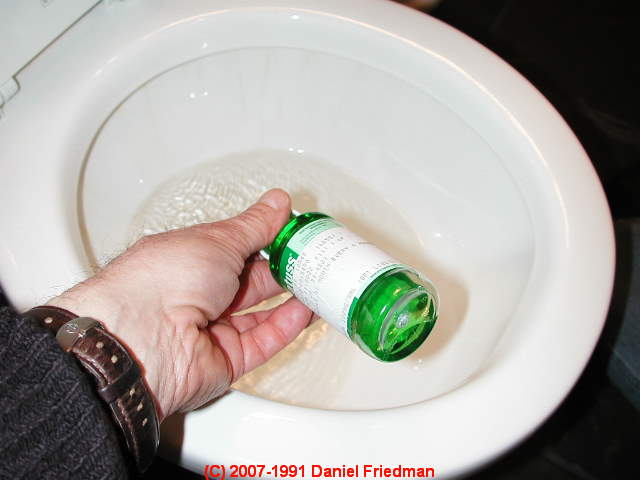
Page top: flushing drugs down the toilet may not be OK.
InspectAPedia tolerates no conflicts of interest. We have no relationship with advertisers, products, or services discussed at this website.
- Daniel Friedman, Publisher/Editor/Author - See WHO ARE WE?
Summary List of FAQs on What is OK or Not OK to Flush Down Drains or Toilets
 These questions and answers about our printable list of substances that ought not be flushed down a toilet were posted originally
at * NO FLUSH SUMMARY LIST - be sure to review that list.
To find an item or substance that is your concer and to see our Q&A or comment on flushing down drains a substances that people have asked about, use your browser's "search" (CMD-F or CTRL-F) to find the keyword or name of the material or product in your question or click on the alphabetical list starting letters given just below.
A - B - C - D - E - F - G - H - I - J - K - L - M - N - O - P - Q - R - S - T - U - V - W - X - Y - Z
Photo: our inspection client is pointing to bottles of photo chemicals that the photographer was using and then disposing-of by pouring trays of chemicals down the sink drain.
...
A
Acid:
Is OK to flush Hydrochloric Acid harmful to septic systems?
Does Hydrochloric acid hurt a septic system? On 2018-10-29 by Jeff
I'm thinking about cleaning toilet tank with ascorbic acid - Anon On 2018-06-2
by (mod) - HCL hydrochloric acid and other strong acids should not go down drains
In quantity, yes
In trivial incidental use as part of a sink or toilet cleaner, probably it's so dilute in the septic tank as to be harmless.
Anon: Ascoribic
Acid is simply Vitamin C. It's also used as a disinfectant in some water treatment systems. At low concentrations It won't have a useful effect in your toilet tank.
But if you're using just a few ounces in a toilet it ought to be so dilute as to be harmless.
Is Affresh washing machine cleaner safe for my septic tank?
Is the Affresh washing machine cleaner safe for my septic tank? It says it is, but I don't trust these companies to always be truthful. Thank you. On 2019-02-18 by Patty
Reply by (mod) -
Patty in general household cleaners, used at normal levels, are so dilute in the septic tank as to be harmless.
Affresh, a Whirlpool product:
Whirlpool Corporation
2000 N. M-63
Benton Harbor, MI 49022
1-800-643-0961 (USA)
1-888-253-2668 (CANADA)
is comprised of (by its MSDS)
Chemical Name CAS-No. Concentration (%)
Sodium Carbonate Peroxyhydrate 15630-89-4 >= 50 - < 70
boric acid 10043-35-3 >= 20 - < 30
sodium carbonate 497-19-8 >= 20 - < 30
tetrasodium edta 64-02-8 >= 1 - < 5
poly[oxy(methyl-1,2-ethanediyl)], a-hydro-whydroxy25322-69-4 >= 1 - < >See this BORIC ACID MSDS (Fisher Scientific 2014)
Algecide: How do we stop green growth in the tank where we store rainwater for toilet flushing - without harming the septic tank?
We have a tank which gathers rainwater which we use for flushing the toilet.
However sometimes it turns green which is not only unsightly in the toilet, but also puts a nasty lining around the bowl. Is there something that we can put into the tank to keep the water clear, which would not harm the septic tank? On 2016-12-05 by Mazza
by (mod) - stop green growth in rainwater cistern used to flush toilets
You could perhaps best proceed by having the water tested to see what's growing in it - most likely it's an algae. An algecide or probably even a dilute bleach solution might be enough to stop the growth.
Probably a copper based algecide will be safe enough if you check with the manufacturer about the concentration that's safe to use.
An alternative will be to buy another commercial algecide that's used, for example, in swimming pools. See Clorox Pool and Spa and similar polyquat 60% solutions.
More help is at ALGAE & MOLD STAINS on EXTERIORS
Ammonia: At what concentraion will ammonia kill septic bacteria?
How much ammonia would it take to kill the bacteria in your septic tank ? On 2018-01-10 by Anonymous -
by (mod) - Ammonia NH3 is not registered as a disinfectant by the US EPA but you'd need about 50 gallons to hurt the septic tank bacteria
Ammonia NH3 is not registered as a disinfectant by the US EPA, Ammonia is broken down by some bacteria, releasing nitrates. Some bacteria thrive on NH3.
However ammonia, possibly at 5 to 10% solution, can kill some bacteria including e-coli and possibly other coliform bacteria found in septic systems.
To get a 5% solution of vinegar in a 1000 gallon septic tank we'd need to make the total tank volume 5% vinegar, so we'd add roughly
0.05 x 1000 = 50 gallons of vinegar to a 1000 gallon tank.
Wikipedia adds
The U. S. Occupational Safety and Health Administration (OSHA) has set a 15-minute exposure limit for gaseous ammonia of 35 ppm by volume in the environmental air and an 8-hour exposure limit of 25 ppm by volume.[74]
NIOSH recently reduced the IDLH from 500 to 300 based on recent more conservative interpretations of original research in 1943. IDLH (Immediately Dangerous to Life and Health) is the level to which a healthy worker can be exposed for 30 minutes without suffering irreversible health effects.
Is it ok to flush aquarium plants into the septic?
Can Aquarium plants hurt septic tank On 2018-12-01 by J
by (mod) - OK in small volume
You could be risking a clogged drain trap. Beyond that concern I don't know what volume of aquarium plants you're trying to flush down the drain.
A couple of leaves of some small aquarium plan on going to affect the septic tank one bit.
Large quantities could cause a clogged at the tank and lid. It would be better just to throw them in the garbage.
...
B
Baby Care Products: bottle sterilizer
Is Milton Sterilising Liquid safe for use in septics at typical use?
Can Milton sterilising liquid go in the Septic tank On 2016-03-30 by chris
by (mod) - Yes at household use levels
Chris
Milton Sterilising Liquid, sold by Milton Baby Care products in 1/2L and 1 litre bottles, is typically used at a concentration of 0.6% (30 ml in 5 litres of water) to sterilise baby bottles, nipples, etc.
At that volume and concentration, that is at most 5L of disinfectant, per day, poured into a septic tank where it will be diluted by about 2000 to 5600 L of wastewater in a typical residential septic tank even before additional wastewater enters the system from daily use, my opinion is that there is no worry that the disinfectant will harm the septic tank.
Milton Pharmaceutical Company (UK) provides an MSDS sheet on this product, indicating thereon that this is a chlorine-bleach type product.
Milton Sterilising Fluid 1%w/v gives 10,000 ppm available chlorineMilton Sterilising Fluid 2%w/v gives 20,000 ppm available chlorine
Also see CHLORINE SOURCES in WASTEWATER
Baby Wipes: Didn't know that baby wipes should not be flushed down the toilet
I never knew that baby wipes shouldn't be flushed into the city sewage or even septic. Well.
That definitely makes cleaning a youngling more difficult and results with less cleanliness. No more fun with the Disney products or Finding Dory products.
And just like most of the listed items to not flush. I can't believe.... wait actually.... For how stupid people are, not knowledge but even knowledge will accidentally or purposely flush the items.
And for my story. I just wanted to look up if I can drain a bleach bucket that I use to clean certain floors and a separate bleach bucket that I use to clean/sanitize certain toy items.
So I really shouldn't flush it. But what the hell am I supposed to do with it? dig a hole in the yard and fill it up with bleach? On 2017-03-05 by Tyee Cambron
by (mod) - do not flush disposable wipes into a septic system
I wouldn't hesitate to use baby wipes. They won't harm the bacteria in the tank but there's a risk of clogging the drain line or septic baffle.
Just toss them into a plastic trash bag that can be closed an disposed-of with household waste. Don't flush them.
Household bleach, in normal usage quantities and levels, ought not be harmful to septic systems.If you've already flushed some wipes down the drain and the drains are not clogged, we expect that they'll be found in and removed from the septic tank when it is next pumped.
I flushed baby wipes down the john and now I'm worried even though everything seems to be working
Me, the biggest idiot, because today was the day when I JUST found out that I wasn't supposed to flush baby wipes at all, and yet I've been doing so from time to time these past few weeks.
I'm VERY worried with what is about to come. The toilet and drains are still functioning normally, but this still has me very worried on what will eventually come. Is there anything I can do to make sure that any awful outcome will never happen? On 2018-05-22 by Biggest Idiot
Clarification by (mod) -
Big
Don't feel bad, your mistake is a small one and not costly compared with ones I've made as well as ones made by national leaders.
If your drains are not currently slow or blocked you should not spend another minute worrying about the flushed baby wipes. That means we got away with it this time.
If you are connected to a private septic system AND provided the septic tank baffles are intact in the tank, the baby wipes will be retained in the tank and will be removed at the next septic tank pumping schedule.
IF your drains are slow, gurgling, clogging, or blocked you might need the drains cleared with a power snake.
Hug the baby for us.
Daniel
Bath oil
Does bath oil harm the septic system?
Is bath oil harmful to septic lines ? On 2018-11-17 by Nancy
Reply by (mod) -
No, Nancy. At normal household usage levels bath oil won't harm the septic system. That small amount of oil will simply join the floating grease and scum layer where it will be removed at the next septic tank pumpout.
Bath Bombs:
Are homemade soaps and bath bombs bad for the septic system?
I run a soap making and bath products business from my home. I am VERY careful not to let uncured soaps down the drain and into my septic system.
Recently a lot of my customers have been requesting bath bombs.
Are they safe for the septic system? They are made of citric acid, sodium bicarb, and some oils to hold it all together. I wont sell anything to my customers I cant test on myself first On 2017-05-03 by stacyraewalker
Reply by (mod) -
Great question, Stacey.
In a separate article WASHING MACHINES & SEPTIC SYSTEMS we discuss the impact of soaps and detegents on septic systems, starting with washing machines and dishwasher soaps; generally usage of bath products at normal household levels should not affect the septic system.On occasion I find heavy usage of powdered products can clog drain lines.
In normal home usage, the very small volume of citric acid and sodium bicarbonate (baking soda) and essential oils that are used in individual bath bombs will be harmless to a septic system because they are very diluted first by the bathwater and second by the much larger volume of the septic tank.
Bleach: Will bleach use in a washing machine hurt the septic system?
Is bleach from a washing machine safe for a septic system? How much? - Alan 10/5/12
Reply by (mod) -
Alan,
Bleach used at normal levels in a home laundry system should be so dilute in the septic tank as not to cause a problem. Follow the manufacturer's instructions;
Watch out: I would agree that dumping bleach wholesale into building drains for any reason is not a good idea and could damage the septic system.
In fact in a separate article on cheating on water quality testing, we report observations including by Steve Vermilye (dec). that property owners who had sanitized a well with high doses of bleach right before a building inspection put enough bleach into the water supply that we could observe the septic dye test colorizing dye fading from red to clear as the dyed water entered the septic tank.
Technical details about how much bleach you'd need to disinfect water, using drinking water as an example, as well as how long the bleach needs to be in contact in the water,
see WATER DISINFECTANT QUANTITY
See details at CHLORINE SOURCES in WASTEWATER
...
C
Caravan toilet waste tank empty into my house toilet and septic tank?
See Caravan Waste Tanks at - R - and read RV HOLDING TANK DUMP INTO SEPTIC TANK?
Cat Litter - OK to Flush a "little" cat litter into the toilet while I train my cat?
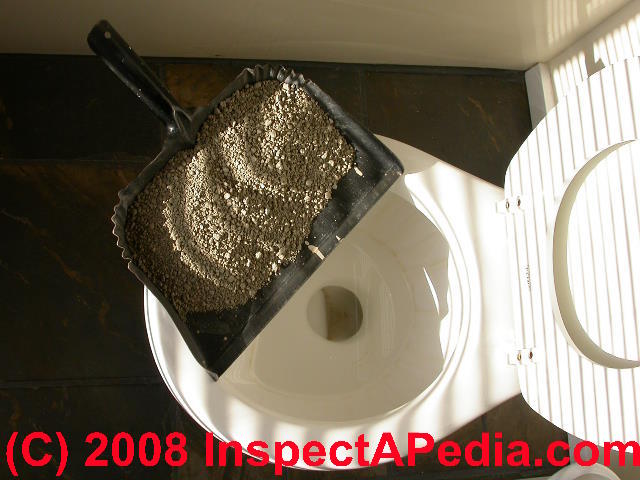 I am not training him to go in the box but on the John.
A minimal amount of litter will get in the septic until he learns. So I am wondering if a clay litter would be OK. On 2018-08-29 by Holly Kozlowski
What's the best cat litter to use while training my cat to use the human toilet?
Hi, I am hoping to toilet train a cat I will be getting. I have my own septic system and wondering if there is a best cat litter. I do not want anything that clumps so I got a clay based litter.
Is that OK?
It would be short term until he is trained, and it would probably amount to one 10 bad in the end.
Then I started thinking, would rice work as a better substitute?
Any thoughts? On 2018-08-29 by Holly Kozlowski
by (mod) - Do NOT put cat litter into the toilet
Never throw cat litter into the toilet.
If you're training a cat to use a litter box the most important thing is not the brand of litter but that you keep it scrupulously clean.If it smells the cat will not want to use it.
Cat Poop: Is it Ok to flush cat poop down a toilet without the cat litter?
I uderstand I shouldn’t flush kitty litter but what about cat solid waste (with no traces of any cat litter)? Can i flush cat poop into my septic? On 2018-11-25 by Tate
by (mod) - Sure, flushing cat feces alone into a septic system will cause no harm.
Tate,
You're quite correct the flushing cat feces alone into a septic system will cause no harm.However flushing kitty litter down drains risks drain clogs - as we've agreed.
by Tat
Thank you so much for your reply: there are lots of conflicting info online regarding this topic. Thank you.
Citric Acid: Does citric acid harm a septic system?
Citric acid does it have bad affects on the septic tank? On 2017-02-10 by Jacqueline Long
Reply by (mod) -
At normal household usage levels, no.
At - K - see our discussion of Kleenwise.
Cleaning Chemicals, Liquids, Powders
Cleaning soaps & liquids: Are biodegradable cleaning products like Fabuloso and Purple Power safe for a septic system?
Are biodegradable cleaning products safe for a septic system? (purple Power concentrated industrial-strength cleaner degreaser as well as Fabuloso) On 2016-12-01 by George
by (mod) -
George
Normally, yes. There are some cleaners specifically advertised as "safe for septics", but beware:
Watch out: be sure that you use any cleaning product in the concentration, in the manner, and for the purpose described by its manufacturer. Otherwise your use may be harmful or even dangerous.
For example, at normal household use volumes and concentrations, ammonia, bleach (NEVER USED TOGETHER WITH AMMONIA), vinegar, even cola drinks are safe for septic systems.
Are toilet tank cleaners that clean with every flush bad for the septic system?
 How about those toilet tank cleaners that clean with every flush, especially with bleach.
I have a septic system 4 years old now, and since day one i use blue bowel flush cleaners with bleach.
This year for the first time i noticed there is no grass on leach field. Is this my problem and should i stop using toilet tank flush cleaners. Please advise. Thanks - Dave A 4/21/11
Reply: Content, properties, & uses of some common toilet tank cleaners, deodorizers, & treatments
Dave,
The amount of bleach from a typical toilet tank solid cleaner-insert cake in normal usage should not produce enough bleach in the septic tank to have a noticeable effect on the tank bacteria.
We found that toilet tank deodorant or "cleaner" product ingredients varied by product; some of the typical ingredients listed (not all of these are present in every product) included:
- Ascorbic Acid (preservative)
- Borax
- Fragrances
- Salts of bisulfate
- Surfactants
- Sodium sulfate
- Thickeners
- Trichloroisocyanurate of sodium
- Color agents and dyes
Coffee: Are septic tank pranks with coffee Harmless?
Can you put already made coffee into the septic tank? trying to do a prank. (Mar 30, 2013) Andres
Reply:
Andres,
Liquid coffee at any normal quantity brewed in a home won't hurt the septic tank. While coffee is acidic and is an antimicrobial that can kill some bacteria strains, in a septic tank the volume of any household coffee liquid will be so dilute as to be harmless.
Figure even a full gallon of coffee dumped into a 1000 gallon septic tank is diluted 1000:1 or at a concentration of 0.001 - harmless.
Cola: Is it ok to use cola to clean toilets or to remove stains?
Was going to use cola as a cleaner in the toilet, after seeing this as a tip. Is it ok to use with a septic tank? On 2016-12-03 by Donna
Thanks!
Answer by (mod) - it's harmless, but may not be effective
Donna
Dumping a few ounces or even a can of Coke®, Pepsi®, RC Cola® or any other soft drink into a septic system won't hurt the system.
Some of these products are acidic and might help clean a toilet, and indeed letting a mild acid sit for a few hours on some types of stains may improve their removal, but in my opinion you're at risk of falling into another type of pit: that of urban legend. Vinegar and baby oil are also effective at removing some stains.
The effectiveness of any cleaning substance on a specific stain depends on several factors:
The surface being cleaned - of what material is it comprised
The components or ingredients of the stain - a rust stain or lime or calcium stain respond better to mild acids than some other stains
The components or ingredients of the stain removing chemical - no single chemical is best-effective against all types of stains.
- Ciafone, Amanda. "If “Thanda Matlab Coca-Cola” Then “Cold Drink Means Toilet Cleaner”: Environmentalism of the Dispossessed in Liberalizing India." International Labor and Working-Class History 81 (2012): 114-135.
Abstract:
With the sudden, almost ubiquitous reentry of The Coca-Cola Company to India during economic liberalization, the branded commodity became a sign of both aspirational global consumer-citizenship for India's urban middle class and of corporate enclosure for those dispossessed of material and symbolic resources to fuel this consumption.
Village communities around several of Coca-Cola's rural plants, including in Mehdiganj, Uttar Pradesh, organized against the company's operations, which they accused of exploiting and polluting common groundwater in the production of bottled drinks as an increasing expanse of the country fell into a crisis of water scarcity.
This “environmentalism of the poor” has articulated a powerful critique of corporate globalization and privatization, illuminating the exploitation of the resources of the rural poor for the consumption of those on the other side of an increasingly widening economic divide. - Varner Jr, Thomas L., Timothy W. Blount, and Charles R. Minns. "Removing stains from fixed items." U.S. Patent 5,522,580, issued June 4, 1996.
Abstract:
A method for removing various stains from stained fixed items uses an aqueous cleaning composition having a pH of at least about 9.0 and composed of up to about 30 percent by total composition weight of a wetting agent containing 1 to about 5 carbon atoms; between about 3 and about 15 percent by total composition weight of a peroxyhydrate oxidizing agent; and a pH adjustment substance.
Cornstarch causes trouble in the Septic or Plumbing System?
I am a teacher and my students are asking if products made from cornstarch are safe to flush. Will cornstarch harm plumbing or a septic system?On 2017-12-19 by Charlotte
by (mod) - Cornstarch won't harm the plumbing or septic system
Corn starch won't harm the plumbing or septic system unless you are flushing so much of it down the drains that you're clogging pipes. If it's dilute with water it should be ok.
Cornstarch is water soluble.
...
...
D
Damp Rid: is it safe to flush the liquid contents of DampRid down the toilet ?
Is it safe to flush the liquid contents of DampRid down the toilet that is connected to a septic system?
Is it safe to dispose of damp rid in a toilet which is on a septic system? On 2016-05-31 by Richard
Is DampRid, calcium chloride, CaCl2 safe for septic systems? DampRid says to pour the liquid containing the absorbed crystals into the toilet. Will this have a negative effect on my septic system ? - Anon On 2018-08-06
by (mod) - Better not
Bottom line: OPINION: Small amounts of salts including CaCl used in DampRid are not likely to harm a septic tank, but I would not do that - as depending on the volume and its condition you'll might be inviting a drain blockage.
That blockage is more likely if insufficient flush water is used to both disperse and dissolve the salts in DampRid.Ruth. You should not put the liquid nor the calcium chloride salts into the drains of your building.Richard: I would not dump any granular debris into any drain, as you risk clogging the drain system.
DampRid, produced by W.M. Barr in Memphis, is an anhydrous calcium chloride product that consists of three salts:
calcium chloride (CaCl), sodium chloride (NaCl), and potassium chloride (KCl).
These salts in a container are used to absorb moisture from the surrounding air.
Anonymous:
This is classified by OSHA as a hazardous material, according to the company's Damp Rid Product MSDS provided by a vendor, Home Depot, at http://www.homedepot.com/catalog/pdfImages/0e/0e3fde22-0089-4fe1-b595-dd75494666e9.pdf.
Watch out: there are other hazards including skin exposure that may be more likely if you do not follow the manufacturers' instructions.
OPINION: Watch out: also, using this or any similar moisture-absorbing product is not a reliable way to prevent indoor mold growth except perhaps within a rather limited volumetric space. Rather you need to find and correct the moisture source or water leaks.
From the DampRid MSDS one finds the constituents10043-52-4 Calcium chloride 70.0 -100.0 %
7647-14-5 Sodium chloride < 3.0 %
7447-40-7 potassium chloride < 3.0 %
this product is regulated by the united states consumer product safety commission and is subject to certain labeling requirements under the federal hazardous substances
act.
Damprid company name: w. m. barr, 105 channel avenue, memphis, tn 38113 usa website: http://www.wmbarr.com/
Damp Rid Moisture Absorbers Safety Data Sheet (SDS) [PDF at Damprid ] (2019) W. M. Barr 2105 Channel Avenue Memphis, TN 38113 - link updated 2026/05/02
Deodorant Products for Toilets
 Watch out: most of the toilet tank deodorizer and treatment tablets and products we surveyed (October 2012) include
- warnings to keep these products out of reach of children
- warning to use plastic or rubber gloves when handling the product
- warning to avoid mixing these products with others that contain ammonia or bleach (dangerous or toxic gas reactions can result)
- warning that in case of skin or eye contact, because burns are possible, wash with plenty of clean water
Watch out: I found in testing about 15 years ago that some toilet tank treatments caused the flush valve to deteriorate, resulting in running toilets that did flood the drainfield.
There is research on the effects of treatments for RV holding tanks and septic systems (a concern for those emptying an RV wastewater holding tank into a residential septic tank) and for toilet and toilet tank deodorants:
I will post some citations above at CHEMICAL CONTAMINANTS Found in Residential Wastewater & Their Sources
Are Denture Cleaners safe for the septic system?
Will a polident solution harm the septic tank? On 2017-10-24 by Ann
by (mod) - OK to flush Polident denture cleanser down the drain and into a septic system?
Ann.
The manufacturer's MSDS for Polident Denture Cleaner [PDF] (Glaxo Smith Kline) in addressing "accidental release" advises
Prevent entry into waterways, sewer, basements or confined areas.
But I think that has to pertain to industrial settings such as where the product is manufactured. It cannot, in any sensible view, mean that spilling out a cup of denture cleansing liquid into the local drain and thence into a septic system can be harmful. By sensible view I consider the following:
The quantity of Polident denture whitening products in normal household use is so tiny compared with the volume of a septic tank as to make it so dilute in the septic system as to be harmless
The principal ingredients are rather mild - sodium bicarbonate (baking soda, 30-40%), citric acid (think lemon juice <= 20%), and similar whitening constituents along with a trace level of peppermint oil.
there are, therefore, warnings on the polident msds from glaxo smith kline that the product can be toxic if eaten or harmful if gotten in the eyes. >
Detergent: Is it ok to use laundry detergent to unclog drains? Draino didn't work.
Can I use liquid laundry detergent to unclog bath drains?
When Drano fail to unclog I pour liquid detergent down a clogged sink and it worked - unclogged the drain to flow easily. Are there any risks? (June 17, 2014) Susan Marie
Reply: that won't be effective for most clogs and if Draino didn't work you need to call a plumber.
Susan,
Liquid laundry detergent is not likely to be effective as a drain de-clogger.
Perhaps there was a delay in the effectiveness of the Drano de-clogger or perhaps it reacted more effectively against a clog when the detergent (perhaps with additional water) gave more volume to the solution.
I don't see a particular risk as long as you are not overdosing a septic tank with de-cloggers or with detergents.
But from your description you've probably got a broken or root clogged pipe or a failed septic system. It'd be smart to get help from a plumber.
Drain Cleaners:
Draino Drain Cleaner Effect on Septic System
See our detailed discussion of Lye hazards at - L -
To find a flush-product to fix a slow bathub drain I see that every product at Home Depot says "Safe For Septics,"
Trying to find solution to sluggish bathtub drain to avoid tearing down kitchen ceiling to get to plumbing above.
The label of every product in the Home Depot reads "Safe For Septics," or the like. Although I can't believe them all, one or two must be O.K. Any suggestion short of "Tear Down The Ceiling" would be greatly appreciated. Thank you! On 2015-11-16 by J. Loeven
by (mod) - drain cleaners at normal usage volume and concentration are OK for septics but won't fix a failed septic system
J.
At normal household use, a drain cleaner, poured into a trap and left for hours or longer, won't damage the septic system .It's using large quantities or using magic bullets that purport to fix a failed septic drainfield that is more dubious.
I like to pour about a half-quart of drain cleaner into the tub drain, let it sit overnight, flush out thoroughly with cold water in the morning.
Keep me posted.
Dye Products into Toilet / Septic Tank
OK to put Rit Dye water into the toilet?
Can I dump rite dye water down the toilet going out to a septic field! On 2018-03-07 y Patricua
Answer by (mod) -
Assuming this is normal household use of Rite Dye I don't see a problem.
This Rite Dye MSDS http://westerncostume.com/sites/default/files/sds/rit%20powdered%20dyes.pdf
identifies the principal ingredients as sodium chloride (salt) and proprietary dyes.
The instructions for Rit Dye at https://www.ritdye.com/how-to-dye/ notes in the instructions
Fill a plastic container or stainless steel sink with enough water for the fabric to move freely.
For a typical dye lot of a few pounds of clothing that's just a few litres of water - not enough volume to have a noticeable impact on the septic tank bacteria nor its operation.
Watch out: I would give a different and more cautious answer for commercial use or for larger dye lot quantities using most dye products.
Here is what Rit says about their dye:
Rit products may be safely flushed through both sewer and septic systems.
...
E
...
...
F
Food Waste
Can I flush down a mold infested food item that may help in the break down of buldge in the septic tank?
Can I flush down a mold infested food item that may help in the break down of buldge in my septic tank. My dad (deceased) talked about flushing down moldy liver which would assist in the break down in the tank.
thanks
will On 2017-07-17 by will
by (mod) - Bad idea: wrong culture and drain risk clog.
Sorry but that won't fix a septic tank sludge problem. Have the tank pumped, cleaned, & inspected.
And sending food down drains risks a costly drain clog!
...
G
Glitter: Will cosmetic glitter cause problem in a septic tank?
Can cosmetic glitter (.008”, precision cut polyester) be safely found in a septic tank?
I have a bath fizzy that contains about 1/4 teaspoon of cosmetic glitter and want to know if it’s safe to use.
I’d fill a tub with water, then drop it in. The glitter would be drained down with the bath water. On 2018-02-02 Elizabeth
by (mod) - no
Elizabeth
Because of the volumes involved, a 1/4 tsp of non-soluble glitter ought to have no measurable impact on the septic system.OPINION: However in my opinion such very small particles are potentially harmful, especially if inhaled.
...
H
OK to put Hair Dye water into the toilet?
See our discussion of Dye at - D -
Is it ok to flush hair into the septic system? From a dog kennel or a beauty parlor?
Can you clog up a leach field with hair from a kennel and or human hair from a Barber/Beauty shop?
Should it go through it's own septic system prior to going into the primary (household) and/or secondary leach field? 7 March 2015 ArticTraveler
Reply: Hair won't harm bacteria but can clog traps and pipes, especially in a barber shop or beauty shop - try drain screens and a septic filter
Artic
I think I'd have to say no and yes.
First: if the septic tank is working properly, baffles in the tank, especially the outlet tee, should prevent solids, including floating solids like hair, from exiting the tank and clogging the drainfield. If that's the case, then the volume of hair in the tank would not normally be significant and it'd be emptied at the next scheduled pumpout.
If large volumes of air are entering the building drain system I'd agree that there are drain clog risks, and if that hairy mess, say from a dog kennel or grooming center or a barbershop were entering the septic tank, at the next tank pumpout an inspection of the scum and sludge thickness levels should tell us if more frequent cleaning is needed.
Finally, rather than installing a different drainfield or septic system (very expensive), if you want to minimize the risk of hair clogging in the system, I'd install a septic filter at the tank outlet. That will add a regular maintenance task, perhaps monthly for a kennel, but it'd protect the drainfield.
Is hair clog remover safe for septic pumps and systems - it uses lye
Is instant power hair clog remover safe for grinder pumps. It contains lye. Thank you. On 2021-08-05 by Monica
Answer by Inspectapedia Com Moderator
@Monica,
"Used as directed" by the manufacturer the hair clog remover should be ok; you're not leaving straight, un-diluted lye in the drain system and you're further diluting it as the clogged fixture is used afterwards.
But
Watch out: any corrosive chemical drain cleaner is likely to be dangerous if you get it on your skin or in an eye. Read and follow the directions and handle with great care.At - L - see our discussion of Lye.
HCL Hydrochloric Acid:
OK to flush Hydrochloric Acid down Drains into Septic?
Does Hydrochloric acid hurt a septic system? On 2018-10-29 by Jeff
by (mod) - HCL hydrochloric acid should not go down drains
In quantity, yes
In trivial incidental use as part of a sink or toilet cleaner, probably it's so dilute in the septic tank as to be harmless.
...
...
I
Ice Melters: OK to use ice melter outdoors near the septic system?
Is there a product that is safe to melt ice on stairs of my cottage with the septic nearby? Salt? Other products? If the answer is that nothing is good, what is the least bad, as I need to use at least a little. Thx On 2021-12-26 by David
Answer by Inspectapedia Com Moderator
@Davidv,
In my OPINION you can safely use salt or you can also use other ice melt alternatives (Calcium Chloride, Vinegar, Sand or other alternatives) near a septic system - at normal levels the quantity of salt in normal homeowner use isn't likely to be sufficient to kill off soil bacteria in the septic drainfield.
...
...
J
...
...
K
Kitty Litter OK to Flush a "little" kitty litter into the toilet while I train my cat?
I am not training him to go in the box but on the John.
A minimal amount of kitty litter will get in the septic until he learns.
So I am wondering if a clay litter would be OK. On 2018-08-29 by Holly Kozlowski
What's the best cat litter to use while training my cat to use the human toilet?
Hi, I am hoping to toilet train a cat I will be getting. I have my own septic system and wondering if there is a best cat litter. I do not want anything that clumps so I got a clay based litter.
Is that OK?
It would be short term until he is trained, and it would probably amount to one 10 bad in the end.
Then I started thinking, would rice work as a better substitute?
Any thoughts? On 2018-08-29 by Holly Kozlowski
by (mod) - Do NOT put cat litter into the toilet
Never throw cat litter into the toilet.
If you're training a cat to use a litter box the most important thing is not the brand of litter but that you keep it scrupulously clean.If it smells the cat will not want to use it.
Kleenwise Distiller Cleaner / De-Scaler Safe for the Septic System?
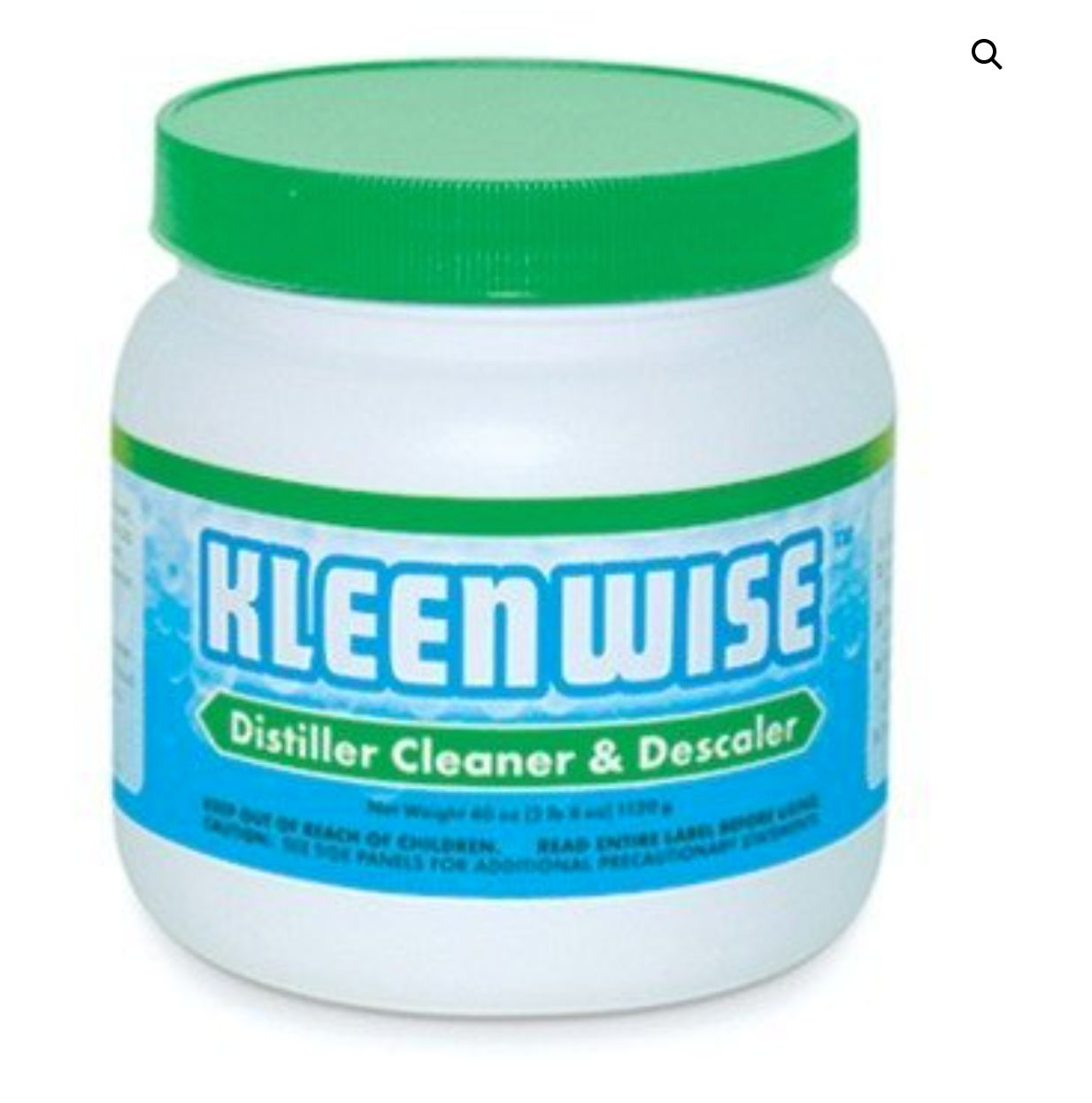 Will Kleenwise distiller + descaler (made with sulfamic and citric acid) be ok for a septic system?
Trying to descale the toilet trap.
Using about a daily teaspoon for a few days, allowing it to sit in the bowl. Then will move to maybe weekly use. Thanks! On 2022-01-25 by Desertdune
Answer by Inspectapedia Com Moderator
@Desertdune,
Kleenwise de-scaler, at the normal levels of household usage such as you describe -a teaspoon - will be perfectly safe for a septic system. That de-scaler is so very dilute in the septic tank (figure a teaspoon in 750 gallons or more + further dilution as more wastewater enters the septic tank) that it's harmless.
See this KLEENWISE DISTILLER CLEANER SDS [PDF]
and you will read that Kleenwise is Sulfamic acid which is indeed corrosive and could be harmful if not used as directed.
See these KLEENWISE DISTILLER CLEANER INSTRUCTIONS [PDF]
You'll also read that this product is designed to clean a portable water distiller. It is not intended for use in a toilet trap and is not likely to be effective.by desertdune
@Inspectapedia Com Moderator, I appreciate the reply. Honestly, it's been working better than the industrial descaler that IS recommended for toilets. Maybe I can use the industrial for maintenance. Thanks, again!
Answer by Inspectapedia Com Moderator
@desertdune,
Thanks for the follow-up; that's pretty interesting; typically a distiller de-scaler expects to be run through that appliance at high temperature, so I was skeptical that it'd work at all at normal household water supply temperature such as found in a toilet.
How long do you let the de-scaler sit in the toilet bowl?by desertdune
Actually, Kleenwise does NOT run thru the distiller! Put some in the water container, add hot water to activate, cover and let sit a few hours.
I've put it in the toilet and let sit several hours. Sometimes with hot water, other times not.
...
L
Is it ok to flush lime from pickling cucumbers into the toilet
Is it okay to flush a small amount of lime down the sink when pickling cucumbers On 2017-06-10 by Shirley smith
by (mod) - lime in large quantities is harmful;
Shirley,
If you mean dissolved liquid lime, maybe a quart, that's probably harmless because the total concentration of lime in the tank would be miniscule.If you are operating a commercial pickling operation, no, don't flush large volumes of pickling waste down into a private septic system.
Dumping powdered lime into a toilet is likely to clog pipes.
Dumping large volumes of lime into a septic tank risks killing back bacteria and thus causing the tank to fail to process sewage - shortening the drainfield life.
More details including a calculation of the concentration of lime in a septic from dumping a lime pet dip into a toilet can be read
Is it safe to flush Lime-away in the septic tank
Is it safe to flush lime away in the septic tank ? On 2017-04-24 by Cherrie
by (mod) - effects of Lime Away® - not to be disposed-of into septic systems
Cherrie,
Lime Away is a professional de-scaling chemical or de-limer that, in the product MSDS includes the following warning:Environmental precautions:
"Do not allow contact with soil, surface or ground water."
That would include septic systems.
EcoLab, a producer of LimeAway notes in the product literature:
For Industrial Use Only - Not For Household UseWaste Disposal: The generation of waste should be avoided or minimized wherever possible. Avoid dispersal of spilled material and runoff and contact with soil, waterways, drains and sewers. Disposal of this product, solutions and any by-products should at all times comply with the requirement of environmental protection and waste disposal legislation and any regional local authority requirements.
\ Waste Classification: Unused product is D002 (Corrosive)
\ Consult your local or regional authorities.
Product literature: https://cdndadepaper.blob.core.windows.net/paper-images/a47c0899-f173-4160-9ec2-8b42d3a1e098.pdf
Product MSDS: http://sds.chemtel.net/webclients/cheneybrothers/10044975SDS.pdf
What's the impact of lime sulfur veterinary solution on a septic tank"
Does sulfurated lime dip used for treating pets affect septic systems? 2015/12/03 Rob
Reply:
Rob (and for other readers)
Lime sulfur dip is a sulfurated lime solution used for animals including pets to kill mites and other parasites, and according to typical sulfurated lime dip vendors the dip also works against fungi and bacteria. It smells like rotten eggs - that's the sulfur content.
Sold for pet use the typical container volume is 16 oz. typically in a 97.8% solution (for veterinary use). You should consult a vet before using this treatment on your animals.
Because the solution is a type of biocide it's appropriate to ask if it's harmful to the necessary biota in a septic tank.
In typical preparation of the solution I describe above you dilute 4 ounces of the solution into one gallon of water and apply that solution topically to the animal.
Used in that volume and concentration and considering that a typical residential septic tank volume is 1000 gallons or more, you are diluting the dip from 97.8% lime-sulfur concentration twice: 4 0z in 128 oz (that dilutes to 2.31%) and then that diluted solution is further disposed-of into 128,000 ounces in the septic tank.
That dilutes to a 0.00002 % solution - before further wastewater enters the tank to dilute that solution further.
At that dilution I am doubtful you'd be able to detect the solution in the septic tank.
Will liquor hurt the septic?
Will liquor hurt the septic On 2017-08-30 by Linda
by (mod) - Will liquor hurt the septic tank
That would depend on the quantity of alcohol being disposed of into the septic system.
At normal private household usage levels, no.If we needed to get about a 10% concentration of alcohol to kill off septic tank bacteria you'd need to flush, at 100 proof liquor (50% alcohol)
about 0.1 (concentration) x 1000 (gallons in the septic tank) x 2 (since your liquor is 50 proof or less) or about 200 gallons of whiskey down the drain.
Lye: Is flushing Oven Monster, Drano, Lye into a septic system safe?
We use oven monster at work for stainless steel such as cleaning blackened stainless steel from the grill is this safe for our specit system On 2018-05-14 by Tom
Answer by (mod) - hazards of Lye
Tom
The product you ask about, Oven Monster, contains sodium hydroxide, or caustic soda or commonly called "lye" - as its active ingredient.
So the basic question is How Much Caustic Soda Will Harm a Septic Tank or Septic System?
From the Cornell Cooperative Extension we have this recommended limit on the use of bleach or caustics or drain cleaners in septic systems:
Maximum daily dosage of selected household Chemicals for a 1,000-gallon septic tank (Gross, 1987) cited in CHEMICALS to KEEP OUT OF SEPTICSProduct Amount
Liquid hypochlorite bleach 1.3 gallons
Pine cleaner 2.5 gallons
Crystal drain cleaner 0.65 ounces
Source:
Schwartz, John HJ., Ann t. Lemley, Kalpana Pratrap, Household Chemicals and your septic system [PDF] (2004), Water Treatment Notes, Cornell Cooperative Extension, produced in cooperation with the U.S. Department of Agriculture, retrieved 2018/05/17, original source: http://waterquality.cce.cornell.edu/publications/CCEWQ-16-HouseholdChemicalsSeptic.pdf
in turn derived from
Gross, Mark A. "Assessment of the effects of household chemicals upon individual septic tank performances." (1987).
A copy is also available at InspecctApedia.com athttps://inspectapedia.com/septic/Household-Chemicals-Septic-Limits-CCE-2004.pdf
Background and a rough calculation:
Caustic soda or lye at high levels in a septic tank risks killing the bacteria needed to break down sewage pathogens both in the tank itself and also in the soil into which the septic tank effluent is discharged.
Occasional use, perhaps once a month, of a 15% caustic soda solution in amounts of a gallon or less, is not likely to harm the septic system, based on this calculation using Powell's online caustic soda dilution calculator at https://www.powellfab.com/
0.3 gallons of 15wt diluted sodium hydroxide + 0.8 gallons of water produces what the industry considers "dilute sodium hydroxide solution" such as might be used for grill cleaning.
If, then, one gallon of dilute sodium hydroxide enters a 1000 gallon septic tank (for example, as you don't give your septic tank size) the sodium hydroxide is further diluted by the 1000 gallons of sewage in the tank.
If we figure that an in-use septic tank contains solid sludge, floating scum, and a remaining liquid volume, we can figure that your cleaning product is being initially diluted into about 750 gallons of wastewater.
If we figure that your septic tank is receiving no less than another 250 gallons of wastewater each day, at the end of day 1 your cleaning solution has been diluted at a rate of 1000:1 with wastewater - that's quite dilute.
Over the next four days that dilution is doubled. Over two weeks that dilution is multiplied by roughly 7-10 times.
Watch out: HOWEVER if larger amounts of concentrated or diluted sodiuim hydroxide or NaOH or Lye is entering a septic system it may indeed kill bacteria and contaminate the surrounding environment.
Details:
According to the MSDS for Oven Monster, produced by Intercon Chemical Company, www.interconchemical.com/products/sds/784-OvenMonster-iccb.pdf
the principal active ingredient is NaOH or Sodium Hydroxide at a 15% concentration
described by the company as
This powerful oven and grill cleaner contains strong alkali, detergent builders and surfactants to penetrate, emulsify and saponify soil, food, grease and carbon deposits.Concentrated for strength and economy, this product is effective in removing light to very heavy accumulations of oils, grease, food and dirt that may be found in all food serving and processing areas.
DirectionsGRIDDLES AND OVENS: Remove excess grease with scraper. Apply product to warm surface. Soak, scour and scrape to drain trough. Wipe and rinse with
potable water.
FRYERS: Drain pot and wipe up excess. Refill fryer with solution of 2-6 oz. of this product per gallon of water. Drain and wipe out residue. Rinse with
potable water.
Safety InformationKEEP OUT OF REACH OF CHILDREN
DANGER: Causes burns to eyes and skin. Harmful if swallowed. Avoid contact with skin, eyes or clothing. In case of contact with skin, flush area with plenty of water and seek medical attention if irritation persists. In case of contact with eyes, flush with plenty of water and seek medical attention. If swallowed,
DO NOT induce vomiting. Call a doctor or poison control center immediately.
Gross (1987) cited at CHEMICALS to KEEP OUT OF SEPTICS says this in the paper's abstract:
A laboratory study and a field study were performed to determine the amounts of specific household chemicals required to destroy bacteria populations in individual domestic septic tanks. The particular chemicals evaluated include liquid chlorine bleach, High Test Hypochlorite (HTH), Lysol disinfectant and Drano crystal.The laboratory study was performed to determine the approximate chemical concentrations to destroy the bacteria in the septic tank, and the field study showed the actual effect of the chemicals upon the bacteria in terms of reduction of the number of bacteria in the septic tank as well as the time required for the bacterial population to recover.
A liquid bleach concentration of 1.85 ml/l destroyed the bacteria in the septic tanks.
This corresponds to 7 liters (1.85 gallons) of liquid bleach in a 3780 liter (1000 gallon) septic tank. After addition of chlorine bleach, and within approximately 30 hours of normal septic system usage, the bacterial population had recovered to its original concentration.
A Lysol concentration of 5.0 ml/l destroyed the bacteria in the domestic tanks. This corresponds to 19 liters (5.0 gallons) of Lysol in a 3780 (1000 gallon) septic tank. Following the addition of Lysol, the bacteria population recovered to its original concentration within approximately 60 hours (2.5 days).
A Drano concentration of 3.0 mg/l destroys the bacteria in a septic tank. This corresponds to 11.3 grams (0.4 ounces) in a 3780 liter (1000 gallon) septic tank. The bacterial population recovers to its original concentration within 48 hours following the addition of the Drano.
...
...
M
Does milk harm septic tanks?
Can milk into the sept tank, and will do any harm. (Nov 28, 2014) Anonymous
Reply: no
Anon
No not at normal household disposal levels.
A dairy disposing of tens of gallons of milk into a residential septic tank might cause trouble.
Will Mira-Clean Harm the Septic System?
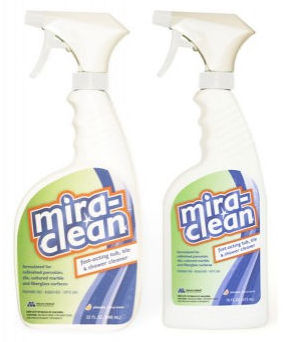 Can chemicals used by Miracle Method to clean and refinish a bathtub be flushed down the drain of a septic tank system? On 2020-10-16 by Robert Warner
Reply by (mod) -
Thanks for the question, Robert.
Take a look at the MIRACLE METHOD CLEANER MSDS [PDF] -
original source: http://www.genlabscorp.com/ghspdf/02211_EN.pdf
Nothing therein warns against flushing down drains, but the MSDS states
Dispose of contents and container according to the local, city, state and federal regulations.
The company's product use instructions state simply: ALWAYS RINSE THOROUGHLY after cleaning, and wipe the surface dry. -
source: https://www.miraclemethod.com/care-and-cleaning.htm
Typically household cleaners are used in such a low volume that when rinsed from a plumbing fixture with fresh water they are sufficiently dilute as to be harmless in the septic tank and drainfield.
Watch out: however, that does not mean that it's ok to DISPOSE of un-used chemical cleaners or chemicals by dumping them down a drain. Don't do that.
Milton Sterilising Liquid safe for use in septics?
Can Milton sterilising liquid go in the Septic tank On 2016-03-30 by chris
by (mod) - Yes at household use levels
Chris
Milton Sterilising Liquid, sold by Milton Baby Care products in 1/2L and 1 litre bottles, is typically used at a concentration of 0.6% (30 ml in 5 litres of water) to sterilise baby bottles, nipples, etc.
At that volume and concentration, that is at most 5L of disinfectant, per day, poured into a septic tank where it will be diluted by about 2000 to 5600 L of wastewater in a typical residential septic tank even before additional wastewater enters the system from daily use, my opinion is that there is no worry that the disinfectant will harm the septic tank.
Milton Pharmaceutical Company (UK) provides an MSDS sheet on this product, indicating thereon that this is a chlorine-bleach type product.
Milton Sterilising Fluid 1%w/v gives 10,000 ppm available chlorineMilton Sterilising Fluid 2%w/v gives 20,000 ppm available chlorine
Separately at CHLORINE SOURCES in WASTEWATER we discuss the effects of bleach on the septic tank and soakbeds or drainfields
Mortar: is it OK to power wash mortar residue into the septic tank?
I have recently had my house reruffcasted and was wondering if its ok to power wash the mortar residue into my septic tank ? On 2015-06-14 by Ann
by (mod) No, don't wash masonry mortar into the septic tank
I would not wash mortar residue into a septic system.
The substance is highly alkaline and may be harmful and you also may be adding an small but unwanted volume of solids that mean the tank needs to be pumped sooner.
...
N
...
...
O
Oils:
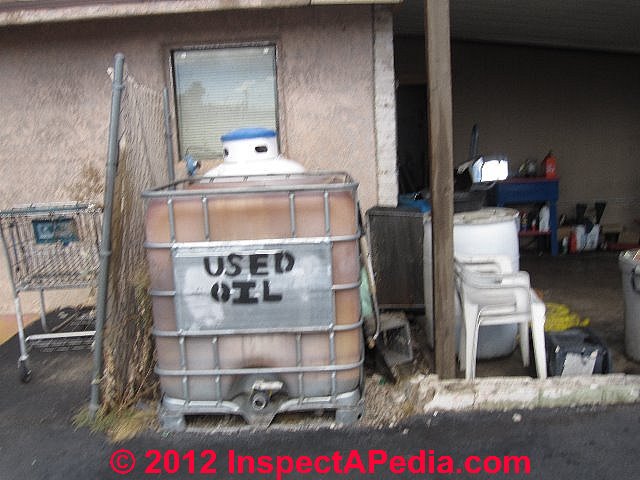 Is it OK to pour olive juice down the drain?

Is it ok to pour juice from green olives, pickles down the kitchen sink? On 2019-05-07 by Terri
by (mod) - vinegar or olive oil at tens of gallons risks harming the septic tank
Juice from olives, pickles, etc., at normal household usage levels, will not harm a septic tank nor drainfield.
The volume is so slight that those often acidic substances are very dilute in the septic tank.
However in my OPINION, **IF** you were pouring large quantities of oils, such as olive oil in which some olives are packed, into a drain or septic system you risk oil clogging of the drain system if the drains are exposed to very low temperatures,
and **IF** you were pouring much larger quantities such as disposing of restaurant waste oils, you could cause a problem for the septic system as well as the drain system - food greases and oils and fats in restaurants and similar commercial facilities must be intercepted and disposed of as food waste or waste oil. (FOG interceptors are used).
Similarly, vinegar, a main ingredient in some pickle juices, disposed of at normal household usage levels won't harm a septic tank.
Watch out: dumping oils such as used motor oils down any drain or storm sewer or similar point is illegal and harmful.
Lawn mower oil filter (a little sponge) went into the septic system
I cleaned my lawn mower sponge air filter with soap and water that went down the drain and into our septic. Is there enough oil on such a filter to hurt a septic? (Aug 6, 2011) Charles
Reply: if the lawnmower sponge didn't clog a drainy you're OK
Charles don't feel bad, lots of us have lost things down the drain and then worried about the result. My grandson's underpants went down the drain; I've found a toy truck in the drain, and god knows what else.
A typical lawn mower air filter sponge is just a few inches across. IF IF IF the sponge made it all the way into the septic tank (and is not clogging a pipe somewhere) your system will be ok. Baffles in the tank (hope they're intact) will keep the floating sponge in the tank where it'll be sucked out at the next septic tank cleanout job.
The volume of remaining soap and oil in the filter won't be enough to be measurable in a typical home septic tank volume.
Next time clean the sponge over a bucket outdoors, OK?
Oven Cleaners
Oven Monster Cleaner Effect on Septic System
See our detailed discussion of Lye hazards at - L -
...
P
Pesticides: Will washing pesticide-treated clothing harm the septic system or contaminate the environment?
I know not to drain-pour pesticides, including permethrin. But what about laundering permethrin-treated clothing?
The specific product I'm considering using is "Sawyer Products Premium Permethrin Insect Repellent for Clothing, Gear & Tents," which contains 0.5% permethrin and recommends using 4.5 oz of product (so just under 638 mg permethrin) per outfit.
It says that clothes remain protected "for 6 weeks or 6 washings," before requiring retreatment, which would imply an average of just over 106 mg being "lost" per outfit per washing -- although I have no idea how that's distributed between washing off in the laundry and other routes of removal or destruction (evaporation (whether during initial drying after spraying or subsequently), in situ breakdown, rubbing off during use, skin absorption and subsequent metabolism, etc.).
I have a fairly large septic system for a single-family residence (I can find out the exact volume, but don't remember off the top of my head) and am probably the only one who would be using permethrin during the next month and a half. Is that level of permethrin entering my septic system going to be a problem?
The local tick population is both quite high and fairly heavily infected with Lyme disease, and I love tromping about in the woods, so I'd really rather double up on my protection, with both an insecticide like permethrin and a repellant like DEET.
Speaking of which, what about runoff from clothing and exposed skin sprayed with DEET? Is that a septic tank issue? On 2021-06-28 by CJH
by Inspectapedia Com Moderator: Pesticide uses on pets and on clothing is an open question, under study; here are some results
@CJH,
Thank you, that's an interesting question. I don't think there has been enough research on your question to have an unambiguous answer.
But there is no doubt that pesticides ARE showing up in wastewater (Xie 2021).
I haven't researched long enough (yet) to be able to cite a complete body of authoritative research on this, but my guess and so OPINON is that it's fine to launder insect-repellent-treated clothing.
The claim would be that at normal consumer-use levels the pesticide that is removed by laundering will be sufficiently-dilute in the septic tank, combined, remember with other household wastewater, as to not be a detectable hazard to the drainfield. The second research article below seems to support that view.
The first article I'll cite pertains to municipal wastewaters.
Pesticides on pets and heavier-used pesticides on fabrics might be a concern in some cases, though, especially in urban areas. See
- Sutton, Rebecca, Yina Xie, Kelly D. Moran, and Jennifer Teerlink. "Occurrence and sources of pesticides to urban wastewater and the environment." In Pesticides in Surface Water: Monitoring, Modeling, Risk Assessment, and Management, pp. 63-88. American Chemical Society, 2019.
Municipal wastewater has not been extensively examined as a pathway by which pesticides contaminate surface water, particularly relative to the well-recognized pathways of agricultural and urban runoff.
A state-of-the-science review of the occurrence and fate of current-use pesticides in wastewater, both before and after treatment, indicates this pathway is significant and should not be overlooked.
A comprehensive conceptual model is presented to establish all relevant pesticide-use patterns with the potential for both direct and indirect down-the-drain transport. Review of available studies from the United States indicates 42 pesticides in current use.
While pesticides and pesticide degradates have been identified in wastewater, many more have never been examined in this matrix. Conventional wastewater treatment technologies are generally ineffective at removing pesticides from wastewater, with high removal efficiency only observed in the case of highly hydrophobic compounds, such as pyrethroids. Aquatic life reference values can be exceeded in undiluted effluents.
For example, seven compounds, including three pyrethroids, carbaryl, fipronil and its sulfone degradate, and imidacloprid, were detected in treated wastewater effluent at levels exceeding U.S. Environmental Protection Agency (US EPA) aquatic life benchmarks for chronic exposure to invertebrates.
Pesticides passing through wastewater treatment plants (WWTPs) merit prioritization for additional study to identify sources and appropriate pollution-prevention strategies.
Two case studies, diazinon and chlorpyrifos in household pesticide products, and fipronil and imidacloprid in pet flea control products, highlight the importance of identifying neglected sources of environmental contamination via the wastewater pathway. Additional monitoring and modeling studies are needed to inform source control and prevention of undesirable alternative solutions. - Turner, Andrew. "Trace elements in laundry dryer lint: A proxy for household contamination and discharges to waste water." Science of The Total Environment 665 (2019): 568-573.
Abstract
Seventy samples of laundry dryer lint from 19 households have been analysed for trace elements (As, Br, Cu, Fe, Ni, Pb, Sb, Zn) by energy-dispersive portable X-ray fluorescence (XRF) spectrometry.
Bromine, Fe and Zn were detected in more than sixty samples encompassing all households, with dry weight concentrations ranging from 5.5 to 213 μg g−1, 76 to 3580 μg g−1 and 24 to 3540 μg g−1, respectively. Lead and Sb were detected in twenty and eight samples from ten and seven households, respectively, with concentrations ranging from about 8 to 110 μg g−1 for Pb and 40 to 90 μg g−1 for Sb.
In contrast, As was only detected in six samples from the same household with concentrations ranging from about 10 to 250 μg g−1.
Analysis of 72 items of new or clean clothing and linen revealed the ubiquity of Sb in synthetic (largely polyester-based) articles and the presence of Br in a variety of natural and synthetic articles, suggesting that the dominant source of these elements in dryer lint is derived from clothing fibres themselves; specifically, Sb2O3 is employed as a catalyst in the manufacture of polyester and various brominated compounds appear to be used as disperse dyes.
No detectable As or Pb in the clothing-linen samples indicates that their presence in dryer lint arises from contamination of laundry from extraneous sources (e.g. household dust and material accumulated from outdoor activities) and suggests that concentrations can be used as proxies for exposure or household contamination.
Since dryer lint is representative of material shed during the washing of clothes and linen, its composition also serves as a proxy for contaminants entering the environment from this process.
Of particular significance in this respect is the discharge of chemicals specific to textiles or associated with microfibers. - Xie, Yina, Robert Budd, Jennifer Teerlink, Yuzhou Luo, and Nan Singhasemanon. "Assessing pesticide uses with potentials for down-the-drain transport to wastewater in California." Science of The Total Environment 773 (2021): 145636.
Abstract
Pesticides and degradates are ubiquitously detected in municipal wastewater influent in the United States. However, little detailed information exists on their sources.
The aim of this study is to investigate California Pesticide Use Report (PUR) and sales data to identify pesticide uses with a high potential for indoor down-the-drain (DtD) transport. The DtD transport of pesticides could result from direct applications to drains and sewers or through indirect activities such as washing pets, treated textiles, laundries, and cleaning surfaces treated with pesticides.
An initial screening on pesticide products registered in California with DtD potentials showed that fipronil, imidacloprid, and seven pyrethroids were pesticides of concern due to the relatively high sales in DtD use patterns and high toxicity to aquatic organisms; and thus prioritized for additional evaluation.
Uses and sales data of products containing the selected pesticides were analyzed for mass of active ingredient applied with specific DtD pathways and by different user groups. Professional uses were retrieved from the PUR and consumer uses were estimated by comparing PUR data to sales data.
Overall, approximately 38,615 kg fipronil, 44,561 kg imidacloprid, and 240,550 kg pyrethroids were used annually in California from 2011 to 2015 with some likelihoods of DtD transport.
The shares of professional use ranged from 56% (cypermethrin) to 98% (cyfluthrin), depending on the pesticide, with the majority of the mass applied in and around structures and for some pesticides (imidacloprid and permethrin) on landscapes as well.
The remaining mass was applied by consumers on various DtD sources, including pet treatments (fipronil, imidacloprid, and permethrin), treated textiles (permethrin), indoor-only uses (cypermethrin), and mixed indoor/outdoor or outdoor-only applications (other pyrethroids).
Results from this study help elucidate the relative significance of specific DtD pathways and pesticide occurrence in California waste streams.
Pickle Juice: Is it OK to pour pickle juice down the drain?
Is it ok to pour juice from green olives, pickles down the kitchen sink? On 2019-05-07 by Terri
by (mod) - vinegar or olive oil at tens of gallons risks harming the septic tank
Juice from olives, pickles, etc., at normal household usage levels, will not harm a septic tank nor drainfield. The volume is so slight that those often acidic substances are very dilute in the septic tank.
However in my OPINION, **IF** you were pouring large quantities of oils, such as olive oil in which some olives are packed, into a drain or septic system you risk oil clogging of the drain system if the drains are exposed to very low temperatures,
and **IF** you were pouring much larger quantities such as disposing of restaurant waste oils, you could cause a problem for the septic system as well as the drain system - food greases and oils and fats in restaurants and similar commercial facilities must be intercepted and disposed of as food waste or waste oil. (FOG interceptors are used).
Similarly, vinegar, a main ingredient in some pickle juices, disposed of at normal household usage levels won't harm a septic tank.
Polident Denture Cleaner OK to drain into septic tank?
Will a polident solution harm the septic tank? On 2017-10-24 by Ann
by (mod) - Polident won't hurt the septic system at normal usage levels but note this warning from the manufacturer
Ann.
The manufacturer's MSDS for Polident (Glaxo Smith Kline) in addressing "accidental release" advises
Prevent entry into waterways, sewer, basements or confined areas.
But I think that has to pertain to industrial settings such as where the product is manufactured. It cannot, in any sensible view, mean that spilling out a cup of denture cleansing liquid into the local drain and thence into a septic system can be harmful. By sensible view I consider the following:
The quantity of Polident denture whitening products in normal household use is so tiny compared with the volume of a septic tank as to make it so dilute in the septic system as to be harmless
The principal ingredients are rather mild - sodium bicarbonate (baking soda, 30-40%), citric acid (think lemon juice <= 20%), and similar whitening constituents along with a trace level of peppermint oil.
there are, therefore, warnings on the POLIDENT DENTURE CLEANSER TABLETS WHITENING SAFETY DATA SHEET (SDS) [PDF] (2011) from GlaxoSmithKline UK 980 Great West Road Brentford, Middlesex TW8 9GS UK UK General Information (normal business hours): +44-20-8047-5000
that the product can be toxic if eaten or harmful if gotten in the eyes.
Here's PoliDent's full list of Safety Data Sheets
Pomades: Will using hair pomades harm the septic tank when showering?
Will using petroleum and wax based pomades harm the septic tank when showering?
I use the old school pomades for my hair like Murray's Superior, Royal Crown and Brylcreem. The ingredients are Petrolatum, lanolin, wax, mineral oil, coconut oil and oil olive.
These are small amounts though. I use a dime sized glob of pomade to style my hair in the morning. I'm not pouring gallons down the drain. Just going for the Rodney Dangerfield look for my hair. On 2018-12-15 by Mark
Reply & Suggestions by (mod) -
Mark,
Thank you for an interesting question. I don't think that use of Pomade or any hair products will be home. Acetic system at normal usage levels. Not only is a quantity small but the saponification effects of soap help to break down those petroleum products or Oils in the course of shampooing or washing them from your hair or body.by Mark
Thanks, Dan. That's good to hear. I just moved into a new house with a septic tank, and I've been stressing on potentially clogging up the leach fields with the oil based pomades and hair tonics I use.
...
...
Q
...
...
R
OK to put Rit Dye water into the toilet?
See our discussion of Dye at - D -
Is it OK to empty my RV (caravan) toilet waste into my house toilet with soak away septic tank?
Can I empty my caravan toilet waste into my house toilet with soak away septic tank? On 2018-04-18 by Anonymous -
by mod - depends on volume and frequency
Anon
An occasional dump of even 10 litres of chemical toilet waste or caravan waste into a septic tank won't hurt it.
But dumping larger volumes of caravan waste or many chemical toilets into a septic tank may risk killing off needed septic tank and soakaway bed bacteria IF the usual chemical deodorants and anti-bacterial treatments are also in use in the caravan or chemical toilet waste tank.
Please read our detailed advice at RV HOLDING TANK DUMP INTO SEPTIC TANK?
...
S
Salt: OK to use ice melter outdoors near the septic system?
Is there a product that is safe to melt ice on stairs of my cottage with the septic nearby? Salt? Other products? If the answer is that nothing is good, what is the least bad, as I need to use at least a little. Thx On 2021-12-26 by David
Answer by Inspectapedia Com Moderator
@Davidv,
In my OPINION you can safely use salt or you can also use other ice melt alternatives (Calcium Chloride, Vinegar, Sand or other alternatives) near a septic system - at normal levels the quantity of salt in normal homeowner use isn't likely to be sufficient to kill off soil bacteria in the septic drainfield.
Is it OK to flush sauerkraut down the toilet?
Can you put sauerkraut in your septic tank? On 2019-01-27 by Jim
by (mod) - sauerkraut into the septic?
Jim
A few dish-scrapes or scraps of sauerkraut that wash down a drain won't hurt a thing.
Disposing of food waste such as by flushing sauerkraut down a toilet risks clogging a drain line.
Scale Removers: Is Kleenwise Distiller Cleaner / De-Scaler Safe for the Septic System?
Will Kleenwise distiller + descaler (made with sulfamic and citric acid) be ok for a septic system?
Trying to descale the toilet trap.
Using about a daily teaspoon for a few days, allowing it to sit in the bowl. Then will move to maybe weekly use. Thanks! On 2022-01-25 by Desertdune
Answer by Inspectapedia Com Moderator - not intended for toilets
@Desertdune,
Kleenwise de-scaler, at the normal levels of household usage such as you describe -a teaspoon - will be perfectly safe for a septic system.That de-scaler is so very dilute in the septic tank (figure a teaspoon in 750 gallons or more + further dilution as more wastewater enters the septic tank) that it's harmless.
See this KLEENWISE DISTILLER CLEANER SDS [PDF]
and you will read that Kleenwise is Sulfamic acid which is indeed corrosive and could be harmful if not used as directed.
You'll also read that this product is designed to clean a portable water distiller. It is not intended for use in a toilet trap and is not likely to be effective.
Slime affects the septic system?
My grandchildren make the popular "slime" out of glue, liquid starch and contact lens solution. When done, they wash up, and the dishes are washed. What affect does this have on my septic system? On 2018-06-11 by Greg O'Connor
by (mod) - Slime ingredients in the septic tank
Greg
In trivial or infrequent usage the Slime ingredients are not likely to harm the septic tank. I might be concerned if semi-solids of being flushed down drains that you may clog a drain.People using products such as Elmer's Glue (Pre-Made Slime), be sure to read this
Elmers Glue (Pre-made SLIME) SAFETY DATA SHEET (SDS) [PDF] from Sanford, L.P.
Sulfurated lime dip Impact on septic systems?
Does sulfurated lime dip affect septic systems? (Dec 3, 2015) Rob
Reply: not if you dump 4 ounces of concentrate into the system
(mod) said: Rob (and for other readers)
Lime sulfur dip is a sulfurated lime solution used for animals including pets to kill mites and other parasites, and according to typical sulfurated lime dip vendors the dip also works against fungi and bacteria. It smells like rotten eggs - that's the sulfur content.
Sold for pet use the typical container volume is 16 oz. typically in a 97.8% solution (for veterinary use). You should consult a vet before using this treatment on your animals.
Because the solution is a type of biocide it's appropriate to ask if it's harmful to the necessary biota in a septic tank.
In typical preparation of the solution I describe above you dilute 4 ounces of the solution into one gallon of water and apply that solution topically to the animal.
Used in that volume and concentration and considering that a typical residential septic tank volume is 1000 gallons or more, you are diluting the dip from 97.8% lime-sulfur concentration twice: 4 0z in 128 oz (that dilutes to 2.31%) and then that diluted solution is further disposed-of into 128,000 ounces in the septic tank.
That dilutes to a 0.00002 % solution - before further wastewater enters the tank to dilute that solution further.
At that dilution I am doubtful you'd be able to detect the solution in the septic tank.
Surface Cleaners: Floors, walls, sinks, counters
In its concentrated form a cleaner such as Uline 2 in 1 Cleaner/disinfectant this chemical is considered hazardous by the 2012 OSHA Hazard Communication Standard (29 CFR 1910 1200)
But if you're using just a few ounces in a toilet it ought to be so dilute as to be harmless.
See this ULINE 2 in 1 CLEANER DISINFECTANT SAFETY DATA SHEET (SDS) [PDF]
...
...
T
Toilet paper isn't dissolving in my septic tank
Why does my septic tank not deisintegrate toilet paper On 2017-05-06 by Anonymous
by (mod) - many toilet papers do not completely break down into microscopic particles in the septic tank but will be removed when the tank is pumped
Our lab tests (available here at InspectApedia.com) have shown that many toilet papers do not completely break down into microscopic particles in the septic tank.
The rate of breakdown depends in part on the amount of agitation in the septic tank and of course on the composition of the paper.
However the dominant factor seems to be the volume of paper flushed into the septic tank. I wouldn't worry about it as long as your septic tank has intact baffles to prevent solids from flowing out of the tank.
Be sure to read
and
Toilet Seat Covers: Is it ok to flush paper toilet seat covers into a septic tank?
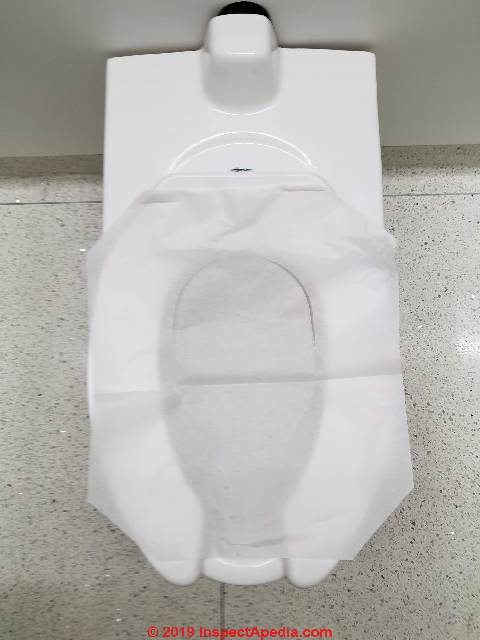 What about toilet seat covers and septic systems? We have an office in town but it is on its own septic system and the women want toilet seat covers. Yes or no? On 2019-02-06 by Holly
Answer by (mod) - NOT recommended
Holly
The women enthusiasts for toilet seat covers ought to be joined by men. Certainly I've been put off by peed-on toilet seats in mens toilets, principally at public toilets.
I think paper toilet seat covers are a variation on toilet paper - but the paper does not (in my OPINION) break down or soften as rapidly as toilet tissue.Therefore my first concern is a risk of clogging the building sewer line or drain ahead of the septic tank.
Where I"ve seen paper toilet seat covers in use they've been on power-flush toilets such as those operated by a flushometer or Sloan valve such as those I discuss at
FLUSHOMETER VALVES for TOILETS URINALS
Those are flushing (usually) into a larger diameter public sewer and are using a more-forceful flush water dose as well.My photo above shows a disposable paper toilet seat cover in place on a toilet at the Chicago O'Hare international airport. This paper seatcover will flush into a public sewer system.
Watch out: I do NOT recommend flushing paper toilet seat covers down a gravity-operated toilet nor into septic tanks.
See NEVER FLUSH INTO SEPTICS
Instead perhaps we can offer a more assertive program of bathroom inspection and cleaning.
Is flushing toys into drains or septic systems ever OK?
Can you flush toys? - Deepesh
Reply: of course not, but ...
No deepesh, I can't imagine any toy that can safely be flushed down a toilet.
For example, plastics won't biodegrade in the septic tank and any toys flushed down a drain risk clogging piping.
At TOILETS, DON'T FLUSH LIST you will find a more complete list of stuff to keep out of toilets, drains, and septic tanks or sewers.
*IF* we're lucky the toy is small and makes it through into the septic tank without blocking a drain line.
In that case it can be removed when the septic tank is next pumped.
...
...
U
Ulline 2in1 Surface Cleaner OK in the septic tank?
In its concentrated form a cleaner such as Uline 2 in 1 Cleaner/disinfectant this chemical is considered hazardous by the 2012 OSHA Hazard Communication Standard (29 CFR 1910 1200)
But if you're using just a few ounces in a toilet it ought to be so dilute as to be harmless.
See this ULINE 2 in 1 CLEANER DISINFECTANT SAFETY DATA SHEET (SDS) [PDF]
...
...
V
Vermouth: Is it OK to pour vermouth down the drains
Is it safe to pour Vermouth down septic On 2017-06-29 2 by marie
by (mod) -
Sure Marie, at normal household uses such as a bottle - one fifth of vermouth won't be enough alcohol to affect a septic tank. It's harmless.
However if you are operating a restaurant or bar and were to dispose of a much larger quantity of alcoholic beverages down a drain you might kill off septic tank bacteria.
Vinegar: Will it kill off needed bacteria if I put Vinegar into the septic tank?
Will vinegar upset the bacteria elements in the toilet On 2017-08-16 by Kathleen Ludlow
by (mod) - Vinegar down drains is OK at normal household use lavels
Vinegar, disposed of at normal household usage levels won't harm a septic tank.
Using vinegar as a mild disinfectdant when cleaning a toilet bowl would also be harmless.
Vitamins: Can Vitamin D3 -4000iu harm septic tanks?
Can Vitamin D3 -4000iu harm septic tanks? On 2017-06-21 by rich
Reply by (mod) -
Unless you are describing washing large quantities of a vitamin E oil into a septic system, such as vitamin D fabrication plant, no, it's unlikely that individual use levels or household use of us have a vitamin would be measurable in a septic system.
Watch out: medical facilities and nursing homes and hospitals on private septic systems do need to be concerned about the larger volume of medical substances flushed down drains, particularly antibiotics.
...
...
W
Wax in the septic system
Is flushing wax used in batik clothing manufacture bad for the septic system?
I make batik clothing wand have moved to a home with a septic tank. I use beeswax to resist the dyes and part of my process involves washing the clothes in cold water before boiling the wax out. Will the bits of wax that come off during the wash harm my septic tank or drain field over time?
This septic system uses a pump required by the county health department. On 2019-06- by Pam -
by (mod) - wax flushed down drains risks costly clogging
Watch out: Wax flushed into building drains invites a drain clogged and sewage backup into the building.
A very small amount of wax entering a septic tank probably is harmless as I would expect it to collect on the floating scum layer in to be removed during septic tank cleaning.
However if you're running a business and flushing large amounts of that into your system you risk are loading your septic tank and causing a blockage.
Of course if the septic tank baffles are not intact you're also sending wax into the drain field and running that.
WD40 Spray Lubricant Impact on Septic?
Do small quantities of WD 40 harm a household septic system? On 2017-06-20 by Jim
Reply by (mod) -
Seems unlikely, but can you define the quantity?
As WD-40 is sold in a spray can it would be difficult to get any significant amount of the product into a septic tank or drainfield.
Washing Machine Cleaner: Is Affresh safe for my septic tank?
Is the Affresh washing machine cleaner safe for my septic tank? It says it is, but I don't trust these companies to always be truthful. Thank you. On 2019-02-18 by Patty
Reply by (mod) -
Patty in general household cleaners, used at normal levels, are so dilute in the septic tank as to be harmless.
Affresh, a Whirlpool product:
Whirlpool Corporation
2000 N. M-63
Benton Harbor, MI 49022
1-800-643-0961 (USA)
1-888-253-2668 (CANADA)
is comprised of (by its MSDS)
Chemical Name CAS-No. Concentration (%)
Sodium Carbonate Peroxyhydrate 15630-89-4 >= 50 - < 70
boric acid 10043-35-3 >= 20 - < 30
sodium carbonate 497-19-8 >= 20 - < 30
tetrasodium edta 64-02-8 >= 1 - < 5
poly[oxy(methyl-1,2-ethanediyl)], a-hydro-whydroxy25322-69-4 >= 1 - < >See this BORIC ACID MSDS (Fisher Scientific 2014)
Water softener drainage harms septic system?
Will it hurt my septic tank to let the water from a water softener go to the septic tank? email address is biwms2@aol.com thank you On 2016-07-10 by frank williams
Answer by (mod) - water softener impact on septic
Frank,
Many homes discharge water softener backwash into the septic tank (and thus into the drainfield or soakbed). You MIGHT be ok with that appraoch, but there are two risks:
1. salt can damage the drainfield and shorten its life.
2. extra water discharge into the system can flood the drainfield and stop it from working - more of a problem if your softener gets stuck in "regen" mode or if it has to run with high frequency.
A better approach is to direct softener drainage into a drywell for separate disposal.Read details at WATER SOFTENER IMPACT on SEPTIC SYSTEMS - salt effects; water discharge volume effects
Watch out: also read WATER SOFTENER SANITIZER IMPACT on SEPTICS
Water: how much water would be "too much" water to be flushed into a septic system
"Water in large quantities"
What would be a "large quantity"?
1 gallon? 2 gallons? Swimming pool? - Tim
Reply: Water volumes that exceed the design load for septic system - x gallons/day
Tim,
About "how much water is too much for a septic system to handle?", let's be reasonable.Posed by your question, a gallon of water would hardly be a "large" quantity since that's less than some toilet flushes. And a bath tub or shower use typically consume 30-50 gallons of water.
A typical home septic system is designed to accept a daily wastewater load of 100-200 gallons per person in a household.
What can flood a septic drainfield and/or even damage a septic effluent dosing system are water volumes that exceed the anticipated daily design load. Examples of "large quantities of water" that damage septic system are most often found where equipment is malfunctioning:
- a water softener stuck in "regen" cycle can pump water continuously into the septic system, hundreds of gallons a day added to the normal load
- leaky toilets and other fixtures might, depending on flow rate, also flood the system
- putting together a local laundromat and connecting it to a typical residential septic system would flood and overload the system
- failing to keep groundwater away from the septic tank or drainfield flood the system and lead to its failure.About a swimming pool, I'm doubtful that anyone would try emptying a swimming pool into a septic system, but indeed, I have seen failed drainfields that were saturated when a homeowner repeatedly emptied pool filter backwash waters and annual swimming pool drain-out waters directly onto the septic drainfield or soakaway bed.
Thanks for asking - these are important clarifications.
Wine: Is it ok to flush small amounts of wine down the drain?
Is it ok to pour wine down drain into septic tank? On 2017-10-20 by Pete
by (mod) - yes at household consumption levels
Pete
Sure, it won't hurt a septic system to empty out a bottle or two of wine into a drain.But if you are operating a winery and have a large volume of wine that needs disposal, that would be a different matter and not something I'd recommend without further investigation.
...
...
X
...
...
Y
...
...
Z
ZEP Commercial Professional Cleaner Safe to use where we have a septic tank?
Can I use Zep commercial Professional strength to remove calcium and rust deposits from toilet and shower without harming my septic tank On 2019-02-15 by Eleonora
Reply by (mod) -
At normal household usage levels, yes.
OPINION: Zep makes it hard to find the actual SDS for their products, and easy to find product description flyers. But other websites have found and publised the safety data sheets and made them easier to locate;
Key ingredient in ZEP all purpose cleaner: Alcohols, C9-11, ethoxylated
Product information see these
ZEP ALL PURPOSE CLEANER & DEGREASER SAFETY DATA SHEET [PDF] (2019)
ZEP PROFESSIONAL ORANGE CLASSIC INDUSTRIAL HAND CLEANER with PUMICE SAFETY DATA SHEET
ZEP Professional Alkaline Cleaner Product Data Sheet (at Shopify)
ZEP A-ONE SDS (Safety Data Sheet) provided by the manufacturer
...
...
Continue reading at * NO FLUSH SUMMARY LIST - topic home, or select a topic from the closely-related articles below, or see the complete ARTICLE INDEX.
Or see SEPTIC SYSTEM INSPECT DIAGNOSE REPAIR FAQs - our index to all septic system install, troubleshoot, or repair Q&A
Or see these
Recommended Articles
- CHEMICALS to KEEP OUT OF SEPTICS
- NEVER FLUSH INTO SEPTICS - list of absolute toilet-flush no-no's
- ROOT KILLERS in SEWER LINES or SEPTIC PIPES
- SEPTIC TREATMENTS & CHEMICALS
- SEPTIC DRAINFIELD RESTORERS?
- TOILETS, DON'T FLUSH LIST - master list of stuff to keep out of drains, toilets, septic tanks
- SEPTIC DRAINFIELD RESTORERS?
- TOILETS, DON'T FLUSH LIST
Suggested citation for this web page
TOILET / SEPTIC NO FLUSH SUMMARY LIST FAQs at InspectApedia.com - online encyclopedia of building & environmental inspection, testing, diagnosis, repair, & problem prevention advice.
Or see this
INDEX to RELATED ARTICLES: ARTICLE INDEX to SEPTIC SYSTEMS
Or use the SEARCH BOX found below to Ask a Question or Search InspectApedia
Ask a Question or Search InspectApedia
Share this article:Search the InspectApedia website
Need to make a private comment? Email editor@inspectApedia.com. We welcome email with your website content critique, corrections, suggestions or questions. Email is monitored daily but our workload may prevent an immediate reply. For immediate results, we hope you'll first try asking your question using the search box just above.
Citations & References
In addition to any citations in the article above, a full list is available on request.
- In addition to citations & references found in this article, see the research citations given at the end of the related articles found at our suggested
CONTINUE READING or RECOMMENDED ARTICLES.
- Carson, Dunlop & Associates Ltd., 120 Carlton Street Suite 407, Toronto ON M5A 4K2. Tel: (416) 964-9415 1-800-268-7070 Email: info@carsondunlop.com. Alan Carson is a past president of ASHI, the American Society of Home Inspectors.
Thanks to Alan Carson and Bob Dunlop, for permission for InspectAPedia to use text excerpts from The HOME REFERENCE BOOK - the Encyclopedia of Homes and to use illustrations from The ILLUSTRATED HOME .
Carson Dunlop Associates provides extensive home inspection education and report writing material. In gratitude we provide links to tsome Carson Dunlop Associates products and services.
 |
HOME | ABOUT | ASK a QUESTION | CONTACT | CONTENT USE POLICY | DESCRIPTION | POLICIES | PRIVACY | |
| © 2026 - 1985 Publisher InspectApedia.com - Daniel Friedman | |||||||||