InspectAPedia.com InspectAPedia®

Question? Just ask us!

Google
InspectAPedia

Free Encyclopedia of Building & Environmental Inspection, Testing, Diagnosis, Repair

  • HOME
  • AIR CONDITIONING
  • DAMAGE ASSESSMENT
  • ELECTRICAL
  • EXTERIORS
  • HEATING
  • HOME INSPECTION
  • INTERIORS
  • PLUMBING
  • ROOFING
  • SEPTIC SYSTEMS
  • STRUCTURE
  • WATER SUPPLY
  • ENERGY SAVINGS
  • ENVIRONMENT
  • INDOOR AIR IAQ
  • INSULATION
  • MOLD INSPECT TEST REMOVE
  • NOISE
  • ODORS
  • SOLAR ENERGY
  • VENTILATION
  • EXPERTS DIRECTORY
  • CONTACT US


InspectAPedia ® Home

AIR CONDITIONING & HEAT PUMP SYSTEMS

A/C - HEAT PUMP CONTROLS & SWITCHES
AIR CONDITIONER COMPONENT PARTS
AIR CONDITIONER TYPES, ENERGY SOURCES
AIR FILTER EFFICIENCY
AIR FILTERS, FIBERGLASS PARTICLES
AIR FLOW MEASUREMENT CFM
APPLIANCE EFFICIENCY RATINGS

BLOWER DOORS & AIR INFILTRATION
BLOWER FAN CONTINUOUS OPERATION
BLOWER FAN OPERATION & TESTING
BOOKSTORE - Air Conditioning "How To" Books

CAPACITORS for HARD STARTING MOTORS
CAPILLARY TUBES
CLEANING & Legionella BACTERIA
CHINESE DRYWALL HAZARDS
CONDENSATION or SWEATING PIPES, TANKS

DEFINITION of Heating & Cooling Terms
DEW POINT CALCULATION for WALLS
DEW POINT TABLE - CONDENSATION POINT GUIDE
DIAGNOSE & FIX AIR CONDITIONER / HEAT PUMP
DIAGNOSE & FIX HEATING PROBLEMS-BOILER
DIAGNOSE & FIX HEATING PROBLEMS-FURNACE
DUCTS - Asbestos
DUCT INSULATION, Asbestos Paper
DUCT INSULATION for SOUNDPROOFING
DUCT SYSTEM NOISES
DUCTS, Asbestos Transite Pipe
DUST, HVAC CONTAMINATION STUDY

ELECTRIC MOTOR OVERLOAD RESET SWITCH
EVAPORATIVE COOLING SYSTEMS

FAN LIMIT SWITCH
FAN NOISES

GAS EXPOSURE EFFECTS, TOXIC
GAS DETECTION INSTRUMENTS

HEAT LOSS (or GAIN) in buildings
HEAT LOSS (or GAIN) INDICATORS
HEAT LOSS R U & K VALUE CALCULATION
HEAT PUMPS
HEATING SMALL LOADS

INSPECTION CHECKLIST - OUTDOOR UNIT
INSPECTION LIMITATIONS, A/C SYSTEMS

LEED GREEN BUILDING CERTIFICATION
LOST COOLING CAPACITY
LOW VOLTAGE TRANSFORMER TEST

MOTOR OVERLOAD RESET SWITCH
MOLD in AIR HANDLERS & DUCT WORK

OPERATING COST, AIR CONDITIONER
OPERATING DEFECTS, AIR CONDITIONING

REPAIR GUIDE, AIR CONDITIONERS / HEAT PUMPS
REPAIR & DIAGNOSTIC FAQs for A/C

SWAMP COOLERS

THERMOSTATS, HEATING / COOLING
THERMOSTATIC EXPANSION VALVES

WATER COOLED AIR CONDITIONERS
WINDOW / WALL AIR CONDITIONERS
WINDOW / WALL A/C SUPPORTS

More Information

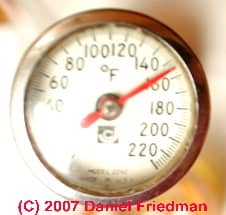
Photograph of a dial thermometer reading a high output temperature at an air conditioning compressor How & Where to Measure Central Air Conditioning Temperatures
     

  • Air conditioning system operating temperatures to measure
    • Rules of thumb for temperatures you should find at various points in an air conditioning system
    • How & where to measure air conditioner temperatures & what they mean
    • Air conditioning suction line typical vacuum pressures and temperatures
  • Air Conditioning System Temperatures
  • Instruments Used to Measure A/C Temperatures - separate article
  • Procedures for Making Temperature Measurement - separate article
  • Questions & Answers about how, where, & when to measure central air conditioning or heat pump system temperatures
  • References

Click to Show or Hide Related Topics

  • AIR CONDITIONING & HEAT PUMP SYSTEMS - home
  • A/C COMPONENTS
  • AIR FILTERS for HVAC SYSTEMS
  • AIR HANDLER / BLOWER UNITS
  • BACKUP HEAT for HEAT PUMPS
  • BTU CHART for AIR CONDITIONERS / HEAT PUMPS
  • CLEARANCE DISTANCE, HVAC
  • COMPRESSOR & CONDENSING COIL, A/C
  • CONDENSATE HANDLING, A/C
  • CONTROLS & SWITCHES, A/C - HEAT PUMP
  • CONDENSING COIL REPAIR REPLACE
  • COOL OFF HEAT THERMOSTAT SWITCH
  • COOLING CAPACITY, RATED
  • COOLING COIL or EVAPORATOR COIL
  • COOLING COIL CLEANING
  • DATA TAGS on AIR CONDITIONERS
  • DEHUMIDIFICATION PROBLEMS
  • DUCT SYSTEM & DUCT DEFECTS
  • DUCTLESS AIR CONDITIONERS & HEAT PUMPS
  • EDUCATION & CLASSES, HVAC SCHOOLS
  • ELECTRIC MOTOR DIAGNOSTIC GUIDE
  • EXPANSION VALVES, REFRIGERANT
  • FAN, AIR HANDLER BLOWER UNIT
  • FAN AUTO ON Thermostat Switch
  • FAN, COMPRESSOR/CONDENSER UNIT
  • FAN CONVECTOR HEATERS - HYDRONIC COILS
  • FROST BUILD-UP on AIR CONDITIONER COILS
  • GAUGE, REFRIGERATION PRESSURE TEST
  • HEAT PUMPS
  • HUMIDITY LEVEL TARGET
  • MANUALS & PARTS GUIDES - HVAC
  • MINI SPLIT AIR CONDITIONERS & HEAT PUMPS
  • NOISE AIR CONDITIONER / HEAT PUMP
  • ODORS in AIR HANDLERS & DUCT WORK
  • OPERATING TEMPERATURES
  • PORTABLE ROOM AIR CONDITIONERS
  • PRESSURE READINGS, REFRIGERANT
  • REFRIGERANTS & PIPING
  • REPAIR GUIDE - A/C or Heat Pumps
  • REPAIR TOPICS A/C & HEAT PUMPS
  • ROOFTOP A/C / HEAT PUMP
  • SEER RATINGS & OTHER DEFINITIONS
  • SPLIT SYSTEM Ductless Air Conditioners
  • SWAMP COOLERS
  • THERMOSTATS, HEATING / COOLING
  • THERMOSTATIC EXPANSION VALVES
  • WALL CONVECTORS Heating / Cooling
  • WINDOW / WALL AIR CONDITIONERS
InspectAPedia tolerates no conflicts of interest. We have no relationship with advertisers, products, or services discussed at this website.

This article answers: what are the normal operating temperatures of air conditioning equipment and what temperatures can be expected when measured at different locations, information that we look at as part of checking basic air conditioning system operation and for detection of air conditioning operating defects.

Green links show where you are. © Copyright 2013 InspectAPedia.com, All Rights Reserved. Author Daniel Friedman.

OPERATING TEMPERATURES - Air Conditioning System Operating Temperatures
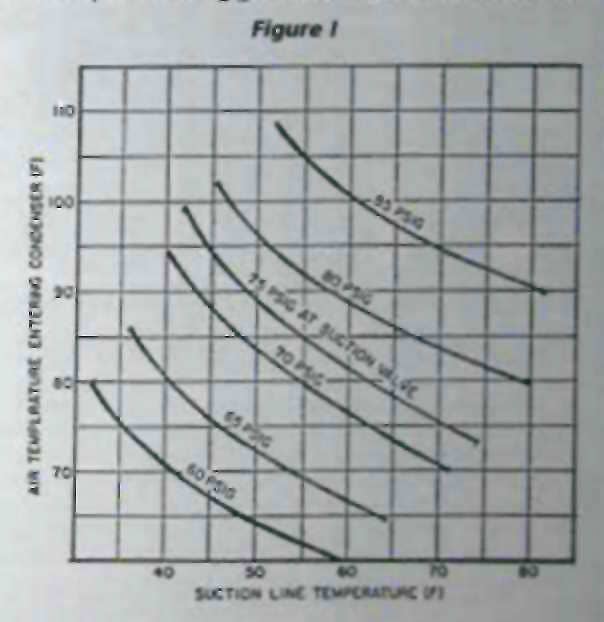
Photograph of an air conditioning system suction line temperature chart

Air conditioner temperatures that are too high or too low can indicate specific operating problems on central and portable or window air conditioners. Simple measurements of air temperatures, if made at the right place, can assist in diagnosing what may be wrong and what repairs may be needed for the air conditioner. This document is a portion of our website which describes the inspection of residential air conditioning systems (A/C systems) to inform home buyers, owners, and home inspectors of common cooling system defects.

If your air conditioning or heat pump system has lost its cooling capacity or won't start see REPAIR GUIDE for AIR CONDITIONERS. See How to determine the cooling capacity of air conditioning equipment if the system seems to be working but is inadequate to cool your building. Contact us to suggest text changes and additions and, if you wish, to receive online listing and credit for that contribution.

The following Rules of Thumb for air conditioning system temperatures are used for performing a rough check for proper operating temperature of an air conditioning system include several procedures and describe the points at which you can take your air conditioning system's temperature as a step in evaluating its health.

Details about exactly where and how to make air conditioning system temperature measurements are at our next and more detailed article: Procedures for Making Temperature Measurements.

Temperatures at the AC refrigerant lines: some inspectors and air conditioner service technicians make a quick check of cooling system operation by looking-at and feeling the refrigerant lines.

When the air conditioning system has been operating for at least 20 minutes we expect the (large-diameter) refrigerant suction line (returning refrigerant to the compressor) to feel cool or close to outdoor air temperatures at the compressor. (If the same condensate return line or suction line is covered with heavy frost right at the evaporator coil in the air handler, the refrigerant level in the system may be too low.)

At the same time, also at the compressor/condenser unit, the high-pressure refrigerant line (refrigerant leaving the compressor to return to the indoor air handler and evaporator coil) will be hot. The little chart shown in the sketch here shows how the refrigerant suction line temperature varies as a function of the outdoor air temperature at the compressor.

We don't suggest actually measuring these temperatures, but a quick look-at and careful touch-of the refrigerant lines can tell a lot about how the air conditioning system is working (or not). [Remember when medical doctors used to actually touch their patients?]
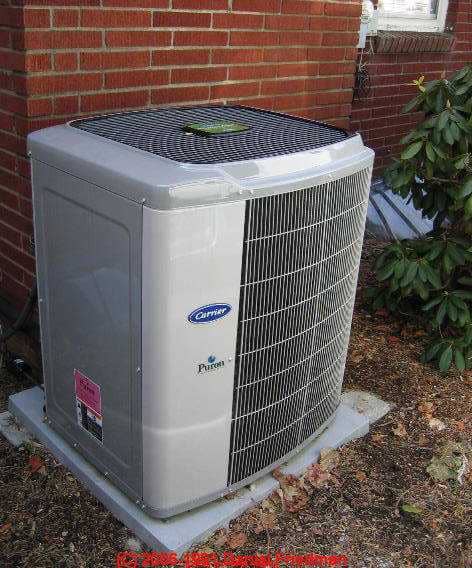
AC Compressor (C) D FriedmanTemperatures outside at the air conditioner compressor/condenser: if the air conditioning system has reached steady state and normal operation, the temperature of air blowing out of the outside compressor/condenser unit will feel [subjectively] warmer than the ambient outdoor air temperature.

This is because a properly working system is transferring heat from the compressed refrigerant (perhaps 150 deg .F. inside the condenser coil) to the outside air (perhaps 85 to 90 degF ambient outdoor temperature).

Temperature differences inside at the air conditioning system air handler's evaporator coil: if the A/C system is has reached steady state operation and normal operation, the temperature of air should be reduced as it moves across the evaporator coil. Typically this drop is 15 to 20 deg .f.

[Carson Dunlop adds it may be as little as 14 degF. or as much as 22 degF.]. Look for this difference between the indoor air in the building as it reaches the coil and the air leaving the coil.

Low side temperature example: A home refrigerator evaporator coil will operate at an internal temperature range of -38 degF. to 45 degF. so air blown across that coil will approach that temperature (IF you could measure air temperature right at the coil surface). .

Temperature leaving the air handler's evaporator coil: similar to above, measure the supply air temperature at a hole or crack in the supply plenum above (or "downstream from) the evaporator coil. It should be around 55 degF. Some experts argue that this is the only accurate way to examine the cooling system and that measuring temperatures across the evaporator coil is unreliable.
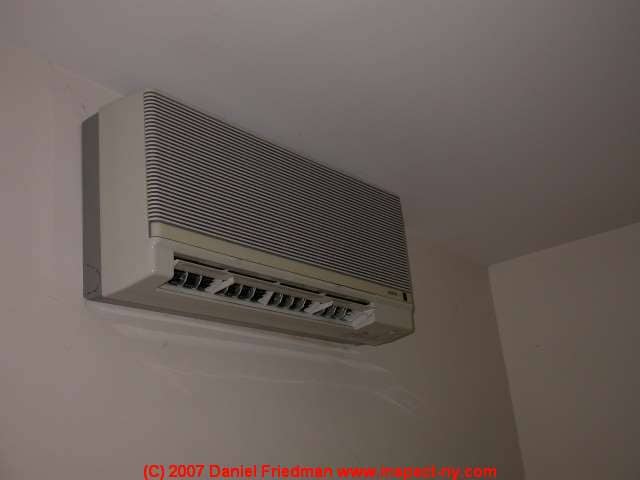
Wall mount air conditionre split system (C) D FriedmanTemperature of conditioned air at a supply register: If a measurement opening is not available at the evaporator coil at the air handler, measure air temperatures leaving the nearest supply register.

There too, unless the supply duct is long, uninsulated, running in a hot space (such as an attic), the air temperature at the supply register should be around 55 degrees.

As long as the building has not reached its thermostat's set point. the system should be blowing air that is noticeably cooler than the building's air.

Too Low air conditioning output temperatures may indicate that there is a problem with air movement in the system. If air moves too slowly across the coil its temperature may be lower than the numbers specified above. Look for an evaporator coil that is partly blocked by dirt or is icing up. Too low a temperature can also be caused by improper metering of refrigerant into the evaporator coil (a bad TEV or thermal expansion valve), or by improper charging (too little refrigerant in the system).

NOTE about air conditioning refrigerant leaks: so a refrigerant leak in an air conditioning system may show up first as abnormally low system output air temperature, followed by rising air temperatures, followed by just plain old warm air coming out of the system, as the amount of refrigerant that has been lost increases. Refrigerant leaks should be found and repaired. At air conditioning school we scoffed at repairmen who developed an air conditioning refrigerant delivery route - regularly adding refrigerant to what is supposed to be a closed, non-leaking system. It may be easy and profitable, and sometimes a refrigerant leak can be hard to find, but a proper repair is to find an fix the refrigerant leak, not just to keep adding refrigerant. See REFRIGERANT LEAK DETECTION.

Too high air conditioning output temperatures may indicate that the system is not working properly: perhaps the coil has become blocked solid with ice. Alternatively, high A/C outlet temperatures may be occurring, or even no cooling at all, due to other problems such as a loss of refrigerant. (Don't just add refrigerant, find and fix the leak. Otherwise you're just making the refrigerant delivery man rich.)

Operating Temperature Ranges of Types of Refrigeration Equipment

High temperature refrigeration equipment refers to cooling equipment that operates typically in the 25 degF to 45 degF, such as air conditioning systems.

Medium temperature refrigeration equipment refers to cooling equipment that operates typically in the range of 0 degF to 25 degF, such as a food freezer or refrigerator.

Low temperature refrigeration equipment refers to cooling equipment that operates typically at temperatures below zero, such as commercial freezing equipment.

All of these refrigeration systems operate on the same principles and in general they use similar equipment, though the choice of refrigerant liquid/gas, and the operating controls will vary.

Air Conditioner Suction Line Pressure and Temperature - Typical Data and What It Means

Determining proper suction "pressure" (really we're measuring a vacuum, not a pressure) is critical for proper refrigeration equipment operation assessment. If the air conditioner system suction pressure is too low (and that probably means the temperature in the line also is "low") it could indicate

  • An incorrect setting of the TEV (thermostatic expansion valve) that meters delivery of liquid refrigerant into the evaporator coil (cooling coil)
  • An oil slugged (oil logged) compressor, so refrigerant flow is blocked at the evaporator - oil slugging can lead to a compressor body failure.

Note that if we're looking at oil-slugging, the compressor head temperatures will also be abnormally high - which is how
that condition ruins an air conditioning compressor

Normally suction line pressure on air conditioning equipment is about 45 degF with a suction pressure of 42 psi for Freon 12 and about 76 psi for Freon 22. The data points for the new refrigerants will be a bit different, but this example makes clear that the air conditioning system pressure measurement numbers (both suction vacuum and compressor outlet side pressures and temperatures) will be different for each refrigerant.


Frequently Asked Questions (FAQs) about temperatures measured at air conditioning or heat pump systems

Click to Show or Hide FAQs

No FAQs have beenn posted for this topic. Try the search box below or CONTACT US by email if you cannot find the answer you need at InspectApedia.

Question: what does low pressure on the high side of my air conditioner mean?

My unit doesn' t go more than 90 psi in high side, the low stay around 45 psi, I had try more refrigerant, but didn't make any change it's a heat pump 6 ton - Kim 5/16/11

Reply:

Low high side pressure sounds like either you've lost refrigerant or the compressor is damaged or an refrigerant metering device is failing to ever close as it should. Just "adding refrigerant" without a properly measured charge and without diagnosing and fixing a leak, even if it worked, is likely to be just a short term band-aid fix.

Question: My central air conditioner won't turn off

My central unit will not turn off. The temp in the house is 92 degrees and I have set the thermostat to 78, but it will not cool the house and will not turn off. Do I need to add freon in the unit? Also, I flushed the unit with bleach to clean the pipes out and the air conditioner cooled the house for about 4 to 5 hours only. After that it will not turn off or cool the house. What can I do before calling a technican? Thanks - Ossie 6/8/11

Reply:

I'm not clear where you used bleach but it doesn't sound like a good idea.

Before calling a technician check your air filters and check for duct work damage, leaks, crushing, etc. See the article linked to at Related Topics and titled LOST COOLING CAPACITY for detailed diagnostic help for an air conditioner that is not working.

Question: My central air conditioner never shuts off

help,help. i have no problems with the air being cool. the unit will just not shut off unless i shut it off - Anon 7/3/11

Reply:

An A/C unit that is providing adequately cooled air at the supply registers but still won't shut off is either never satisfying the room thermostat or there is a problem with the thermostat or the control board. Or there's another problem we haven't thought of. I'd first check to see if the thermostat shows that the room temperature is at or below the set temperature. It it is, I'd call a service tech.

If the room temperature never reaches the set temperature then either the set temperature is lower than your system can deliver, or there is a problem to find and fix, such as a blocked air flow (dirty air filter or fan).

Question: our unit keeps on cooling and won't shut off

Hi. For some reason, our dual zone unit keeps cooling the downstairs zone to well below the set temperature -- when set at 79, very cold air is still blowing though the thermostat reads 71. Cold air still blows even with both thermostats turned to "OFF."

Not sure what is causing this, but I am sure it's gonna cost me $700/month if I can't get the air to shut off.

Any thoughts would be greatly appreciated! - EL 6/25/12

Reply:

EL, check for crossed or bad thermostat wires as a starting point.

For air conditioners that "won't stop running" or "won't shut off" readers will want to see these articles:

  • COOL OFF HEAT, Thermostat Switch
  • FROST BUILD-UP on AIR CONDITIONER COILS
  • LOST COOLING CAPACITY
  • FAN, COMPRESSOR/CONDENSER UNIT
  • Heat Won't Turn Off - Stop Unwanted Heat

Question: what is the maximum that an air conditioner can cool indoor air below outdoor air ?

I think I remember maybe that I might have read somewhere that a home central air conditiorne has a difficult time holding an inside air temperature more than 20 degrees F below the outside temperature. True or False? - Dennis 7/6/11

Reply: it depends...

Dennis: my OPINION, though we don't care for "true or false" questions, is that the answer is ... it depends. On a newly installed split system I was working with last week the unit had no trouble getting indoor temp down to 68 F when it was 90 F outside. But building insulation, heat loss or gain rates, solar gain, air leaks, etc. all add up to having an enormous effect on just what a given heating or cooling system can attain.

Question: our new A/C doesn't cool as well as the old one

We replaced our 9 year old central air unit with a new one (both 4 tons) and also added another air return. The new unit does not cool as well as the old unit. The air output temp is 67 degrees. The house stays at 82 degrees. The outside temp is about 100 degrees. Any idea why the new unit is not doing at least as good a job as the old? - John Hazel 8/5/11

Reply:

You need a more expert onsite diagnosis than I can guess from just the information below, John, but I'd start by looking at

- air flow at the supply registers
- temperature drop across the cooling coil (look for 15-20 degF as typical)
- the blower fan cleanliness and fan speed
- obstructions in the ductwork - including a dirty or obstructing air filter

Question: my air conditioner blower was replaced and now the new unit doesn't cool?

I had my blower replaced and the temperature in house is only 3 degree different from outide temp; it doesn't matter at what temp I set my themostrat. I never had that problem prio to the replacement motor. It always reached the set temp I set on the themostrat. Freon was added with the replacement motor, is there anything else I should be looking for beside over servicing. - Sepulveda 8/19/11

Reply:

Sepulveda I'm sorry to say it sounds as if the blower replacement may have been done without adequate diagnosis, or perhaps it needed replacement but there is a second problem to be found and fixed. You need a service call. Bur first check the diagnostic suggestions and advice found at LOST COOLING CAPACITY.

Question: My air conditioner won't start

my unit will not start i just had someone who said he knew what he was doing recharged it and now if i manually close the relay the high side goes up to 300psi and the low side will go up to 150psi is this an overcharged system. - Kevin Goans 8/21/11

Reply: wrong question, wrong repair?

An A/C unit that won't start has more wrong with it that missing refrigerant. If the problem were only lost refrigerant the system would still start, it just wouldn't cool.

Question: Do you think that the evaporator is dirty / in need of cleaning; or was it just iced up due to the continuous running of the unit?

I just moved into a new 3-level townhome with Central air for the whole home PLUS a 2nd cooling unit (Space-Pak type) for the 3rd level only. Approximately 2 weeks in, noticed a drop in cooling (hot day); checked the air filter, was completely clogged, replaced it. A few weeks later, very hot day, noticed drop in cooling again. Thermostat temperature never reached. Manually shut down unit, restarted, worked better. After reading this site, I understand now that the evaporator was likely iced/frosted. 3 days ago, very hot days, water backed up in the unit. Service call, drain backed up. Cleaned the drain. My question is: Do you think that the evaporator is dirty / in need of cleaning; or was it just iced up due to the continuous running of the unit? I measured the air temperature at one of the outlet/vents and it is at 57 degrees. I would think that a dirty evaporator would mean poor performance of the Space-Pak even before ice could build, whereas since I am still getting poor performance on very hot days only once the system is running for a very long time continuously (12-24 hours or so), I am assuming that the evaporator problem is/was ice and not dirt. I am thinking of changing the thermostat to a more advanced model that I can program with a cycle time for both on and off (i.e. never on continuously more than 6 hours, never off continuously less than 30 minutes) as well as changing the fan (air handler) from "auto" to "on" (which I have already done.) Since I have changed from Auto to On, I have noticed an improvement (assuming that the ice buildup is draining more quickly / evaporator coils are warming more in between cycles). Also, the large pipe (copper, approx. 1" dia.) wrapped with insulation feeding the unit has had some small amount of ice very close to the unit where there is a small tear in the insulation. Not sure if this is left over water from the drain backup (the serviceman said that all the insulation was likely soaked as a result and could take 7-10 days to clear up). Thoughts? - BB 9/3/11

Reply:

BB

I'd have the system evaporator coil inspected for dirty conditions and cleaned if needed. The thermostat program you suggest is an interesting idea, but in my opinion a properly working AC system operating in hot weather should be able to run continuously without icing the evaporator coil.

A dirty evaporator coil should also show up as reducer airflow. Also the blower fan itself may be dirty, reducing airflow and so leading to coil icing.

Reader Follow-up:

Thanks. I had a chance to read the notes left behind from the technician that performed the service call: he noted that the evaporator coils were rusted. I am assuming that this is causing the icing... should I look to replace just the evaporator, or upgrade the entire Unico cooling unit at this point? What would you recommend as the cost/benefit considerations for the decision? I am assuming that the condenser and air handler are in good shape since the cooling and air flow are quite good just after the unit starts. I am assuming that it would be more cost effective to replace only the evaporator. Any thoughts based on your experience?

Reply:

Interesting. I've never seen rusted evaporator coils since they are usually made of aluminum or copper, though there may be steel parts around the coil itself that can indeed rust. Perhaps the tech meant corroded. Gross corrosion, enough to clog the coil fins, would block air flow and could contribute to coil icing, though I don't usually find that the root cause.

I'd ask for a price estimate on coil replacement; it's a big job in that the system has to be evacuated and recharged as well as cutting out and soldering in the new coil. Let us know what you're told and I'll comment further

Reader follow-up:

I asked a different company to come quote on "repairing" the problem, where the problem was simply stated as a lack of cooling after some length of time when the unit is running, with evidence of icing (and subsequent leaking resulting from the thaw). They suspected a low refrigerant charge, and will come back and look for a leak (for which they are charging me, no pun intended.) They did indeed say that the evaporator coils are copper, not rusted, and that no evidence of poor airflow was seen. I will keep you posted to see if a leak was found. - BB

Question: what is the minimum temperature for central air conditioning?

what is the minimum temperature for central air conditioning system? - Sibaji 9/27/11

Reply:

Sibaji

The output temp of a central air conditioning system depends on the temperature of the air entering the cooling system. Typically we see about a 15 to 23 deg F temp drop across the cooling coil inside the air handler. Length and insulation of and on ductwork will mean the temp you measure at a cool air supply register will be somewhat warmer.

Question: Air Conditioner Suction Line Pressure and Temperature - Typical Data and What It Means

Determining proper suction "pressure" (really we're measuring a vacuum, not a pressure) is critical for proper refrigeration equipment operation assessment. If the air conditioner system suction pressure is too low (and that probably means the temperature in the line also is "low") it could indicate - BH 11/10/11

Reply:

Thanks BH we agree.

Question: ice on the coils of a window air conditioner

Hi, the window airconditioner i'm working on shows ice formation on the evaporator coils. It started to around 2 to 3 coils then it gradually increases until almost the entire coils are covered with ice.

I won't go with the idea that the thermostat should be set in a way to avoid the compressor running continously because before the trouble begun the unit has been running almost continously for 8hours for the last several years and there was no occurance of ice/frost build-up. We check the unit current and its ok, so we believe the charge is also ok.

We check other possible causes, like distorted coils fins, dirt, obstructions and blower speed and they seem to be all ok. What do you think should i do more? - Arnie 11/10/11

Reply:

Arnie no way can I be smarter than a trained service tech, but

Question - how did younfigure the charge is ok vs refrigerant is low?

Question 2- could you have a partly crimped or blocked cap tube ? that can result in low side pressure being abnormally low, uneven refrigerant metering; a blob of oil or dirt traveling in the system easily blocks a cap tube.

Is there a drier that could be clogged or has the unit never been opened ?

Is the blower fan itself dirty? This one can foolmyou. Dirt on squirrel cage blower fan blades fills in their curve and really cuts airflow

Keep me posted

Dan

Question: can my liquid refrigerant line freeze?

can my liquid line freez with frost if so why - Kevin Ohio 2/19/12

Reply:

Kevin Ohio, no the liquid refrigerant line does not freeze, but it can be come frost or even ice coated if it is missing insulation, or in some cases if the refrigerant charge is improper, or if a refrigerant metering device is not working properly. In cooling mode on a heat pump or in an air conditioning system you will see frost formation on the suction line - the larger diameter refrigerant pipe.

Question: how long should an air conditioner compressor run before it cycles off?

Hi. How long should my ac compressor keep on running before it automatically turns off. - Mon 5/31/12

Reply: it depends...

Mon: about typical air conditioning compressor run time, I don't think there is a single right answer to your question, because the on-cycle time depends on several variables that could in some cases leave the unit on for a long time, even continuously. Those variables that set the run time for the compressor include

- the indoor temperature, that is in turn affected by outdoor temperature and sunlight as well as building heat gain, windows, insulation, air leakage, and similar factors

- the thermostat set point - if the thermostat is set to a cooling number below what the system can achieve it will run continuously

- the size or capacity of the cooling system versus the actual building cooling load

However there is another way to approach your question that may be more useful diagnostically. That is to ask if something has changed in how your A/C system seems to operate. So if you think that the building and its insulation, windows, heat gain conditions have not changed, and if your thermostat setting is the same temperature as in previous cooling seasons, and if the outdoor temperature and sun and wind conditions are similar to previous seasons, and THEN if your cooling system seems to run longer or continuously when it did not previously, there may be a problem to diagnose and repair.

Check the LOST COOLING CAPACITY article (links at Related Topics ) for more detailed diagnostic suggestions.

Question: is the outside compressor unit controlled by indoor temperature?

Is the outside compressor controlled by the temperature outdoors? At a outdoor temp. of 72F and the indoor temp around the same and I turn the thermostate to 70F the compressor will not run only the fan. When the outdoor temp is 82F or higher the compressor runs normally. - Compressor situation 6/11/12

Reply:

The outside compressor on a residential cooling system basically runs under control of the thermostat that is calling for cooling. But the efficiency of the system is affected by outdoor air temperature. In hotter outdoor air the compressor/condenser has to work harder, and perhaps longer to condense the refirgerant back to a liquid.

Question: typical R22 refrigerant pressures

The pressures on our home AC system (R22) seem fine when operating: suction line 73psi, liquid line 233 psi. When the system is off, the pressure equalizes to 115psi. On the manifold I used, the suction gauge indicates anything over 110 psi as in the "danger" zone. In short, would 115psi on the suction line only be a problem when the system is operating but not when it's off? Thanks! - Pete 6/27/12

Reply:

Pete, Yes I think you're quite right. When most A/C systems are off for some time, especially older residential designs, pressure equalizes throughout the system and will ultimately be the standard pressure for that refrigerant gas at the ambient temperature, with a little adjustment for altitude above sea level. Refrigeration gas pressure/temperature charts (from various manufacturers) summarize these properties. For example R22, at 65 degF will stabilize at about 111 psi if memory serves.

Question: My A/C quit blowing cold air - the repairman said "give it a few days"

My ac quit blowing cold. My ac repair man checked for leaks (found none). He cleaned both outside and inside coils. Still not cooling good so he put a very small amount of coolant in it. My air blowing out of my vents is aaround 80 degrees. My ac repairmand knew the temp was not cool,he said to give it a few days and let him know. I called him and told him it is still not working. He said he has all the info and would tell me about it. Now he does not return my calls and we are burning up. What can I do to correct my ac problem? - Bill 7/5/12

Reply:

Bill it sounds from your note as if your repair tech is either overloaded with work ( after it's all during very hotvweather) or is stumped .it's time to call someone else who will respond to you.

Question: evaporater temperature

Can you help me pelase ? I have a problem. How to calculate evaporator tempature - Erhan

Reply:

Sorry that's too broad a question to even understand where to begin. Check your textbook for tables relating temperature, pressure, and the specific type of refrigerant gas.

Question: is a hot bathroom wall next to HVAC equipment dangerous?

I have a older unit, central air unit inside the condo. The wall of the unit is against my bathroom shower wall. It gets so hot in there, I can't keep it cool in the bathroom. I rent and I don't know what kind it is. But I have to so something as it is a one bedroom and my cooling bill is outrageous. Help please? - Donna Van Wie 7/09/12

Reply:

Thanks for the question, Donna, but I'm sorry - I don't really understand the situation that you describe. The indoor air handler unit, if it's a cooling unit only, should not be running so hot - it sounds as if you need a service call from an experienced technician. Keep us posted on what you find - it will surely help other readers.

Question: how accurate is the operating temperature range of an air conditioner?

how accurate is the operating temp range, and if the outside air is hotter than said range, is the machine potentially going to over work itself and have issues?? - JD

Reply:

Nate I do not know a factual answer to your operating temperature range question, it would need to be answered by the specific manufacturer of the A/C system. My OPINION is that the range is the temperature range at which the equipment can adequately cool the space for which it was designed. At higher outdoor temperatures the system may not be able to produce the same cooling capacity. I would not expect it to be ruined by that fact alone. In fact it is common to see cooling equipment run for very long periods during very hot weather.

Question: should I set the fan to constant ON on very hot days?

should the furnace fan be set to stay on constantly during very hot days, to keep cool air flowing?? JD - 7/09/11

Reply:

JD:
the answer is an OPINION as I don't think there is a single right answer: Often I like running the A/C fan continuously to improve air/dust filtration and give more even indoor temperatures;

Question: does a drop in the temperature of cool air in my system mean the compressor is damaged?

I recently replaced a fan relay. Before the fan relay went bad, the register cooling temp was at 62f. The fan relay was bad for a few days and the outside compressor was running for some number of hours throughout the day until we realized the inside wasn't running. Now, after the fan relay has been replaced the register cool temp has sometimes hit 56.1f. What's up with that? Could it indicate a damaged compressor? Thanks, Chris K

Reply:

Chris, thanks for the interesting question. But I don't think I can give a straight answer evaluating an 8 degF drop in cool air output temperature after getting a fan relay replaced. That's because building and environmental conditions vary so widely that the temperature of the return air entering the cooling system also varies widely from time to time.

A cooling system generally produces a rather constant temperature drop across the cooling coil, so long as the air flow rate stays unchanged. Something that slows the air rate may cause a greater temperature drop - not always desirable, and vice versa.

So if the weather or your home were hotter when you made the first measurement than when you made the second, that condition alone could explain the change that you saw.

Question: air conditioner compressor unit fan relay problems?

I recently replaced a fan relay. Before the fan relay went bad, the register cooling temp was at 62f. The fan relay was bad for a few days and the outside compressor was running for some number of hours throughout the day until we realized the inside wasn't running. Now, after the fan relay has been replaced the register cool temp has sometimes hit 56.1f. What's up with that? Could it indicate a damaged compressor? Thanks, Chris - CK 7/14/12

Reply:

CK thanks for the interesting question. But I don't think I can give a straight answer evaluating an 8 degF drop in cool air output temperature after getting a fan relay replaced. That's because building and environmental conditions vary so widely that the temperature of the return air entering the cooling system also varies widely from time to time.

A cooling system generally produces a rather constant temperature drop across the cooling coil, so long as the air flow rate stays unchanged. Something that slows the air rate may cause a greater temperature drop - not always desirable, and vice versa.

So if the weather or your home were hotter when you made the first measurement than when you made the second, that condition alone could explain the change that you saw.

Question: Lennox HVAC control board replaced with White Rodgers Unit?

hello.. wondering i have a 7 to 8 year old lennox hvac. i replaced the control board and they gave me a whiterodgers Single Stage HSI Integrated Furnace Control Kit ... now this happin in winter time .. before this i had around 58F output on AC.. now iam upto 66F output .. on the AC uint inside home .. the small line is cold . not over cold not froze .. the larger line is middle of road also to the warmer side .. if i had to say example 25 degress diff in the lines by touch .. small again cold .. the little line goin to the tve i thiink its called does drip .
so ? is ... single stage ? my AC not goin to high stage ? stayin on the low stage? or there is no stage ?
airflow seems good i can feel it around 3 foot off floor .. White Rodgers 50M56U-843 Universal Single Stage HSI Integrated Furnace < is what i replaced old board with .. ty - Phil 7/26/12

Reply:

I'm sorry Phil but I'm just baffled by your question. Let's start with asking if there seems to be a problem with how your cooling system is working: is it not cooling? Given that you are finding the system confusing, I can't recommend messing with the controls, wiring, refrigerant and instead I think it's well worth paying a trained HVAC tech to take a look.

no it doesnt seem to cool good enough .. if its say 80 outside. house will cool upstairs to say 75 .. tho the air temp from the registers is 65. and last summer it was 55.. the system never shuts off as it never seems to reach temp . so i was wondering if some home systems have a 2stage compresser high and low . per say ?

Question: question about supply air temperature from the air conditioner

the temp of the air comming out in rooms is 65F even on a 70F day .. i was wondering if the compresser has 2 stages a high and low .. as last summer i had 55F comming out of the AC.. since i put the new board in i seem to have lost 10F somewhere.. the new board says single stage . to me in say car world a single stage is 1 ... so no idea if there is a dual or 2 stage cooling on compressers for home AC units . - Anon 7/27/12

Reply:

Most residential A/C systems do not use temperature staging.

Question: stolen A/C compressor unit, now problems converting to an R410 refrigerant system

My house had its condensor stolen while we were in escrow. Purchased a 410 system. My buddy replaced it and we left the existing furnace. Changed out blower and coil. Evacuated all freon with nee refrigirant. It was cooling fine then one day it could not keep up. My friend can't find the reason why. He checked temp at register. It was in the mid 40s then jumps up to the 60s. Can this be a faulty t x v ? Even though it was new maybe a deffective piece? - J Flores 8/11/12

Reply:

J

You made a good guess. Check to see that the thermostat is oontinuing to call foes cooling (set it well below the room temp) and that the compressor is continuing to run. In that case if the air temp surges between cool and not cool I too suspect the refrigerant metering device - presuming it's not a heat pump system.

Also check for icing at the TEV and that the TEV is rated to handle the r410

Reader follow-up:

Spoke to my friend and he is convinced that the condensor is to far from the furnace and this why its not blowing cold air. Furnace is in garage in front of house. The condensor is in rear of house. Lines coming from condensor go up aprox 20 ft. Into attic. 2 story house then goes all the way across aprox 40-45 ft. Then down to furnace. He says any line being over 50 ft is going to struggle. Hes planning on moving the condensor to the side of house. Bringing it closer to the furnace. Aprox 25-30 ft of line. He thinks this will cool properly.

Reply:

J
That distance determines the length of refrigerant piping and thus the amount of charge needed. If the charge s low that could be the issue. On moving the system the whole thing will be emptied and recharged anew, which might then look as if it were the move rather than the charge that fixed matters. Keep me posted.

Reader follow-up:

Dan we are back to step 1. My friend moved the confenser back to its original place. His gauge read blue gauge 42 degrees. Red gauge 370 degrees. Text book temps he said. Temp at coil 48.8 degrees. Air from vent. 68-70 F. So from the coil to the register a distance of about 3 ft the air heats up 18-19 degrees! Why? We even climbed in attic no leaks. Punctured one duct with thermometer. 68.5 f nxt week hes going to temove coil to see if anything is disconnected. Hes determined to find out why. Still took it over 6 hrs to drop it from 87 to 81. We concluded that it was not a tpv valve. This system does not have one. It has a coolant regulator which he placed. It allowed the temp of coolant to drop to 42. The most it had come down to was 52.

Question: can my cooling compressor stay outdoors with no damage in cold weather?

i need to cool a very warm room all year round. Can my compressor stay outside and opperate in cold winter temps without harm? - Michigan 8/14/12

Reply:

Outdoor compressor/condenser units are designed for outdoor weather exposure; but that's not to say that your particular unit is designed for outdoor use in cold weather.

Watch out: do not turn on an un-known air conditioner or heat pump system in cold weather if you don't know about the temperature rating of your outdoor A/C system (or heat pump system) and if you have not checked with your HVAC service technician. For example, if a system has no crankcase heater installed, or even if it has one installed but the system has been left turned off, trying to run the compressor without sufficient time for the crankcase heater to work can damage or even destroy the compressor motor.

Question: question about air temperature differences between intake and supply

temperature difference between intake and suppy was 13 degrees it should be 15 - 20 degrees,how do i fix - Brian 8/23/12

Reply:

Not sure you have a problem; Nor did you make clear exactly where you took your measurements.

Some things to check are refrigerant level, insulation in the system, dirty coil. See REPAIR GUIDE - A/C or Heat Pumps for details.

Question: Trane A/C system repair questions - air handler speed is too high?

I recently had my traine system repair under warranty work. At the time the repair technician said my air handler speed was two high, and set it on low. recently I came home and the air was not cooling, so I called repair company who sent another technician, but before he got there I replaced air filter and reset unit. It seem to do the trick but air flow from vents seemed low. When he arrived he said everything check out, But he said the fan was set to low. So know I don't know what to think as two technicians from same company had opposite recommendations. I live in Texas were is extremely hot in the summer - CB 9/12/12

Reply:

Sounds as if there was confusion about fan speed and a dirty air filter. A clogged air filter reduces air flow through the system.

Question: air blowing sounds when our A/C system is shut off

We have a dual air conditioning unit and when we shut both levels to the off position it still sounds like air is blowing. We are worried this might raise our electric bill if it is continuously running even when shut to off on both levels. Any suggestions? ? - Rob 10/13/12

Reply:

Turn off electrical power to the system at its circuit breaker and check again. If the blower stops then but does not stop when you are using the system operating controls and switches, either a switch is bad or you are confused about the controls.

Question: thermostat improvements on my A/C unit

I had a a guy come and install and new government supplied smart thermostat and the AC was not working so he could not do the install as per his rules. The outside temp is apporx 15 degrees, would this have anything to do with it? - Stumped 10/19/12

Reply:

If the new thermostat was not properly connected your A/C system might indeed stop working.

But at an outside temperature of 15 degrees F, no one would expect the air conditioner to be operated - doing so risks damage.

Question: my window A/C unit fan speed is too high - how can I adjust it ?

HI there, The lowest fan setting on my window A/C is way to high. It blows like a hurricane. Is there any way to adjust the settings to make "low" really "low"? I appreciate any help or suggestions you can offer! Thanks much, Carrie - 11/17/12

Reply:

Carrie,
I'm doubtful that you can at reasonable cost change out the fan speed control on your window A/C unit as long as the original one is operating to factory spec.

But you can try adjusting the air-directing louvers to not blow the hurricane where it's not wanted, or even to leave them partly closed to slow down the air flow.

Question: how cold can it be outside and still get heat from my heat pump system?

How cold can the outside temp. go down to and still let the inside unit warm the inside room to a comfortable temp. on a split system - Jon Joynson 12/14/12

Reply:

John,

The lowest operating temperature of a heat pump varies by brand and model. System efficiency begins to drop when temperatures drop below the low 40's, and eventually it's cold enough that backup heat or alternative heat sources are required. Tyically a modern high efficiency heat pump can extract some heat from cold outdoor air down to the high 30's. And there are some recent models of heat pumps designed to extract heat from air down into the 30's F and even to as low as 15F. (But we'd want to see the efficiency operating curve and operating cost data too.)


...

Ask a Question or Search InspectApedia

Use the search box below to ask a question or to search the InspectApedia.com website.

Ask a Question or Enter Search Terms in the InspectApedia search box just below.

Technical Reviewers & References

Related Topics, found near the top of this page suggest articles closely related to this one.

Click to Show or Hide Citations & References

  • [1] "Air Conditioning & Refrigeration I & II", BOCES Education, Warren Hilliard (instructor), Poughkeepsie, New York, May - July 1982, [classroom notes from air conditioning and refrigeration maintenance and repair course attended by the website author]
  • [2] "Pre Season Start/Check/Test Procedure" [for central air conditioning systems], Fuel Oil & Oil Heat & Solar Systems Magazine, May 1985 Issue, p. 56-71, source of the temperature chart used here.
  • Modern Refrigeration and Air Conditioning, A. D. Althouse, C.H. Turnquist, A. Bracciano, Goodheart-Willcox Co., 1982
  • Principles of Refrigeration, R. Warren Marsh, C. Thomas Olivo, Delmar Publishers, 1979
  • "Air Conditioning & Refrigeration I & II", BOCES Education, Warren Hilliard (instructor), Poughkeepsie, New York, May - July 1982, [classroom notes from air conditioning and refrigeration maintenance and repair course attended by the website author]
  • Refrigeration and Air Conditioning Technology, 5th Ed., William C. Whitman, William M. Johnson, John Tomczyk, Cengage Learning, 2005, ISBN 1401837654, 9781401837655 1324 pages
  • Carson Dunlop, Associates, Toronto, have provided us with (and we recommend) Carson Dunlop Weldon & Associates' Technical Reference Guide to manufacturer's model and serial number information for heating and cooling equipment
    Special Offer
    : Carson Dunlop Associates offers InspectAPedia readers in the U.S.A. a 5% discount on any number of copies of the Technical Reference Guide purchased as a single order. Just enter INSPECTATRG in the order payment page "Promo/Redemption" space.

  • NewAir Conditioning SEER - New DOE Air Conditioner and Heat Pump Efficiency Standard

Books & Articles on Building & Environmental Inspection, Testing, Diagnosis, & Repair

  • Our recommended books about building & mechanical systems design, inspection, problem diagnosis, and repair, and about indoor environment and IAQ testing, diagnosis, and cleanup are at the InspectAPedia Bookstore. Also see our Book Reviews - InspectAPedia.
  • Home Reference Book - Carson DunlopThe Home Reference Book - the Encyclopedia of Homes, Carson Dunlop & Associates, Toronto, Ontario, 25th Ed., 2012, is a bound volume of more than 450 illustrated pages that assist home inspectors and home owners in the inspection and detection of problems on buildings. The text is intended as a reference guide to help building owners operate and maintain their home effectively. Field inspection worksheets are included at the back of the volume. Special Offer: For a 10% discount on any number of copies of the Home Reference Book purchased as a single order. Enter INSPECTAHRB in the order payment page "Promo/Redemption" space. InspectAPedia.com editor Daniel Friedman is a contributing author.

    Or choose the The Home Reference eBook for PCs, Macs, Kindle, iPad, iPhone, or Android Smart Phones. Special Offer: For a 5% discount on any number of copies of the Home Reference eBook purchased as a single order. Enter INSPECTAEHRB in the order payment page "Promo/Redemption" space.

  • GO TO Carson Dunlop's Home Study Course Information - How to Become a Home Inspector: Carson Dunlop's nationally recognized Home Study Course, selected by ASHI the American Society of Home Inspectors and other professionals and associations. This website author is a contributor to this course.
  • GO TO Carson Dunlop's Home Study Course Information - How to Become a Home Inspector: Carson Dunlop's nationally recognized Home Study Course, selected by ASHI the American Society of Home Inspectors and other professionals and associations. This website author is a contributor to this course.
  • GO TO Carson Dunlop's Home Study Course Information - How to Become a Home Inspector: Carson Dunlop's nationally recognized Home Study Course, selected by ASHI the American Society of Home Inspectors and other professionals and associations. This website author is a contributor to this course.
    Building inspection education & report writing systems from Carson, Dunlop & Associates Ltd
  • Complete List of Air Conditioning & Heat Pump Design, Inspection, Repair Books at the InspectAPedia Bookstore.
  • ...
HOME ABOUT CONTACT COPYING DESCRIPTION POLICIES PRINTING PRIVACY © 2013 Copyright InspectAPedia.com