
InspectAPedia® FREE Encyclopedia of Building & Environmental Construction, Diagnosis, Maintenance & Repair |
Question? Just ask us! InspectAPedia
|
 Indoor Air Quality
Home Page & Index to Articles
Best Practices for Improving Indoor Air in Homes
- POST a QUESTION or COMMENT about indoor air quality, contaminants, testing, ventilation designs, etc.
This page provides our index to building indoor air quality investigation, testing, problem identification and remedies. We include guides to practices guide for testing or assuring good indoor air quality:
These articles also detail indoor air quality (IAQ) testing, diagnosis, and remedies including how to test & remove indoor air contaminants: gases, particles, odors, others. These indoor air quality and health articles discuss in detail the steps needed to test, diagnose and improve indoor air quality in homes and commercial buildings.
Examples of topics we cover include air filters, allergens indoors, carpeting, Chinese drywall, house dust, unsafe gases found indoors, mold in buildings, odors, and building ventilation.
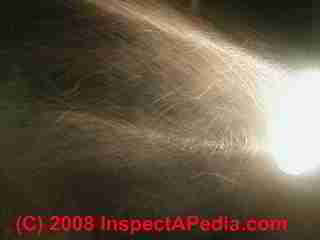
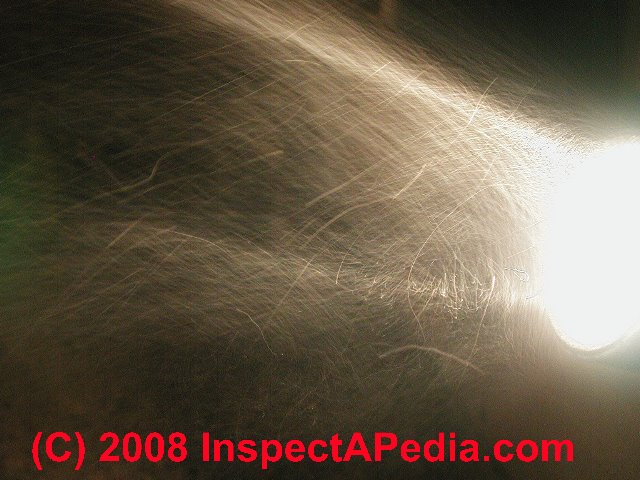
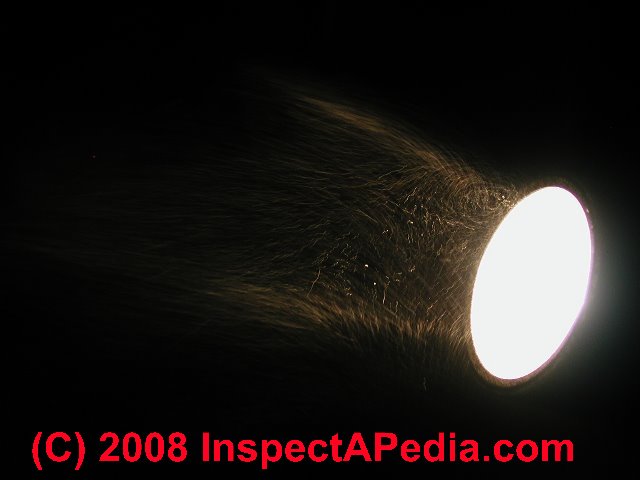
Our page top photo shows that even the naked eye can see comparatively large airborne particles indoors.
Article Contents
- BEST PRACTICES FOR IMPROVING INDOOR AIR IN HOMES
- HEALTH EFFECTS OF INDOOR AIR POLLUTANTS
- COLLECTING DUST SAMPLES FOR IAQ ASSESSMENT
InspectAPedia tolerates no conflicts of interest. We have no relationship with advertisers, products, or services discussed at this website.
Indoor Air Quality - Best Practices for Improving Indoor Air in Homes
Here we provide detailed, unbiased advice on finding and correcting indoor air quality problems as well as advice on new construction details for a combination of low building energy cost and high indoor air quality.
This article series includes excerpts or adaptations from Best Practices Guide to Residential Construction (Steve Bliss, J Wiley & Sons) , by Steven Bliss, courtesy of Wiley & Sons.
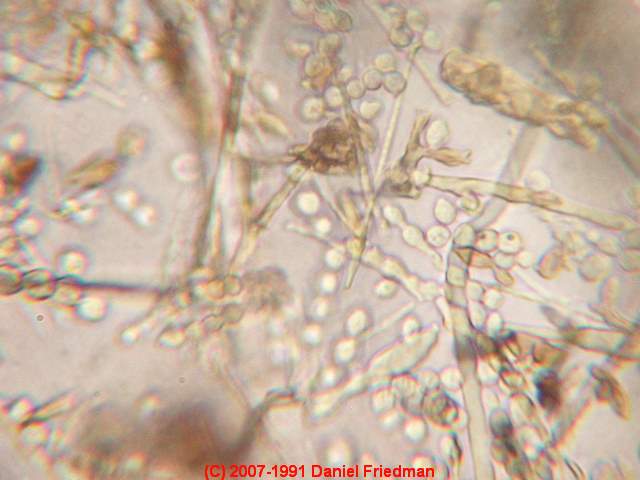
Our photo illustrates an indoor air particle sample dense with fiberglass, fungal hyphae, and Penicillium/Aspergillus spore chains - indicating a nearby mold contamination source.
But many indoor contaminants are simply too small to see, or are not particles at all but rather gases or chemicals.
See ENVIRONMENTAL HAZARDS - INSPECT, TEST, REMEDY for our full list of environmental hazard identification and remedy related to buildings
To find what you need quickly, if you don't want to scroll through this index you are welcome to use the page top or bottom SEARCH BOX to search InspectApedia for specific articles and information.
Overview of Indoor Air Quality Issues & Solutions
As noted in Best Practices Guide to Residential Construction (Steve Bliss, J Wiley & Sons) (at page bottom, Click to Show or Hide to see book information):
Two trends have conspired to place significant stresses on the indoor environment over the past two decades.
First, houses are being built much tighter today than they were a generation ago, either deliberately by energy-minded builders or simply as a by-product of using modern building materials, such as
plywood, DRYWALL, or INSULATION, and tight- fitting doors and windows.
Second, the number of synthetic building materials has rapidly expanded to include
synthetic CARPETING, a wide variety of plastics, wood composites, adhesives, sealants, and finishes.
These, along with the wide variety of cleaning, personal care, and hobby products stored and used indoors provide most homes with an ample source of airborne chemicals, many of which have not been well studied, either alone or in combination with others.
Some leading indoor-air-quality advocates have referred to this unknown mix of airborne compounds as “chemical soup”.
Individuals with allergies, asthma, or strong chemical sensitivities were, like the proverbial canary in the coal mine, the first to call attention to the higher concentrations of chemicals that were building up in our new, tighter homes. While scientists had thoroughly studied the outdoor air in cities and indoor air in occupational settings, little was known about air quality in homes.
Indoor Air is Typically More Contaminated than Outdoor Air
A growing body of scientific evidence has demonstrated that the air inside homes is typically more polluted than outdoor air, even in polluted urban areas.
For example, the U.S. EPA team study of over 600 residents in seven cities in the 1980s found that exposure to toxic chemicals was much greater at home or at work than outdoors.
Compare our airborne dust photograph at left with the similar image at page top for two examples of the extreme range of airborne particle contaminants that may be present in a building.
Levels of about a dozen common organic pollutants were found to be two to five times higher inside homes than outside, regardless of whether homes were in rural or industrial areas.
And since the average person spends far more time indoors than outside, the study concluded that health risks from the indoor environment pose a greater risk to most people than outdoor air pollution.
Fortunately, as builders, designers, and homeowners, we potentially have much greater control over our indoor environment than out of doors.
Public health professionals and researchers, both in the private sector and in state and federal agencies, have identified the most significant threats posed by indoor air pollution, as well as a number of straightforward strategies that enable us to minimize or eliminate the health risks.
See INDOOR AIR QUALITY & HOUSE TIGHTNESS for a discussion of the relationship between air-tightness of a home and indoor air quality and for a description of the causes of variation in indoor air quality among similarly constructed homes.
Acceptable Risk: Just How Clean Does Indoor Air Need to Be?
Remember, there is no environment— indoor or outdoor—that is 100% free of hazardous materials, many of which (like radon, asbestos, and airborne particulates) occur naturally in the environment.
And while many of these substances have been studied extensively in the workplace, the effects of long-term exposure to the lower levels found in most homes are not well understood.
For some indoor air pollutants, like RADON, scientists have a fairly precise understanding of the health effects and recognize that that no exposure level is safe.
However, the cost of reducing the indoor radon level to zero (below outdoor levels) would be prohibitive for most people, so homeowners, health professionals, and regulatory agencies do their best to find a “cost-effective” goal that balances costs against perceived health risks.
In the absence of clear indoor air guidelines, and taking into account that all building projects have budget limitations, the goal of this chapter is to identify reasonable steps that builders and designers, and, in some cases, homeowners can take to produce a healthy indoor environment by eliminating or substantially reducing known hazards.
The emphasis will be on getting the greatest benefit for the least cost, starting with the most significant hazards.
How much an individual invests in clean indoor air is a matter of personal choice. Fortunately, with good planning, a great deal can be accomplished for a modest investment.
For individuals with special sensitivities to chemicals, dust, or biological materials such as
INDOOR MOLD CONTAMINATION, the measures described here may not be adequate. A more comprehensive approach under the guidance of environmental health specialists is advisable.
Note: For a helpful discussion of just what constitutes "adequate ventilation",
see USE WITH ADEQUATE VENTILATION ? [PDF], ASHRAE Journal, May 2018. Offermann, Francis (Bud) J., P.E., C.I.H., ASHRAE & Mark Nicas, Ph.D., MPH, C.I.H.
Health Effects of Indoor Air Pollutants
Indoor air pollutants at high levels can cause acute illness, while lower levels may lead to health problems only after years of exposure. In the case of certain carcinogens, such as radon, health professionals believe that a single exposure could lead to health problems many years later (although the greater the total exposure over time, the greater the risk).
While the effects of some pollutants are well understood, for others, further research is needed to determine what concentrations and types of exposure will impair health. Also, it is important to bear in mind that different people react very differently to indoor pollutants.
Even in the absence of definitive studies on every pollutant, there is little disagreement that reducing exposure to volatile organic compounds, combustion gases, radon, common allergens, and other indoor pollutants is a worthwhile goal for all homeowners and particularly vital for the very young or for those with allergies or respiratory problems.
[See MOLD RELATED ILLNESS for an extensive list of occupant reported illnesses related to mold and other indoor contaminants.]
Short-Term Health Effects of Exposure to Indoor Pollutants
High levels of indoor pollutants can cause immediate symptoms after one or more exposures. The symptoms may look like those of a cold or virus, including irritation of the eyes, nose, and throat, headaches, dizziness, and fatigue.
These effects are usually short-term and reverse quickly once the person leaves the building or the pollutant is identified and eliminated.
Short-term exposures can also trigger asthma episodes and lead to other serious allergic responses, including hypersensitivity pneumonitis and humidifier fever, both of which may first appear as flu-like symptoms.
For many pollutants, the exposure level at which symptoms first appear is highly variable. Key factors include a person’s age, pre-existing medical conditions, and his or her individual sensitivity to the chemical or biological compound in question.
For example, MOLD,
or POLLEN,
or INSECT FECALS,
and ANIMAL ALLERGENS / PET DANDER (dander, etc.), elicit a range of allergic reactions in some, while others are unaffected.
Also, the level at which FORMALDEHYDE elicits symptoms ranges from as little as .04 ppm to as much as 5.0 ppm (parts per million), depending on an individual’s sensitivity.
To complicate matters, people can develop sensitivities to both biological and chemical pollutants at any point in their lives, possibly from repeated exposures to low levels of the substance.
See COMBUSTION AIR REQUIREMENTS for additional details about the requirement for combustion air.
COMBUSTION AIR for TIGHT BUILDINGS explains how to provide outside combustion air for tight buildings.
See COMBUSTION GASES & PARTICLE HAZARDS for an explanation of the dangers of inadequate combustion air.
See COMBUSTION PRODUCTS & IAQ for the relationship between fuel burning appliances and building indoor air quality. More about carbon monoxide - CO - is
and at CARBON MONOXIDE WARNING.
Long-Term Health Effects of Exposure to Indoor Pollutants
Some of the most toxic substances in our homes, such
or ASBESTOS,
and RADON, can, under some circumstances, cause long-term irreversible damage to health. Many types of air pollutants increase the frequency and severity of asthma attacks.
COMBUSTION BYPRODUCTS have been linked to reduced lung function in developing children. Some health problems, including certain cancers, have long latency periods and may show up years after exposure to a pollutant such as tobacco smoke or radon.
There is also ample evidence that some materials,
such as FORMALDEHYDE GAS, are “sensitizers,” which can cause a person to become hypersensitive after years of low-level exposure.
Whether indoor air quality contributes to other chronic health problems, such as heart disease, respiratory diseases, and cancers (other than lung cancer from radon and secondhand smoke), is unclear; but there is evidence that all major internal systems can be strained and become symptomatic as a result of poor indoor air quality.
- - Adapted with permission from Best Practices Guide to Residential Construction (Steve Bliss, J Wiley & Sons) .
Collecting & Testing Building Dust Samples for Indoor AIr Quality Assessment
Reader Question: how can I collect a dust sample for lab analysis to screen for problem particles?
Can you tell me the best procedure for getting a dust sample analyzed to see if there are indications of mold, insects, pollen, small fiberglass particles, or other indoor irritant particles? - Maurice 2/5/2010
I am looking through the site so that I can follow the suggested steps to test a dust sample from my apartment. Can you recommend a lab to send it to? Thank you. - Peggy Sissleman 6/15/2011
Reply:
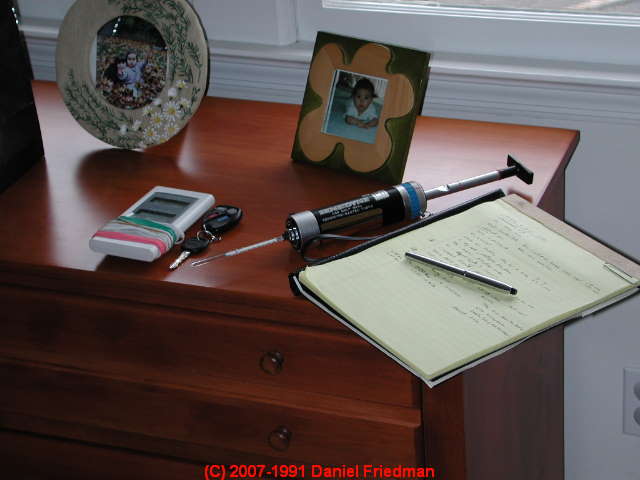
Please see DUST SAMPLING PROCEDURE where we describe when, where, & how best to collect a sample of settled dust from a representative building surface.
Just about any forensic microscopy lab, including many of the labs who accept mold test samples, should be able to examine your dust to let you know what particles are dominant and whether or not the dust contains clues suggesting that further building investigation is needed.
Dust samples are also useful to track down annoying or apparently unusual quantities of indoor dust to its probable source. For example, we may examine a settled dust sample as well as a snip of carpeting fiber or a sample of building insulation to determine if that carpet or insulation is the source.
Watch out: keep in mind that while airborne particles are a key component in IAQ investigations, particle analysis will not detect irritating or hazardous gases, VOCs, odors, etc.
Reader Question: where can I mail building dust samples for analysis?
30 Oct 2014 Maria said
Where can I mail dust samples to see what they contain - Maria
Reply:
Maria
You can use any environmental test lab - to avoid any possible conflict of interest, please do not send dust samples to our own forensic lab.
For environmental or forensic investigative support and lab work, you can use any forensic lab provided you first check that their area of expertise matches your needs.
For strange particle analysis, building dust analysis, fiberglass particle screening, mold contaminant screening contact these expert forensic microscopists:
- Daniel Baxter (dbaxter@san.rr.com) or
- Larry Wayne (lew@forensica.com)
- ASBESTOS TESTING LAB LIST provides directories of certified asbestos test labs organized by country, state, or province, and city.
- CONSULTANTS & EXPERTS DIRECTORIES provides an index to directories of various experts & services.
- ENVIRONMENTAL INSPECTORS & TESTING SERVICES provides a directory organized by country, state, or province, and city.
For mold or general environmental dust samples, also contact our backup:
- Susan Flappan, 11020 W. 122nd St. Overland Park KS 66213 USA, Tel: 913 322 2237. toll free number of 866 225 MOLD Website: http://moldetect.com/ Email: sflappan@moldetect.com
- EMS lab is a very large and competent network of labs offering a wide range of services, Website: www.emlab.com
InspectAPedia.com is an independent publisher of building, environmental, and forensic inspection, diagnosis, and repair information for the public - we have no business nor financial connection with any manufacturer or service provider discussed at our website.
Helpful IAQ PDFs
- [1] Indoor Air Quality (IAQ) ASHRAE STANDARD [PDF] Ranish Joshi, Arctic India Sales, reviews the basics of IAQ, emphasizes the importance of both source control and removal of contaminants when improving indoor air quality, warns about bringing inside contaminants from outdoors, and reviews the pertinent ASHRAE IAQ standards for buildings.
- [2] ASHRAE Fresh Air Ventilation System [PDF] Jie Chen et als, describes a fresh air ventilation system designed to meet ASHRAE 62.2P Standard.
- Updated ASHRAE 90.1 Energy Code May Help
Maximize The Benefits Of Energy Efficient
Technologies" DF] Lindsay Audin, Building Operating Management, May 2005, discusses ASHRAE Standard ASHRAE 90.1-2004, the latest version of ASHRAE's energy code, encompassing updates to the ASHRAE 90.1-2001 standard.
"Written to allow easy incorporation into specifications for new buildings and renovations, 90.1-2004 lays out minimum requirements for a building’s envelope, electrical power systems and equipment, lighting, heating, Ventilating and air conditioning, service, water heating, and energy management.
Under the 1992 federal Energy Policy Act (EPAct), ASHRAE 90.1 was mandated as the basis for all state building codes as they affect energy use, starting with ASHRAE 90.1-1989. Under EPAct, the 1999 version became law in July 2004, but has yet to be adopted by all states.
Since the 1999 version was somewhat dated by the time it became a requirement, some states, especially those having high energy prices, have already updated their building codes to the 2001 version.
Some states and cities, such as Phoenix, are now going further by leapfrogging the 2001 edition and enacting part or all of the 2004 edition instead." - CRAWL SPACE MOISTURE CONTROL [PDF] U.S. Department of Energy
- ENERGY RECOVERY VENTILATION SYSTEMS for BUILDINGS [PDF] U.S. Department of Energy
- ENERGY SAVINGS METHODS: WHOLE HOUSE SYSTEMS APPROACH [PDF] U.S. Department of Energy
- JHCS, MODEL STATE INDOOR AIR QUALITY ACT [PDF] Johns Hopkins Center for Health Security 700 E. Pratt Street, Suite 900 Baltimore, MD 21202 Tel: 443-573-3304 centerhealthsecurity@jhu.edu centerforhealthsecurity.org
Excerpt:
The Model State Indoor Air Quality Act (MSIAQA) is intended to be adapted and adopted by state legislatures as a legal framework for good IAQ in public spaces, outlining best practices for how to monitor implementation, inform the public about the quality of indoor air and the benefits of good IAQ, adjust acceptable standards based on the latest research from expert bodies, and seek compliance among building owners. - MOISTURE CONTROL in BUILDINGS [PDF] U.S. Department of Energy
- MOISTURE CONTROL in WALLS [PDF] U.S. Department of Energy
- NATURAL VENTILATION for BUILDINGS [PDF] U.S. Department of Energy
- Offermann, Francis (Bud) J., P.E., C.I.H., ASHRAE & Mark Nicas, Ph.D., MPH, C.I.H., USE WITH ADEQUATE VENTILATION ? [PDF], ASHRAE Journal, May 2018, also available as a PDF here with permission of the authors.
Abstract:
Consumer products such as paints, cleaning chemicals, and adhesives often contain toxic volatile chemicals. When these products are used indoors, these chemicals are released into the air resulting in inhalation exposures to applicators and other occupants.
The resulting indoor concentrations can result in exposures that cause acute adverse health effects, including death, and/or explosion risks.
Warning labels on these products and information in “safety data sheets” often simply caution to “use with adequate ventilation.”
Excerpt:
Providing consumers with the required ventilation rates and product quantity limitations for indoor applications of paints, cleaning chemicals, and adhesives should significantly reduce adverse health impacts associated with the use of these products. - R-VALUE of Wood [PDF] U.S. Department of Energy
- SPOT VENTILATION for houses, U.S. Department of Energy
- SLAB on GRADE Foundation Moisture and Air Leakage [PDF] U.S. Department of Energy
- VAPOR BARRIERS or VAPOR DIFFUSION RETARDERS [PDF] U.S. DOE - how vapor barriers work, types of vapor diffusion barriers, installing vapor barrier
- VENTILATION for ENERGY-EFFICIENT BUILDINGS [PDF] Purpose of ventilation, ventilateion strategies, etc.
- WEATHER RESISTIVE BARRIERS [PDF] how to select and install housewrap and other types of weather resistive barriers, U.S. DOE
- WHOLE HOUSE VENTILATION SYSTEMS [PDF] U.S. Department of Energy
- WHOLE HOUSE BALANCED VENTILATION SYSTEMS [PDF] U.S. Department of Energy
- WHOLE HOUSE EXHAUST VENTILATION SYSTEMS [PDF] U.S. Department of Energy
- WHOLE HOUSE SUPPLY VENTILATION SYSTEMS [PDF] U.S. Department of Energy
- BASEMENT MOISTURE CONTROL [PDF] U.S. Department of Energy
Reader Comments, Questions & Answers About The Article Above
Below you will find questions and answers previously posted on this page at its page bottom reader comment box.
Reader Q&A - also see RECOMMENDED ARTICLES & FAQs
On 2022-11-19 by InspectApedia (mod) - living in the space after a heavy rodent infestation if proper remediation wasn’t done
@Joy,
It is very concerning that someone is living in the space after a heavy rodent infestation if proper remediation wasn’t done. This is especially so if building occupants are at particular risk including elderly, infants, and asthmatics. There is risk of a number of viral or bacterial illnesses for the residents.
Proper cleanup includes not only removal of rodent feces but disinfecting of all surfaces and being sure any HVAC ductwork has been inspected and addressed by a professional.
This first link gives a general overview of the necessary process to follow:
CLEANING UP AFTER RODENTS [PDF] U.S. CDC
This second one gives more specific information and steps to follow using a particular disinfectant product.
Contec®, "CLEANING & DISINFECTING GUIDELINES FOR BIRD, BAT, AND RODENT DROPPINGS " [PDF] Contec® Sporicidin® Contec, Inc.
P.O. Box 530 Spartanburg, SC 29304 USA Tel: +1-864-503-8333
Toll Free US, Canada, PR: 1-800-289-5762 Email: info@contecinc.com
Cleanup projects like this are dangerous and require proper attire and safety equipment.
My OPINION is that if, in fact, there were significant levels of dangerous contaminants, the resident should vacate the premises until adequate remediation has been completed.
Please let us know if you have additional questions.
On 2022-11-18 y Joy
Rodent feces from a huge infestation were vacuumed and swept up in a home prior to learning the dangers of doing so without taking appropriate measures first.
Is a commercial type HEPA filter going to filter out any dander /bacteria/viruses they carry and mold spores that are also present or is another type filter recommended. Your prompt attention is needed and appreciated as there is someone living in the home.
On 2022-03-06 by Inspectapedia Com Moderator (mod) - Risk of structural collapse is an immediate hazard
@Lisa M,
With respect nobody can guess at a risk assessment for any possible airborne dust, asbestos, or other debris with so little information. And it sounds as if you've combined several different worries.
If the building foundation is "failing" such that the building could collapse, that is an immediate safety concern, so at the very least you need to get a more-expert condition of the safety of the building structure.
A worry about peeling flooring pales in comparison with the risk of structural collapse ** if that risk is actually present at your building - something one can't guess from your text.
When that concern has been addressed, see the additional help for your asbestos question found at
DOES THIS MATERIAL CONTAIN ASBESTOS? - 5 easy questions to tell if a BUILDING MATERIAL probably contains asbestos - https://inspectapedia.com/hazmat/DIY-Asbestos-Material-Test.php
ASBESTOS FLOORING HAZARD REDUCTION https://inspectapedia.com/hazmat/Asbestos-Flooring-Hazard-Reduction.php
On 2022-03-06 by Lisa M
@Yesy, in a rental with a crazy landlord. Collapsing foundation under peeling asbestos flooring. Mold under two bedrooms. Lead paint. Poor plumbing drainage. Disintegrating carpet. Leaking roof.
Lead painted windows are rotting and the city is making her put up replacements (the house isn't worth the repairs.
She irritates us about stupid things like a broken (rotten 50 year old blind). The house is collapsing and we are trashing it? Huh? I itch constantly.
I have no energy. Im depressed and nervous. I sympathize. Its hell!
On 2022-03-06 y Lisa M
The foundation is failing at our rental. Specifically the kitchen and laundry room where asbestos flooring is. The linoleum is peeling and chipping. Ive stopped sweeping and mopping. How dangerous is this?
On 2021-06-05 by inspectapedia.com.moderator (mod) - concerned about fiberglass dust
@Yesy,
From the recommended reading links above you'll want to review
https://inspectapedia.com/Fiberglass/Fiberglass_Hazards.php
FIBERGLASS HAZARDS
On 2021-05-22 by Yesy
Hi, I have been feeling itchy eyes, sore throat, dry lips, wheezing in my home. I have had people with fancy equipment come to the house and each one has said something different ( mold, no mold, change ac ducts, nothing wrong) and between it all, my health is getting worse.
I even went to a doctor to see if my head could be causing all of these symptoms because I am severely allergic, it seems to be affecting just me. I have spent several hundreds to thousands to figure out what is happening if mold or fiberglass and a solution.
I have lined fiberglass in enclosed wall ac duct so I do not have an attic. I purchased a snake camera, but didn't want to go to far and saw black garbage bag looking like lining and some small gray dust.
I paid for a non- molested cleaning of ducts where a HEPA vacuum sucked everything out. I installed the blue light and an allergen filter. I am going insane at night. I get light headed and nausea when indoors for a bit. Who can I trust to come inspect for fiberglass contamination in duct work ?
Also, the main ac unit is clean and there were yellow insulation visible in that main component area, of which I sealed with mastic tape. I am almost positive there is fiberglass in the household. Please, I do not know what else to do.
On 2021-04-15 by danjoefriedman (mod)
@Anonymous,
see your question and our detailed reply now found at
Reader Q&A - also see the FAQs series linked-to below
On 2021-04-15 by Anon - glass fibers from a memory foam mattress caused problem?
found at
https://inspectapedia.com/Fiberglass/Fiberglass_Hazards.php#Zinus
On 2021-04-15 y Anonymous
Hello! I sent an email to you all about help with our problem with glass fibers from a memory foam mattress that we have been living with all over our home for a year and a half and just discovered this. I will be looking out for a response. We are in desperate need of advice/help. Thank you so much
On 2021-04-15 by danjoefriedman (mod)
@Ryan,
see your question and our detailed reply now found at https://inspectapedia.com/Fiberglass/Fiberglass_Hazards.php#Zinus
...
Continue reading at INDOOR AIR QUALITY IMPROVEMENT, KEY STEPS or select a topic from the closely-related articles below, or see the complete ARTICLE INDEX.
Or see INDOOR AIR QUALITY IMPROVEMENT FAQs - questions and answers posted originally on this page.
Or see these
Recommended Articles
- AIR FILTERS for HVAC SYSTEMS - home
- AIR POLLUTANTS, COMMON INDOOR
- INDOOR AIR QUALITY IMPROVEMENT GUIDE - home
Suggested citation for this web page
INDOOR AIR QUALITY IMPROVEMENT GUIDE at InspectApedia.com - online encyclopedia of building & environmental inspection, testing, diagnosis, repair, & problem prevention advice.
Or see this
INDEX to RELATED ARTICLES: ARTICLE INDEX to BUILDING INDOOR AIR QUALITY IAQ
Or use the SEARCH BOX found below to Ask a Question or Search InspectApedia
Ask a Question or Search InspectApedia
Try the search box just below, or if you prefer, post a question or comment in the Comments box below and we will respond promptly.
Search the InspectApedia website
Note: appearance of your Comment below may be delayed: if your comment contains an image, photograph, web link, or text that looks to the software as if it might be a web link, your posting will appear after it has been approved by a moderator. Apologies for the delay.
Only one image can be added per comment but you can post as many comments, and therefore images, as you like.
You will not receive a notification when a response to your question has been posted.
Please bookmark this page to make it easy for you to check back for our response.
Our Comment Box is provided by Countable Web Productions countable.ca
Citations & References
In addition to any citations in the article above, a full list is available on request.
- Best Practices Guide to Residential Construction, by Steven Bliss. John Wiley & Sons, 2006. ISBN-10: 0471648361, ISBN-13: 978-0471648369, Hardcover: 320 pages, available from Amazon.com and also Wiley.com. See our book review of this publication
- Steve Bliss's Building Advisor at buildingadvisor.com helps homeowners & contractors plan & complete successful building & remodeling projects: buying land, site work, building design, cost estimating, materials & components, & project management through complete construction. Email: info@buildingadvisor.com
Steven Bliss served as editorial director and co-publisher of The Journal of Light Construction for 16 years and previously as building technology editor for Progressive Builder and Solar Age magazines. He worked in the building trades as a carpenter and design/build contractor for more than ten years and holds a masters degree from the Harvard Graduate School of Education.
Excerpts from his recent book, Best Practices Guide to Residential Construction, Wiley (November 18, 2005) ISBN-10: 0471648361, ISBN-13: 978-0471648369, appear throughout this website, with permission and courtesy of Wiley & Sons. Best Practices Guide is available from the publisher, J. Wiley & Sons, and also at Amazon.com - [4] "Energy Efficient Lab Design", Nicolas Lemire, Eng., Member ASHRAE, and Roland Charneux, Eng., Fellow ASHRAE, American Society of Heating, Refrigerating and Air-Conditioning Engineers, Inc. (www.ashrae.org). Reprinted by permission
from ASHRAE Journal, (Vol. 47, No. 5, May 2005). ©ASHRAE - [5] Moeckel, W.E.; Weston, K.C., "Composition and Thermodynamic Properties of Air in Chemical Equilibrium", Technical Report NACA-TN-4265, Lewis Flight Propulsion Lab., Cleveland, 1 April 1958, updated 25 February 2008, Website citation: www.osti.gov, U.S. DOE, Abstract:
Charts have been prepared relating the thermodynamic properties of air in chemical equilibrium for temperatures to 15,000 deg K and for pressures from 10/sup -5/ to 10/sup +4/ atmospheres. Also included are charts showing the composition of air, the isentropic exponent, and the speed of sound. These charts are based on thermodynamic data calculated by the National Bureau of Standards. (auth). - [6] Bender, M. L., T. Sowers, J.‐M. Barnola, and J. Chappellaz (1994), Changes in the O2/N2 ratio of the atmosphere during recent decades reflected in the composition of air in the firn at Vostok Station, Antarctica, Geophys. Res. Lett., 21(3), 189–192, doi:10.1029/93GL03548.
Abstract:
Samples of air at various depths in firn were collected at Vostok Station, Antarctica, and analyzed for δ15N of N2, O2/N2 ratio, and CO2. The ultimate objective of this work is to constrain the recent rate of the atmospheric [O2] decrease, thereby providing a direct experimental constraint on net CO2 fluxes into the ocean and the land biosphere. δ15N increases with depth, because of gravitational enrichment, at approximately the rate predicted by the barometric equation. Gravitationally corrected CO2 decreases with depth to 308 ppmV at 101.9 m depth, because deeper air is older and less contaminated with anthropogenic CO2.
The gravitationally corrected O2/N2 ratio increases with depth mainly because burning fossil fuel consumes O2. Samples in the top 20 m of the firn have anomalously high CO2 concentrations and anomalously low O2/N2 ratios. Samples below 96.2 m depth have anomalously high O2/N2 ratios. Between 30 and 96.2 m depth, the gravitationally corrected increase in the O2/N2 ratio is nearly equal to that computed from the rate of O2 consumption by combustion of fossil fuels. Our results indicate that the rate of anthropogenic O2 consumption can be accurately constrained by future firn air studies. - [7]
A.P. Jones, "Indoor Air Quality and Health", School of Environmental Sciences, University of East Anglia, Norwich, Norfolk, NR4 7TJ, UK, Atmospheric Environment
Volume 33, Issue 28, December 1999, Pages 4535–4564
Abstract
During the last two decades there has been increasing concern within the scientific community over the effects of indoorair quality on health. Changes in building design devised to improve energy efficiency have meant that modern homes and offices are frequently more airtight than older structures.
Furthermore, advances in construction technology have caused a much greater use of synthetic building materials. Whilst these improvements have led to more comfortable buildings with lower running costs, they also provide indoor environments in which contaminants are readily produced and may build up to much higher concentrations than are found outside. This article reviews our current understanding of the relationship between indoorair pollution and health. Indoor pollutants can emanate from a range of sources.
The health impacts from indoor exposure to combustion products from heating, cooking, and the smoking of tobacco are examined. Also discussed are the symptoms associated with pollutants emitted from building materials. Of particular importance might be substances known as volatile organic compounds (VOCs), which arise from sources including paints, varnishes, solvents, and preservatives. Furthermore, if the structure of a building begins to deteriorate, exposure to asbestos may be an important risk factor for the chronic respiratory disease mesothelioma.
The health effects of inhaled biological particles can be significant, as a large variety of biological materials are present in indoor environments. Their role in inducing illness through immune mechanisms, infectious processes, and direct toxicity is considered. Outdoor sources can be the main contributors to indoor concentrations of some contaminants.
Of particular significance is Radon, the radioactive gas that arises from outside, yet only presents a serious health risk when found inside buildings. Radon and its decay products are now recognised as important indoor pollutants, and their effects are explored. This review also considers the phenomenon that has become known as Sick Building Syndrome (SBS), where the occupants of certain affected buildings repeatedly describe a complex range of vague and often subjective health complaints.
These are often attributed to poor air quality. However, many cases of SBS provide a valuable insight into the problems faced by investigators attempting to establish causality. We know much less about the health risks from indoorair pollution than we do about those attributable to the contamination of outdoor air.
This imbalance must be redressed by the provision of adequate funding, and the development of a strong commitment to action within both the public and private sectors. It is clear that meeting the challenges and resolving the uncertainties associated with air quality problems in the indoor environment will be a considerable undertaking. Keywords Biological particles; Combustion pollution; Radon; Sick building syndrome;Volatile organic compounds - [8] H. Frommea, D. Twardellaa, S. Dietricha, D. Heitmannb, R. Schierlc, B. Liebld, H. Rüdene, "Particulate matter in the indoorair of classrooms—exploratory results from Munich and surrounding area", Atmospheric Environment, Volume 41, Issue 4, February 2007, Pages 854–866
Abstract
Numerous epidemiological studies have demonstrated the association between particle mass (PM) concentration in outside air and the occurrence of health related problems and/or diseases. However, much less is known about indoor PM concentrations and associated health risks. In particular, data are needed on air quality in schools, since children are assumed to be more vulnerable to health hazards and spend a large part of their time in classrooms.
On this background, we evaluated indoorair quality in 64 schools in the city of Munich and a neighbouring district outside the city boundary. In winter 2004–2005 in 92 classrooms, and in summer 2005 in 75 classrooms, data on indoorair climate parameters (temperature, relative humidity), carbon dioxide (CO2) and various dust particle fractions (PM10, PM2.5) were collected; for the latter both gravimetrical and continuous measurements by laser aerosol spectrometer (LAS) were implemented. In the summer period, the particle number concentration (PNC), was determined using a scanning mobility particle sizer (SMPS). Additionally, data on room and building characteristics were collected by use of a standardized form.
Only data collected during teaching hours were considered in analysis. For continuously measured parameters the daily median was used to describe the exposure level in a classroom.
The median indoor CO2 concentration in a classroom was 1603 ppm in winter and 405 ppm in summer. With LAS in winter, median PM concentrations of 19.8 μg m−3 (PM2.5) and 91.5 μg m−3 (PM10) were observed, in summer PM concentrations were significantly reduced (median PM2.5=12.7 μg m−3, median PM10=64.9 μg m−3).
PM2.5 concentrations determined by the gravimetric method were in general higher (median in winter: 36.7 μg m−3, median in summer: 20.2 μg m−3) but correlated strongly with the LAS-measured results. In explorative analysis, we identified a significant increase of LAS-measured PM2.5 by 1.7 μg m−3 per increase in humidity by 10%, by 0.5 μg m−3 per increase in CO2indoor concentration by 100 ppm, and a decrease by 2.8 μg m−3 in 5–7th grade classes and by 7.3 μg m−3 in class 8–11 compared to 1–4th class.
During the winter period, the associations were stronger regarding class level, reverse regarding humidity (a decrease by 6.4 μg m−3 per increase in 10% humidity) and absent regarding CO2indoor concentration. The median PNC measured in 36 classrooms ranged between 2622 and 12,145 particles cm−3 (median: 5660 particles cm−3).
The results clearly show that exposure to particulate matter in school is high.
The increased PM concentrations in winter and their correlation with high CO2 concentrations indicate that inadequate ventilation plays a major role in the establishment of poor indoorair quality. Additionally, the increased PM concentration in low level classes and in rooms with high number of pupils suggest that the physical activity of pupils, which is assumed to be more pronounced in younger children, contributes to a constant process of resuspension of sedimented particles. Further investigations are necessary to increase knowledge on predictors of PM concentration, to assess the toxic potential of indoor particles and to develop and test strategies how to ensure improved indoorair quality in schools. - In addition to citations & references found in this article, see the research citations given at the end of the related articles found at our suggested
CONTINUE READING or RECOMMENDED ARTICLES.
- Carson, Dunlop & Associates Ltd., 120 Carlton Street Suite 407, Toronto ON M5A 4K2. Tel: (416) 964-9415 1-800-268-7070 Email: info@carsondunlop.com. Alan Carson is a past president of ASHI, the American Society of Home Inspectors.
Thanks to Alan Carson and Bob Dunlop, for permission for InspectAPedia to use text excerpts from The HOME REFERENCE BOOK - the Encyclopedia of Homes and to use illustrations from The ILLUSTRATED HOME .
Carson Dunlop Associates provides extensive home inspection education and report writing material. In gratitude we provide links to tsome Carson Dunlop Associates products and services.
 | HOME | ABOUT | ASK a QUESTION | CONTACT | CONTENT USE POLICY | DESCRIPTION | POLICIES | PRIVACY | |
| © 2024 - 1985 Publisher InspectApedia.com - Daniel Friedman | |||||||||