
InspectAPedia® FREE Encyclopedia of Building & Environmental Construction, Diagnosis, Maintenance & Repair |
Question? Just ask us! InspectAPedia
|
 World Trade Center Dust Particle Photo-Catalog
- POST a QUESTION or COMMENT about microscopic analysis of dust from the World Trade Center Disaster September 11, 2001
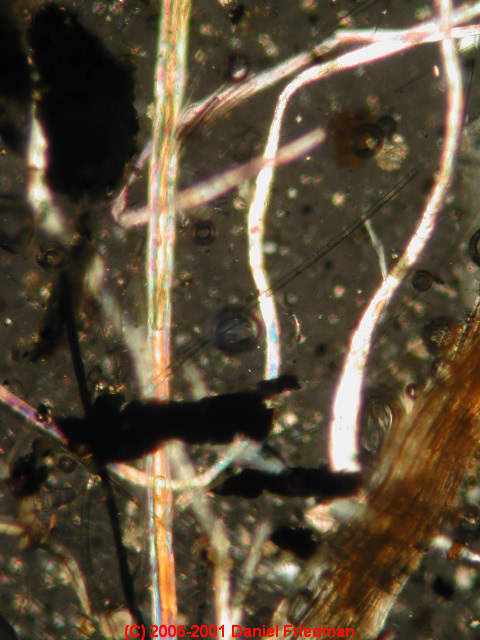
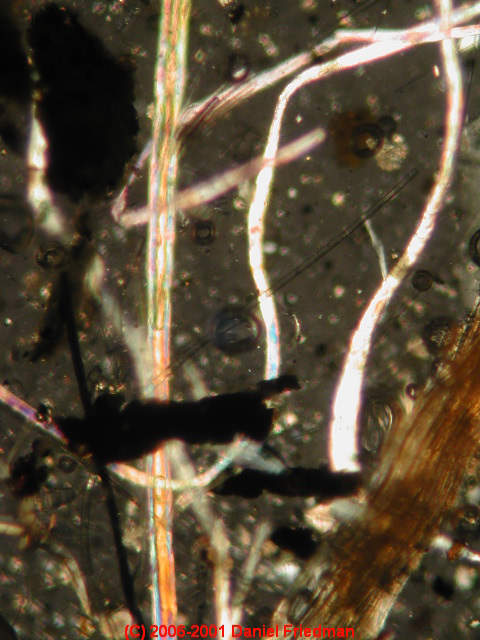
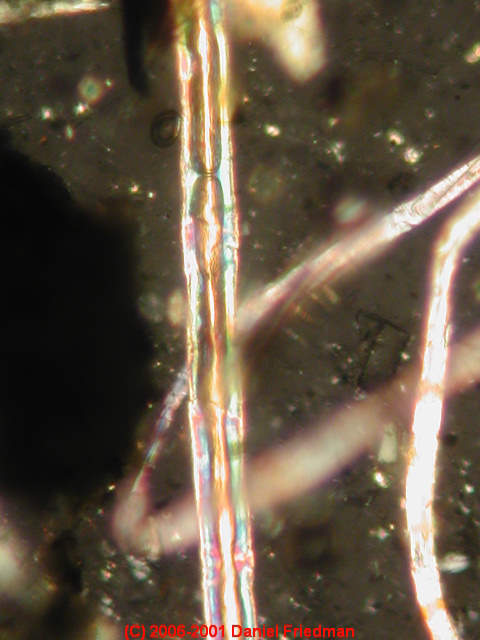
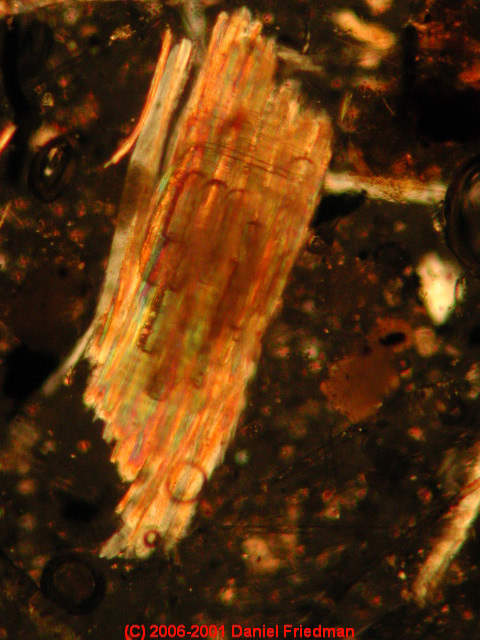
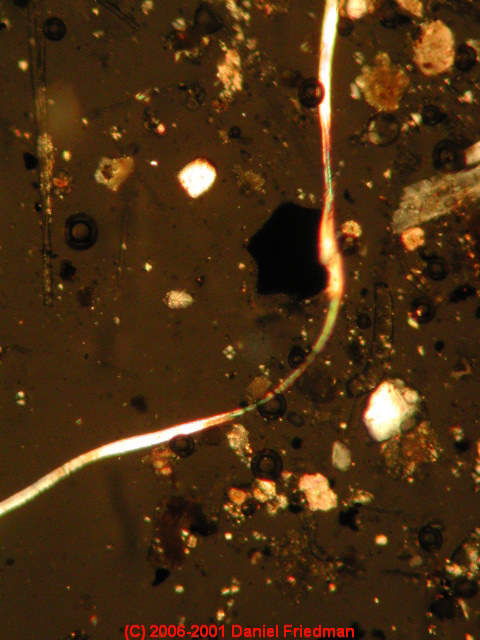
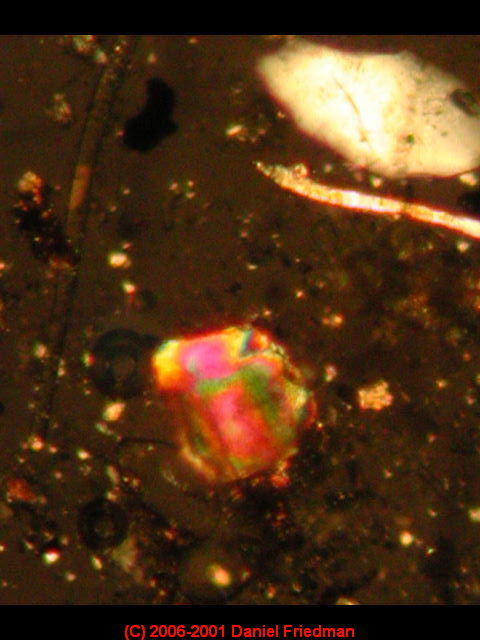
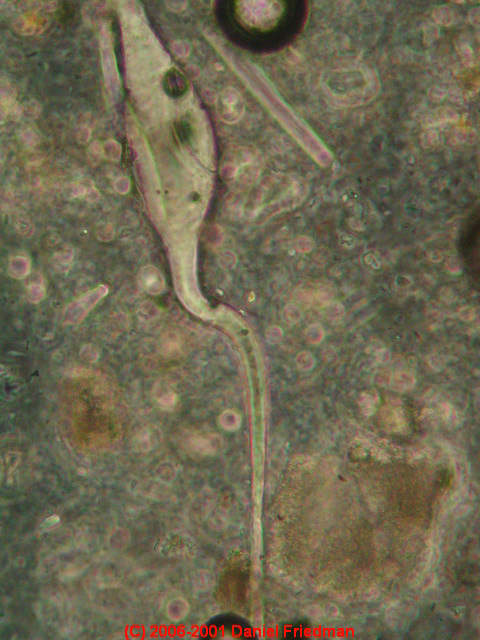
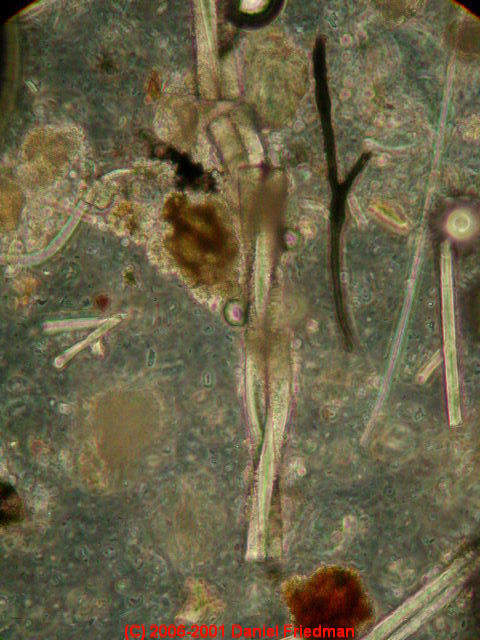
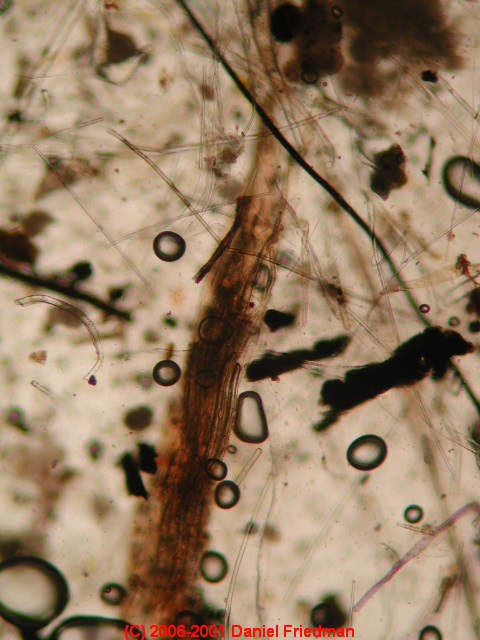
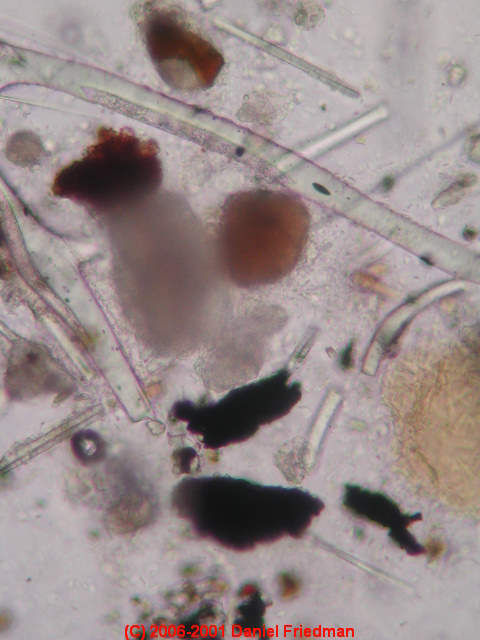
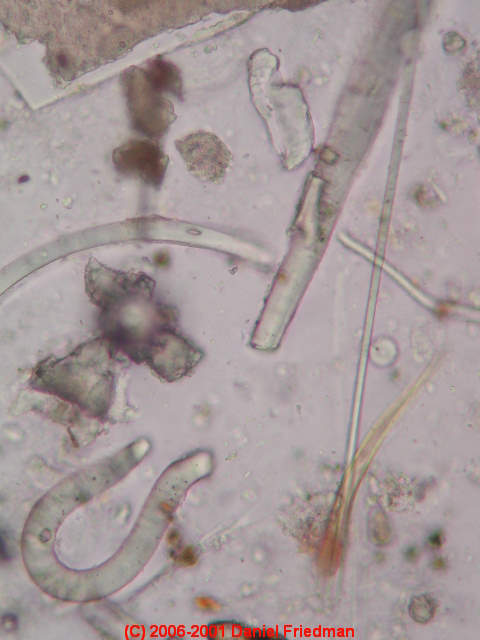
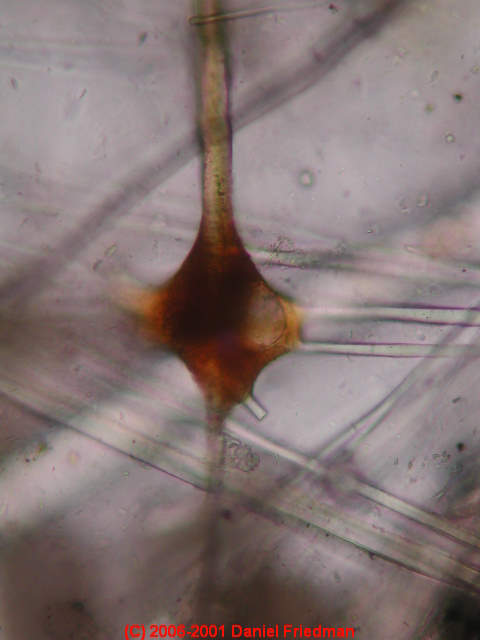
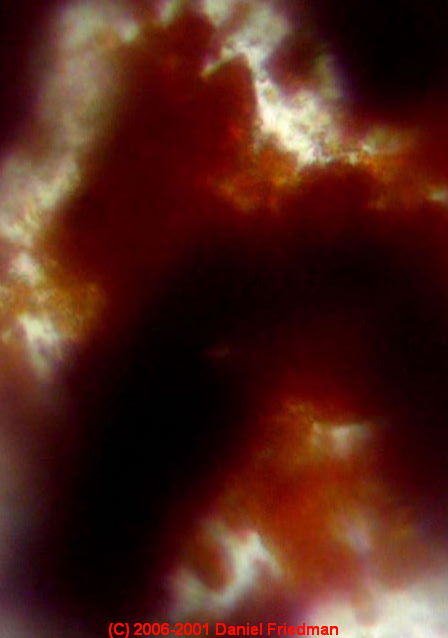
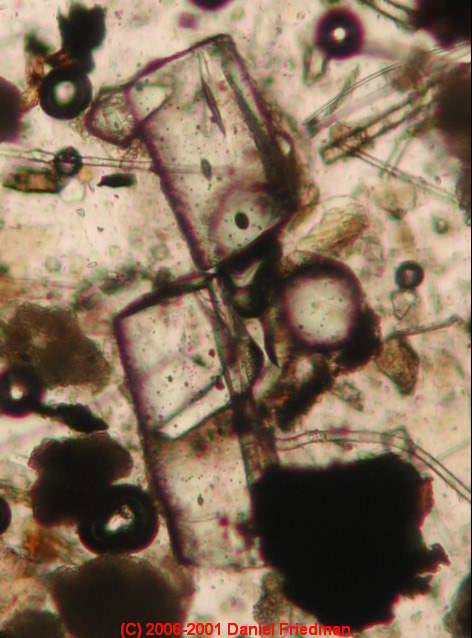
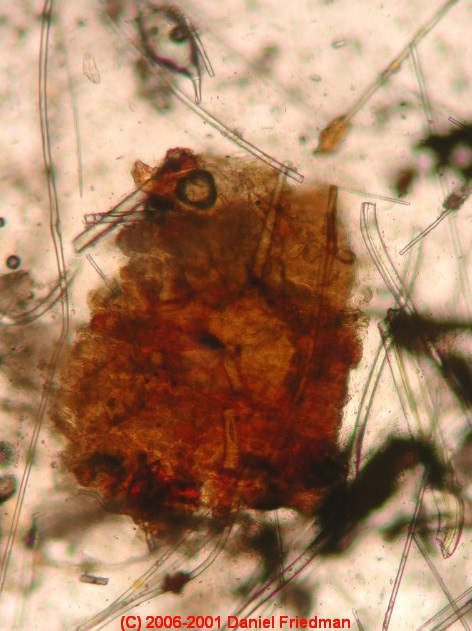
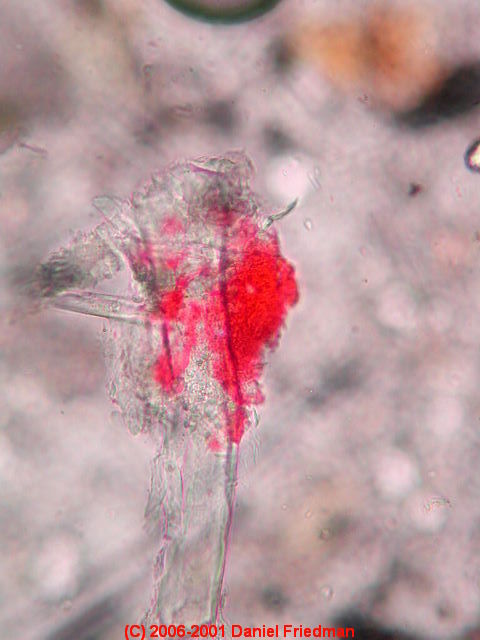
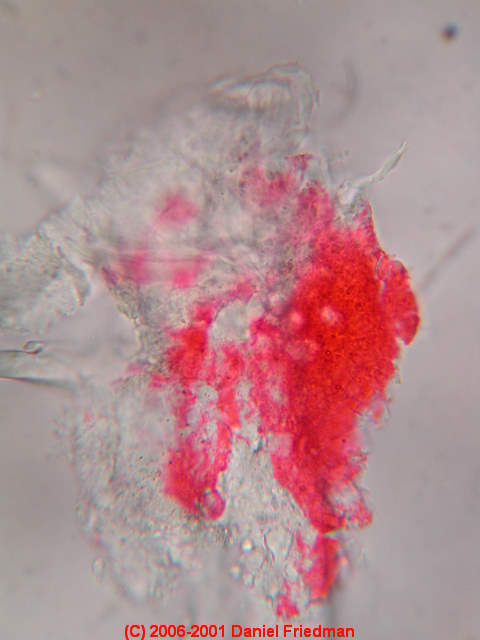
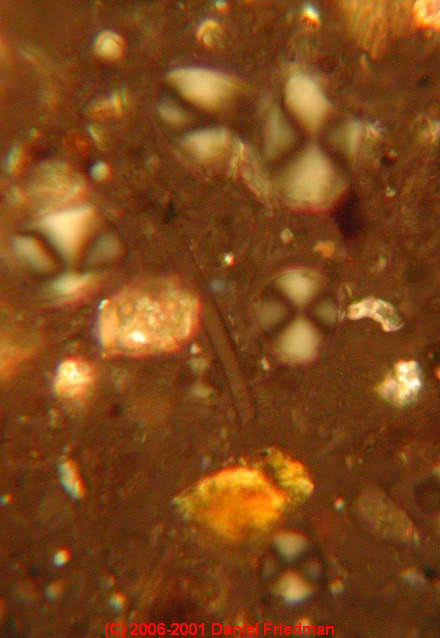
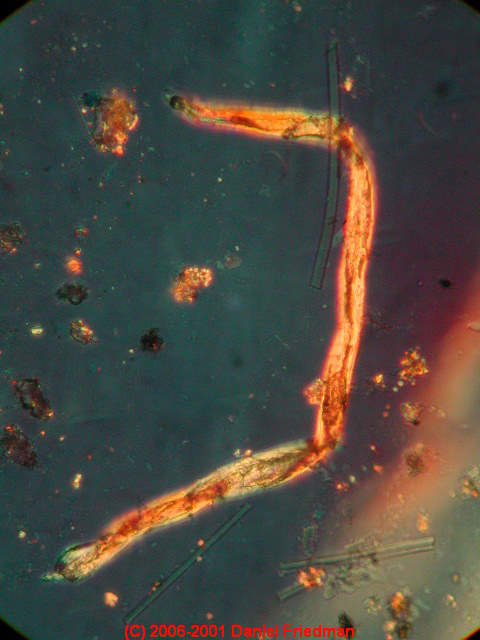
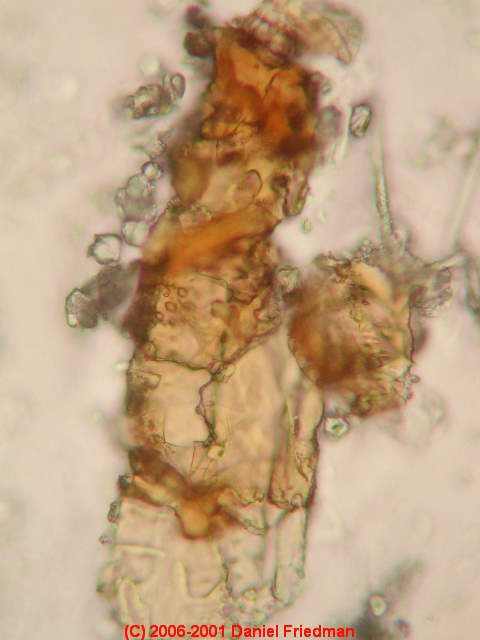
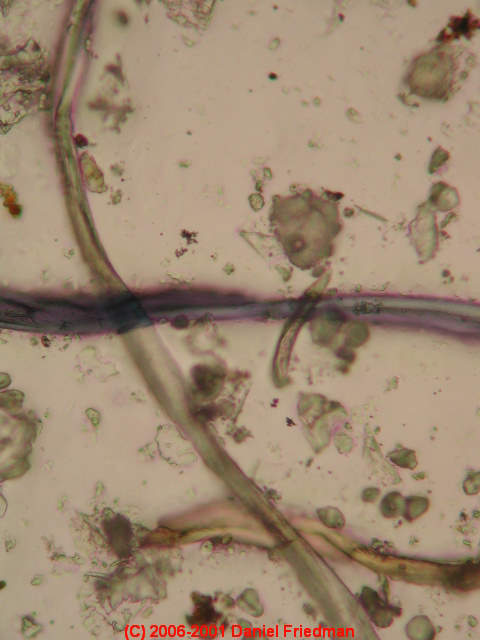
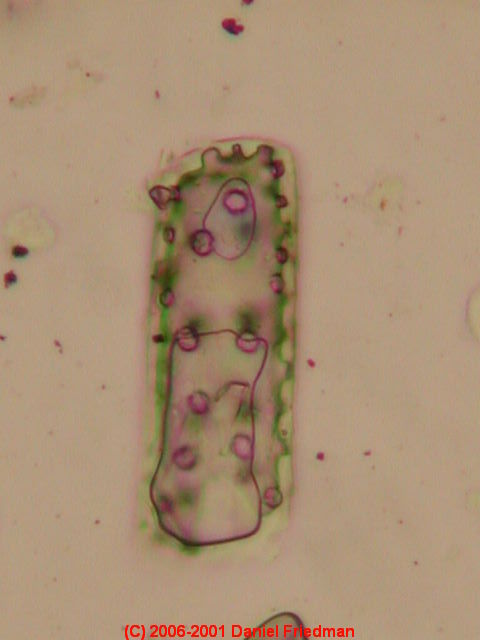
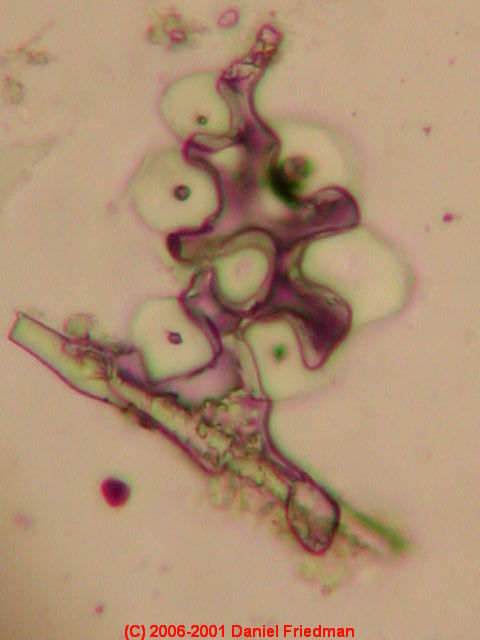
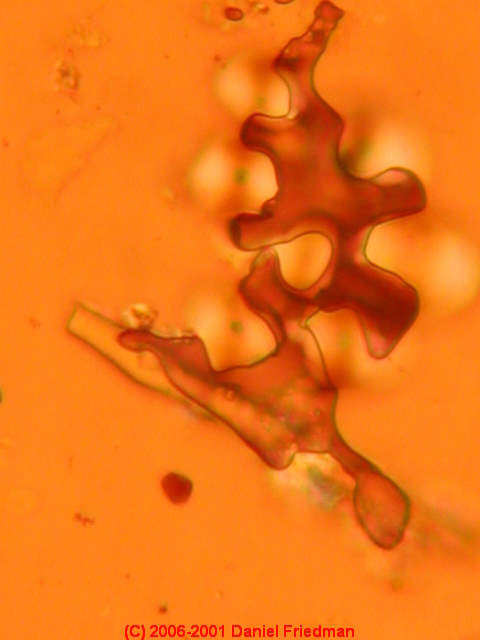
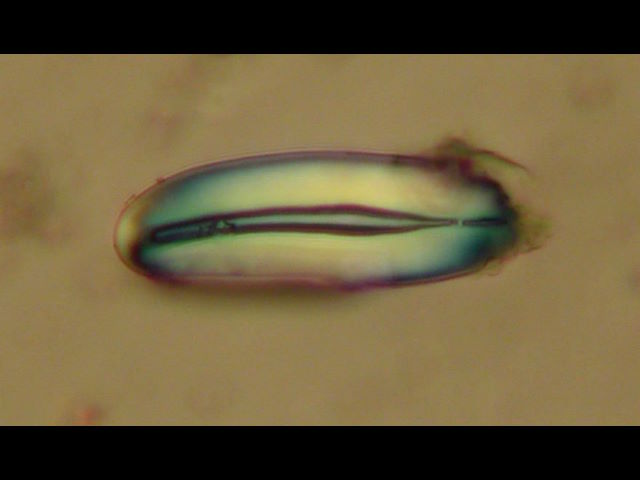
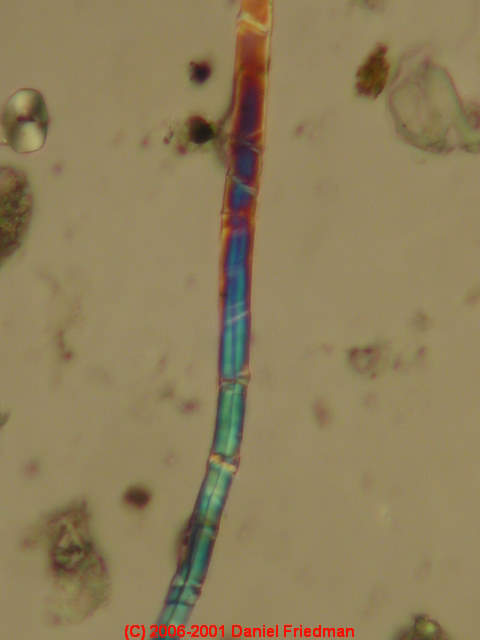
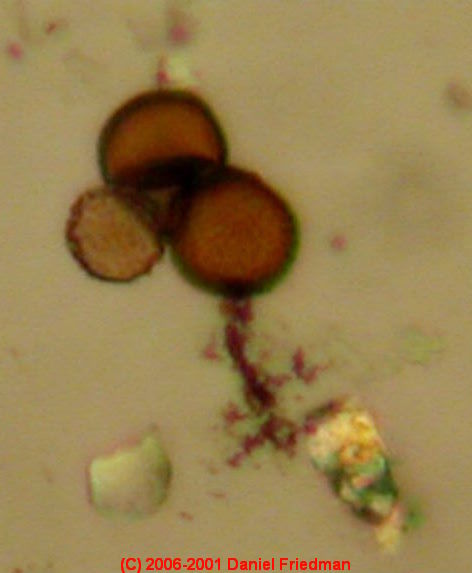
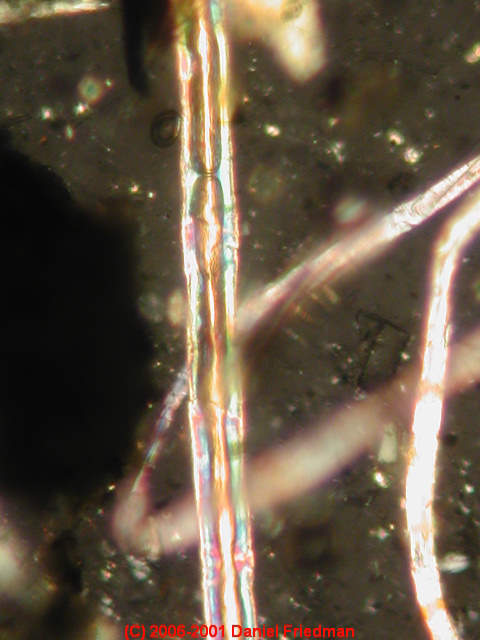
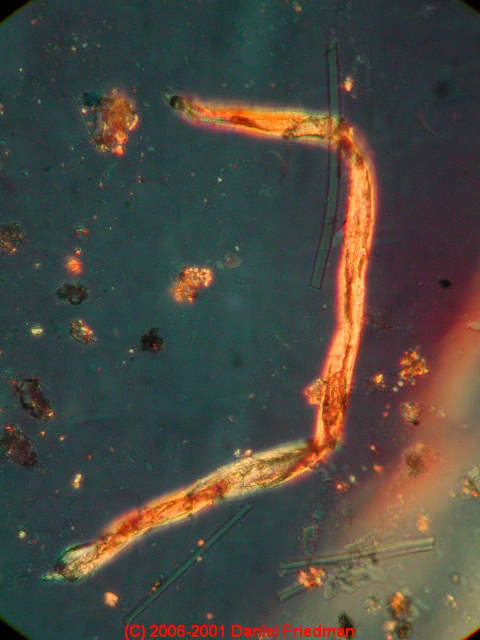
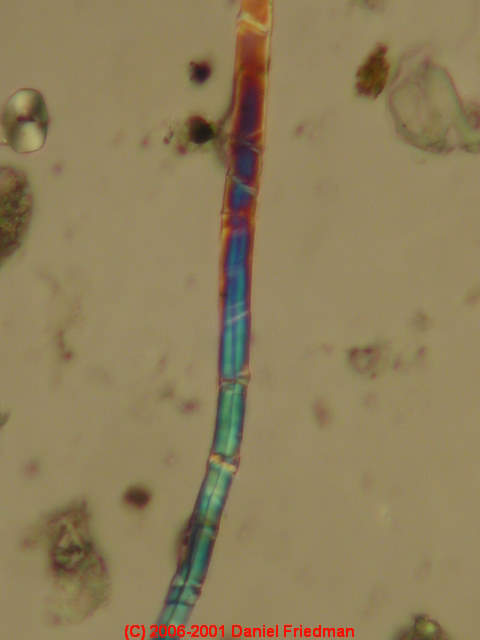
This article presents photographs of dust particles from the World Trade Center Collapse as an aid in the identification of the nature and composition of typical particles found in dust from the World Trade Center Collapse.
The WTC dust particles shown above and in these photographs were examined in our forensic microscopy laboratory and were a portion of physical samples of dust collected from New York City building window sills at the 9/11/01 site shortly after the attack.
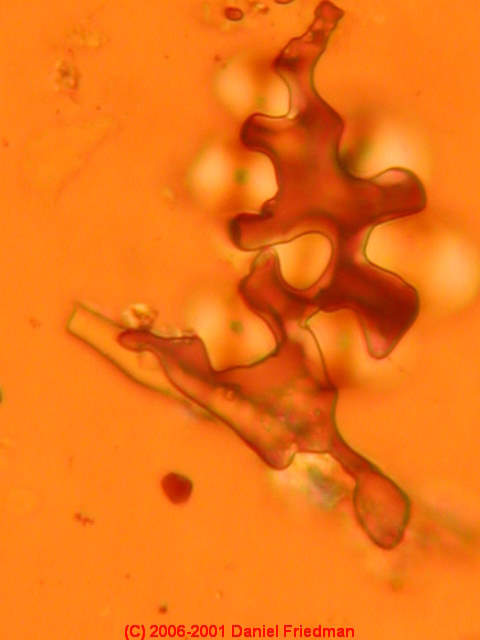
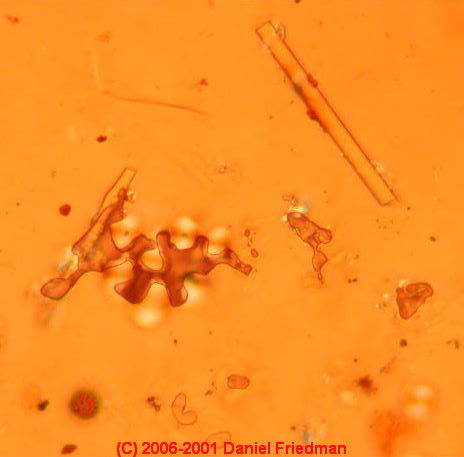
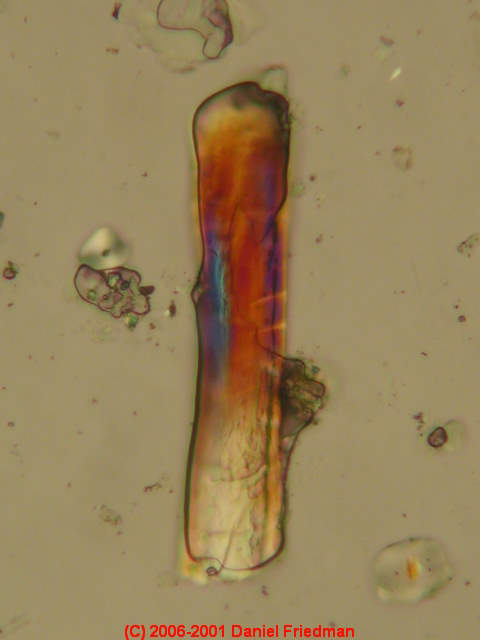
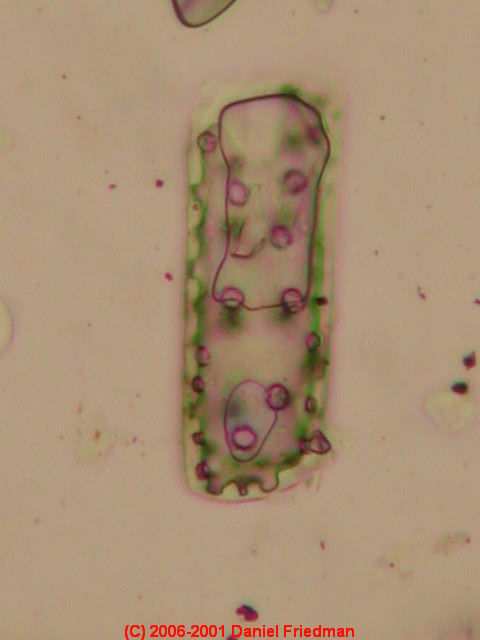
Digital photographs were made at magnifications ranging from 300x to 1920x and using both transmitted light and polarized light microscopy in our forensic laboratory in Poughkeepsie, NY.
InspectAPedia tolerates no conflicts of interest. We have no relationship with advertisers, products, or services discussed at this website.
World Trade Center Catastrophic Collapse - Microscopic Photos of WTC Dust
The concerns for public health and simple public anxiety concerning the contents of the dust created by the World Trade Center Collapse deserve thoughtful attention. However no scientific inquiry regarding this material should proceed without remembering to treat the substance and its implications with utmost respect, as is our intention here.
The purpose of these microphotographs is to aid researchers in recognizing typical World Trade Center Collapse Dust particles when they may be present in other environmental samples. Small amounts of dust from these samples can be provided to other research scientists on request.
The micro-photographs here investigate the contents and physical appearance of the dust particles created by the September 11, 2001 World Trade Center collapse following the terrorist attack on that date. Particles in dust can be identified, in many instances, by forensic microscopy.
While this work was begun in September 2001, the resulting photos taken through the microscope were not displayed until development of this public information page in 2006. Also see Asbestos: How to find and recognize asbestos in Buildings and ASBESTOS HVAC DUCTS & FLUES .
Microscopic Photos of Dust Particles from World Trade Center Collapse
Typical particles in this material include fiberglass, slag wool, asbestos, paper, cotton and other fabric fibers, plastic fragments and droplets, wood. Some photos also show starch granules, recognizable in polarized light. The dust from the WTC collapse does not include identifiable microscopically identifiable organic particles. Particle sizes range from large, perhaps 20 x 120 u (typically fiberglass) to sub-micron particulates. Magnification in these photos ranges from 300x to 1920x.
Experts report other contents in this dust including "microscopic traces of nearly every element - chromium, magnesium, manganese, aluminum, barium, titanium, and lead." [N.Y. Times, "What Happened to That Cloud of Dust", Pg. B1, B7, 11/2/2006].
The Times article reported on work by Paul J. Lioy, who mapped the dust and gas plume movement following the attack and collapse of the buildings. Lioy reported that volatiles were also present including components of jet fuel. Volatiles would have been present in gaseous form not as particulates.
By May 2006, increasing media reports indicate very serious health effects from exposure to high levels of this dust, including apparent fatalities and significant loss of lung function (pulmonary aging). By January 2007 these effects were well established in public media reports such as articles in the New York Times and various health journals.
Click on the image or the link to see an enlargement of each forensic microscopic photograph of the dust from the world trade center collapse
 World Trade Center Collapse Dust
 World Trade Center Collapse Dust
 World Trade Center Collapse Dust
 World Trade Center Collapse Dust
 World Trade Center Collapse Dust
 World Trade Center Collapse Dust
 World Trade Center Collapse Dust
 World Trade Center Collapse Dust
 World Trade Center Collapse Dust
 World Trade Center Collapse Dust
 World Trade Center Collapse Dust
 World Trade Center Collapse Dust
 World Trade Center Collapse Dust
 World Trade Center Collapse Dust
 World Trade Center Collapse Dust
 World Trade Center Collapse Dust
 World Trade Center Collapse Dust
 World Trade Center Collapse Dust
 World Trade Center Collapse Dust
 World Trade Center Collapse Dust
 World Trade Center Collapse Dust
 World Trade Center Collapse Dust
 World Trade Center Collapse Dust
 World Trade Center Collapse Dust
 World Trade Center Collapse Dust
 World Trade Center Collapse Dust
 World Trade Center Collapse Dust
 World Trade Center Collapse Dust
 World Trade Center Collapse Dust
 World Trade Center Collapse Dust
 World Trade Center Collapse Dust
 World Trade Center Collapse Dust
 World Trade Center Collapse Dust
 World Trade Center Collapse Dust
 World Trade Center Collapse Dust
 World Trade Center Collapse Dust
 World Trade Center Collapse Dust
 World Trade Center Collapse Dust
 World Trade Center Collapse Dust
 World Trade Center Collapse Dust
 World Trade Center Collapse Dust
 World Trade Center Collapse Dust
Research on Composition of World Trade Center 9/11 Collapse Dust
- [1] "Why Did the World Trade Center Collapse? Science, Engineering, and Speculation", Thomas W. Eagar, Christopher Musso, JOM, 53 (12) (2001), pp. 8-11. Original source: http://www.tms.org/pubs/journals/jom/0112/eagar/eagar-0112.html
Quoting:
The World Trade Center was not defectively designed. No designer of the WTC anticipated, nor should have anticipated, a 90,000 L Molotov cocktail on one of the building floors. Skyscrapers are designed to support themselves for three hours in a fire even if the sprinkler system fails to operate. This time should be long enough to evacuate the occupants. The WTC towers lasted for one to two hours—less than the design life, but only because the fire fuel load was so large. No normal office fires would fill 4,000 square meters of floor space in the seconds in which the WTC fire developed. Usually, the fire would take up to an hour to spread so uniformly across the width and breadth of the building.
The Minerals, Metals & Materials Society (TMS), JOM is a technical journal devoted to exploring the many aspects of materials science and engineering. JOM reports scholarly work that explores the state-of-the-art processing, fabrication, design, and application of metals, ceramics, plastics, composites, and other materials. In pursuing this goal, JOM strives to balance the interests of the laboratory and the marketplace by reporting academic, industrial, and government-sponsored work from around the world - [2] The Role of Metallurgy in the NIST Investigation of the World Trade Center Towers Collapse, S.W. Banovic, T. Foecke, W.E. Luecke, J.D. McColskey, and C.N. McCowan, T.A. Siewert, and F.W. Gayle, JOM Vol. 59, No.11 p. 22-30, [Web-Enhanced
Feature Article from JOM]
Quoting:
On August 21, 2002, on the direction of the U.S. Congress, the National Institute of Standards and Technology (NIST) initiated an investigation into the collapse of the World Trade Center (WTC) towers. In support of the overall investigation goals, the NIST Metallurgy and Materials Reliability Divisions pursued three objectives: assess the quality of the steel used in the construction of the towers, determine mechanical properties of the steel for input to the finite element models of the building collapse, and assess the failure mechanisms of the recovered steel components. This article describes the major findings of the metallurgical part of the NIST WTC investigation and shows how the findings were integrated into the investigation.
S.W. Banovic, T. Foecke, W.E. Luecke, and F.W. Gayle are with the Metallurgy Division and J.D. McColskey, C.N. McCowan, and T.A. Siewert are with the Materials Reliability Division at the National Institute of Standards and Technology, Technology Administration, U.S. Department of Commerce, Gaithersburg, MD 20899. Dr. Banovic can be reached at (301) 975-8822, or e-mail swbanovic@nist.gov. - [3] Structural Fire Response and Probable Collapse Sequence of the World Trade Center Towers. Federal Building and Fire Safety Investigation of the World Trade Center Disaster (NIST NCSTAR 1-6), Gross, J. L.; McAllister, T. P., December 01, 2005, original source http://www.nist.gov/manuscript-publication-search.cfm?pub_id=101279
- [4] "Particle Atlas of World Trade Center Dust", Heather A. Lowers and Gregory P. Meeker, USGS United States Geological Survey, US Department of the Interior, http://pubs.usgs.gov/of/2005/1165/508OF05-1165.html
The United States Environmental Protection Agency (EPA) has begun a reassessment of the presence of World Trade Center (WTC) dust in residences, public buildings, and office spaces in New York City, New York. Background dust samples collected from residences, public buildings, and office spaces will be analyzed by multiple laboratories for the presence of WTC dust. Other laboratories are currently studying WTC dust for other purposes, such as health effects studies. To assist in inter-laboratory consistency for identification of WTC dust components, this particle atlas of phases in WTC dust has been compiled.
This work was funded by the U.S. Geological Survey
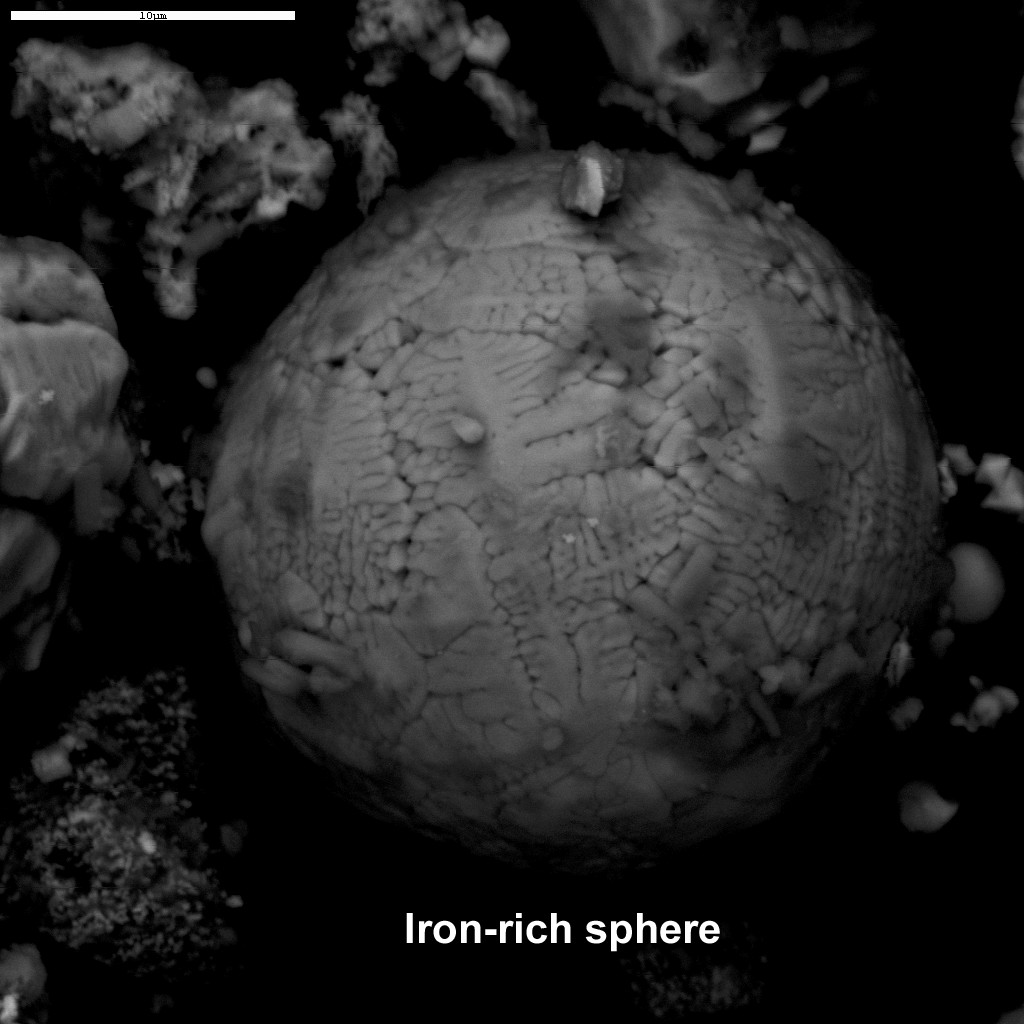
USGS photo of an iron-rich sphere common in samples of WTC dust.
- [5] Characterization of the Dust/Smoke Aerosol that Settled East of the World Trade Center (WTC) in Lower Manhattan after the Collapse of the WTC 11 September 2001, Environmental Health Perspectives (EHP), 7/2002, original source http://ehp.niehs.nih.gov/members/2002/110p703-714lioy/lioy-full.html
- [6] Chemical Compositions of the WTC Dusts and Girder Coating Material, USGS.gov, 11/30/01 Original source: http://pubs.usgs.gov/of/2001/ofr-01-0429/chem1/index.html
Quoting:
Representative splits of samples of dusts from the WTC area and of steel girder coatings from the WTC debris were analyzed for total major element composition by Wavelength-Dispersive X-Ray Fluorescence (WD-XRF), for total major and trace element composition by Inductively Coupled-Plasma Mass Spectrometry (ICP-MS), for total carbon and sulfur by combustion, and for carbonate carbon by coulometric titration.
Quoting from portions of Interpretation of part 1 of this report:The total element compositions of the dust samples reflect the chemical makeup of materials such as: glass fibers (containing silicon, aluminum, calcium, magnesium, sodium, and other elements); gypsum (containing calcium and sulfate); concrete and aggregate (containing calcium and aluminum hydroxides, and a variety of silicate minerals containing silicon, calcium, potassium, sodium, and magnesium); particles rich in iron, aluminum, titanium, and other metals that might be used in building construction; and particles of other components, such as computers, etc. Organic carbon in the dusts is most likely from paper, wallboard binder, and other organic materials.
The trace metal compositions of the dust and girder coatings likely reflect contributions of material from a wide variety of sources. Possibilities include metals that might be found as pigments in paints (such as titanium, molybdenum, lead, and iron), or metals that occur as traces in, or as major components of, wallboard, concrete, aggregate, copper piping, electrical wiring, and computer equipment. Further detailed SEM studies of dust and beam coating samples are needed to develop a better understanding of the residences of metals in the samples.
A detailed review of the materials used in construction, and the elemental composition of materials commonly found in office buildings would also be useful to understand more completely the potential sources and compositions of the materials in the dusts.It is important to note that the total chemical analyses presented in this section do not provide an indication of the metals in the dusts and girder coating materials that may potentially be bioavailable (readily assimilated by organisms). For example, heavy metals, such as lead, may occur in forms that range from highly soluble to highly insoluble in water or body fluids. Consequently, high concentrations of total lead in dust samples may or may not translate into elevated concentrations of readily bioavailable lead.
Fequently-Asked Questions (FAQs) or other questions & remarks about dust and particulates from the 9/11 World Trade Center Collapse
Question: thermate reported in some WTC dust samples
I found unburned thermate in the samples send to me. Didn't you find any? - Max Christiansen, 12/13/11
Reply: the Thermate/Thermite Conspiracy Theory of the World Trade Center Airplane Attack of 2001
No Max. I did not find thermate in my WTC dust samples collected nearby horizontal surfaces at the WTC disaster site. Nor do I claim to have performed technically exhaustive tests on the world trade center dust. Our lab retains a small amount of dust from this terrible event and we have occasionally agreed to make samples available for further testing by qualified experts.
The conspiracy assertions behind your elegantly brief question deserve a longer reply.
Although I've heard about the thermite/thermate theory and have seen a paper published on that topic, I have not followed details of the thermite / thermate WTC conspiracy theory.
Have you documented and had peer reviewed your own lab procedures and conclusions? And given the minute amounts of material actually submitted to testing and the sensitive nature of such tests, are there other possible explanations for chemical signatures that might be found in particle testing?
No responsible forensic analyst should claim that a given particle analysis is technically exhaustive, nor that there could not be confounding data, or even contaminants in a sample. At an event such as the 9/11 disaster there might be confounding heat, fire, sources of materials from various building and aircraft components, and other chemistry that could contribute to later tests finding particle results resembling a variety of substances that do not accurately characterize the dust, including tests suggesting the presence of thermite.
Another World Trade Center Attack Conspiracy Theory
Shortly after the September 11 disaster, a Moroccan acquaintance espoused a different theory to explain the airplane crashes that led to collapse of the towers. He was convinced that Jews planned and executed the aircraft flights that crashed the World Trade Center, damaged the U.S. Pentagon, and crashed a third aircraft into the ground in Pennsylvania. His view was that Jews planned these events in order to make trouble for the Arab world.
His remarkable proof of that Jewish conspiracy argument was his assertion that on 11 September 2001, all of the Jews who worked in the WTC knew of the pending disaster and that they all stayed away from work on that date.
How could one explain how anyone could actually believe such an absurd theory?
Excusing deliberate pandering as the source of the Jewish WTC conspiracy theory, (not something I'd associate with my acquaintance, a University professor in Rabat) it may help to understand some of the cultural differences between American Jews living in New York City and Moroccan muslims living in Rabat, Morocco.
My acquaintance lives in Rabat, Morocco, in a community where religious and cultural views are much more homogeneous than in the U.S., and where news travels quickly by word of mouth throughout the (comparatively much smaller) community, and finally, where on a given religious holiday nearly everyone is doing the same thing at the same time.
Based on his mistaken assumption that people and communities in the U.S. (a country he does not know well) could not be very different from his own, my acquaintance could not imagine that, as I explained, not only do American Jews not blow up their neighbors and their cities, in New York City, Jewish people working in the huge population of the World Trade Center would not even know one another, much less be in secret mutual contact.
There is no secret Jewish telegraph service that links up American Jews nor is there anything like the same conformity of opinion, political or religious, as we see in some other areas of the world such as my acquaintance's own Rabat, Morocco.
Still more significant, among the thousands of Jewish people who worked daily in the World Trade Center, all of whom, by my acquaintance's theory had to be notified to stay at home on September 11th, no conspiracist of any persuasion could possibly count on thousands other people, Americans, Jews, or of any other label to remain quiet, nor to take no action to prevent such a calumny.
Engineering Explanations for the WTC Collapse
Your analysis for thermate in World Trade Center collapse dust, I infer, is in response to several popular articles indicating that some scientists have reported finding evidence of explosives in WTC dust. "Thermate is a variation of thermite and is an incendiary pyrotechnic composition that can generate short bursts of very high temperatures focused on a small area for a short period of time. It is used primarily in incendiary grenades." - Wikipedia web search 12/13/11. [An incendiary grenade is intended to light a fire, not to blow out structural columns.]
I am not a building collapse nor explosives expert, though our McCrone research training does include some microscopy, PLM, and microchemical methods for identifying certain particles of explosives.
But there are other more direct engineering explanations for the collapse of the 9/11/01 World Trade Center Towers [1] [2] than a conspiracy to place a precisely coordinated and precisely placed collection of incendiary grenades throughout the buildings. I personally witnessed the events of 9/11/01.
I was close enough to see the second aircraft strike the WTC, to watch with horror as I saw the first falling tower first tip to one side, then straighten and fall straight down, collapsing floor after floor below the original point of origin. And of course experts have pored over films and made other studies of the event.
Paraphrasing some of the more engineering-based articles on the Trade Center collapse, the structures were not designed to withstand the forces generated by the collapse of all or a significant part of an individual floor level. As the first floor level collapsed the impact broke the structure below, and so on.
Quoting from S.W. Banovic, et als:
The Most Probable Collapse Sequence [of the World Trade Center Towers on 9/11/2001]: The investigation team integrated the photographic record, the eyewitness accounts, the experimental results, and the results of the aircraft impact analysis, fire spread and growth analysis, heat conduction analysis, and structural response analysis to determine the probable collapse sequence for each tower. Report NIST NCSTAR 1-6 [3] , from which this summary is abstracted, summarizes the observations, results, and findings in much greater detail. [2]
Quoting from Eagar & Musso:
There have been numerous reports detailing the cause of the World Trade Center Tower collapse on September 11, 2001. Most have provided qualitative explanations; however, simple quantitative analyses show that some common conclusions are incorrect; for example, the steel could not melt in these flames and there was more structural damage than merely softening of the steel at elevated temperatures.
...
Nearly every large building has a redundant design that allows for loss of one primary structural member, such as a column. However, when multiple members fail, the shifting loads eventually overstress the adjacent members and the collapse occurs like a row of dominoes falling down. [1]
Occam's Razor and WTC Collapse Conspiracies
Having worked with a great many people who've suffered illness and tragedy in my own forensic work, I understand well the difficulty of accepting very painful catastrophes, and the inclination to look for greater, more complex conspiracies or other theories that might explain a disaster.
We will continue to monitor research on WTC dust with interest.
The principle of Occam's Razor suggests that when there are two competing explanations for an event, one simple and direct, and the other complex and difficult, usually the first, simpler explanation is correct.
We are dedicated to making our information as accurate, complete, useful, and unbiased as possible: we very much welcome critique, questions, or content suggestions for our web articles. Working together and exchanging information makes us better informed than any individual can be working alone.
InspectAPedia is an independent publisher of building, environmental, and forensic inspection, diagnosis, and repair information provided free to the public - we have no business nor financial connection with any manufacturer or service provider discussed at our website.
Respectfully, Daniel Friedman
...
Continue reading at ENVIRONMENTAL HAZARDS at BUILDINGS or select a topic from the closely-related articles below, or see the complete ARTICLE INDEX.
Or see these
Recommended Articles
- ASBESTOS FIREPROOFING SPRAY-On Coatings - spray-on fibers uses as building or structural fireproofing
- HOUSE DUST COMPONENTS
Suggested citation for this web page
WTC DUST PARTICLE - MICRO PHOTOGRAPHS at InspectApedia.com - online encyclopedia of building & environmental inspection, testing, diagnosis, repair, & problem prevention advice.
Or see this
INDEX to RELATED ARTICLES: ARTICLE INDEX to BUILDING ENVIRONMENT
Or use the SEARCH BOX found below to Ask a Question or Search InspectApedia
Ask a Question or Search InspectApedia
Try the search box just below, or if you prefer, post a question or comment in the Comments box below and we will respond promptly.
Search the InspectApedia website
Note: appearance of your Comment below may be delayed: if your comment contains an image, photograph, web link, or text that looks to the software as if it might be a web link, your posting will appear after it has been approved by a moderator. Apologies for the delay.
Only one image can be added per comment but you can post as many comments, and therefore images, as you like.
You will not receive a notification when a response to your question has been posted.
Please bookmark this page to make it easy for you to check back for our response.
Our Comment Box is provided by Countable Web Productions countable.ca
Citations & References
In addition to any citations in the article above, a full list is available on request.
- In addition to citations & references found in this article, see the research citations given at the end of the related articles found at our suggested
CONTINUE READING or RECOMMENDED ARTICLES.
- Carson, Dunlop & Associates Ltd., 120 Carlton Street Suite 407, Toronto ON M5A 4K2. Tel: (416) 964-9415 1-800-268-7070 Email: info@carsondunlop.com. Alan Carson is a past president of ASHI, the American Society of Home Inspectors.
Thanks to Alan Carson and Bob Dunlop, for permission for InspectAPedia to use text excerpts from The HOME REFERENCE BOOK - the Encyclopedia of Homes and to use illustrations from The ILLUSTRATED HOME .
Carson Dunlop Associates provides extensive home inspection education and report writing material. In gratitude we provide links to tsome Carson Dunlop Associates products and services.
 | HOME | ABOUT | ASK a QUESTION | CONTACT | CONTENT USE POLICY | DESCRIPTION | POLICIES | PRIVACY | |
| © 2024 - 1985 Publisher InspectApedia.com - Daniel Friedman | |||||||||