InspectAPedia.com InspectAPedia®
Google
InspectAPedia
 

Free Encyclopedia of Building & Environmental Inspection, Testing, Diagnosis, Repair

Ask a Question or Search InspectAPedia

  • HOME
  • AIR CONDITIONING
  • DAMAGE ASSESSMENT
  • ELECTRICAL
  • EXTERIORS
  • HEATING
  • HOME INSPECTION
  • INTERIORS
  • PLUMBING
  • ROOFING
  • SEPTIC SYSTEMS
  • STRUCTURE
  • WATER SUPPLY
  • ENERGY SAVINGS
  • ENVIRONMENT
  • INDOOR AIR IAQ
  • INSULATION
  • MOLD INSPECT TEST REMOVE
  • NOISE
  • ODORS
  • SOLAR ENERGY
  • VENTILATION
  • EXPERTS DIRECTORY
  • CONTACT US


Mobile View
ENVIRONMENTAL HAZARDS - INSPECT, TEST, REMEDY

MOLD: A COMPLETE GUIDE to TEST CLEAN PREVENT

ACCURACY vs PRECISION of MEASUREMENTS
ACTIVITY of MOLD in buildings
AGE of MOLD - Old is the Mold?
AIR POLLUTANTS, COMMON INDOOR
AIR TEST SAMPLING CASSETTE STUDY
AIRBORNE MOLD COUNT NUMBER GUIDE
AIRBORNE PARTICLE ANALYSIS METHODS
ALLERGEN TESTS for BUILDINGS
ALLERGENS in BUILDINGS, RECOGNIZING
ALLERGY & MOLD IAQ PRODUCTS
ALLERGY TESTS for PEOPLE
ALLERGY TEST ACCURACY
ATTIC MOLD

BASEMENT MOLD
BASEMENT MOLD WATER IMPACT
BATHROOM MOLD
BIBLIOGAPHY for ENVIRONMENTAL HEALTH, MOLD, IAQ
BIOLOGICAL POLLUTANTS in the HOME - EPA
BLACK MOLD, HARMLESS COSMETIC
BLACK MOLD, TOXIC & ALLERGENIC
BLEACHING MOLD, Advice about
BOOK MOLD, Moldy Book Cleaning
BOOKSTORE - ENVIRONMENTAL

CAR MOLD CONTAMINATION
CARPET DUST IDENTIFICATION
CARPETING & INDOOR AIR QUALITY
CARPETS & PADDING ODORS IN buildings
CHINESE DRYWALL HAZARDS
CLEARANCE INSPECTIONS - MOLD CLEANUP
CRAWL SPACES

DIRECTORY of MOLD / ENVIRONMENTAL EXPERTS
DIRT FLOOR MOLD CONTAMINATION
Disinfectants
Disinfecting Buildings with Bleach
DO-IT-YOURSELF MOLD CLEANUP WARNINGS
DRYWALL MOLD
DUCT SYSTEM & DUCT DEFECTS
DUST, HVAC CONTAMINATION STUDY

EFFLORESCENCE, Salts & White / Brown Deposits
EMERGENCY RESPONSE, IAQ, GAS, MOLD

FEAR of MOLD - MYCOPHOBIA
Fiberboard Insulation Sheathing Mold
FIBERGLASS INSULATION MOLD
FIND MOLD, ESSENTIAL STEPS
FIND MOLD in buildings, HOW TO
FLOOD DAMAGE ASSESSMENT, SAFETY & CLEANUP
FLOODS IN buildings-mold
FLOOR & SUBFLOOR MOLD, HIDDEN

HIDDEN MOLD, HOW TO FIND
HUMIDITY CONTROL & TARGETS INDOORS

INDOOR AIR HAZARDS TABLE
Indoor Air Pollution Book Online CPSC
INDOOR AIR QUALITY & HOUSE TIGHTNESS
INDOOR AIR QUALITY IMPROVEMENT GUIDE
INDOOR AIR QUALITY METHODS COMPARED

LAB PROCEDURES MICROSCOPE TECHNIQUES
Legionella BACTERIA & HVAC Equipment

MEDIA BLASTING for MOLD REMOVAL
MILDEW in BUILDINGS ?
MILDEW ERRORS - MOLD PHOTOS
MILDEW REMOVAL & PREVENTION
MOISTURE CONTROL in BUILDINGS
MOLD: A COMPLETE GUIDE TO MOLD
MOLD CLEANUP GUIDE- HOW TO GET RID OF MOLD
MOLD COUNT NUMBER GUIDE
MOLD CULTURE TEST KIT VALIDITY
MOLD DETECTION & INSPECTION GUIDE
MOLD or INDOOR AIR EMERGENCY RESPONSE
MOLD FAQ's
MOLD LEVEL IN AIR, VALIDITY
MOLD ODORS, MUSTY SMELLS
MOLD PREVENTION GUIDE
MOLD RELATED ILLNESS GUIDE
MOLD SAFETY WARNINGS
MOLD STANDARDS
MOLD TEST KITS
MOLD TESTING METHOD VALIDITY
MSDS Material Safety Data Sheets
MYCOPHOBIA, STAINS MISTAKEN for MOLD

Nanomaterials Hazards

ODORS GASES SMELLS, DIAGNOSIS & CURE
OZONE for MOLD OR ODORS

PAINTS & COATINGS ODORS IN BUILDINGS
PARTICLE SIZES & IAQ
Particulates & Allergens Indoors

RADON HAZARD TESTS & MITIGATION
RENTERS & TENANTS GUIDE TO INDOOR HAZARDS

SMELL PATCH TEST to Track Down Odors
SEWAGE BACKUP TEST & CLEANUP
STAINS on & in BUILDINGS, CAUSES & CURES
STAIN DIAGNOSIS on BUILDING EXTERIORS
STAIN DIAGNOSIS on BUILDING INTERIORS
STAINS & Thermal Tracking

THERMAL IMAGING MOLD SCANS
THERMAL TRACKING & THERMAL BRIDGING
TRAPPED MOLD BETWEEN WOOD SURFACES

UV LIGHT BLACK LIGHT USES

Volatile Organic Compounds VOCs

More Information

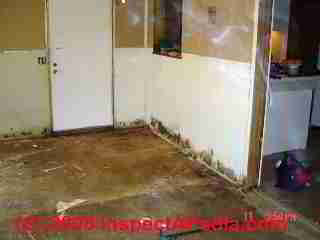
Flood damaged home, Jasper (C) Daniel Friedman Why You need to Dry Out Moldy Areas Before Mold Cleanup
     

  • How and Why to Dry Moldy Areas Before Mold Cleanup or Mold Remediation Begins
    • \
    • The importance of correcting sources of water or moisture before cleaning up mold
  • Questions & Answers about proper building dryout and humidity control as part of mold remediation
  • References

Click to Show or Hide Related Topics

  • MOLD: A COMPLETE GUIDE - home
  • ACCEPTABLE MOLD LEVEL
  • ACCURACY OF VARIOUS MOLD TEST METHODS
  • ACTION GUIDE - WHAT TO DO ABOUT INDOOR MOLD
  • AIR TEST FOR MOLD: ACCURACY
  • CARPET MOLD CONTAMINATION
  • CRAWLSPACE MOLD ADVICE
  • DISASTERS: BUILDING INSPECTION & REPAIR - home
  • DRYWALL MOLD
  • DUST SAMPLING PROCEDURE
  • EMERGENCY RESPONSE, IAQ, GAS, MOLD
  • FUNGICIDAL SPRAY & SEALANT USE GUIDE
  • HIDDEN MOLD, HOW TO FIND
  • INDOOR AIR QUALITY IMPROVEMENT GUIDE
  • INSULATION MOLD
  • KILLING GUIDE for MOLD
  • MOLD ACTION GUIDE - WHAT TO DO ABOUT MOLD
  • MOLD AGE - Old is the Mold?
  • MOLD APPEARANCE - WHAT MOLD LOOKS LIKE
  • MOLD APPEARANCE - STUFF THAT IS NOT MOLD
  • MOLD CLEANERS - WHAT TO USE
  • MOLD CLEANUP COMPANIES
  • MOLD CLEANUP, DO IT YOURSELF
  • MOLD CLEANUP GUIDE - home
  • MOLD CLEANUP COMPANIES
  • MOLD CLEANUP, DO IT YOURSELF
  • MOLD CLEANUP - BLEACH
  • MOLD CLEANUP - LIMITATIONS
  • MOLD CLEANUP - MISTAKES to AVOID
  • MOLD CLEANUP - MEDIA BLASTING
  • MOLD CLEANUP - DRY THE MOLD-CLEANED SURFACE
  • MOLD CLEANUP - SAFETY WARNINGS
  • MOLD CLEANUP - WOOD FLOORING
  • MOLD CLEANUP - WOOD FRAMING & PLYWOOD
  • MOLD CLEARANCE INSPECTIONS
  • MOLD CONSULTANTS / INSPECTORS
  • MOLD EXPERT, WHEN TO HIRE
  • MOLD EXPOSURE STANDARDS
  • MOLD PRODUCTS, INEFFECTIVE
  • MOLD RELATED ILLNESS SYMPTOMS
  • MOLD SPRAYS, SEALANTS, PAINTS
  • MOLD TESTING METHOD VALIDITY
  • MVOCs & MOLDY MUSTY ODORS
  • MYCOTOXIN EFFECTS of MOLD EXPOSURE
  • OZONE for MOLD OR ODORS
  • TEST KITS for DUST, MOLD, PARTICLE TESTS
InspectAPedia tolerates no conflicts of interest. We have no relationship with advertisers, products, or services discussed at this website.

This section of our article series on How to Clean Up or Get Rid of Mold discusses the importance of drying the surfaces to be cleaned.If an expensive mold remediation effort is begun before the moldy area has been dried and leaks stopped, it is likely that the cleanup cost will have been wasted as mold growth will simply recur. Our photo above shows a recently-flooded home in Jasper TX. You can see that the floor is still wet. Demolition of moldy materials can begin but mold cleanup can't be successfully completed before the building has first been dried.

Green links show where you are. © Copyright 2013 InspectAPedia.com, All Rights Reserved. Author Daniel Friedman.

2. DRY THE SURFACE - Dry the cleaned, previously moldy surface

No mold remediation project can be successfully completed unless:

  1. The causes of mold growth in the building have been eliminated - such as building leaks or moisture traps
  2. Wet and damp building surfaces and materials have been properly dried.

When can mold cleanup begin in a building?

Certain steps can begin immediately and in some cases are essential:

  1. The building must be safe to enter, structurally as well as regarding environmental hazards. If significant mold levels are present, appropriate protective clothing and equipment should be used.
  2. Establish containment to prevent unaffected building areas from cross-contamination. This step can be taken before any other work has begun on the building and should be done even if cleanup work is not to begin for some time. The sooner mold containment is established the greater the chance that the mold cleanup will not have to include cleaning of other, apparently unaffected, building areas.
  3. Stop any active building leaks and remove standing water
  4. Begin demolition: Demolition and removal of ruined, soaked, and obviously to-be-discarded building contents and building materials, such as wet carpeting, moldy drywall, soaked furniture, can begin as soon as practical.
  5. Dry out the building: the moisture level in interior wood surfaces needs to be well below 18% before cleaning and any final fungicidal sealing (if used) can be completed.
  6. Finish final cleaning: remove all loose demolition debris and complete the physical cleaning of all remaining surfaces.
  7. Check for ongoing leaks: don't close down a mold cleanup job if there are ongoing leaks - the cost and effort may be wasted as mold growth can recur quickly - in as little as 24-48 hours.

What we are emphasizing, however, is that while initial demolition and even some cleaning can begin before the building has been successfully dried and protected from further leaks, no mold remediation project can be completed under those conditions. If the building remains wet, mold growth will recur on remaining building materials and surfaces.

How Dry do Things Have to be in a Building to Complete Mold Cleanup?

Let the cleaned lumber or plywood surface dry thoroughly. 18% moisture level or less in wood is usually acceptable; normally inside of a building that has been closed to weather and heated or air conditioned, moisture levels will be way below this point, perhaps at 2 to 6% in wood and in any remaining drywall.

When lumber surfaces have been washed or otherwise are wet, they should be dry (less than 18% moisture content) before further treatment.

For wood framing and sheathing surfaces which have been cleaned of problem mold, a simple contact probe system or Tramex moisture encounter system is adequate since wood surfaces are directly accessible. In more broad investigations we measure moisture in wood and drywall using either a pin-probe type moisture meter such as the Delmhorst™ model BD-7, the Tramex Compact™ or for impenetrable surfaces such as tiled walls and floors we use the Tramex moisture encounter which uses a pair of pads and an electrical signal to perform non-destructive moisture detection.

The Delmhorst moisture meter also offers sets of long pin probes which can penetrate a wood frame wall or ceiling to sense moisture within insulation or on the far side of that cavity.

We also use the Exergen infra-red scanner to find moisture based on variations in temperature. A study comparing the effectiveness of various moisture measuring tools in the detection of moisture in inaccessible building cavities and a comparison of use of these instruments, a bore scope, and direct visual inspection by test cuts has been completed.

Remember when measuring moisture that looking only in the center of a surface, such as 4 ft. up a drywall-covered partition, is not the full story. :Moisture may still be present at problem levels in slow-to dry areas including building wall and ceiling cavities and on drywall behind wood trim. Measure at the locations most-likely to still be wet, not the locations most-likely to be dry, if you're trying to avoid an indoor mold problem.


Frequently Asked Questions (FAQs)

...

Ask a Question or Search InspectApedia

Use the search box below to ask a question or to search the InspectApedia.com website.

Ask a Question or Enter Search Terms in the InspectApedia search box just below.

Technical Reviewers & References

Related Topics, found near the top of this page suggest articles closely related to this one.

  • ...

Books & Articles on Building & Environmental Inspection, Testing, Diagnosis, & Repair

  • Our recommended books about building & mechanical systems design, inspection, problem diagnosis, and repair, and about indoor environment and IAQ testing, diagnosis, and cleanup are at the InspectAPedia Bookstore. Also see our Book Reviews - InspectAPedia.
  • Home Reference Book - Carson DunlopThe Home Reference Book - the Encyclopedia of Homes, Carson Dunlop & Associates, Toronto, Ontario, 25th Ed., 2012, is a bound volume of more than 450 illustrated pages that assist home inspectors and home owners in the inspection and detection of problems on buildings. The text is intended as a reference guide to help building owners operate and maintain their home effectively. Field inspection worksheets are included at the back of the volume. Special Offer: For a 10% discount on any number of copies of the Home Reference Book purchased as a single order. Enter INSPECTAHRB in the order payment page "Promo/Redemption" space. InspectAPedia.com editor Daniel Friedman is a contributing author.

    Or choose the The Home Reference eBook for PCs, Macs, Kindle, iPad, iPhone, or Android Smart Phones. Special Offer: For a 5% discount on any number of copies of the Home Reference eBook purchased as a single order. Enter INSPECTAEHRB in the order payment page "Promo/Redemption" space.

  • GO TO Carson Dunlop's Home Study Course Information - How to Become a Home Inspector: Carson Dunlop's nationally recognized Home Study Course, selected by ASHI the American Society of Home Inspectors and other professionals and associations. This website author is a contributor to this course.
  • GO TO Carson Dunlop's Home Study Course Information - How to Become a Home Inspector: Carson Dunlop's nationally recognized Home Study Course, selected by ASHI the American Society of Home Inspectors and other professionals and associations. This website author is a contributor to this course.
  • GO TO Carson Dunlop's Home Study Course Information - How to Become a Home Inspector: Carson Dunlop's nationally recognized Home Study Course, selected by ASHI the American Society of Home Inspectors and other professionals and associations. This website author is a contributor to this course.
    Building inspection education & report writing systems from Carson, Dunlop & Associates Ltd
  • Carson Dunlop, Associates, Toronto, have provided us with (and we recommend) Carson Dunlop Weldon & Associates' Technical Reference Guide to manufacturer's model and serial number information for heating and cooling equipment
    Special Offer
    : Carson Dunlop Associates offers InspectAPedia readers in the U.S.A. a 5% discount on any number of copies of the Technical Reference Guide purchased as a single order. Just enter INSPECTATRG in the order payment page "Promo/Redemption" space.

  • Environmental Health & Investigation Bibliography - our technical library on indoor air quality inspection, testing, laboratory procedures, forensic microscopy, etc.
  • Adkins and Adkins Dictionary of Roman Religion discusses Robigus, the Roman god of crop protection and the legendary progenitor of wheat rust fungus.
  • Kansas State University, department of plant pathology, extension plant pathology web page on wheat rust fungus: see http://www.oznet.ksu.edu/path-ext/factSheets/Wheat/Wheat%20Leaf%20Rust.asp
  • "A Brief Guide to Mold, Moisture, and Your Home", U.S. Environmental Protection Agency US EPA - includes basic advice for building owners, occupants, and mold cleanup operations. See http://www.epa.gov/mold/moldguide.htm
  • US EPA - Mold Remediation in Schools and Commercial Building [Copy on file at /sickhouse/EPA_Mold_Remediation_in_Schools.pdf ] - US EPA
  • US EPA - Una Breva Guia a Moho - Hongo [Copy on file as /sickhouse/EPA_Moho_Guia_sp.pdf - en Espanol

Allergies, Allergens, Allergy Testing in buildings - References & Products

  • Air Conditioning System Blower Fans & Filters Cascading for Optimum Indoor Air Quality
  • Allergen Tests in buildings advice about how to test, what to look for, in evaluating the level of dog, cat, or other animal allergens in a building
  • "IgG Food Allergy Testing by ELISA/EIA, What do they really tell us?" Sheryl B. Miller, MT (ASCP), PhD, Clinical Laboratory Director, Bastyr University Natural Health Clinic - ELISA testing accuracy: Here is an example of Miller's critique of ELISA http://www.betterhealthusa.com/public/282.cfm - Townsend Letter for Doctors and Patients
    The critique included in that article raises compelling questions about IgG testing assays, which prompts our interest in actually screening for the presence of high levels of particles that could carry allergens - dog dander or cat dander in the case at hand.
    http://www.tldp.com/issue/174/IgG%20Food%20Allergy.html contains similar criticism in another venue but interestingly by the same author, Sheryl Miller. Sheryl Miller, MT (ASCP), PhD, is an Immunologist and Associate Professor of Basic and Medical Sciences at Bastyr University in Bothell, Washington. She is also the Laboratory Director of the Bastyr Natural Health Clinic Laboratory.
  • Allergens: Testing for the level of exposure to animal allergens is discussed at http://www.animalhealthchannel.com/animalallergy/diagnosis.shtml (lab animal exposure study is interesting because it involves a higher exposure level in some cases
  • Allergens: WebMD discusses allergy tests for humans at webmd.com/allergies/allergy-tests
  • Animal Allergens: Dog, Cat, and Other Animal Dander - Cleanup & Prevention Information for Asthmatics and regarding Indoor Air Quality.
  • Atlas of Mold Related Illness Symptoms & Complaints - long list of both documented, studied mold related illness, and complaints ascribed to mold contamination or allergens in buildings
  • Cat Dander: how to inspect and test a building for past or current presence of cats, cat hair, cat dander, and cat allergens
  • Clinical Atlas of Mold Toxicity - An Online Description of Toxic, Pathogenic, Allergenic Fungi, Fungal Diseases
  • Fiberglass Insulation Contains Mold© 2005 comments about a field study in process, & more about health hazards from fiberglass insulation
  • Humidity: What indoor humidity should we maintain in order to avoid a mold problem?
  • Mold Action Guide detailed guide on finding, removing, and preventing indoor mold contamination
  • Odors, Odor Detection, Smells, & Gases how to find and identify sources of noxious or toxic odors and gases
  • Other environmental risks, Our much longer list: Asbestos, carbon monoxide, electromagnetic fields, etc.
  • Ozone: The Use of Ozone Indoors for Control of Odors and Mold Removal in buildings: A Summary of Hazards and False Claims.
  • Pollen Allergens: identification, plant pollen and indoor air quality
  • Products to Reduce Mold & Allergy Problems to reduce indoor mold or allergen levels: air cleaners, air purifiers, dust mite covers, vacuum cleaners, crawl space vents
  • Recognizing Allergens: What various indoor allergens look like - identification photos to help identify pollen, dust mites, animal dander, toxic or allergenic mold - Common Mold and other Allergens, Irritants, Remedies & Advice
  • Rodent control issues, including dander, fecal, and urine contamination of buildings and Building insulation are discussed at our
  • Sewage and Septic backup contamination in buildings: inspection, testing, remediation, & references to expert sources
  • Action Guide: What to do about mold, mildew, and other indoor allergens
  • ...

Mold Contamination Testing, Cleanup, Prevention: references & products

  • GO TO the MOLD and INDOOR ENVIRONMENT INFORMATION CENTER for in-depth advice on avoiding testing for or cleaning up mold and other indoor environmental hazards, odors, gases, contaminantsThe Mold Information Center: What to Do About Mold in buildings, When and How to Inspect for Mold, Clean Up Mold, or Avoid Mold Problems
  • Aerobiology, Building Science, Microscopy, & Laboratory References, an extensive technical bibliography
  • Allergens: what they look like in buildings
  • Associations: Sick House, Sick Building, SBS - Air Quality, Government, Private Associations and Information Resources
  • Atlas of Clinical Fungi, 2nd Ed., GS deHoog, J Guarro, J Gene, & MJ Figueras, Centraalbureau voor Schimmelcultures, Universitat Rovira I Virgili, 2000, ISBN 90-70351-43-9 (you can buy this book at Amazon) - The Atlas of Clinical Fungi is also available on CD ROM
  • Atlas of Mold Related Illness: Index of Symptoms and health, physical, neurological, psychological, and other complaint which people suspect may be mold or building-related.
  • Atlas of Indoor Mold, Online Clinical Mold Atlas, Toxins, Pathogens, Allergens and Other Indoor Particles - Medical Health Effects of Mold (separate online document)
  • Black Mold that is Harmless Photos of recognizable, usually harmless black mold on wood, bluestain, ceratocystis, ophistoma
  • Building Floods: quick steps after a building flood or plumbing leak can prevent costly mold contamination
  • Classes of Mold: what types of cosmetic, allergenic, or toxic mold are a problem? Can mold be cleaned-up successfully?
  • Clinical Mold References - Detailed bibliography of mold reference texts
  • "A Brief Guide to Mold, Moisture, and Your Home", U.S. Environmental Protection Agency US EPA - includes basic advice for building owners, occupants, and mold cleanup operations. See http://www.epa.gov/mold/moldguide.htm
  • "Disease Prevention Program for Certain Vegetable Crops," David B. Langston, Jr., Extension Plant Pathologist - Vegetables, University of Georgia (PDF document) original source: www.reeis.usda.gov/web/crisprojectpages/209797.html
  • "Disease Prevention in Home Vegetable Gardens," Patricia Donald, Department of Plant Microbiology and Pathology, Lewis Jett
    Department of Horticulture, University of Missouri Extension - extension.missouri.edu/publications/DisplayPub.aspx?P=G6202
  • "Management of Powdery Mildew, Leveillula taurica, in Greenhouse Peppers," Ministry of Agriculture and Lands, British Columbia - Original source: www.agf.gov.bc.ca/cropprot/peppermildew.htm
  • Environmental Health & Investigation Bibliography - our own technical library on indoor air quality inspection, testing, laboratory procedures, forensic microscopy, etc.
  • Fiberglass: Mold in Fiberglass Insulation© 2005 comments about a field study in process, & more about health hazards from fiberglass insulation - DJF
  • Fifth Kingdom, Bryce Kendrick, ISBN13: 9781585100224, is available from the InspectAPedia online bookstore - we recommend the CD-ROM version of this book. This 3rd/edition is a compact but comprehensive encyclopedia of all things mycological. Every aspect of the fungi, from aflatoxin to zppspores, with an accessible blend of verve and wit. The 24 chapters are filled with up-to-date information of classification, yeast, lichens, spore dispersal, allergies, ecology, genetics, plant pathology, predatory fungi, biological control, mutualistic symbioses with animals and plants, fungi as food, food spoilage and mycotoxins.
  • Fungi, Identifying Filamentous, A Clinical Laboratory Handbook, Guy St-Germain, Richard Summerbell, Star Publishing, 1996, ISBN 0-89863-177-7 (English) (buy at Amazon)
  • Looking for Mold Procedure: what mold is often found where in buildings - simple technical presentation
  • Meruliporia: the house eating fungus or "poria"
  • Mold Action Guide: Step-by-Step Instructions, What to do about mold, mildew, and other indoor allergens
  • MOLD APPEARANCE - WHAT MOLD LOOKS LIKE Photos of what mold looks like in buildings
  • MOLD APPEARANCE - STUFF THAT IS NOT MOLD Photos of NOT-mold material that is sometimes mistaken for mold
  • MOLD ATLAS & PARTICLES INDEX, Pathogens, Allergens and Other Indoor Particles - Medical Health Effects of Mold (separate online document)
  • MOLD BY MICROSCOPE Mold under the microscope - photo identification of the most common indoor molds found in buildings
  • Mold FAQs Answers to Most Questions about Indoor Mold, Mold Related Illness, Mold Cleanup, Mold Prevention
  • US EPA: Mold Remediation in Schools and Commercial Building [Copy on file at /sickhouse/EPA_Mold_Remediation_in_Schools.pdf ] - US EPA
  • Mold spores in the Home - a Photo ID Library for detection and identification of mold allergens
  • Mold Test Kits - How to Collect and Send Your Own Mold Sample to our mold testing lab or to any mold lab you wish
  • Most Common Indoor Molds Found in buildings, A Table of
  • Mycology, Fundamentals of Diagnostic, Fran Fisher, Norma B. Cook, W.B. Saunders Co. 1998, ISBN 0-7216-5006-6 (buy this book at Amazon)
  • Ozone Warnings - Use of Ozone as a "mold" remedy is ineffective and may be dangerous.
  • Rot concerns in buildings-some building mold such as Meruliporia incrassata "Poria" risks serious rot and hidden structural damage
  • US EPA: Una Breva Guia a Moho - Hongo [Copy on file as /sickhouse/EPA_Moho_Guia_sp.pdf - en Espanol

OTHER IAQ ISSUES: How To Find and Address Other Indoor Air or Indoor Environment Contaminants Besides Mold

Mold or allergens may not be the only or even the main indoor environmental contaminant. Don't let media attention to mold cause so much enviro-scare fear that other, possibly more urgent hazards go un-addressed.

  • Fiberglass building insulation and HVAC duct work insulation hazards
  • Sewage and Septic backup contamination in buildings: inspection, testing, remediation, & references to expert sources
  • Other environmental risks: Asbestos, carbon monoxide, electromagnetic fields, environmental illness, fiberglass, MCS - multiple chemical sensitivity, toxic gases, etc
  • Indoor Gas Sampling Plan for Residential buildings lists a number of toxic indoor gases which we test for, depending on the building complaint and building conditions
  • Ozone Warnings - Use of Ozone as a "mold" remedy is ineffective and may be dangerous.
  • Pet control - if you can't say goodbye to your bird, cat, dog, guinea pig, hamster, tropical fish, then limit the areas they occupy and limit the airflow from that area to sleeping or other areas of the building, use allergenic bedding, eliminate wall-to-wall carpeting, improve housecleaning including use of a HEPA-rated vacuum cleaner. For more details see our article Dog, Cat, and Other Animal Dander - Information for Asthmatics and Indoor Air Quality
  • Rodents, Mice, Squirrel Control - I find high levels of mouse and rodent dander, fecal dust, and urine-contaminated dust in some buildings, and high levels of these materials in building insulation in those locations. If you have a mouse problem, particularly if mice and their waste (fecals or urine) are contaminating the building HVAC or building insulation, may need both steps to clean up or remove infected materials and steps to stop an ongoing rodent problem. If squirrels are a problem, the cleanup needs to include closing off entry openings into the building. Get some help from a licensed pest control expert.

HOME ABOUT CONTACT COPYING DESCRIPTION POLICIES PRINTING PRIVACY © 2013 Copyright InspectAPedia.com